
Cabergoline
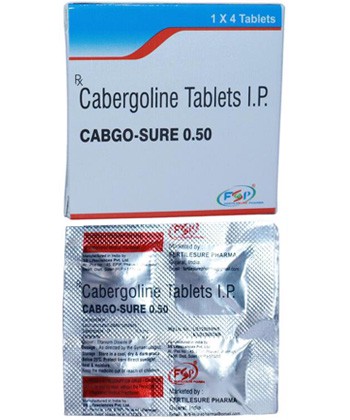
Cabergoline
- In our pharmacy, you can buy cabergoline without a prescription, with delivery in 5–14 days throughout the United Kingdom. Discreet and anonymous packaging.
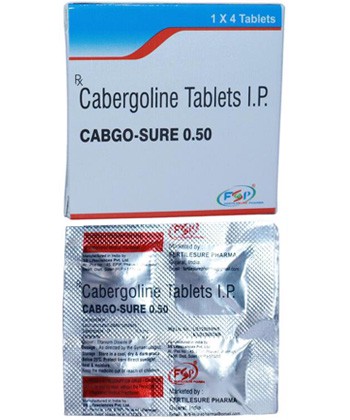
- Cabergoline is used to treat hyperprolactinaemia and prolactinomas, to suppress lactation and as a dopaminergic agent in Parkinson’s disease; it is an ergot-derived dopamine D2 receptor agonist that inhibits pituitary prolactin secretion.
- The usual dose is 0.25 mg twice weekly initially for hyperprolactinaemia (titrate to a usual maintenance of up to 1 mg twice weekly); for Parkinson’s disease 0.5–1 mg daily titrated up to a maximum of around 3 mg/day; for lactation cessation a single 1 mg dose or 0.25 mg every 12 hours for 2 days are common regimens.
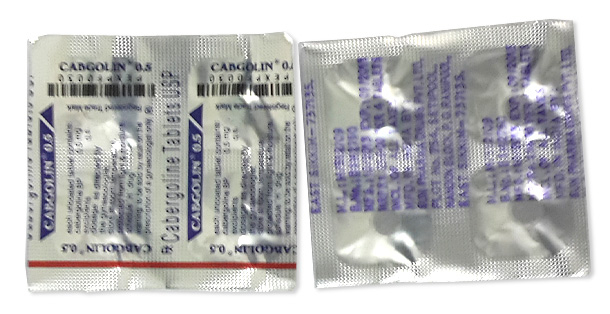
- The form of administration is oral tablets, commonly 0.5 mg and 1 mg.
- The effect on prolactin levels is usually seen within 24–72 hours, though symptomatic improvement may take several weeks.
- The duration of action is long‑lasting (cabergoline has a multi‑day half‑life and effects often persist for several days to about a week; dosing is commonly once or twice weekly for endocrine indications).
- Avoid or limit alcohol while taking cabergoline as it can worsen dizziness, orthostatic hypotension and sedation.
- The most common side effect is nausea.
- Would you like to try cabergoline without a prescription?
Cabergoline

Critical Warnings, Restrictions And Patient Protection (Safety-First)
Basic Cabergoline Information
- INN (International Nonproprietary Name): Cabergoline.
- Brand Names Available In United Kingdom: Cabergoline Accord 0.5 mg tablets in blister packs of 8 tablets.
- ATC Code: G02CB03 and N04BC06.
- Forms & Dosages: Tablets 0.5 mg (most common) and 1 mg in some markets; pack sizes commonly 2, 8 or 20 tablets.
- Manufacturers In United Kingdom: Accord Healthcare (local presentation: Cabergoline Accord 0.5 mg blister of 8).
- Registration Status In United Kingdom: Widely registered and licensed for use; listed as a Prescription-Only Medicine under the MHRA.
- OTC / Rx Classification: Prescription-only medicine (POM) in the UK.
Immediate Safety Priorities For UK Patients
Cabergoline is a prescription-only medicine (POM).
Obtain treatment through an NHS prescriber or a registered pharmacist following a valid prescription.
Report any suspected adverse reactions via the MHRA Yellow Card scheme.
Contraindications include the following.
- Hypersensitivity to cabergoline, other ergot derivatives or any excipients.
- History of pulmonary, pericardial or retroperitoneal fibrosis.
- Uncontrolled hypertension.
- Confirmed valvular heart disease on echocardiogram.
Safety checklist for prescribers and pharmacists.
- Consider a baseline echocardiogram for patients expected to need long-term or high-dose therapy.
- Check baseline blood pressure and arrange ongoing BP monitoring.
- Review hepatic function before starting and during treatment as clinically indicated.
- Screen for mental health history and monitor for depression, impulse control problems and psychosis.
Urgent red flags patients must know.
- New or worsening breathlessness.
- New chest pain or unexplained chest tightness.
- Persistent cough that does not clear.
- New or worsening swelling of the legs or face (oedema).
- Fainting, sudden collapse or new hallucinations.
Advise patients to attend A&E and contact their GP immediately if any red-flag symptoms occur.
High-Risk Groups (Elderly, Pregnancy, Chronic Illness)
Elderly patients require a lower starting dose and very slow titration.
Monitor closely for orthostatic hypotension and for cognitive or psychiatric adverse effects in older people.
- Pregnancy: generally avoid cabergoline unless treating hyperprolactinaemia under specialist supervision.
- Breastfeeding: lactation is an absolute contraindication for non-cessation indications.
- Specialist input is advised for any decision about use during pregnancy or postpartum.
- Hepatic impairment: start at a lower dose and titrate slowly because of reduced clearance.
- Renal impairment: clinical review and close monitoring are advised; no routine dose adjustment for mild to moderate impairment.
Interaction With Activities (Driving, Workplace Safety Under UK Law)
- Cabergoline can cause dizziness, somnolence, hallucinations and orthostatic hypotension.
- Warn patients not to drive or operate machinery until they know how the medicine affects them.
- Advise patients to follow DVLA guidance on fitness to drive if they develop persistent effects that impair driving.
Q&A — “Can I Drive After Taking It In The UK?”
Q: Can I drive after a dose of cabergoline?
A: Not until you know how it affects you.
If you experience dizziness, sudden sleepiness, hallucinations or visual disturbance do not drive.
Seek medical review and inform your GP and insurer if symptoms persist.
Follow DVLA guidance and report if required.
Short checklist: stop driving, seek medical review, report to DVLA if effects persist.
Usage Basics — Names, Classification And Legal Status
INN, UK Brand Names And Local Formulations
- INN: cabergoline.
- UK Presentation Commonly Seen: Cabergoline Accord tablets 0.5 mg in blister packs of 8 tablets.
- Common International Brands: Dostinex, Cabaser.
ATC Codes And Pharmacological Classification
- ATC Code
- G02CB03 and N04BC06.
- Classification
- Dopamine agonist with indications as a prolactin inhibitor and as a dopaminergic agent for Parkinson’s disease; chemically an ergot derivative for some indications.
Legal Status In The UK
- Cabergoline is a Prescription-Only Medicine (POM) under MHRA rules.
- Dispense only with a valid prescription and provide counselling consistent with NHS and MHRA guidance.
- Record the indication, dose and monitoring plan in patient notes and electronic prescribing systems.
Dosing Guide (NHS-Focused)
Standard Regimens By Indication (Practical NHS Guidance)
| Indication | Typical Starting Dose | Maintenance / Notes |
|---|---|---|
| Hyperprolactinaemia / Prolactinoma | 0.25 mg twice weekly | Increase gradually; maintenance commonly up to 1 mg twice weekly. Increase by 0.25 mg per dose weekly as needed. |
| Parkinson’s Disease | 0.5–1 mg daily (titrate up) | Divided daily dosing; maximum up to 3 mg/day depending on response and tolerance. |
| Cessation Of Lactation | Single 1 mg dose or 0.25 mg every 12 hours for 2 days | Short-term use only and per product information. |
Adjustments For Comorbidities And Special Populations
- Elderly: start at the lowest recommended dose and titrate slowly while monitoring for hypotension and psychiatric effects.
- Hepatic impairment: lower starting dose and close monitoring due to reduced clearance.
- Children: safety and efficacy not established; not routinely recommended.
- Renal impairment: mild to moderate impairment usually requires no routine dose change but clinical monitoring is advised.
Q&A — “What If I Miss A Dose?”
Q: Missed dose?
A: Take the missed dose as soon as you remember unless the next scheduled dose is due soon.
Do not double up doses to make up for a missed one.
For twice-weekly regimens follow prescriber advice if multiple doses are missed.
Contact your pharmacist or GP for clarifications.
Interaction Chart (Food, Drinks And Medicines)
Food And Drink Interactions
- Alcohol increases the risk of hypotension and sedation when taken with cabergoline.
- Avoid alcohol until you know how the medicine affects you.
- No critical interactions with normal foodstuffs are recorded, but caffeine may worsen anxiety or insomnia in susceptible patients.
Drug–Drug Interactions
| Interacting Drug | Effect | Action |
|---|---|---|
| Strong CYP3A4 inhibitors (eg. some azole antifungals) | May increase cabergoline exposure | Review therapy; consider monitoring and dose adjustment if necessary. |
| Strong CYP3A4 inducers | May reduce cabergoline levels | Review efficacy and consider specialist advice. |
| Antihypertensives | Additive hypotension / orthostatic effects | Monitor blood pressure and counsel patient on standing up slowly. |
| Antipsychotics | Antagonise dopaminergic effect; may reduce efficacy | Specialist review and coordination between prescribers recommended. |
Flag: always consult the BNF and a trusted drug interaction checker for specific cases.
MHRA Yellow Card Insights
- Reported interaction themes include augmentation of hypotensive and sedative effects with other sedating agents.
- Antipsychotics may reduce cabergoline effect on prolactin.
- Monitor psychiatric status when combining with serotonergic or dopaminergic agents.
User Reports & Trends (Patient Perspectives)
- Sources include NHS.uk patient information pages, Patient.info, discussion threads on parenting forums and community pharmacy feedback.
- Commonly reported issues on initiation include nausea and dizziness.
- Many patients report improvement in galactorrhoea and menstrual regularity once prolactin falls.
- Long-term users sometimes express concern about cardiac valvulopathy risk and request echocardiography.
Practical tips drawn from patient forums and pharmacy experience.
- Taking cabergoline with food may reduce nausea for some patients.
- Report any mood changes or impulse-control symptoms promptly to your prescriber.
- Keep a medication card showing dates and doses, particularly for twice-weekly regimens.
- There is rising search interest in purchasing cabergoline online.
- Emphasise that cabergoline is a POM and warn patients about risks from unregulated overseas suppliers.
- Encourage use of NHS e-prescription routes and registered UK pharmacies.
Access & Purchase Options In The UK
Community Pharmacies And Chains
- Major high-street dispensers such as Boots, LloydsPharmacy and Superdrug dispense POMs with a valid prescription.
- Independent pharmacies also dispense following a prescription and provide pharmacist counselling.
- Typical UK pack: Cabergoline Accord 0.5 mg, blister of 8 tablets.
Online Pharmacies And E-Prescriptions
NHS Electronic Prescription Service (EPS) prescriptions are accepted by registered online pharmacies.
Check for a valid GPhC registration number and NHS.uk pharmacy badge when choosing an online supplier.
- Checklist for online pharmacy verification: view GPhC number, find the pharmacy listed on NHS website, use secure payment and ensure a valid prescription is required.
In our online pharmacy, cabergoline is available without a prescription, with discreet delivery to United Kingdom in 5-14 days.
Safe-Purchase Checklist For Patients
- Verify pharmacy registration and GPhC number.
- Ensure a prescription is required and pharmacist counselling is offered.
- Use tracked delivery and check the pharmacy has a local emergency contact.
- Confirm return policy and storage guidance at delivery.
Mechanism Of Action & Pharmacology (Patient-Friendly + Clinical Terms)
Simplified Explanation
- Cabergoline is a long-acting dopamine D2 receptor agonist.
- It reduces prolactin secretion from the pituitary gland.
- Lower prolactin eases symptoms such as galactorrhoea and menstrual disturbance and can shrink prolactin-secreting tumours.
Clinical Pharmacology Notes
- Half-Life
- Long half-life supports twice-weekly dosing for endocrine indications.
- D2 Agonist
- Stimulates dopamine receptors to reduce prolactin and provide dopaminergic activity for Parkinson’s disease.
- Prolactin
- Hormone secreted by the pituitary that is suppressed by cabergoline therapy.
Pharmacokinetic considerations include hepatic metabolism and the need for caution in severe hepatic impairment.
There is accumulation risk with higher chronic doses, which is why cardiac monitoring is advised for long-term, high-dose regimens.
Indications & Off-Label Use (NHS/MHRA Perspective)
MHRA-Approved Uses (Typical)
- Treatment of hyperprolactinaemia, including prolactinomas.
- Management of Parkinson’s disease using higher-dose formulations in some situations.
- Short-term use to suppress lactation in specific, exceptional scenarios as per product information.
Off-Label Practices Seen In NHS/Private Care
- Low-dose cabergoline is occasionally used in fertility and IVF protocols to manage hyperprolactinaemia.
- Off-label use should always be discussed with secondary-care specialists and documented.
Prescribing Considerations
- Specialist input is advisable for pregnancy, fertility treatment and long-term high-dose Parkinson’s therapy because of valvular risk monitoring requirements.
- Document indication, consent and monitoring plans in the clinical record.
Key Clinical Findings & Safety Evidence (2022–2025 Synopsis)
- Cabergoline is effective at normalising prolactin and often reduces the size of prolactinomas.
- It is also an established dopaminergic therapy in Parkinson’s disease where appropriate.
- Regulatory reviews in the EU and UK have emphasised a safety signal for valvular heart disease with long-term, high-dose ergot-derived dopamine agonists.
- Baselines and periodic echocardiography are recommended when patients require chronic high doses.
| Outcome | Monitoring | Frequency |
|---|---|---|
| Valvular Heart Disease | Baseline echocardiogram and periodic echo if on long-term high doses | Baseline and then as advised by cardiology or specialist (eg. annually or per risk) |
| Blood Pressure / Orthostatic Symptoms | BP check and symptom review | At initiation and periodically during titration |
| Psychiatric Effects | Mental health screen and ongoing review | Baseline and regular review during treatment |
Alternatives Matrix (NHS Prescribing Alternatives)
Common Alternatives
- Bromocriptine (Parlodel) — ergot dopamine agonist commonly used historically for hyperprolactinaemia.
- Quinagolide (Norprolac) — a non-ergot prolactin inhibitor used in some markets.
- For Parkinson’s disease consider non-ergot agents such as pramipexole and ropinirole.
Comparison Table
| Drug | Indication | Dosing Frequency | Key Pros | Key Cons |
|---|---|---|---|---|
| Cabergoline | Hyperprolactinaemia, Parkinson’s | Twice weekly (endocrine) / daily (Parkinson’s) | Less frequent dosing for prolactin control; effective tumour shrinkage. | Valvular risk at long-term high doses; caution in hepatic impairment. |
| Bromocriptine | Hyperprolactinaemia | Daily | Longer safety data in pregnancy for some uses. | More frequent dosing and more GI side effects. |
| Pramipexole / Ropinirole | Parkinson’s disease | Daily | Non-ergot agents with different safety profiles. | Different side-effect spectrum; not primary for prolactin suppression. |
Pros And Cons Checklist For Clinicians
- Consider fertility plans and pregnancy potential when choosing an agent.
- Review psychiatric history before starting dopaminergic therapy.
- Check cardiac history and consider echocardiography for long-term high-dose use.
- Assess tolerance and adverse-effect profile when switching agents.
Common Patient Questions (UK Clinic FAQs)
- Q1: “Can I get pregnant on cabergoline?” — Many patients regain fertility after prolactin normalises; manage pregnancy under specialist advice and consider stopping or continuing therapy as directed.
- Q2: “Is it safe long-term?” — It is effective long-term for prolactinomas but requires periodic review and echocardiography for those on high cumulative doses.
- Q3: “Will it affect mood or sex drive?” — Mood changes, decreased libido and other sexual effects have been reported and should be reported to the prescriber promptly.
- Q4: “Are there withdrawal effects?” — Rebound hyperprolactinaemia can occur if stopped abruptly; follow prescriber guidance on stopping and monitoring.
NHS Cost & Access Comparison
| Pharmacy / Source | Typical Private Price (Example) | NHS Charge | Exemptions | Online Availability |
|---|---|---|---|---|
| Boots | Approx. £10–£25 per pack (cabergoline 0.5 mg, 8-tab blister) | England: £9.35 per item | Scotland / Wales / Northern Ireland: generally free | Yes, NHS prescription accepted |
| LloydsPharmacy | Approx. £10–£25 per pack | England: £9.35 per item | Devolved nations generally exempt | Yes |
| Registered Online Pharmacy | Approx. £9–£30 depending on provider | England: £9.35 per item | Prescription-exempt patients do not pay in devolved nations | Yes, accepts NHS EPS where registered |
- Regional differences: England charges the standard NHS prescription fee unless exempt, while Scotland, Wales and Northern Ireland generally provide free prescriptions.
- Use FP10 prescriptions or EPS2 electronic prescriptions for NHS dispensing where appropriate.
Registration, Regulation And Reporting (MHRA & NHS Framework)
Regulatory Status
- Cabergoline products hold licences with the MHRA in the UK and are widely registered internationally.
- Multiple manufacturers market generic and branded products; Cabergoline Accord is one UK presentation.
- The drug remains listed as a Prescription-Only Medicine (POM).
Prescribing & Pharmacovigilance
- Document the indication, dose and monitoring plan in the patient record when initiating cabergoline.
- Report suspected adverse drug reactions promptly to the MHRA Yellow Card scheme.
- For serious suspected effects such as cardiac fibrosis or new psychosis, escalate to specialist care and report the reaction.
Storage, Handling & Household Guidance (UK Climate)
Storage Recommendations
- Store below 25°C and protect from light and moisture.
- Keep in original packaging to protect tablets and to retain batch and expiry information.
- Avoid storing in bathrooms or other damp areas common in UK homes; use a dry cupboard or medicine cabinet in living areas.
Travel And Transport
- Carry cabergoline in its original packaging with prescription or e-prescription note when travelling.
- Short temperature excursions are acceptable, but avoid prolonged exposure to high heat or humidity during travel.
Safe Disposal
- Return unused or expired medication to a pharmacy take-back service for safe disposal.
- Do not flush medicines down the toilet or dispose of them in household waste.
Guidelines For Proper Use & Pharmacist Counselling (NHS Patient Safety)
Core Counselling Points (Pharmacist Script)
- Confirm the indication and the exact dosing schedule with the patient.
- Warn about orthostatic hypotension, sedation and possible mood changes.
- Advise on what to do for missed doses and emphasise not doubling doses.
- Give written patient information and signpost to NHS/MHRA leaflets and the Yellow Card scheme.
- Arrange or advise follow-up with the GP or specialist for monitoring.
Monitoring Plan To Agree With Patient
- Baseline checks: blood pressure, cardiac history and consider echocardiogram if long-term or high-dose therapy is anticipated.
- Ongoing monitoring: symptom reviews for breathlessness, leg swelling and mood changes.
- Laboratory monitoring: prolactin levels and hepatic function testing as clinically indicated.
- BP Monitoring
- Check at baseline and during titration to detect orthostatic hypotension.
- Echocardiogram
- Consider baseline and periodic echo for long-term high-dose users.
- Mental Health Review
- Watch for depression, impulse-control problems and psychosis.
Documentation & Shared Care
- Use the Electronic Prescription Service and patient clinical records to document counselling and monitoring plans.
- Record that Yellow Card reporting advice was given and escalate complex cases to endocrinology or neurology as required.
Delivery Across United Kingdom
| City | Region | Delivery Time |
|---|---|---|
| London | England | 5–7 days |
| Birmingham | England | 5–7 days |
| Manchester | England | 5–7 days |
| Glasgow | Scotland | 5–7 days |
| Leeds | England | 5–7 days |
| Edinburgh | Scotland | 5–7 days |
| Liverpool | England | 5–7 days |
| Bristol | England | 5–7 days |
| Sheffield | England | 5–7 days |
| Newcastle Upon Tyne | England | 5–7 days |
| Nottingham | England | 5–9 days |
| Leicester | England | 5–9 days |
| Coventry | England | 5–9 days |
| Southampton | England | 5–9 days |
| Plymouth | England | 5–9 days |
Closing Safety Notes
Cabergoline is an effective option for hyperprolactinaemia and has established uses in Parkinson’s disease when indicated.
Because of potential cardiac and psychiatric risks, ensure treatment is prescribed and monitored by a clinician and documented in the patient record.
Report suspected adverse effects to the MHRA Yellow Card scheme and seek urgent care for red-flag symptoms.
If you are sourcing cabergoline online, only use registered UK pharmacies and ensure a valid prescription and pharmacist counselling are provided.