Isotretinoin
In brief
- Isotretinoin is a prescription-only medicine in the UK, EU, USA and most other countries because of its serious risks, especially severe birth defects. In some online or cross-border pharmacy settings it may be offered without a prescription, but this is not legally appropriate or safe. It should only be used under medical supervision.
- Isotretinoin is used to treat severe recalcitrant acne, especially nodular or cystic acne that has not responded to other treatments. It is a systemic retinoid that reduces sebum production, normalises skin cell turnover, and helps reduce inflammation and acne-causing blockage of pores.
- The usual dose is weight-based, often starting at 0.5 mg/kg/day and increased up to 1 mg/kg/day as tolerated. Treatment is commonly continued for 16–24 weeks, aiming for a cumulative dose of about 120–150 mg/kg.
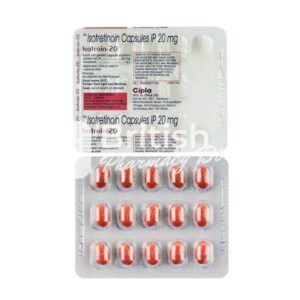
- It is usually taken by mouth as hard capsules or soft capsules, with common strengths including 5 mg, 10 mg, 20 mg and 40 mg. Oral suspension exists in rare cases, and topical products are different medicines.
- Isotretinoin does not work immediately; improvement is usually seen after several weeks, often around 4–8 weeks, with fuller benefit developing over the course of treatment.
- The effect lasts for the duration of the treatment course, typically 16–24 weeks. In some people, results may continue after the course ends, although relapse can occur and a second course may sometimes be needed.
- Avoid alcohol or keep intake to a minimum, as alcohol may worsen liver strain and raise triglyceride levels, which isotretinoin can also increase.
- The most common side effects are dry lips, dry skin, dry eyes, peeling skin, nosebleeds, and headache. It can also cause muscle or joint pain, photosensitivity, raised liver enzymes, and increased blood lipids.
- Would you like to try isotretinoin without a prescription?
Isotretinoin Safety First: What UK Patients Need To Know
- INN (International Nonproprietary Name): Isotretinoin.
- Brand names available in United Kingdom: Roaccutane, Roacutan, and some imported packs such as Curacné, Curacne, Rizuderm, Reticutan, and other local labels.
- ATC Code: D10BA01.
- Forms & dosages: Hard capsules or tablets in 5 mg, 10 mg, 20 mg, and 40 mg strengths; soft capsules in some versions.
- Manufacturers in United Kingdom: Roche (historical), and other global suppliers may appear on imported or licensed packs.
- Registration status in United Kingdom: Prescription Only Medicine (POM), regulated by MHRA.
- OTC / Rx classification: Rx only.
Isotretinoin is the medicine dermatologists reach for when severe acne will not settle with the usual treatment path.
It is a systemic retinoid, ATC D10BA01, and it is used for severe recalcitrant nodular or cystic acne when topical treatments and antibiotics have failed.
For UK patients, the biggest safety issue is pregnancy prevention, because isotretinoin is highly teratogenic and must not be used in pregnancy or when pregnancy is being planned.
That means pregnancy testing where relevant, strict contraception before, during, and for at least one month after treatment, and regular NHS or MHRA-aligned monitoring.
Red flags that need urgent action include severe mood change, severe headache, visual disturbance, abdominal pain, jaundice, or signs of an allergic reaction.
- Do not share your capsules with anyone else.
- Do not buy isotretinoin from unregulated online sellers.
- Do not start treatment without proper counselling and follow-up.
- Do seek help quickly if you notice major mood, sight, or stomach symptoms.
Before you start: confirm your pregnancy status if relevant, review your contraception, tell the prescriber about liver, renal, lipid, mood, or alcohol problems, and bring a full medicine list to the pharmacy or clinic.
High-Risk Groups And Absolute Contraindications
Some people should not take isotretinoin at all, and others need closer monitoring before a specialist decides it is suitable.
Absolute contraindications include pregnancy, breastfeeding, severe liver impairment, severe renal impairment, hypervitaminosis A, very high blood lipids, and known hypersensitivity to isotretinoin or excipients.
Caution is also needed in people with a history of depression, diabetes, lipid disorders, chronic alcoholism, and in children under 12 years.
When To Stop And Seek Urgent Help
Stop taking the medicine and seek urgent medical advice if you develop severe headache, visual disturbance, abdominal pain, jaundice, suicidal thoughts, or any allergic reaction such as swelling, wheeze, or a widespread rash.
- Severe headache or vomiting.
- Blurred vision, reduced night vision, or other visual change.
- Severe tummy pain or persistent nausea.
- Yellowing of the skin or eyes.
- Suicidal thoughts or a marked mood shift.
- Swelling of the face, lips, or throat.
Q&A — Can Isotretinoin Ever Be Used In Pregnancy?
No.
Pregnancy is an absolute contraindication because isotretinoin is highly teratogenic.
If pregnancy is suspected during treatment, the medicine should be stopped immediately and urgent specialist advice should be sought.
What Isotretinoin Is: INN, Brand Names, And UK Naming
People often ask whether Roaccutane, Roacutan, and isotretinoin are different medicines.
In practice, they refer to the same systemic retinoid acne treatment, although the packaging, manufacturer, or country label may change.
Its INN is isotretinoin, and the medicine may also appear in other languages as Isotretinoína, Isotretinoïne, Isotretinoinum, or 13-cis-retinoic acid.
- INN
- Isotretinoin.
- Other names
- Isotretinoína, Isotretinoïne, Isotretinoinum, 13-cis-retinoic acid.
- UK brand names
- Roaccutane, Roacutan, and imported labels such as Curacné, Rizuderm, or Reticutan.
- Usual forms
- Capsules in blister packs, usually 5 mg, 10 mg, 20 mg, or 40 mg.
In real-world pharmacy work, patients sometimes arrive with a blister pack from Europe or a repeat prescription label carrying a slightly different spelling.
The active medicine is still isotretinoin, and the same safety rules apply whatever the brand name.
Names You May See On Prescription Or Packaging
Roaccutane and Roacutan are the names most UK patients recognise, but Curacné, Curacne, Rizuderm, Reticutan, and imported labels can also appear depending on the supply route.
Common Capsule Strengths And Packaging
Blister packs are common in the UK and EU.
The most frequently seen strengths are 5 mg, 10 mg, 20 mg, and 40 mg, with hard capsules being by far the most common formulation.
UK Legal Status, MHRA Regulation, And NHS Prescribing
Can you buy isotretinoin over the counter in the UK?
No, you cannot.
Isotretinoin is a Prescription Only Medicine and is tightly controlled because of its severe side effects, especially teratogenicity.
In UK practice, it is usually started through dermatology rather than casual primary care prescribing, and pharmacist counselling is part of safe supply.
| Prescription Route | Who Usually Prescribes | Key Safety Checks |
|---|---|---|
| NHS dermatology | Dermatology specialist | Assessment, baseline tests, counselling, follow-up monitoring |
| Private dermatology | Specialist prescriber | Same safety checks should still apply |
| Online pharmacy supply | Registered pharmacy with a valid prescription | GPhC registration, pharmacist counselling, legitimate dispensing |
Legitimate online pharmacies must be registered, and informal sellers should be avoided completely.
The safety model in UK medicine relies on counselling, review appointments, and documented monitoring, not on a quick anonymous checkout.
How NHS Prescribing Usually Works
Typical NHS care begins with a dermatology assessment, baseline blood tests, pregnancy prevention checks where relevant, and a discussion of side effects and expectations.
Follow-up appointments then check response, tolerability, and whether any dose adjustment is needed.
Private Vs NHS Access In The UK
Private access can be faster, but the same clinical checks should still be in place.
That is the point of safe isotretinoin prescribing, whether the medicine is supplied through an NHS prescription or a private route.
Q&A — Is Isotretinoin Available Over The Counter In The UK?
No.
It is a prescription-only treatment because specialist assessment and monitoring are needed to reduce harm.
Who Isotretinoin Is For: NHS-Approved Use And Clinical Indications
Isotretinoin is not a first-line option for ordinary mild acne.
It is used when acne is severe, recalcitrant, nodular, cystic, or causing a meaningful risk of scarring.
That is why many patients only hear about it after creams, gels, or antibiotics have not given enough control.
- Suitable: severe acne unresponsive to conventional therapy.
- Suitable: nodular, cystic, or scarring acne.
- Not suitable: mild acne that can still be managed with topical treatment.
- Not suitable: pregnancy, breastfeeding, or severe liver disease.
UK and NHS-aligned use focuses on achieving sustained remission while keeping total exposure as low as possible.
Some people ask about off-label use, but that should stay specialist-led and never become a DIY decision.
MHRA/NHS-Aligned Acne Indications
The key indication is severe recalcitrant nodular or cystic acne that has not responded to conventional treatment such as antibiotics, topical retinoids, benzoyl peroxide, or azelaic acid.
Off-Label Use And Why It Matters
Off-label prescribing can happen in medicine, but isotretinoin needs special caution because its risk profile is so serious.
For that reason, it should remain under specialist supervision rather than being used casually as a quick fix.
Dosing Basics: Standard Regimens, Duration, And Real Product Strengths
Patients often worry whether the dose will be “too strong” or whether one pack is enough.
In practice, dosing is weight-based and individually prescribed, so there is no one-size-fits-all answer.
| Aspect | Usual Range | Notes |
|---|---|---|
| Initial dose | 0.5 mg/kg/day | Often started cautiously |
| Typical maximum dose | Up to 1 mg/kg/day | Depends on response and tolerability |
| Course length | 16–24 weeks | Sometimes based on cumulative dose |
| Cumulative target | 120–150 mg/kg | May vary by clinician judgement |
Hard capsules and tablets in 5 mg, 10 mg, 20 mg, and 40 mg strengths are the common product types, with some soft capsule versions also available.
Most people take isotretinoin with a routine that fits daily life, such as after breakfast or dinner, but the exact instructions depend on the prescription.
What Determines The Dose
Weight, acne severity, side effects, liver function, lipid results, and overall tolerance all influence the final dose.
Course Length And Repeat Courses
The standard cycle is usually 16 to 24 weeks.
If acne returns after a break, a repeat course may be considered after about two months.
Q&A — What Should I Do If I Miss A Dose?
Take it when you remember unless it is nearly time for the next dose.
Never double-dose.
Dose Adjustments, Missed Doses, And Overdose Safety
Isotretinoin can be used in people over 12 years of age, but dosing should remain weight-based and cautious.
Extra care is needed in older adults, and in anyone with liver, renal, lipid, or diabetes issues.
| Situation | Usual Approach | Practical Point |
|---|---|---|
| Normal use | Standard specialist dosing | Follow the prescribed regimen |
| Caution needed | Liver disease, renal disease, diabetes, lipid disorders, older age | More monitoring may be needed |
| Avoid | Severe hepatic impairment, pregnancy, breastfeeding, severe lipid excess | Do not start treatment |
If a dose is missed, it should be taken as soon as remembered unless the next dose is close.
If too much is taken, urgent medical help is needed because acute overdose can cause vitamin A toxicity.
Patients Needing Extra Monitoring
Adolescents, older adults, and people with liver disease, kidney disease, diabetes, or lipid disorders should be monitored carefully during treatment.
Signs Of Overdose
Possible overdose features include severe headache, vomiting, dizziness, drowsiness, peeling skin, and visual symptoms.
Side Effects: Common, Less Common, And Red-Flag Adverse Effects
Most people notice dryness first, and that is the part patients usually ask about in clinic or on the phone.
Isotretinoin side effects UK patients commonly report include dry skin, chapped lips, dry eyes, nosebleeds, headache, joint or muscle pain, nausea, mild liver enzyme rise, photosensitivity, reduced night vision, and increased triglycerides.
| Severity | Examples | Usual Action |
|---|---|---|
| Common and usually manageable | Dry skin, dry lips, dry eyes, peeling, rash, nosebleeds, headache | Self-care plus routine monitoring |
| Needs review | Joint or muscle pain, nausea, mild liver enzyme elevation, increased triglycerides | Discuss at review appointment |
| Urgent | Severe headache, visual symptoms, abdominal pain, jaundice, suicidal thoughts, allergic reaction | Stop and seek help quickly |
Simple self-care often makes a big difference, especially lip balm, moisturiser, eye drops, and sun protection.
That is why many patients can stay on treatment comfortably once they know what to expect.
Common Effects Patients Usually Notice First
Dry lips and dry skin are usually the earliest changes, followed by dry eyes or mild skin sensitivity.
When Side Effects Need Medical Review
Mood changes, severe headache, vision problems, abdominal pain, or yellowing of the skin need prompt review.
Q&A — Does Everyone Get Very Dry Lips?
Dry lips are very common, but the severity varies from person to person.
Regular lip balm usually helps, and a pharmacist can suggest practical ways to reduce discomfort.
Monitoring During Treatment: Blood Tests, Review Appointments, And Safety Checks
Monitoring is not there to make treatment difficult.
It is there to reduce harm, adjust the dose if needed, and catch problems early.
| Test / Check | Why It Is Done | When |
|---|---|---|
| Medical history | Checks for risk factors and contraindications | Before starting |
| Pregnancy testing where relevant | Prevents exposure in pregnancy | Before and during treatment as required |
| Liver function tests | Looks for liver strain | Baseline and follow-up |
| Lipids | Monitors triglycerides and cholesterol trends | Baseline and follow-up |
Patients should attend review appointments, report symptoms honestly, and keep contraception discussions up to date where relevant.
Pharmacists play an important part by reinforcing counselling, checking understanding, and making sure the supply pathway is legitimate.
Baseline Checks Before Starting
Before the first capsule, clinicians usually review medical history, current medicines, pregnancy status where relevant, lipids, and liver function.
Follow-Up Monitoring
After treatment starts, clinicians look at symptoms, adherence, side effects, lab trends, and whether the dose should change.
Drug Interactions, Alcohol, And Lifestyle Considerations
A common question is whether isotretinoin can be taken with vitamins, antibiotics, or a glass of wine.
The safest answer is to check before mixing it with anything new.
| Interaction | Why It Matters | Practical Advice |
|---|---|---|
| Vitamin A supplements | May increase toxicity | Avoid unless specifically advised |
| Tetracyclines | Interaction risk concerns in acne care | Usually avoided |
| Other retinoids | Adds retinoid exposure | Do not combine casually |
| Lipid-raising medicines | May worsen triglycerides | Needs review |
Alcohol can add strain to the liver and may worsen lipid issues, so moderation or avoidance is sensible while treatment is ongoing.
Because photosensitivity can increase, daily sunscreen and sensible sun habits are worth keeping up.
- Avoid vitamin A supplements unless prescribed.
- Be cautious with alcohol.
- Use sunscreen even on cloudy days.
- Keep skin, lips, and eyes well hydrated.
- Tell the prescriber about every medicine you use.
Common Medicine Conflicts
Vitamin A, tetracyclines, other retinoids, and medicines that affect liver or lipids are the main practical concerns.
Food, Drink, And Everyday Habits
Good hydration, regular lip care, and eye care help many patients stay comfortable throughout the course.
Pregnancy Prevention And Contraception Rules In UK Practice
This is the section that matters most for patient protection.
Isotretinoin is highly teratogenic, so women of childbearing potential need strict contraception before, during, and for at least one month after treatment.
Pregnancy is an absolute contraindication, and treatment should stop immediately if pregnancy is suspected.
- Confirm pregnancy status before starting where relevant.
- Discuss reliable contraception before the first dose.
- Continue contraception during treatment.
- Keep contraception for at least one month after stopping.
- Follow all written warnings and test requirements.
UK clinicians usually require pregnancy assessment, contraception counselling, documented warnings, and ongoing checks to make sure the medicine remains safe.
If pregnancy happens during treatment, stop the medicine, contact a GP or dermatologist urgently, and seek specialist advice immediately.
What UK Clinicians Usually Require
In routine UK practice, prescribers assess pregnancy risk, document counselling, and arrange relevant pregnancy tests and follow-up checks.
If Pregnancy Happens During Treatment
Do not wait for the next appointment.
Stop the medicine and contact medical services urgently for advice and follow-up.
Q&A — How Long After Stopping Isotretinoin Can I Try For A Baby?
At least one month after stopping treatment is the usual minimum safety window in UK practice.
Access In The UK: NHS, Private, Boots, LloydsPharmacy, Superdrug, And Online Pharmacies
Patients often want to know how quickly they can get started and where a prescription can be dispensed.
In the UK, isotretinoin may be accessed through NHS dermatology, private dermatology, or a legitimate pharmacy supply chain once a prescription is in place.
Major pharmacy chains such as Boots, LloydsPharmacy, and Superdrug may dispense it subject to local stock and dispensing rules.
Our online pharmacy offers discreet delivery to the United Kingdom in 5 to 14 days, and in our service isotretinoin is available without a prescription, with the same focus on privacy and clear delivery information.
| Access Route | Speed | Safety Checks |
|---|---|---|
| NHS | Usually slower, specialist-led | Full clinical monitoring |
| Private | Often faster | Should still include full safety checks |
| Registered online pharmacy | Convenient and discreet | GPhC registration and pharmacist counselling |
When using any online service, GPhC registration and legitimate dispensing are essential, because counterfeit and parallel-import risks exist.
NHS Vs Private Access
NHS access usually involves specialist referral and longer waiting times, while private routes may be quicker for suitable patients.
Online Pharmacy Safety
Check that the pharmacy is properly registered and that the dispensing process includes real clinical checks rather than a no-questions-asked sale.
UK Cost, Prescription Charges, And Regional Differences
Cost is a practical concern for many families, especially when a course lasts several months.
In the UK, the patient’s out-of-pocket cost depends on where they live, how the medicine is prescribed, and whether private fees apply.
| UK Region | NHS Prescription Cost | Practical Effect |
|---|---|---|
| England | Prescription charges apply | Costs may add up across a course |
| Scotland | Generally free at point of use | No standard NHS prescription charge |
| Wales | Generally free at point of use | No standard NHS prescription charge |
| Northern Ireland | Generally free at point of use | No standard NHS prescription charge |
Private prices vary by brand, pack size, prescription fee, consultation fee, and pharmacy dispensing fee.
That is why patients are usually advised to confirm the total route cost before starting treatment.
England Vs Scotland, Wales, And Northern Ireland
England is the main UK nation where standard NHS prescription charges affect cost directly, while the other nations generally provide NHS prescriptions free at the point of use.
Private Prescription Cost Factors
Brand choice, capsule strength, pack size, and consultation fees all influence the final private price.
How Isotretinoin Works: Mechanism And Pharmacology
In simple terms, isotretinoin turns down the acne process at its source.
It is a systemic retinoid that reduces oil gland size and output, helps prevent blocked pores, and calms inflammation.
- Retinoid
- A vitamin A-related medicine used in acne care.
- Sebum
- The oily substance made by skin glands.
- Keratinisation
- The process that affects how skin cells shed and clog pores.
- Cumulative dose
- The total amount taken over the full course.
- Relapse
- Acne returning after treatment has finished.
That mechanism is why isotretinoin can work so well in severe acne that has resisted other treatment.
It also explains why careful monitoring matters, because the medicine affects more than just the skin.
Alternatives And Where Isotretinoin Fits In Acne Care
Before isotretinoin is considered, many patients will already have tried some combination of doxycycline, minocycline, oral contraceptives, topical retinoids, benzoyl peroxide, azelaic acid, clindamycin gels, or dapsone.
Those options can be very useful, especially for mild to moderate acne.
| Treatment | Best For | Main Limitation |
|---|---|---|
| Doxycycline / Minocycline | Inflammatory acne | Not the final step for severe resistant acne |
| Oral contraceptives | Hormonal acne in suitable patients | Not suitable for everyone |
| Topical retinoids | Mild to moderate acne | May not control severe nodular disease |
| Benzoyl peroxide / Azelaic acid | First-line topical care | May be too weak alone for severe acne |
Isotretinoin tends to be chosen when the balance shifts towards stronger efficacy, accepting the monitoring burden and pregnancy restrictions that come with it.
For someone planning a pregnancy soon, or someone who cannot tolerate dryness, another option may be better.
When An Alternative May Be Better
Mild acne, pregnancy planning, intolerance of dryness, or a clear contraindication to retinoids all favour another treatment route.
Pros And Cons Checklist
- Pros: strong efficacy for severe acne, potential for sustained remission.
- Pros: useful when antibiotics and topical treatment have failed.
- Cons: strict pregnancy prevention rules.
- Cons: blood test and follow-up burden.
- Cons: dryness and other side effects can be bothersome.
Storage, Handling, And Pharmacist Counselling For Safe Use
Patients often store medicines in the bathroom or leave them in a hot car, but isotretinoin should be kept more carefully than that.
Store it at 15 to 25°C, protected from light and moisture, in the original packaging.
- Keep in a bedroom cupboard, not a bathroom.
- Keep away from children.
- Do not leave in direct sunlight or on a windowsill.
- Do not expose to high heat or freezing.
- Keep in the original blister pack when possible.
Pharmacist counselling should cover how to take the capsules, what to avoid, how to handle missed doses, how to manage dryness, and when to attend review appointments.
That conversation is one of the main safety layers in British pharmacy care.
Safe Storage In UK Homes
A cool, dry cupboard is usually the best place, especially in a typical UK home where bathrooms can be damp and warm.
Counselling Points Patients Should Expect
Expect advice on daily routine, side effects, contraception, and the exact steps to take if a dose is missed or a warning symptom appears.
Delivery Across United Kingdom
| City | Region | Delivery time |
|---|---|---|
| London | England | 5-7 days |
| Birmingham | England | 5-7 days |
| Manchester | England | 5-7 days |
| Leeds | England | 5-7 days |
| Liverpool | England | 5-7 days |
| Newcastle upon Tyne | England | 5-7 days |
| Glasgow | Scotland | 5-7 days |
| Edinburgh | Scotland | 5-7 days |
| Cardiff | Wales | 5-7 days |
| Swansea | Wales | 5-9 days |
| Belfast | Northern Ireland | 5-7 days |
| Norwich | England | 5-9 days |
| Exeter | England | 5-9 days |
| Aberdeen | Scotland | 5-9 days |
| Inverness | Scotland | 5-9 days |
For patients ordering online, discreet delivery is often one of the most reassuring parts of the service.
Just as important, though, is making sure the medicine is sourced and supplied safely.