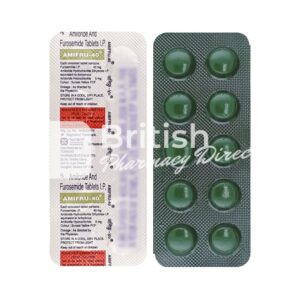
Furosemide
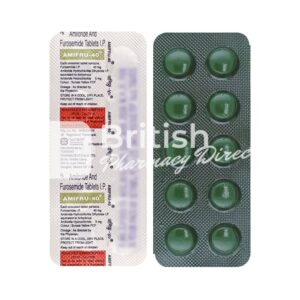
In brief
- In our pharmacy, you can buy furosemide without a prescription, with delivery in 5–14 days throughout the United Kingdom. Discreet and anonymous packaging.
- Furosemide is a loop diuretic used to treat oedema associated with heart failure, liver disease, or kidney disease, and to help lower blood pressure; it works by blocking sodium and chloride reabsorption in the loop of Henle, increasing urine output and reducing fluid overload.
- The usual dose of furosemide is 20–80 mg by mouth once or twice daily for oedema, 20–40 mg twice daily for hypertension, and 20–40 mg intravenously for acute pulmonary oedema, with dose adjustments made according to response and clinical monitoring.
- The form of administration is tablets, film-coated tablets, oral solution, injection ampoules, solution for injection, and vials.
- The effect of the medication usually begins within about 30–60 minutes after oral use and within 5 minutes after intravenous administration.
- The duration of action is usually around 6 hours, though it may vary depending on the dose and route of administration.
- Do not consume alcohol, as it may increase dizziness, dehydration, and low blood pressure.
- The most common side effects are increased urination, thirst, dizziness, low blood pressure, and electrolyte disturbances such as low potassium or low sodium.
- Would you like to try furosemide without a prescription?
Basic Furosemide Information
- INN (International Nonproprietary Name): Furosemide
- Brand names available in United Kingdom: Frusemide, Lasix
- ATC Code: C03CA01
- Forms & dosages: Tablets 20 mg, 25 mg, 40 mg, 250 mg; film-coated tablets 40 mg; injection ampoules 20 mg/2 ml, 40 mg/4 ml; solution for injection 20 mg/2 ml, 50 mg/5 ml; oral solution 40 mg/4 ml, 40 mg/5 ml; vials 20 mg/2 ml
- Manufacturers in United Kingdom: not specified
- Registration status in United Kingdom: MHRA; Rx-only (as Frusemide/Lasix/Generics)
- OTC / Rx classification: Prescription (Rx) medication in almost all jurisdictions
What Furosemide Is And Why It Matters
Furosemide is a medicine many patients recognise by its faster-acting “water tablet” reputation.
It is commonly used when swollen ankles, breathlessness from fluid overload, or raised blood pressure need treatment that is properly monitored.
In UK practice, people may still hear the older British Approved Name, Frusemide, on prescriptions and packaging.
That difference in spelling can be confusing, especially if a patient has seen Lasix online or picked up a pack abroad.
The important point is simple: the active ingredient is the same, but prescribing, strength, and follow-up matter just as much as the brand name.
Do Not Use If You Have Anuria, Severe Dehydration, Or Low Electrolytes
Furosemide is a prescription-only loop diuretic in the UK, regulated by the MHRA, and it should only be used when a clinician has decided the benefit outweighs the risk.
It must not be used in anuria, in people with hypersensitivity to furosemide or sulfonamides, in severe hypokalaemia or hyponatraemia, or in hepatic coma or pre-coma.
Severe dehydration is another major concern, because the medicine can worsen fluid loss and blood pressure drops very quickly.
If someone feels confused, faints, becomes markedly weak, or seems dangerously dehydrated, urgent medical review is needed.
- Confusion or sudden drowsiness.
- Fainting or near-fainting.
- Marked weakness or severe muscle cramps.
- Very dry mouth, little urine, or signs of dehydration.
- Palpitations, vomiting, or worsening breathlessness.
High-Risk Groups Needing Extra Monitoring
Extra caution is needed in older adults, pregnant patients when use is only clearly necessary, breastfeeding people, and anyone with kidney, liver, heart disease, gout, diabetes, or urinary retention.
These groups can be more sensitive to electrolyte imbalance, postural hypotension, and, in the wrong setting, ototoxicity.
That risk is particularly important with higher intravenous doses and in renal impairment, where blood tests and symptom review should happen early and repeatedly.
- Who needs early blood tests: elderly patients.
- Who needs early blood tests: anyone with kidney impairment.
- Who needs early blood tests: people with liver disease or cirrhosis.
- Who needs early blood tests: patients with heart failure after starting or changing dose.
- Who needs early blood tests: patients with diabetes, gout, or urinary retention.
Micro-FAQ — Can I Drive After Taking Furosemide?
Dizziness, postural hypotension, and the urge to urinate can affect driving and workplace safety.
If the tablet makes someone light-headed, rushed to the toilet, or unsteady, driving should wait until they feel normal again.
UK driving advice is straightforward: do not drive if symptoms could make it unsafe.
Inn, Ban, And Common Brand Names
Furosemide is the International Nonproprietary Name, while Frusemide is the British Approved Name still seen in the UK.
Brand packaging varies around the world, which is why a patient may see Lasix in one country and Frusemide in another.
The medicine may also appear under different spellings internationally, but the active ingredient remains the same.
- INN
- Furosemide, the standard non-proprietary name.
- BAN
- Frusemide, the British naming still commonly used in the UK.
- Brand name
- Examples include Lasix and Frusemide, depending on country and manufacturer.
Drug Class And Atc Code
Furosemide belongs to the loop diuretics and has ATC code C03CA01.
“High-ceiling diuretic” means it can produce a strong diuretic effect, which is why the dose and monitoring need to be handled carefully.
In everyday terms, it helps the body remove excess salt and water rather than simply treating a number on the page.
How Furosemide Works
The medicine acts on the kidneys to remove extra salt and water, which reduces fluid retention and can lower blood pressure.
That is why it is used for oedema, heart failure, and hypertension when fluid overload is part of the problem.
Patients often notice more urine, less swelling, and sometimes a lighter feeling within a short time.
- What it removes: salt and water.
- What it helps: fluid retention, oedema, breathlessness, and raised blood pressure.
- What it can disturb: potassium, sodium, magnesium, blood pressure, and hydration.
Clinical Terms Used By Clinicians
Patients may hear words such as diuresis, resistant oedema, anuric renal failure, or rapid-acting diuretic during consultations.
Diuresis means making more urine, resistant oedema means stubborn swelling, and anuric renal failure describes very little or no urine production from the kidneys.
Lasix is often described as a fast-acting diuretic because it can work quickly, especially when given intravenously in hospital.
| Term | Patient-friendly meaning |
|---|---|
| Diuresis | Passing more urine than usual |
| Resistant oedema | Swelling that needs careful dose adjustment |
| Anuric renal failure | The kidneys are not making urine properly |
| Rapid-acting diuretic | A medicine that starts working quickly |
Who Furosemide Is Used For
In UK practice, furosemide is used for fluid retention linked to heart failure, liver disease, or kidney disease, and for hypertension when a loop diuretic is clinically appropriate.
It is also used in hospital for acute pulmonary oedema, usually by intravenous route under supervision.
Off-label or specialist use can happen, but it must still be justified, prescribed, and monitored carefully.
| Condition | Route | General Use |
|---|---|---|
| Heart failure oedema | Oral | Reduce swelling and breathlessness |
| Liver or kidney-related fluid retention | Oral or intravenous | Remove excess fluid |
| Hypertension | Oral | Lower blood pressure when appropriate |
| Acute pulmonary oedema | Intravenous | Hospital treatment for urgent fluid overload |
Standard Adult Regimens
Adults with oedema often start at 20–80 mg orally once or twice daily, while hypertension may use 20–40 mg twice daily.
In acute pulmonary oedema, 20–40 mg intravenously may be used in hospital, with repeat doses given if the response is not enough.
Doses are titrated to response, and severe resistant cases may need higher doses under supervision.
| Condition | Route | Typical Starting Range |
|---|---|---|
| Oedema | Oral | 20–80 mg once or twice daily |
| Hypertension | Oral | 20–40 mg twice daily |
| Acute pulmonary oedema | Intravenous | 20–40 mg in hospital |
How Long Treatment May Last
Some people use it for just a few days for acute swelling, while others with chronic heart failure or cirrhosis may need it for longer-term treatment.
That does not mean the dose should be changed independently, because treatment should follow symptoms, blood tests, and the prescriber’s plan.
If swelling suddenly returns, the answer is usually a review rather than simply taking more tablets.
- Contact the prescriber if swelling is worsening.
- Contact the prescriber if urine output drops sharply.
- Contact the prescriber if dizziness, cramps, or weakness appear.
- Contact the prescriber after any dose change that feels too strong.
Micro-FAQ — What If I Miss A Dose?
Take it as soon as remembered unless it is nearly time for the next dose.
Do not double up.
Because furosemide can make people urinate more often, it is sensible to think about timing before taking the missed tablet late in the day.
Children And Elderly Patients
In children, oedema dosing may be 1–2 mg/kg/dose, with a maximum of 6 mg/kg/day, and the dose must be individualised.
In older adults, it is safer to start low because they are more prone to falls, dehydration, and electrolyte disturbance.
A patient who is frail, already on antihypertensives, or having trouble keeping fluids down needs extra caution.
- Monitor blood pressure closely.
- Watch for falls, dizziness, or confusion.
- Check electrolytes and kidney function early.
- Review fluid intake and weight changes.
Kidney And Liver Impairment
Renal impairment may require higher or intravenous doses, but this also means electrolyte checks and renal function monitoring must be more frequent.
The risk of ototoxicity rises in this setting, particularly with higher intravenous dosing.
Severe hepatic impairment is different, because furosemide can precipitate encephalopathy, so close monitoring and caution are essential.
| Situation | Main Concern | Monitoring Need |
|---|---|---|
| Kidney impairment | Reduced clearance and ototoxicity risk | Frequent electrolytes and renal tests |
| Liver impairment | Risk of encephalopathy | Close clinical review |
Common Side Effects
Most side effects are linked to the medicine doing its job too well.
Patients often notice increased urination, thirst, dizziness, headache, or postural hypotension, and blood tests may show low potassium, low sodium, or low magnesium.
Muscle cramps, weakness, and temporary changes in creatinine or urea can also happen.
| Side effect | What it feels like | When to seek help |
|---|---|---|
| Increased urination | Passing urine more often than usual | If it is extreme or causes dehydration |
| Low potassium or sodium | Weakness, cramps, tiredness | If symptoms are marked or worsening |
| Dizziness or postural hypotension | Light-headed on standing | If it leads to falls or fainting |
| Rash or photosensitivity | Skin irritation or sun sensitivity | If rash is significant |
When Side Effects Become Urgent
Prompt medical advice is needed if someone faints, develops palpitations, severe weakness, confusion, reduced urine output, or severe vomiting.
These can be signs of dehydration or major electrolyte loss, both of which need quick assessment and blood tests.
- Fainting or near-fainting.
- Palpitations or chest discomfort.
- Severe weakness or inability to stand properly.
- Confusion, drowsiness, or reduced urine output.
- Severe vomiting or inability to keep fluids down.
Common Drug Interactions
Furosemide can interact with NSAIDs, aminoglycosides, and antihypertensives, which can increase the risk of kidney problems, ototoxicity, or excessive blood pressure lowering.
Caution is also sensible with other medicines that affect potassium or blood pressure, because the combined effect can be stronger than expected.
A quick medication review can prevent a lot of avoidable problems, especially after hospital discharge or when a new tablet is added.
| Drug class | Likely effect | Why it matters |
|---|---|---|
| NSAIDs | Can reduce diuretic effect and raise kidney risk | May blunt treatment or worsen renal function |
| Aminoglycosides | Higher ototoxicity risk | Hearing-related caution |
| Antihypertensives | Blood pressure may fall too far | Dizziness or fainting risk |
Food, Drinks, And Daily Habits
Alcohol can make dizziness and dehydration worse, so it is best kept modest or avoided if symptoms are already present.
Tea and coffee can add to the need to urinate in some people, so fluid balance should be kept sensible rather than pushed too far either way.
Salt substitutes should not be used without advice if potassium balance is a concern.
- Avoid excessive alcohol when first starting treatment.
- Do not overdo caffeine if urgency is a problem.
- Do not use salt substitutes without checking if potassium matters.
- Discuss fluid advice with a pharmacist if you are unsure.
What NHS Clinicians Usually Monitor
Regular checks usually include electrolytes, renal function, blood pressure, body weight, and symptoms, especially after dose changes.
That is how clinicians spot low potassium, over-diuresis, or worsening kidney function before it becomes a serious problem.
Patients can help by tracking what happens at home between appointments.
- Daily weight, if advised.
- New or worsening swelling.
- Urine changes, including reduced output.
- Dizziness, cramps, or weakness.
Why Pharmacist Counselling Matters In The UK
Community pharmacists are often the first point of practical advice for timing doses, handling urgency, and spotting dehydration early.
Repeat-prescription reviews can also catch duplicate medicines, missed blood tests, or a dose that no longer matches the patient’s symptoms.
That kind of support matters because many people only think about the tablet when it starts making them dash to the toilet.
- Self-monitoring
- Checking symptoms, weight, swelling, and urine changes at home.
- Repeat prescription
- A regular supply arranged through the prescriber and pharmacy.
- Medication review
- A check that the medicine still suits the person’s condition and test results.
How To Access Furosemide In The UK
Furosemide is Rx-only in the UK and is supplied through the NHS or a private prescription.
Boots, LloydsPharmacy, and Superdrug are common access points for dispensing and pharmacy advice, and legitimate online pharmacies must also be UK-registered.
Our online pharmacy can arrange furosemide with discreet delivery to the United Kingdom in 5-14 days, but it still needs prescriber oversight and careful use.
| Access route | Who can prescribe | Typical patient experience |
|---|---|---|
| NHS prescription | GP, hospital clinician, or other authorised prescriber | Collected from a community pharmacy |
| Private prescription | Private prescriber | Dispensed by a registered pharmacy |
| Legitimate online pharmacy | Registered prescriber where required | Delivered after verification |
Electronic Prescriptions And Online Pharmacies
EPS and e-prescriptions have made repeat treatment easier, but registration still matters more than convenience.
Patients should only use UK-registered pharmacies and should not look for an over-the-counter option, because furosemide is not available OTC.
A simple check of the General Pharmaceutical Council and pharmacy contact details can prevent counterfeit or unsafe supply.
- Check the pharmacy is registered in the UK.
- Check there is a real pharmacy address and pharmacist contact route.
- Do not buy from sites that offer prescription-only medicine with no checks.
- Never assume a bargain pack is genuine.
England Versus Scotland, Wales, And Northern Ireland
Prescription charges apply in England unless a patient is exempt.
Scotland, Wales, and Northern Ireland do not charge standard prescription fees.
That means the same medicine can feel very different to a patient depending on where they live and whether they qualify for exemptions.
| Region | Charge status | Exemption notes |
|---|---|---|
| England | Charged unless exempt | Standard NHS exemption rules apply |
| Scotland | No standard charge | Usual NHS supply rules apply |
| Wales | No standard charge | Usual NHS supply rules apply |
| Northern Ireland | No standard charge | Usual NHS supply rules apply |
Typical Price Considerations
Private prices vary by brand, dose, and dispensing fee, while NHS costs depend on exemption status and the quantity prescribed.
Brand examples include Frusemide, Lasix, and generic Furosemide 40mg, but the label on the box is only one part of the cost picture.
Patients usually benefit more from a stable, safe supply than from switching brands to chase a small difference.
Regulation In The UK And Abroad
Furosemide is regulated by the MHRA in the UK, registered in the EU/EEA through EMA routes, and FDA-approved in the United States.
It is also listed on the WHO Essential Medicines List and sits under ATC code C03CA01.
Regulation matters because it affects quality, safety warnings, and the information patients receive with the medicine.
| Region | Status | Patient impact |
|---|---|---|
| United Kingdom | MHRA, prescription-only | Controlled supply and safety oversight |
| EU/EEA | EMA route | Recognised product standards |
| United States | FDA-approved, prescription-only | Regulated prescribing and labelling |
Alternatives And Comparison With Other Loop Diuretics
Important alternatives in the same class include torasemide, bumetanide, and ethacrynic acid.
Clinicians may choose another loop diuretic depending on response, side effects, availability, or whether swelling remains resistant.
Furosemide is familiar and fast-acting, but it can still require careful electrolyte monitoring and may cause frequent urination that patients find inconvenient.
| Medicine | Typical reason for use | Key caution |
|---|---|---|
| Furosemide | Widely used for oedema and hypertension | Electrolyte loss and dehydration |
| Torasemide | Alternative loop diuretic | Needs prescriber-led selection |
| Bumetanide | Alternative when response differs | Same class monitoring issues |
| Ethacrynic acid | Specialist alternative | Requires careful oversight |
Pros And Cons Of The Medicine
Many patients value the quick effect, the long history of use, and the fact that it is well understood by UK prescribers and pharmacists.
The downside is the frequent urination, the need for blood tests, and the risk of blood pressure or electrolyte problems if it is not monitored.
That balance is why some people stay on it for years, while others are switched to a different loop diuretic if the response is not right.
- Consider switching if swelling remains resistant.
- Consider switching if side effects are persistent.
- Consider switching if kidney function changes significantly.
- Consider switching if a different regimen suits daily life better.
Storage, Handling, And Travel Advice
Store tablets and vials at room temperature, between 15 and 25°C, and protect them from light and moisture.
Do not freeze injectables.
Keep medicines in the original packaging, away from bathrooms and radiators, and check expiry dates before travel.
- Keep in original packaging.
- Store away from heat and damp.
- Do not freeze injections.
- Check expiry before trips.
Patient Guidance And Consultation Points
Practical counselling makes a real difference with furosemide, especially for people balancing work, travel, and frequent toilet trips.
Taking it in the morning or early afternoon helps reduce night-time urination, and standing up slowly can reduce dizziness.
Muscle cramps, reduced urine, or worsening weakness should be reported, and blood tests should not be skipped.
- Take it in the morning or early afternoon.
- Stand up slowly to reduce postural dizziness.
- Report muscle cramps, weakness, or confusion.
- Attend blood tests and reviews.
- Never share tablets with anyone else.
Common Questions In Practice
Will it make me pee a lot? Yes, that is the expected effect, and it is usually strongest soon after a dose.
Can I take it with other blood pressure tablets? Sometimes, but the combined blood pressure effect may be stronger, so the prescriber should review the full regimen.
What if I feel weak? Weakness can be a sign of low electrolytes or dehydration, so speak to a clinician promptly.
Can I use it for water retention without a prescription? No, it should not be used that way without prescriber oversight.
Micro-FAQ — Is Furosemide Available Over The Counter In The UK?
No.
It is a prescription-only medicine and should only be used with prescriber oversight.
Delivery Across United Kingdom
| City | Region | Delivery time |
|---|---|---|
| London | England | 5-7 days |
| Birmingham | England | 5-7 days |
| Manchester | England | 5-7 days |
| Liverpool | England | 5-7 days |
| Leeds | England | 5-7 days |
| Sheffield | England | 5-7 days |
| Bristol | England | 5-7 days |
| Newcastle upon Tyne | England | 5-7 days |
| Nottingham | England | 5-7 days |
| Cardiff | Wales | 5-7 days |
| Edinburgh | Scotland | 5-7 days |
| Glasgow | Scotland | 5-7 days |
| Belfast | Northern Ireland | 5-7 days |
| Aberdeen | Scotland | 5-9 days |
| Plymouth | England | 5-9 days |