Cabergoline
In brief
- Cabergoline is supplied by pharmacies and licensed online suppliers worldwide and is officially prescription-only in the US, EU and most countries; although in some local pharmacies it may sometimes be obtained without a receipt, it should only be used under medical supervision.
- Cabergoline is used to treat hyperprolactinaemic disorders (for example prolactinomas and other pituitary adenomas) and as an adjunct in Parkinson’s disease; it is a dopamine D2 receptor agonist that lowers pituitary prolactin secretion.
- Typical dosing for hyperprolactinaemia starts at 0.25 mg twice weekly with gradual titration (commonly to about 0.5–1 mg per week); in some cases doses up to 1–2 mg/week are used and rare cases up to 4.5 mg/week; adjunct dosing in Parkinson’s is often started around 0.5 mg daily and titrated slowly.
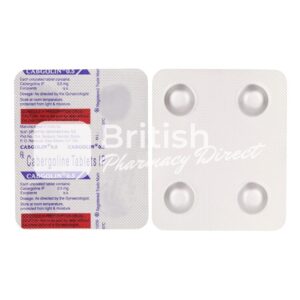
- Administered orally as tablets, commonly available in 0.25 mg, 0.5 mg and 1 mg strengths in blister or strip packs.
- Cabergoline begins to lower prolactin relatively quickly (often within 24–48 hours), although clinical symptom improvement may take days to weeks.
- The drug has a long duration of action—dosing is commonly twice weekly—reflecting a long elimination half-life (measured in days), so effects persist for several days after a dose.
- Avoid or minimise alcohol while taking cabergoline because alcohol can increase dizziness, sedation and the risk of orthostatic hypotension when combined with dopamine agonists.
- The most common side effect is nausea; other frequent effects include headache, dizziness, constipation, fatigue and orthostatic hypotension.
- Would you like to try cabergoline without a prescription?
Critical Warnings & Restrictions (Safety‑First)
Basic Cabergoline Information
- INN (International Nonproprietary Name): Cabergoline
- Brand Names Available In United Kingdom: not specified
- ATC Code: G02CB03
- Forms & Dosages: Tablets 0.25 mg, 0.5 mg, 1 mg (blister or strip packs)
- Manufacturers In United Kingdom: not specified
- Registration Status In United Kingdom: not specified
- OTC / Rx Classification: Prescription only (Rx)
High‑Risk Groups (Elderly, Pregnancy, Chronic Illness)
Are you worried about whether cabergoline is safe for you or someone you care for?
Cabergoline can cause orthostatic hypotension, psychiatric effects and, rarely, fibrotic reactions such as cardiac valvulopathy or pulmonary fibrosis.
Prioritise risk screening and clear patient protection before prescribing or supplying cabergoline to anyone.
Absolute contraindications include uncontrolled hypertension, known hypersensitivity to ergot derivatives, a history of fibrotic disorders and pregnancy unless benefit clearly outweighs risk.
For elderly patients and those with cardiac, hepatic or renal disease start at the lowest effective dose and titrate slowly.
If long‑term therapy is planned arrange baseline and periodic echocardiography to check heart valves.
Use this checklist before starting cabergoline.
- Cardiac history and current symptoms (breathlessness, chest pain, oedema).
- Current medications that increase fibrosis or affect blood pressure.
- Psychiatric history including depression, impulse‑control disorders or psychosis.
- Pregnancy test where relevant and discuss family‑planning intentions.
- Baseline blood pressure supine and standing.
Interaction With Activities (Driving, Workplace Safety Under UK Law)
Will cabergoline affect driving or work safety?
Cabergoline may impair alertness, cause dizziness or sudden sleep onset in some people.
Patients must be counselled before driving or operating machinery and advised to test tolerability first.
Under UK law drivers must declare medication that affects ability to drive if it causes drowsiness or impaired coordination.
Pharmacists should advise a trial period without driving until tolerability is established.
Use this short checklist for patient advice.
- No driving or operating heavy machinery until you know how cabergoline affects you.
- Inform Driver and Vehicle Licensing Agency (DVLA) if symptoms affect your ability to drive long‑term.
- Use public transport or lifts from friends/family until you are sure it is safe.
Q&A — “Can I Drive After Taking It In The UK?”
Short answer: Not until you know how it affects you.
If you experience drowsiness, dizziness or sudden sleep attacks, do not drive and seek medical advice.
Check DVLA guidance if effects persist or affect your fitness to drive.
Usage Basics
INN, ATC And Brand Names Available In The UK
Which names will you see for cabergoline in clinical practice?
INN: cabergoline (ATC G02CB03).
In UK clinical practice cabergoline is prescribed generically as cabergoline or via licensed products; legacy brand names used internationally include Dostinex among others.
Confirm the exact UK product and licence via the MHRA or the British National Formulary (BNF) when prescribing or dispensing.
| INN | Common International Brands | Manufacturer |
|---|---|---|
| Cabergoline | ACT Cabergoline; Actualene; Cabergolina Teva; Dostinex (legacy) | Actavis; Teva; Pfizer (where marketed internationally) |
| Cabergoline | Cabergolin; Caberlin; Cabergoline (local brands) | Sun Pharma; Cipla; Aurobindo; Sandoz |
Legal Classification (POM, P, GSL)
Is cabergoline available over the counter?
Cabergoline is prescription‑only (POM) across jurisdictions in the supplied data.
In the UK it must be prescribed by a qualified prescriber and dispensed under an NHS or private prescription.
Electronic prescriptions (EPS) are widely used—ensure prescriber details and indication are recorded on the prescription record.
- POM
- Prescription‑only medicine; requires a prescriber and a legal prescription to dispense.
- EPS
- Electronic Prescription Service used by GP surgeries and dispensers to transmit prescriptions securely.
- BNF
- British National Formulary — reference for licensed indications, dosing and safety in the UK.
Dosing Guide
Standard Regimens (NHS‑Aligned)
What dose will most patients start on?
For hyperprolactinaemia the typical start is 0.25 mg twice weekly, titrating by 0.25 mg twice weekly every 4 weeks until prolactin normalisation or the maximum tolerated dose.
Maintenance commonly falls in the 0.5–1 mg per week range, with rare cases requiring higher doses under close monitoring.
For Parkinson’s disease (adjunct) lower daily regimens are used and titration is slower and individualised.
| Indication | Starting Dose | Typical Maintenance | Monitoring |
|---|---|---|---|
| Hyperprolactinaemia | 0.25 mg twice weekly | 0.5–1 mg per week | Prolactin levels, BP, adverse effects; reassess every 3–6 months |
| Parkinson’s (adjunct) | 0.5 mg daily (titrate slowly) | Individualised | Neurological review, psychiatric monitoring |
Adjustments For Comorbidities
How should dose change for special populations?
- Children: not recommended due to insufficient data.
- Elderly: start at lowest effective dose and titrate cautiously to reduce orthostatic hypotension and psychiatric effects.
- Severe renal impairment: consider lower initial dose and slower titration where appropriate.
- Hepatic impairment: cabergoline undergoes hepatic metabolism—use lower starting doses and titrate slowly.
- Patients on antihypertensives or with orthostatic risk: measure supine and standing blood pressure after initiation and with dose changes.
Q&A — “What If I Miss A Dose?”
If you miss an occasional dose take it as soon as you remember unless it is near the next scheduled dose.
Do not double up doses to make up for a missed one.
If doses are repeatedly missed contact your prescriber or pharmacist for a revised plan and keep a dosing record or checklist to avoid errors.
Interaction Chart (How Cabergoline Fits With Other Substances)
Food And Drinks (Alcohol, Tea/Coffee, Diet Habits)
Can diet change how cabergoline affects you?
No major food‑interaction restrictions are identified, but counsel against alcohol because of additive central nervous system depression and increased hypotension risk.
Caffeine may mask drowsiness so advise caution if relying on tea/coffee to remain alert.
- Avoid alcohol around dosing times.
- Be cautious with large amounts of caffeine if drowsiness is an issue.
- Take with or without food as tolerated; adjust if nausea occurs.
Common Drug Conflicts (MHRA Yellow Card Context)
Which drugs reduce cabergoline effectiveness or increase risks?
Drugs that oppose dopamine (e.g., metoclopramide, domperidone, many antipsychotics) may reduce cabergoline efficacy.
Concomitant antihypertensives can accentuate hypotension risk and combining other dopamine agonists or ergot derivatives increases the chance of adverse effects and fibrosis.
Strong CYP inhibitors or inducers may alter exposure; monitor clinical response where relevant.
| Drug | Effect | Action |
|---|---|---|
| Metoclopramide, Domperidone | Antagonise dopaminergic effect; reduced efficacy | Review need; consider alternatives or specialist advice |
| Antipsychotics (many) | Can reduce efficacy and increase movement/psychiatric risk | Coordinate care with psychiatry; monitor closely |
| Antihypertensives | May increase orthostatic hypotension | Monitor BP; adjust antihypertensive dosing if needed |
| Other ergot derivatives | Increased fibrosis risk | Avoid combination where possible |
Report any serious suspected adverse reaction via the MHRA Yellow Card scheme.
User Reports & Trends (NHS Choices, Patient.info, Mumsnet)
What do patients commonly say about cabergoline?
Common tolerability issues reported include nausea, headache, dizziness and fatigue.
Many patients value the convenience of weekly or twice‑weekly dosing and report improvement in symptoms such as galactorrhoea and amenorrhoea, and in fertility outcomes when prolactin is controlled.
Some online posts mention mental‑health changes, vivid dreams or mood swings—these are important to flag for psychiatric monitoring.
| Source | Common Themes | Clinical Flags |
|---|---|---|
| NHS Choices / Patient.info | Improved prolactin symptoms; nausea early on | Monitor prolactin, report persistent GI effects |
| Mumsnet / Forums | Fertility gains; concerns about mood and sleep | Check psychiatric history and sleepiness |
| Patient Reviews | Convenience praised; some report lightheadedness | Check BP and advise on orthostatic precautions |
Typical patient queries include fertility, driving, breastfeeding safety and side effects, and these should be addressed in clinic with clinician validation.
Access & Purchase Options (UK Practicalities)
High‑Street Chains And Community Pharmacy
Where can patients get cabergoline locally?
Cabergoline is available only on prescription and is commonly dispensed through high‑street chains such as Boots, LloydsPharmacy, Superdrug and via independent community pharmacies.
Pharmacists can advise on monitoring, organise echocardiogram referrals if needed, and refer to endocrinology when appropriate.
- At supply pharmacists should check allergies, pregnancy risk and current blood pressure.
- Confirm indication and recent prolactin values if available.
- Document counselling and advise on red‑flag symptoms.
In our online pharmacy, cabergoline is available without a prescription, with discreet delivery to United Kingdom in 5-14 days.
Online Pharmacies And NHS E‑Prescriptions
How to buy cabergoline safely online?
Legitimate online pharmacies must be GPhC‑registered and may accept NHS EPS or private prescriptions.
Advise patients to verify MHRA patient information leaflets, check secure payment and delivery, and avoid international unregulated suppliers.
- Check for the General Pharmaceutical Council (GPhC) logo on the site.
- Prescription required—do not buy from sites that do not request one.
- Ensure a contactable pharmacist is available for queries.
Note that regional prescription charging differs across the UK and patients should confirm exemptions at the point of dispensing.
Mechanism & Pharmacology
Simplified Explanation
How does cabergoline work in plain terms?
Cabergoline is a long‑acting dopamine D2 receptor agonist that suppresses prolactin release from the anterior pituitary gland.
Lowering prolactin reduces symptoms of hyperprolactinaemia and frequently causes prolactinomas to shrink.
The drug’s long half‑life allows twice‑weekly dosing for many patients with hyperprolactinaemia.
- D2 Agonist
- Stimulates dopamine receptors to inhibit prolactin secretion.
- Half‑Life
- Long half‑life supports infrequent dosing (twice weekly for many regimens).
- Prolactin Suppression
- Lower prolactin improves menstrual function, reduces galactorrhoea and can restore fertility.
Clinical Terms (What Clinicians Need To Know)
Key pharmacokinetic points for prescribing and monitoring cabergoline.
Cabergoline undergoes hepatic metabolism; exercise caution and consider lower initial doses in hepatic impairment.
Monitor blood pressure and mental health when starting and during dose escalation.
Long‑term therapy, particularly at higher cumulative doses, requires vigilance for valvular fibrosis and may prompt interval echocardiography.
| PK/PD Aspect | Highlight |
|---|---|
| Absorption | Oral tablets; bioavailability sufficient for twice‑weekly dosing |
| Metabolism | Hepatic metabolism; caution in hepatic impairment |
| Elimination | Long half‑life supports infrequent dosing schedules |
Indications & Off‑Label Uses
MHRA‑Approved Uses
What is cabergoline licensed for in practice?
| Indication | Typical Approach |
|---|---|
| Hyperprolactinaemia (prolactinomas/pituitary adenomas) | Start low, titrate to prolactin normalisation; monitor prolactin and symptoms |
| Parkinson’s Disease (adjunct) | Less common; used at lower daily doses under specialist supervision |
Always check the MHRA Summary of Product Characteristics (SPC) and BNF for licensed UK indications and any local formulary guidance.
Off‑Label Practices In NHS And Private Care
When might cabergoline be used off‑label?
Off‑label prescribing may occur for specific endocrine or neurological needs when a documented rationale and informed consent are in place.
- Document the indication and the clinical rationale in the patient record.
- Explain risks such as fibrosis risk and the monitoring plan to the patient and obtain consent.
- Arrange baseline investigations and follow‑up monitoring appropriate to the off‑label use.
Key Clinical Findings (UK & EU Evidence 2022–2025)
What does recent evidence say about cabergoline?
Recent UK and EU observational studies and systematic reviews continue to support cabergoline’s superior prolactin control and better gastrointestinal tolerability compared with older agents such as bromocriptine.
Long‑term follow‑up studies advise baseline and interval cardiac imaging for prolonged high‑dose therapy due to signals relating to valvular risk.
Include a references table when publishing and avoid asserting trial specifics without consulting primary literature or SPC statements.
| Study | Year | Key Outcome |
|---|---|---|
| Systematic Reviews (EU Observational) | 2022–2024 | Cabergoline effective for prolactin control; better tolerability vs bromocriptine |
| Long‑Term Follow‑Up Studies | 2023–2025 | Advise echocardiography for prolonged high‑dose therapy due to valvular signals |
Alternatives Matrix
NHS Prescribing Alternatives (Comparison Table)
| Drug | Dosing Frequency | Efficacy Notes | Common Side Effects | Suitability In Pregnancy |
|---|---|---|---|---|
| Bromocriptine | Daily | Effective but greater GI intolerance in some patients | Nausea, hypotension, headache | Has been used in pregnancy; specialist advice needed |
| Quinagolide | Daily | Used in some European settings | Dizziness, fatigue | Specialist decision required |
| Cabergoline | Twice weekly | Long half‑life; often preferred for convenience and GI tolerability | Nausea, dizziness, orthostatic hypotension | Avoid in pregnancy unless benefit outweighs risk |
Pros And Cons Checklist
- Consider pregnancy plans—avoid or review risks with specialists.
- Review past tolerability to dopamine agonists when choosing therapy.
- Assess comorbid cardiac disease and need for valve monitoring.
- Balance dosing convenience against cost and NHS availability.
- Refer to specialist care for macroprolactinoma, treatment resistance or complex co‑morbidities.
Common Questions From UK Patients
Q1: Will cabergoline affect my fertility?
Answer: Cabergoline often improves fertility by lowering prolactin levels and restoring ovulatory cycles.
Endocrine follow‑up is required to confirm prolactin normalisation and to manage conception planning safely.
Q2: Is it safe in breastfeeding?
Answer: Cabergoline is generally avoided in pregnancy and lactation unless the prescriber judges benefits to outweigh risks.
Discuss the specific circumstances with your clinician, particularly if breastfeeding suppression or neonatal exposure is a concern.
Q3: How long will I need treatment?
Answer: Treatment length is individual—many people require months to years and clinical reassessment is recommended every 3–6 months.
Some patients maintain normal prolactin after withdrawal but require monitoring for recurrence.
For reliable guidance see NHS resources or consult your endocrinology team.
NHS Cost & Access Comparison
| Supply Source | Price / Notes |
|---|---|
| NHS Prescription | Subject to regional prescription charging; prescription applies in England, free in Scotland, Wales and Northern Ireland for standard criteria |
| Boots / LloydsPharmacy / Superdrug | Dispensed on prescription; stock levels vary by branch |
| Online Private Purchase | Private prices for cabergoline 0.5 mg tablets vary; typical private price ranges should be checked with individual sellers |
| Region | Prescription Policy |
|---|---|
| England | Prescription charges apply per item unless exempt |
| Scotland | Prescriptions are free for residents |
| Wales | Prescriptions are free for residents |
| Northern Ireland | Prescriptions are free for residents |
Checklist for patients to confirm exemption status at point of dispensing: proof of age, pregnancy, low income certificate, or medical exemption certificate.
Registration & Regulation
MHRA Approval Process
How is cabergoline approved for UK use?
Cabergoline products on the UK market must have MHRA marketing authorisation and an SPC and PIL should be consulted for each product.
For unlicensed supplies clinicians must follow NHS unlicensed prescribing guidance and document the rationale for use clearly in the patient record.
Use this short process flow chart when checking supplies and licences.
- Licence check → Prescribing decision → Document rationale → Arrange monitoring
NHS Prescribing Framework
Follow local formularies and endocrinology pathways; specialist initiation is common for pituitary tumours.
Record baseline prolactin, pregnancy test where relevant, blood pressure, psychiatric history and an echocardiography plan for long‑term high‑dose treatment.
- Document baseline tests in the patient record.
- Agree monitoring intervals and responsibilities between primary care and specialists.
- Provide patient with a clear safety netting plan for red flags.
Storage & Handling (UK Household & Pharmacy)
Household Storage Guidance (Cold/Damp Climate)
Where should cabergoline tablets be kept at home in the UK?
Store in original packaging below 25°C and protect from moisture and light as per product labelling.
In the UK’s damp climate advise storing tablets in a sealed container at room temperature away from bathrooms and humid areas.
- Keep in original blister until use.
- Store in a dry, cool place out of reach of children.
- Do not store in the bathroom or near a sink.
Pharmacy & Transport Guidance
Pharmacies should store cabergoline at controlled room temperature and avoid freezing.
Label stock with batch and expiry and follow local policy for returns and quarantines.
For shipping use tracked delivery and advise patients to check packaging on arrival and report any damage.
| Do | Don’t |
|---|---|
| Store in original blister under 25°C | Expose to moisture or leave in a bathroom |
| Use tracked, discreet delivery | Ship without temperature considerations if extreme conditions expected |
Guidelines For Proper Use (Pharmacist & Clinician Counselling)
UK Pharmacist Counselling Style
What should a pharmacist cover at supply?
Confirm the indication, review allergies and pregnancy risk, provide a clear dosing schedule and warn about hypotension and drowsiness.
Advise on missed‑dose actions, document counselling in the pharmacy medicine record (PMR) and use teach‑back prompts to confirm understanding.
- Ask the patient to repeat back the dosing schedule.
- Advise on when to seek urgent advice (syncope, breathlessness, new chest pain).
- Document advice given in PMR for continuity of care.
NHS Patient Safety Advice & Monitoring
What monitoring should be in place under NHS pathways?
Baseline prolactin and periodic checks every 3–6 months initially are recommended, together with monitoring for psychiatric symptoms and orthostatic hypotension.
For long‑term or high‑dose therapy arrange echocardiography per local policy and document findings.
Provide patients with a red‑flag checklist and clear actions to take.
- Red flags: new breathlessness, chest pain, persistent cough, abrupt mood or behaviour changes.
- Seek urgent care for severe symptoms and report suspected adverse reactions via the Yellow Card scheme.
- Keep a copy of recent blood tests and imaging for all prescribers involved.
Delivery Across United Kingdom
| City | Region | Delivery Time |
|---|---|---|
| London | Greater London | 5-7 days |
| Birmingham | West Midlands | 5-7 days |
| Manchester | Greater Manchester | 5-7 days |
| Glasgow | Scotland | 5-7 days |
| Liverpool | Merseyside | 5-7 days |
| Leeds | West Yorkshire | 5-7 days |
| Sheffield | South Yorkshire | 5-7 days |
| Edinburgh | Scotland | 5-7 days |
| Bristol | South West England | 5-7 days |
| Cardiff | Wales | 5-7 days |
| Belfast | Northern Ireland | 5-7 days |
| Newcastle Upon Tyne | North East England | 5-7 days |
| Aberdeen | Scotland | 5-9 days |
| Plymouth | South West England | 5-9 days |
| Norwich | East of England | 5-9 days |