Dapsone
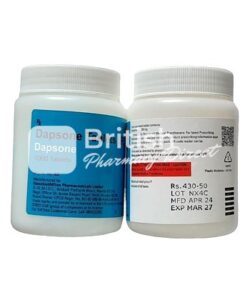
In brief
- In our pharmacy, you can buy dapsone without a prescription, with delivery in 5–14 days throughout the United Kingdom. Discreet and anonymous packaging.
- Dapsone is used for leprosy (as part of multidrug therapy), dermatitis herpetiformis, acne (topical), and Pneumocystis jirovecii pneumonia prophylaxis; it is a sulfone that acts bacteriostatically by inhibiting dihydropteroate synthase (interfering with folate synthesis) and has anti‑inflammatory effects on neutrophil function.
- The usual doses are: oral 100 mg once daily for leprosy (adult); dermatitis herpetiformis typically 50–100 mg daily (dose titrated); topical gel 5% or 7.5% applied once or twice daily for acne; paediatric dosing is commonly weight‑based (about 1 mg/kg up to 50 mg daily).
- Administration forms include oral tablets (25 mg, 50 mg, 100 mg), topical gel or cream (5% and 7.5%), and inclusion in multidrug leprosy kits.
- Onset: topical improvement for acne may be seen in 2–4 weeks with clearer benefit by 8–12 weeks; systemic antimicrobial/clinical effects may take days to weeks, and leprosy treatment is assessed over months as part of MDT.
- Duration of action: oral dapsone has a long elimination half‑life (around 20–30 hours) allowing once‑daily dosing; topical effect requires ongoing application (typical topical courses ~12 weeks); systemic leprosy regimens continue for 6–24 months as indicated.
- Avoid excessive alcohol while taking dapsone — alcohol may worsen liver-related adverse effects and general tolerance; also take care if you have liver disease or G6PD deficiency and consult a clinician before drinking alcohol with treatment.
- The most common side effect is nausea; however, important adverse effects include haemolytic anaemia and methaemoglobinaemia (particularly in G6PD deficiency), rash and mild liver enzyme elevations, and local irritation with topical use.
- Would you like to try dapsone without a prescription?
Basic Dapsone Information
- INN (International Nonproprietary Name): Dapsone (also known as 4,4′-sulfonyldianiline, diaminodiphenyl sulfone, DDS)[4].
- Brand Names Available In United Kingdom: United States — Aczone (topical gel: 5%/7.5% 30-90g tubes)[1][4]; Global/Generic — Dapsone oral tablets 25mg, 50mg, 100mg and topical gel/cream formulations[1][4]; Europe/Asia/Other — used in multidrug leprosy kits with rifampicin/clofazimine, various generic manufacturers[4].
- ATC Code: J04BA02 (Antimycobacterials, drugs for treatment of lepra) and D10AX05 (Dermatologicals topical; e.g. acne).[2][3][4]
- Forms & Dosages: Oral tablets 25mg, 50mg, 100mg; topical gel/cream 5% and 7.5% (Aczone etc.); multidrug leprosy kits are supplied in MTD packs per WHO protocols[1][4].
- Registration & Approval Status: Listed on the WHO Essential Medicines List and widely licensed by major agencies for leprosy, dermatitis herpetiformis and topical acne[4].
- Classification: Prescription only in nearly all jurisdictions (Rx/S4 in some countries)[4].
- Typical Adult Dosages: Leprosy 100mg once daily as part of multidrug therapy; dermatitis herpetiformis 50–100mg daily titrated to response; topical acne thin layer 5%/7.5% gel once or twice daily for ~12 weeks[1][4].
- Dosage Adjustments: Children weight‑based for leprosy (≈1 mg/kg up to 50mg), use caution in elderly, reduce or avoid with significant renal or hepatic impairment[4].
- Missed Dose And Overdose: Take missed oral dose as soon as remembered unless near next dose; do not double up[4].
- Storage: Store at room temperature, protect from moisture and heat; do not freeze topical forms.
- Absolute Contraindications: Known hypersensitivity to dapsone or sulfone group, severe G6PD deficiency, acute anaemia or prior methemoglobinaemia, severe hepatic impairment[4].
Critical Warnings & Restrictions (Patient Safety First)
Dapsone can cause serious blood disorders such as haemolysis and methemoglobinaemia, so safety checks come first.
Patients must have G6PD status checked before any systemic dapsone is started.
Absolute contraindications include known sulfone allergy, severe G6PD deficiency, acute anaemia or previous methemoglobinaemia, and severe hepatic impairment.
Use extreme caution in elderly patients and in those with chronic renal or hepatic disease because accumulation increases risk of adverse effects.
Regular monitoring of full blood count and liver function tests is mandatory during systemic therapy.
Pregnancy and breastfeeding require specialist advice and a documented benefits‑versus‑risks discussion in the clinical record.
- Pre‑treatment Screening Checklist: G6PD test, baseline full blood count (FBC), liver function tests (LFTs), and pregnancy test where applicable.
High-Risk Groups
Elderly people have a higher risk of toxicity and need closer monitoring when prescribed systemic dapsone.
Pregnancy requires specialist dermatology or obstetric input and clear documentation of counselling.
Patients with chronic renal or hepatic illness need individualised dosing decisions and frequent review of bloods.
Interaction With Activities (Driving, Workplace Safety Under UK Law)
Dizziness, visual disturbance or severe headache may occur with dapsone and can impair safe driving or use of machinery.
Under UK road and workplace safety rules, patients who feel affected must not drive or operate heavy machinery.
- Stop driving and avoid machinery if you experience dizziness, marked visual changes, fainting, severe headache, or sudden breathlessness.
- Seek urgent clinical advice or call NHS 111 if symptoms are severe or persistent.
Q&A — Can I Drive After Taking It In The UK?
Usually you may drive if you feel well and unaffected after taking dapsone.
If you experience dizziness, severe headache, cyanosis, visual disturbance or breathlessness you must not drive and should seek clinical advice or call 111 or your GP.
Persistent impairment should be reported to the DVLA where required and counselling notes should be kept in the pharmacy record.
Usage Basics
INN, Brand Names Available In The UK
The INN is dapsone, also listed as DDS in some formularies.[4]
It is marketed as generics supplied to the UK market by multiple manufacturers and distributors, and topical Aczone (Aczone topical gel 5%/7.5%) is a recognised branded topical in other markets.[1][4]
| Form | Strengths | Typical Packaging | Common Supplier |
|---|---|---|---|
| Oral Tablet | 25mg, 50mg, 100mg | Blister or bottle | Accord‑UK / Aurobindo / Rivopharm / AAH / Alliance Healthcare |
| Topical Gel/Cream | 5%, 7.5% | Tubes (30–90g) | Aczone (branded) / Generic topical suppliers |
| Multidrug Kit | N/A | MTD packs for leprosy | WHO prequalified suppliers / national health procurement |
Legal Classification
Dapsone is prescription only (POM) across nearly all jurisdictions and UK supply requires a valid prescription regulated by the MHRA.[4]
- What You Need To Obtain A Prescription: NHS or privately issued paper prescription, electronic prescription token sent to a nominated pharmacy, and ID where local pharmacy policy requires identification for private dispensing.
- Topical formulations are often prescription status in many markets; check local prescribing guidance.
Dosing Guide
Standard Regimens (NHS Guidelines)
For leprosy as part of multidrug therapy, typical adult oral dosing is 100mg once daily.[4]
For dermatitis herpetiformis systemic dapsone is commonly started at 50–100mg daily and titrated to effect and tolerability.[4]
Topical use for inflammatory acne typically uses 5% or 7.5% gel applied once or twice daily for about 12 weeks, extendable if needed.[1][4]
- Checklist: Indication, starting dose, monitoring schedule — confirm indication, start at the recommended dose, and arrange FBC and LFT monitoring at baseline and during treatment.
Adjustments For Comorbidities
Use caution in renal or hepatic impairment because of risk of accumulation and methemoglobinaemia; dose reduction or specialist advice may be required.[4]
Elderly patients may not require a formal starting dose change but have increased toxicity risk and must be monitored closely.
Severe G6PD deficiency is a contraindication to systemic use; mild deficiency may permit specialist‑led therapy with close monitoring.
- Baseline Tests: Full blood count (FBC), liver function tests (LFTs), renal function, and G6PD status prior to systemic therapy.
Q&A — What If I Miss A Dose?
For oral dapsone, take the missed dose as soon as remembered unless it is near the time for the next dose, and do not double doses to catch up.[4]
If you miss doses repeatedly contact the GP or prescribing clinician to review adherence and monitoring.
For topical treatment skip the missed application and continue with the next scheduled application without doubling up.
Interaction Chart
Food And Drinks (Alcohol, Tea/Coffee, Diet Habits)
No major food–drug interactions require fasting with dapsone, but alcohol may worsen hepatic risk and exacerbate anaemia while starting systemic therapy.
Caffeine does not have a direct contraindication but counsel patients about possible worsening of dizziness or insomnia when combined with systemic side effects.
- Practical Advice: Avoid heavy alcohol while initiating systemic dapsone, maintain good hydration, and report new symptoms such as dark urine or breathlessness promptly.
Common Drug Conflicts (MHRA Yellow Card Data)
Dapsone interacts with oxidant drugs that increase the risk of haemolysis and methemoglobinaemia and with agents that alter hepatic metabolism.
Local anaesthetics that can produce methemoglobinaemia (for example prilocaine in susceptible patients) require caution with systemic dapsone.[4]
Report suspected interactions and adverse reactions via the MHRA Yellow Card scheme and consult the BNF or local guidance before co‑prescribing.
| Concomitant Drug/Class | Interaction Type | Clinical Action |
|---|---|---|
| Other Oxidant Drugs (e.g. certain sulfonamides) | Increased haemolysis/methemoglobinaemia risk | Avoid combination where possible; if necessary monitor FBC and methemoglobin symptoms closely. |
| Hepatic Enzyme Inducers (e.g. rifampicin) | May alter dapsone levels via induction of metabolism | Review therapeutic effect; adjust dose with specialist input and increase monitoring frequency. |
| Local Anaesthetics (e.g. prilocaine) | Increased methemoglobinaemia risk in susceptible patients | Inform procedural teams, avoid in high‑risk patients or monitor oxygenation; consider alternative anaesthesia. |
User Reports & Trends
Patients on NHS.uk, Patient.info and social forums such as Mumsnet commonly report both benefit and concern with dapsone use.
Positive themes include good topical control of inflammatory acne for some users and effective systemic benefit for dermatitis herpetiformis and in leprosy MDT regimes.[1][4]
Negative themes focus on anxiety around blood monitoring, worries about anaemia or methemoglobinaemia, and local skin irritation from topical gels.
- Positive Reports: Symptom control, reduction in inflammatory lesions, effectiveness when other agents fail.
- Negative Reports: Monitoring burden, transient anaemia, skin irritation with topical formulations.
Treat forum data as anecdotal and use it to inform counselling rather than to guide treatment choices.
- Clinician Checklist For Patient Reports: Ask about prior blood tests, symptoms of anaemia (fatigue, dark urine), prior sulfonamide allergy, and tolerance of topical agents before prescribing or continuing therapy.
Access & Purchase Options
Boots, LloydsPharmacy, Superdrug
Community pharmacies such as Boots, LloydsPharmacy, Superdrug and independent chemists dispense dapsone on presentation of a valid prescription and provide mandatory counselling at supply.
Wholesalers like AAH and Alliance Healthcare distribute generic dapsone to NHS trusts and community pharmacies.[4]
| Retail Chain | Typical Service | Offerings |
|---|---|---|
| Boots | Prescription dispensing, private Rx handling | Emergency supply where appropriate, private prescription processing |
| LloydsPharmacy | Repeat dispensing, prescription advice | Medication review, private prescription handling |
| Superdrug | Community pharmacy dispensing | Private prescription and NHS dispensing where stock available |
In our online pharmacy, dapsone is available without a prescription, with discreet delivery to United Kingdom in 5-14 days.
Online Pharmacies And NHS E‑Prescriptions
NHS electronic prescribing and digital repeat prescriptions allow tokens to be sent to nominated pharmacies for collection or supply.
Many online pharmacy services will supply dapsone on receipt of a valid electronic or posted prescription; always check the provider is GPhC registered and follows MHRA rules.
- Checklist: Present the prescription, NHS number for NHS prescriptions, ID for private supplies, and verify pharmacy legitimacy by checking GPhC registration and NHS logos.
Mechanism & Pharmacology
Simplified Explanation
Dapsone is a sulfone with both antimicrobial and anti‑inflammatory properties, acting primarily by inhibiting bacterial folate pathways and modulating neutrophil activity.[4]
Topical dapsone reduces inflammatory lesions in acne by local anti‑inflammatory effects while systemic dapsone suppresses neutrophil‑mediated skin disease and acts bacteriostatically in leprosy.[4]
- Methaemoglobinaemia — Reduced oxygen‑carrying capacity caused by oxidation of haemoglobin to methaemoglobin.
- Haemolysis — Destruction of red blood cells often provoked by oxidative stress, particularly in G6PD deficiency.
Clinical Terms
Dapsone is orally well absorbed and undergoes hepatic metabolism with potential accumulation in hepatic or renal impairment.[4]
Key clinical risks include haemolytic anaemia and methemoglobinaemia which are mechanistically linked to oxidative stress on red blood cells, especially in G6PD deficiency.
- Monitoring Parameters: Full blood count with reticulocyte count, liver function tests, renal function and methemoglobin measurement if symptoms suggestive of hypoxia occur.
Indications & Off‑Label Uses
MHRA‑Approved Uses
Dapsone is approved for leprosy and for certain dermatological conditions, and topical dapsone formulations are licensed for acne in some markets.[4]
The drug appears on the WHO Essential Medicines List and systemic use in dermatitis herpetiformis is standard in the UK under specialist care.[4]
- Approved Indications: Leprosy, dermatitis herpetiformis; topical acne where licensed formulations are authorised.
Off‑Label Practices In NHS And Private Care
Off‑label uses can include Pneumocystis jirovecii pneumonia (PCP) prophylaxis for patients intolerant of trimethoprim‑sulfamethoxazole, or selected dermatological indications after specialist review.[4]
- Off‑Label Checklist: Obtain documented informed consent, agree monitoring schedule, and involve specialist referral when needed.
Key Clinical Findings
Recent UK and EU reviews between 2022 and 2025 reiterate that topical dapsone is a useful option for inflammatory acne when first‑line agents are unsuitable.[1][4]
Systemic dapsone remains effective for dermatitis herpetiformis and as part of multidrug therapy for leprosy.[4]
The dominant safety message is the necessity of routine haematological and hepatic monitoring because of haemolysis and methemoglobinaemia risk, and universal G6PD screening before systemic use.[4]
- Practice Points: Pre‑treatment tests, scheduled monitoring (early FBC at 2–4 weeks then periodically), and specialist involvement for complex cases.
| Outcome | Evidence Summary | Clinical Implication |
|---|---|---|
| Topical Effectiveness | Useful for inflammatory acne in trials and practice | Consider topical dapsone when retinoids or benzoyl peroxide are unsuitable |
| Systemic Effectiveness | Effective for dermatitis herpetiformis and leprosy MDT | Use under specialist supervision with blood monitoring |
| Safety Trade‑Off | Risk of haemolysis/methemoglobinaemia particularly in G6PD deficiency | Mandatory G6PD screening and FBC/LFT monitoring are essential |
Alternatives Matrix
NHS Prescribing Alternatives
| Drug/Class | Typical Indication | Pros | Cons | Monitoring |
|---|---|---|---|---|
| Trimethoprim‑sulfamethoxazole | PCP prophylaxis | Effective alternative to dapsone | Risk of sulfa allergy and other adverse effects | Renal function, blood counts as per local guidance |
| Rifampicin / Clofazimine | Leprosy MDT companion drugs | Part of standard WHO regimens | Rifampicin drug interactions, clofazimine skin staining | LFTs, baseline counselling on interactions |
| Tetracyclines / Minocycline | Acne | Good anti‑inflammatory properties | Photosensitivity, contraindicated in pregnancy/young children | Advice on sun protection, LFTs if prolonged use |
| Topical Retinoids / Benzoyl Peroxide | Acne | Established topical first‑line agents | Irritation, not always suitable alone for inflammatory lesions | Skin tolerance checks and topical counselling |
Pros And Cons Checklist
- Compare efficacy versus monitoring burden when choosing dapsone or an alternative.
- Document allergy history, pregnancy/breastfeeding plans and patient preference in the record.
- When dapsone is contraindicated (severe G6PD deficiency) select non‑oxidant alternatives and document rationale.
Common Questions (Clinic‑Facing)
How Is Baseline Monitoring Done?
Baseline tests include FBC, LFTs, renal profile and G6PD before systemic dapsone; repeat FBC at 2–4 weeks then periodically as per local protocol.[4]
How Long Before I See Skin Improvement?
Topical acne often shows benefit within 8–12 weeks while systemic dermatological diseases may require weeks of treatment and dose titration.[1][4]
What Are Red‑Flag Symptoms?
Urgent assessment is required for sudden breathlessness, cyanosis, dark urine, jaundice or pronounced fatigue which may indicate haemolysis or methemoglobinaemia.[4]
Can Dapsone Be Used During Pregnancy?
Use in pregnancy requires specialist review; benefits may outweigh risks in some situations but the decision should be documented and involve obstetric care.[4]
- Red Flags And Immediate Actions: Sudden breathlessness, cyanosis, dark urine, jaundice, or collapse — attend A&E or call 999 for emergency care; for urgent but non‑life‑threatening concerns contact GP or NHS 111.
NHS Cost & Access Comparison Table
Note that live price data should be verified with current pharmacy price lists and NHS prescription charge pages; values here are illustrative where data is not specified.
| Pharmacy/Source | Typical Private Price Range (Oral 100mg; Topical 30g) | NHS Prescription Charge / Exemption | Notes On Availability |
|---|---|---|---|
| Boots | Not specified | England: standard prescription charge unless exempt; Scotland/Wales/Northern Ireland: generally free | Dispense on valid Rx; private ordering available |
| LloydsPharmacy | Not specified | See above | Handles private prescriptions, repeat dispensing |
| Independent Pharmacies | Not specified | See above | May source generics from Accord/Aurobindo/Rivopharm to reduce cost |
| Regional Differences | England | Scotland | Wales | Northern Ireland |
|---|---|---|---|---|
| Prescription Charge Policy | Standard per‑item charge for most patients unless exempt | Prescriptions generally free for residents | Prescriptions generally free for residents | Prescriptions generally free for residents |
- How To Check Exemption Status: Use NHS.uk, check age, income support, war pension or medical exemptions and local council guidance for certificates and eligibility.
Registration & Regulation
MHRA Approval Process
Dapsone is authorised for the UK market under MHRA regulation and prescribers should use licensed indications or document off‑label justification.[4]
Adverse reactions should be reported through the MHRA Yellow Card scheme to support pharmacovigilance.[4]
- How To Report An Adverse Reaction: Gather patient details, suspected drug, reaction description and submit via the Yellow Card website or app.
NHS Prescribing Framework
Prescribing should align with NICE and MHRA guidance where available and complex cases are managed by dermatology or infectious disease specialists.
Electronic prescribing and repeat dispensing are appropriate once monitoring is stable and monitoring schedules should be visible in shared care records.
- GP Responsibilities: Arrange baseline tests, schedule monitoring, adjust dose as needed, and communicate results and plans with pharmacists and specialists.
Storage & Handling
UK Household Storage (Cold/Damp Climate)
Store oral dapsone tablets at room temperature away from moisture and heat, ideally in a dry cabinet rather than the bathroom where humidity is high.
Do not freeze topical gels or creams and keep tubes away from direct sunlight and heating sources such as radiators or windowsills.
- Storage Checklist: Choose a cool, dry cupboard; keep out of reach of children and pets; check expiry dates before use; discard out‑of‑date supplies via pharmacy return.
Guidance From NHS And Pharmacists
Pharmacists should counsel on correct topical application such as applying a thin layer, avoiding mucous membranes, and stopping use if severe irritation occurs.
Advise safe disposal by returning unwanted medicines to a pharmacy for proper destruction and do not flush medicines down the sink or toilet.
- Practical Points: For winter damp homes avoid bathroom cabinet storage; for summer avoid leaving tubes in cars; for spills on skin wash with soap and water and seek advice if irritation persists.
Guidelines For Proper Use (Counselling & Safety)
UK Pharmacist Counselling Style
Begin consultations by confirming the indication and reviewing allergy history including sulfonamide/sulfone allergies.
Ensure G6PD status is known for systemic therapy and explain the required monitoring schedule and who will arrange blood tests.
Discuss red‑flag symptoms, driving and workplace safety implications and safe storage at home.
- Essential Counselling Points: Indication, dose and timing, common side effects, red flags (breathlessness, dark urine, jaundice), monitoring dates, and when to seek urgent care.
NHS Patient Safety Advice
Emphasise adherence to laboratory monitoring and make clear actions for side effects such as stopping the drug and seeking urgent assessment for signs of haemolysis or methemoglobinaemia.
Encourage reporting side effects to MHRA and provide contact details for the prescribing clinician and pharmacy.
- Patient Leaflet Template: Indication; prescribed dose and duration; monitoring dates with contact details; emergency contacts including GP, 111 and A&E advice; Yellow Card reporting link.
Delivery Across United Kingdom
| City | Region | Delivery Time |
|---|---|---|
| London | Greater London | 5-7 days |
| Birmingham | West Midlands | 5-7 days |
| Glasgow | Scotland | 5-7 days |
| Manchester | Greater Manchester | 5-7 days |
| Leeds | West Yorkshire | 5-7 days |
| Edinburgh | Scotland | 5-7 days |
| Cardiff | Wales | 5-7 days |
| Belfast | Northern Ireland | 5-9 days |
| Bristol | South West England | 5-7 days |
| Newcastle | North East England | 5-9 days |
| Southampton | South East England | 5-9 days |
| Nottingham | East Midlands | 5-9 days |