Praziquantel
In brief
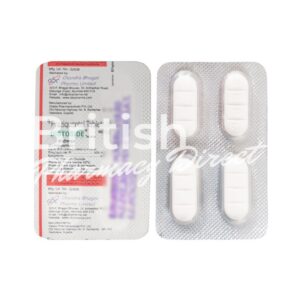
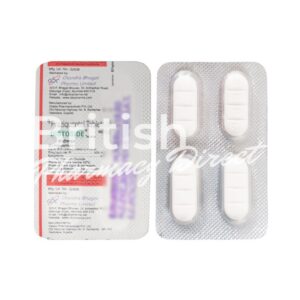
- Praziquantel 600mg tablets at British Pharmacy Direct come in packs of 4, 12, 20, 40 or 80, with UK delivery in 9–21 days.
- The drug paralyses parasitic worms so they can be passed out of the body, and it treats schistosomiasis (bilharzia), tapeworms and liver or lung flukes.
- No form is licensed in the UK, so it reaches patients as an unlicensed imported medicine; the dose follows body weight and is usually divided into two or three portions taken on the same day, spaced 4 to 6 hours apart.
- Tablets or pieces are swallowed whole with water and food, because the bitter taste is unpleasant, and breastfeeding should be paused until 72 hours after the last dose.
- Rifampicin lowers its effect and eye cysticercosis rules it out; dizziness, drowsiness and stomach upset generally fade within a day. It is a prescription-only medicine.
Basic praziquantel information
- INN (international nonproprietary name): Praziquantel
- Brand names available in the United Kingdom: Biltricide (imported), generic praziquantel
- ATC code: P02BA01
- Forms and dosages: 600 mg film-coated tablets are the standard form.
- Manufacturers in the United Kingdom: Bayer AG (Biltricide) and generic manufacturers such as Merck KGaA, Medreich, Cipla, Macleods and Cadila.
- Registration status in the United Kingdom: Prescription-only medicine (POM); not licensed in the UK and usually supplied as an imported medicine.
- OTC / Rx classification: Prescription-only medicine (POM).
- Standard dosages: Schistosomiasis 20 mg/kg x 3 doses in one day; clonorchiasis/opisthorchiasis 25 mg/kg x 3 doses; taeniasis 10–25 mg/kg single dose; cysticercosis 50 mg/kg/day in 3 doses for 14–30 days.
- Storage & transport: Store at 15–30°C, keep in original packaging, and protect from light and moisture.
Critical safety warnings and patient protection in the UK
Who should seek urgent advice before taking praziquantel
Worried about whether praziquantel is suitable for you or your child?
That is the right question to ask before the first dose.
Praziquantel should not be used if there is known hypersensitivity to the medicine or any excipient.
It is also contraindicated in ocular cysticercosis because treatment can trigger severe eye inflammation.
First trimester pregnancy needs particular caution, and treatment should only go ahead if the benefits clearly outweigh the risks.
Extra care is needed in severe liver dysfunction, especially portal hypertension, a history of arrhythmia, severe kidney impairment, and in very young infants because they have not been routinely studied.
In the UK, treatment may be supplied through an NHS prescription, a private prescription, or a mass treatment programme, so it is worth confirming the route before taking any tablets.
- Known allergy to praziquantel or tablet excipients.
- Ocular cysticercosis.
- Pregnancy in the first trimester unless a clinician says the benefits outweigh the risk.
- Severe liver disease, especially portal hypertension.
- History of arrhythmia or concerning palpitations.
- Severe kidney impairment.
- Very young infants not routinely studied.
Safety steps for patients and carers
Before the first dose, it helps to slow down and check the basics.
Confirm the diagnosis, because praziquantel is not a universal deworming medicine.
Check the tablet strength carefully, as 600 mg is the common standard form.
Read the praziquantel packaging label so you know the brand, batch, expiry date, and strength.
If a dose needs fractional tablets, ask a pharmacist whether the tablets can be split safely.
If severe dizziness, palpitations, confusion, breathlessness, facial swelling, hives, or any other allergic symptom appears, seek urgent medical help straight away.
Praziquantel basics: INN, brand names, and UK naming
What praziquantel is
Praziquantel is the International Nonproprietary Name, usually shortened to INN, for this antiparasitic medicine.
It is an anthelmintic for oral use with ATC code P02BA01, and it sits within ATC group P02B, which means anthelmintics for oral use.
The broader ATC prefix P covers antiparasitic products, insecticides and repellents.
It is on the WHO Model List of Essential Medicines and is used worldwide for parasite treatment.
Brand names and packaging readers may see
In the UK, patients may see Biltricide (imported) or generic praziquantel.
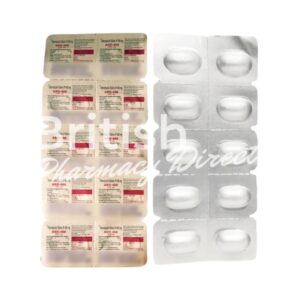
In practice, the packaging usually contains 600 mg film-coated tablets, often in blister packs or bottles.
United Kingdom legal status, MHRA oversight, and prescription access
Prescription status and UK regulation
Praziquantel is a prescription-only medicine (POM) in the UK; it is not licensed in the UK and is usually supplied as an imported medicine under NHS or private prescribing arrangements.
MHRA oversight matters because treatment quality, strength, and product authenticity all depend on regulated supply.
NHS and private supply routes
UK patients may receive praziquantel through electronic prescriptions, travel clinics, infectious disease services, or specialist private care.
In our online pharmacy, praziquantel is available without a prescription, with discreet delivery to the United Kingdom in 9–21 days.
How praziquantel works: simple explanation and clinical terms
Simplified mechanism
Praziquantel damages susceptible parasites so they can no longer survive properly in the body.
That makes it useful in schistosomiasis, as well as for tapeworm and fluke infections.
Patients usually do not need the biochemical detail, just the reassurance that it targets the parasite rather than being a broad general antibiotic.
Clinical wording
In clinical language, the medicine has anthelmintic activity against trematodes and cestodes.
Its exact effect can vary by parasite species, which is why diagnosis matters so much.
- Trematodes
- Flukes.
- Cestodes
- Tapeworms.
- Anthelmintic
- A medicine used to treat worm infections.
Main uses and when it is prescribed
UK-relevant treatment indications
Praziquantel is prescribed for schistosomiasis, clonorchiasis, opisthorchiasis, taeniasis, and cysticercosis.
Treatment is guided by the confirmed diagnosis, and specialist input is sometimes needed, especially for imported infections.
A traveller returning from freshwater exposure in Africa, for example, may need a different work-up from someone with a suspected tapeworm infection.
Off-label or specialist use
Some use happens in specialist infectious disease settings or private care, but that does not make self-diagnosis safe.
It is easy to confuse one worm infection with another, and the dose can differ a lot between conditions.
| Condition | Usual regimen | Duration |
|---|---|---|
| Schistosomiasis | 20 mg/kg x 3 doses | Single day |
| Clonorchiasis / opisthorchiasis | 25 mg/kg x 3 doses | Single day |
| Taeniasis | 10–25 mg/kg single dose | One dose |
| Cysticercosis | 50 mg/kg/day in 3 doses | 14–30 days |
Standard dosing guide for adults and children
Typical regimens
Dosing is usually weight based, so adults and children often use the same mg/kg schedule.
That is why praziquantel 600 mg tablet splitting may be needed when a calculated dose is not a neat whole tablet.
Most courses are completed in one day, except for cysticercosis, which takes much longer.
Dosing by infection type
Schistosomiasis is commonly treated with 20 mg/kg three times in one day, split every 4 to 6 hours.
Clonorchiasis and opisthorchiasis are usually treated with 25 mg/kg three times in one day.
Taeniasis is usually treated with 10–25 mg/kg as a single dose.
Cysticercosis is treated with 50 mg/kg/day divided into three doses for 14–30 days.
What if I miss a dose?
Take it when remembered unless the next dose is nearly due.
Do not double up.
- Take the missed dose as soon as you remember.
- Skip it if the next dose is close.
- Never take two doses at once.
Dose adjustments and special patient groups
Children, older adults, and organ impairment
Children usually receive the same mg/kg dose as adults, with tablets split where needed.
Older adults usually do not need a dose change if liver and kidney function are normal.
Use caution in liver impairment because drug exposure and CNS side effects may increase.
Severe kidney impairment also needs caution because data are limited and accumulation is possible.
Pregnancy and breastfeeding considerations
First trimester pregnancy is the main warning point.
Anyone who is pregnant, trying to conceive, or breastfeeding should discuss treatment with a clinician before taking praziquantel.
- Check age and weight carefully.
- Review pregnancy status if relevant.
- Ask about liver and kidney disease.
- Confirm any heart rhythm history.
- Check whether tablet splitting is needed.
Side effects, tolerance, and when to seek help
Common side effects
Most side effects are mild to moderate and tend to be short lived.
Nausea, abdominal pain, diarrhoea, vomiting, headache, dizziness, malaise, sweating, muscle pain, joint pain, hives, mild fever, and temporary liver enzyme elevations are all reported.
Some people feel rough for a day and then settle quickly, especially when treating an active infection.
Serious reactions
Serious allergy is rare but important.
Marked CNS changes, arrhythmia symptoms, collapse, severe confusion, facial swelling, or trouble breathing need urgent help.
Overdose can cause CNS alterations, arrhythmia, and severe gastrointestinal symptoms, and there is no specific antidote.
- Common: nausea, abdominal pain, diarrhoea, vomiting, headache, dizziness, malaise, sweating, muscle or joint pain, mild fever.
- Serious: facial swelling, breathing difficulty, collapse, severe confusion, chest symptoms, palpitations, or severe allergic signs.
Interactions: food, alcohol, and other medicines
Food and drink
Practical advice around meals is best kept simple and cautious.
Taking tablets with food may help some people tolerate treatment better, and it is sensible to avoid alcohol if you are already feeling dizzy, unwell, or nauseous.
Tea or coffee does not usually need special handling, but if your stomach is upset, keep drinks light and straightforward.
Medicines that need checking
All prescription, over-the-counter, and herbal products should be checked with a pharmacist or prescriber before treatment.
That matters because side effects and interactions are easier to manage early than after the course has already started.
| Medicine class | Why it matters | Action |
|---|---|---|
| Prescription medicines | May affect safety or tolerability | Tell the prescriber and pharmacist |
| Over-the-counter medicines | Can add to stomach upset or dizziness | Check before use |
| Herbal products | May be overlooked in a medicine review | Include them in the check |
Alternatives and comparison with other anthelmintics
Common alternatives
Albendazole, mebendazole, niclosamide, and triclabendazole are common alternatives, but they do not replace praziquantel for every infection.
Praziquantel remains a cornerstone of schistosomiasis eradication efforts and is not a universal deworming medicine.
Pros and cons
Its strengths are strong activity in the right infections, simple single-day regimens for many conditions, and global public health value.
Its limits are that the spectrum is narrower than some people expect, and the dose has to match the parasite and the patient.
| Medicine | Usual role | Main point |
|---|---|---|
| Albendazole | Broad worm treatment | Often used for other helminths |
| Mebendazole | Common intestinal worm treatment | Useful in selected infections |
| Niclosamide | Tapeworms | Alternative for specific cestodes |
| Triclabendazole | Specific fluke infections | Specialist use |
- Strong fit for schistosomiasis and certain tapeworms.
- Often convenient because many regimens are short.
- Not the same as a general deworming tablet.
- Needs diagnosis-based prescribing.
Storage, transport, and packaging checks
How to store tablets at home
Keep praziquantel at room temperature, between 15 and 30°C.
Protect it from light and moisture by leaving it in the original pack.
Do not freeze it or leave it in high heat, such as a car on a warm day.
Packaging label checks
Before use, check the strength, expiry date, batch number, and tamper evidence.
That matters whether the product comes in blister packs or bottles.
- Room temperature storage only.
- Keep in original packaging.
- Check strength and expiry date.
- Look for batch number and tamper evidence.
- Avoid heat, damp, and freezing.
Pharmacist counselling and proper use in UK practice
What UK pharmacists usually explain
Pharmacists usually talk through timing, swallowing, splitting tablets, calculating the correct dose, and watching for side effects.
That counselling often makes the biggest difference to safe use, especially when a single day’s treatment has several doses.
Patient safety advice to reinforce
Finish the prescribed course exactly as directed.
Do not share the medicine with anyone else.
Do not self-treat if you are unsure of the infection type.
Follow referral advice if symptoms persist, because ongoing symptoms may mean the diagnosis or the treatment plan needs reviewing.
Can I drive after taking it in the UK?
Be cautious if you feel dizzy, sleepy, or generally unwell.
Do not drive or use machinery until you are fully alert.
- Take the medicine exactly as prescribed.
- Ask about tablet splitting if the dose is fractional.
- Watch for dizziness or other side effects.
- Do not share tablets with others.
- Seek advice if symptoms do not improve.
Delivery across the United Kingdom
| City | Region | Delivery time |
|---|---|---|
| London | England | 9–21 days |
| Birmingham | England | 9–21 days |
| Manchester | England | 9–21 days |
| Liverpool | England | 9–21 days |
| Leeds | England | 9–21 days |
| Sheffield | England | 9–21 days |
| Bristol | England | 9–21 days |
| Edinburgh | Scotland | 9–21 days |
| Glasgow | Scotland | 9–21 days |
| Cardiff | Wales | 9–21 days |
| Belfast | Northern Ireland | 9–21 days |
| Nottingham | England | 9–21 days |
| Leicester | England | 9–21 days |
| Newcastle upon Tyne | England | 9–21 days |
| Aberdeen | Scotland | 9–21 days |