Glucobay
In brief
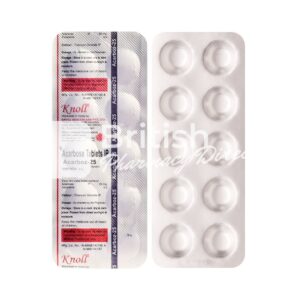
- In our pharmacy, you can buy glucobay without a prescription, with delivery in 5–14 days throughout United Kingdom. Discreet and anonymous packaging.
- Glucobay (acarbose) is used to treat Type 2 diabetes mellitus to reduce post‑prandial blood glucose; it is an alpha‑glucosidase inhibitor that delays intestinal carbohydrate digestion and absorption.
- The usual dose for adults is to start with 25 mg three times daily with the first bite of each main meal, gradually titrating to 50 mg or 100 mg three times daily as tolerated; the maximum recommended dose is 100 mg three times daily.
- Form of administration: oral tablet (available in 25 mg, 50 mg and 100 mg strengths).
- Onset time: begins to work during the meal, typically within 30–60 minutes, reducing post‑prandial glucose from the first dose.
- Duration of action: effect lasts for the duration of the meal and the following hours, typically up to around 4–6 hours after dosing.
- Alcohol warning: avoid excessive alcohol as it may worsen glycaemic control and increase the risk of hypoglycaemia and hepatic effects; exercise caution and seek medical advice if concerned. If hypoglycaemia occurs while taking acarbose, treat with pure glucose (dextrose), not ordinary sugar/sucrose.
- The most common side effects are flatulence and abdominal pain (very common); diarrhoea, bloating and transient increases in liver transaminases may also occur.
- Would you like to try “glucobay” without a prescription?
Basic Glucobay Information
- INN (International Nonproprietary Name): Acarbose
- Brand Names Available In United Kingdom: Glucobay (EU/Other) and local generics — precise UK brand listings not specified
- ATC Code: A10BF01 — Acarbose
- Forms & Dosages: Tablet — 25 mg, 50 mg, 100 mg (oral)
- Manufacturers In United Kingdom: not specified
- Registration Status In United Kingdom: not specified
- OTC / Rx Classification: Prescription Only (Rx)
Critical Warnings & Restrictions
High-Risk Groups (Elderly, Pregnancy, Chronic Illness)
Patients should be informed that acarbose (Glucobay) is a prescription-only medicine that must be supplied under professional supervision.
Do not prescribe Glucobay for patients with chronic intestinal disease such as inflammatory bowel disease, colonic ulceration or partial intestinal obstruction.
Do not prescribe Glucobay to patients with cirrhosis or significant renal impairment (serum creatinine > 2 mg/dL).
Do not give Glucobay to anyone with known hypersensitivity to acarbose or any excipients in the formulation.
- Absolute Contraindications: chronic intestinal disease; colonic ulceration; partial intestinal obstruction; cirrhosis; significant renal impairment (serum creatinine >2 mg/dL); hypersensitivity to acarbose or excipients.
Use caution where hepatic dysfunction is present and in patients weighing less than 60 kg, as low body weight is associated with a higher risk of raised transaminases.
Elderly patients do not have a routine dose reduction but must be monitored for gastrointestinal intolerance and possible changes in liver enzymes.
Pregnancy and breastfeeding data are limited and Glucobay should be avoided unless a diabetes specialist advises otherwise.
Arrange pre-conception review and antenatal diabetes team review before starting or continuing acarbose in pregnancy.
Checklist Before Prescribing:
- Baseline liver function tests (LFTs).
- Baseline renal function including serum creatinine.
- Confirm patient weight and note if <60 kg.
- Review medical history for chronic intestinal disease or cirrhosis.
Interaction With Activities (Driving, Workplace Safety Under UK Law)
Acarbose rarely causes hypoglycaemia when used alone, but the risk rises when combined with insulin or sulfonylureas.
Because acarbose delays carbohydrate absorption, ordinary sugar (sucrose) does not reliably correct hypoglycaemia while the drug is active.
Always treat hypoglycaemia with pure glucose (dextrose) or glucose tablets rather than sugary foods that rely on sucrose.
Patients who drive or operate machinery must be counselled about delayed hypoglycaemia and the need to carry a reliable source of glucose.
- Safety Kit For Drivers/Workers: glucose tablets (dextrose), an ID card stating acarbose use, recent glucose monitor readings to show control.
Advise patients to report significant or unexpected adverse events to the MHRA via the Yellow Card scheme.
Q&A — “Can I Drive After Taking It In The UK?”
Short answer: Yes, if your diabetes is stable and you are not experiencing hypoglycaemia.
If a hypoglycaemic episode occurs while taking acarbose — especially when used with insulin or a sulfonylurea — do not drive until fully recovered.
Record any episodes of hypoglycaemia and inform your prescriber and pharmacist so treatment and driving advice can be reviewed.
- Checklist For Drivers: carry glucose tablets; log hypoglycaemia episodes with date/time and treatment given; inform GP/diabetes nurse and consider notifying DVLA if episodes are recurrent.
Usage Basics
INN, Brand Names Available In The UK
International Nonproprietary Name (INN) is acarbose.
Brand names include Glucobay in EU markets and Precose in the USA, while several generics are marketed worldwide.
In the UK people will commonly encounter the Glucobay brand and local generics supplied by multinational or national manufacturers.
- INN
- Acarbose
- Brand
- Glucobay / Precose (internationally)
- Form
- Tablet (oral) — 25 mg, 50 mg, 100 mg
Legal Classification (POM, P, GSL)
Acarbose is Prescription Only (POM) in the UK and must be supplied in line with MHRA and NHS prescribing rules.
Electronic Prescription Service (EPS) is commonly used in primary care to send prescriptions to nominated pharmacies.
- Patient ID Requirements: standard proof of identity and a valid prescription where required.
- EPS Notes: ensure pharmacy has access to recent test results and monitoring notes where available.
- Private Prescribing: may occur via private endocrinology or diabetes clinics, but the product remains a POM.
Always confirm pack contents and dosing at the point of supply because strengths and packaging may vary by manufacturer.
Dosing Guide
Standard Regimens (NHS Guidelines)
Start adults on 25 mg three times daily with the first bite of each main meal.
Increase gently to 50 mg or 100 mg three times daily as tolerated and if additional glycaemic control is required.
The maximum recommended dose is 100 mg three times daily.
Timing is crucial: each dose must be taken with the start of the meal to work on postprandial carbohydrate digestion.
Titration Checklist:
- Begin at 25 mg with each main meal for the first 1–2 weeks to reduce GI side-effects.
- Assess tolerability and side-effects such as flatulence and diarrhoea before increasing dose.
- Consider raising to 50 mg three times daily, then to 100 mg three times daily if needed and tolerated.
- Monitor patient symptoms and glycaemic response during each titration step.
Adjustments For Comorbidities
Acarbose is not established in children under 18 years and should not be used in this group unless under specialist advice.
Elderly patients do not require routine dose reduction but need closer monitoring for gastrointestinal effects and for liver enzyme changes.
Do not use acarbose in patients with significant renal impairment (serum creatinine >2 mg/dL).
Use caution in liver impairment and in patients weighing less than 60 kg because of a higher risk of transaminase elevation.
Monitoring Schedule:
- Baseline LFTs and renal function before initiation.
- Review LFTs and renal function at 1–3 months after starting.
- Periodic checks thereafter according to clinical judgment and local guidelines.
Q&A — “What If I Miss A Dose?”
If you miss a dose, take it with the next meal.
Do not double up or take a missed dose between meals.
If several hours have passed since the missed dose, skip it and continue the normal dosing schedule with the next meal.
Interaction Chart
Food And Drinks (Alcohol, Tea/Coffee, Diet Habits)
Acarbose inhibits intestinal alpha-glucosidases and delays breakdown of carbohydrates, so its main effect is reducing post-meal glucose peaks.
Dietary composition determines both effect and side-effects, with starchy and sucrose-containing meals being most relevant.
Alcohol can mask the symptoms of hypoglycaemia and affect overall glycaemic control, so advise moderation.
| Meal Type | Expected Effect With Acarbose |
|---|---|
| High-Starch Meals (bread, pasta, potatoes) | Reduced postprandial glucose spike; increased gas from fermentation |
| High-Sucrose Foods (table sugar) | Effect on postprandial glucose limited by delayed breakdown; hypoglycaemia treatment with sucrose may fail |
| Low-Carb Meals | Smaller impact from acarbose; fewer GI side-effects |
- Dietary Tips: encourage smaller, regular meals with controlled starch content and counsel on carbohydrate counting if used as part of a wider diabetes plan.
- Always treat hypoglycaemia with pure glucose (dextrose) rather than ordinary sugar while on acarbose.
Common Drug Conflicts (MHRA Yellow Card Data)
The principal pharmacodynamic interaction is an increased risk of hypoglycaemia when acarbose is combined with insulin or sulfonylureas.
No major systemic pharmacokinetic interactions are described because acarbose acts locally in the gut and has minimal systemic absorption.
Transient liver enzyme elevations have been reported, so caution is warranted when combining with known hepatotoxic drugs.
| Drug Class | Interaction | Recommended Action |
|---|---|---|
| Insulin / Sulfonylureas | Increased risk of hypoglycaemia | Reinforce glucose availability and monitoring; consider dose adjustment of concomitant agents |
| Hepatotoxic Drugs | Potential for increased transaminases | Monitor LFTs closely; avoid combinations if alternative exists |
| Other Antidiabetics | Use in combination possible under supervision | Monitor overall glycaemic control and hypoglycaemia signs |
Encourage patients and clinicians to report suspected adverse drug reactions to the MHRA Yellow Card scheme.
User Reports & Trends
Patient forums in the UK commonly report gastrointestinal effects with acarbose, particularly flatulence and abdominal discomfort.
Clinical studies and post-marketing reports indicate flatulence can be very common, with incidence figures reported up to around 77% in some studies.
Many patients value the ability to blunt post-meal glucose spikes without causing weight gain, but a significant number discontinue due to gastrointestinal bother.
- Typical Patient Concerns: persistent flatulence, abdominal pain, diarrhoea, questions on effectiveness, cost and ease of access.
Checklist For Pharmacists When Addressing Queries:
- Explain expected benefits: reduction of postprandial glucose rather than large HbA1c drops.
- Discuss GI side-effects and titration to minimise symptoms.
- Confirm monitoring plan for LFTs and renal function.
Advise realistic expectations: acarbose mainly reduces post-meal spikes and produces modest HbA1c changes rather than dramatic reductions.
Access & Purchase Options
High-Street Pharmacies And Chains
Major UK pharmacies such as Boots, LloydsPharmacy and Superdrug will dispense Glucobay or generic acarbose on presentation of a prescription.
Pharmacy staff supply counselling, glucose tablets and safety leaflets at the point of supply.
- Bring To The Pharmacy: valid prescription, allergy history, list of current medicines, and recent blood test results if available.
Online Pharmacies And NHS E-Prescriptions
Electronic Prescription Service (EPS) allows prescriptions to be sent to a nominated pharmacy for collection or dispensing.
Many registered online pharmacies can dispense to UK addresses when provided with a valid prescription and appropriate verification.
In our online pharmacy, glucobay is available without a prescription, with discreet delivery to United Kingdom in 5-14 days.
When ordering online, verify the seller is a registered MHRA/NHS-verified supplier and that a prescription is required for a POM product.
- Checklist For Safe Online Ordering: confirm POM status, check MHRA/NHS verification, read patient reviews, and ask the dispensing pharmacist about monitoring and follow-up.
Remember that prescription charges apply in England for most patients while Scotland, Wales and Northern Ireland currently have free prescriptions.
Mechanism & Pharmacology
Simplified Explanation
Acarbose is an alpha-glucosidase inhibitor that slows carbohydrate digestion at the brush border of the small intestine.
The drug delays the conversion of complex carbohydrates into absorbable monosaccharides, thereby reducing postprandial glucose excursions.
- Alpha-Glucosidase
- Enzyme that breaks down carbohydrates in the small intestine.
- Effect
- Delayed glucose absorption and reduced post-meal blood glucose peaks.
Clinical Terms
Pharmacological classification: ATC A10BF01.
Route of administration is oral tablets in 25 mg, 50 mg and 100 mg strengths.
- Clinical Implications: useful as an adjunct for predominant postprandial hyperglycaemia; low systemic hypoglycaemia risk when used alone; gastrointestinal adverse events are common.
Indications & Off-Label Uses
MHRA-Approved Uses
Main indication is Type 2 diabetes mellitus as an adjunct to diet and exercise to improve glycaemic control.
Acarbose can be used as monotherapy or in combination with other antidiabetic agents such as metformin, insulin or sulfonylureas under professional supervision.
Off-Label Practices In NHS And Private Care
Off-label use is limited; acarbose is not established for Type 1 diabetes or for children under 18 years.
Some clinicians may trial acarbose for difficult postprandial hyperglycaemia where other agents are unsuitable or poorly tolerated.
- Off-Label Justifications: intolerance to other oral agents, targeting post-meal spikes specifically, or combining with other therapies under specialist supervision.
- Documentation Checklist: record clinical reason for off-label use, obtain patient consent, and schedule monitoring for tolerability and LFTs.
Key Clinical Findings
Clinical studies demonstrate acarbose reduces postprandial glucose excursions and produces modest reductions in HbA1c.
The main limitation observed in trials and real-world use is a high frequency of gastrointestinal side-effects such as flatulence, abdominal pain and diarrhoea.
Transient dose-dependent increases in transaminases have been reported and are usually reversible with dose reduction or cessation.
- Benefits Versus Harms: reduces postprandial glucose; modest HbA1c benefit; common GI adverse events; possible transient LFT elevations.
| Outcome | Typical Effect |
|---|---|
| Postprandial Glucose | Decrease |
| HbA1c | Modest Decrease |
| Adverse Events | GI Symptoms Very Common; Transient LFT Rise Possible |
Alternatives Matrix
NHS Prescribing Alternatives (Comparison Table)
| Drug / Class | Mechanism | Primary Benefit | Common Adverse Effects | Suitability For Postprandial Control |
|---|---|---|---|---|
| Acarbose (Alpha-Glucosidase) | Delays carbohydrate digestion | Targets post-meal glucose spikes | Flatulence, abdominal pain, diarrhoea, transient LFT rise | Good |
| Metformin | Reduces hepatic glucose output | Weight neutral, first-line for T2DM | GI upset, lactic acidosis rare | Moderate |
| Sulfonylureas | Increase insulin secretion | Effective for lowering glucose | Hypoglycaemia, weight gain | Limited |
| DPP-4 Inhibitors | Enhance incretin effect | Well tolerated, low hypoglycaemia risk | Generally mild, rare pancreatitis reports | Moderate |
| SGLT2 Inhibitors | Increase urinary glucose excretion | Cardio-renal benefits in selected patients | Genital infections, volume depletion | Limited |
| GLP-1 Receptor Agonists | Increase insulin, reduce appetite | Weight loss, strong glycaemic effect | Nausea, injection site reactions | Moderate |
| Miglitol (Glyset) | Alpha-glucosidase inhibitor | Similar postprandial control | GI symptoms | Good |
Pros And Cons Checklist
- Pros: targets postprandial spikes, minimal weight gain, low systemic hypoglycaemia risk when used alone.
- Cons: high rate of gastrointestinal side-effects, need for LFT and renal monitoring, not suitable in significant renal or hepatic impairment.
- Prescriber Checklist: consider patient diet, tolerance for GI effects, comorbidities, and an agreed monitoring plan.
Common Questions
Will It Make Me Gain Weight?
Generally no; acarbose is weight-neutral or may be associated with modest weight effects due to altered carbohydrate absorption.
Can I Drink Alcohol?
Moderate alcohol intake is allowed but alcohol can mask hypoglycaemia and should be discussed if the patient uses insulin or sulfonylureas.
Is It Safe In Pregnancy?
Data are limited and acarbose should be avoided unless advised by a specialist; discuss risks and benefits with the diabetic pregnancy team.
How Long Before Effects Are Seen?
Blunting of postprandial glucose occurs immediately with correct dosing at meals, while measurable HbA1c changes take several weeks to months.
- Follow-Up Advice: arrange review with GP or diabetes nurse to assess tolerability and clinical response within 1–3 months.
NHS Cost & Access Comparison
| Source / Pharmacy | Typical Price Range (Private) | NHS Prescription Charge Applicability | Exemption Status |
|---|---|---|---|
| High-Street (Boots / Lloyds / Superdrug) | Varies by pack size and manufacturer | Subject to prescription charge in England unless exempt | Exemptions apply for age, certain benefits and medical conditions |
| NHS Community Pharmacy (EPS) | Varies | Subject to prescription charge in England unless exempt | Scotland, Wales, Northern Ireland: prescriptions free |
| Online Registered Pharmacies | Varies; may include dispensing fee | Same prescription charge rules apply when sending prescriptions | Check supplier for verification and prescription handling |
- Cost-Saving Tips: consider Prescription Prepayment Certificate (PPC) in England, check for exemptions, and discuss samples or clinic support where available.
Registration & Regulation
MHRA Approval Process
Acarbose is authorised in many markets with brand approvals such as Glucobay (EMA) and Precose (FDA in the USA).
The MHRA regulates licensing and post-marketing surveillance in the UK and clinicians should follow the summary of product characteristics (SPC) for up-to-date contraindications and monitoring.
- Regulatory Checklist: confirm licence status, consult the SPC, and report suspected adverse reactions via the MHRA Yellow Card scheme.
NHS Prescribing Framework
Prescribing should follow NHS formularies and local commissioning guidance with appropriate monitoring for GI tolerance and liver function.
- Documentation To Include: baseline labs, recorded consent for monitoring, and clear advice on hypoglycaemia management (use glucose, not sucrose).
- Pharmacy Role: counsel patients on dosing with meals, side-effects, and provide glucose tablets where needed.
Storage & Handling
UK Household Storage (Cold / Damp Climate)
Store acarbose tablets at 25°C with permitted excursions between 15–30°C and protect from humidity.
In damp UK homes, keep tablets in the original blister pack and store in a cool, dry cupboard away from bathrooms or other humid rooms.
- Storage Checklist: keep out of reach of children, check expiry dates, and avoid transferring tablets to organisers that expose them to moisture.
Guidance From NHS And Pharmacists
Pharmacists should advise correct storage and the safe disposal of unused medicine via NHS pharmacy returns.
- Travel Tips: carry medicine in original packaging, bring a copy of the prescription, and maintain temperature control where possible.
Guidelines For Proper Use
UK Pharmacist Counselling Style
Use a structured counselling checklist at supply to verify identity, indication and the prescription details.
Explain that acarbose targets postprandial control in Type 2 diabetes and must be taken with the first bite of each main meal.
Describe common side-effects (flatulence, diarrhoea) and the plan to titrate to improve tolerability.
Demonstrate how to use glucose tablets and emphasise that sucrose does not treat hypoglycaemia effectively while taking acarbose.
- Follow-Up Contact Points: GP, diabetes nurse, and the dispensing pharmacy for review within 1–3 months.
NHS Patient Safety Advice
Reinforce that acarbose complements diet and exercise and is not a substitute for regular monitoring.
Advise patients to stop and seek medical advice for severe abdominal pain, persistent diarrhoea or any signs of liver dysfunction including jaundice.
- Immediate Actions: maintain a symptom log for clinic reviews and report suspected adverse reactions via the MHRA Yellow Card system.
Delivery Across United Kingdom
| City | Region | Delivery Time |
|---|---|---|
| London | England | 5-7 days |
| Birmingham | England | 5-7 days |
| Manchester | England | 5-7 days |
| Glasgow | Scotland | 5-7 days |
| Liverpool | England | 5-7 days |
| Leeds | England | 5-7 days |
| Sheffield | England | 5-9 days |
| Bristol | England | 5-7 days |
| Newcastle Upon Tyne | England | 5-9 days |
| Belfast | Northern Ireland | 5-7 days |
| Cardiff | Wales | 5-7 days |
| Edinburgh | Scotland | 5-7 days |
| Nottingham | England | 5-9 days |
| Southampton | England | 5-9 days |
| Leicester | England | 5-9 days |
Final Notes For Patients And Clinicians
Glucobay (acarbose) is a useful option when postprandial glycaemia is the main concern and when patients accept the risk of gastrointestinal side-effects for the metabolic benefit.
Always confirm a patient’s renal and liver function before initiation and during early therapy to reduce the risk of adverse effects.
When combined with insulin or sulfonylureas, counsel about hypoglycaemia and ensure clear plans to treat episodes with glucose, not sucrose.
Pharmacists and prescribers should document monitoring plans, provide clear written advice, and encourage reporting of suspected adverse reactions via the MHRA Yellow Card scheme.
For prescription questions or to arrange follow-up testing, contact your GP, diabetes clinic or the dispensing pharmacist listed on your prescription.