Metformin
In brief
- Metformin is a prescription-only medicine in the UK and most major markets, but it may be available from some pharmacies subject to pharmacist assessment. It is widely available from pharmacies and online pharmacies, with multiple generic brands and packaging options.
- Metformin is used to treat type 2 diabetes mellitus, and sometimes off-label for polycystic ovary syndrome, prediabetes, and weight-related metabolic concerns under medical supervision. It lowers blood glucose mainly by reducing hepatic glucose production and improving insulin sensitivity, and it is a biguanide oral hypoglycaemic agent.
- The usual dose of metformin for adults with type 2 diabetes is 500 mg once or twice daily with meals, increased gradually by 500 mg per week as tolerated. Maintenance doses are commonly 1,500–2,000 mg daily, with a maximum of 2,000–2,550 mg daily depending on formulation; extended-release preparations are usually taken once daily up to 2,000 mg.
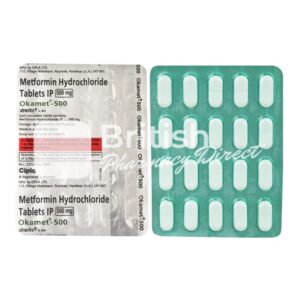
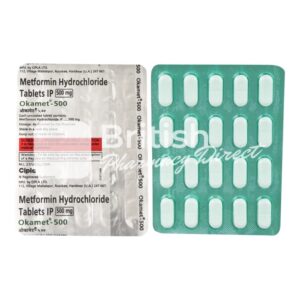
- Metformin is taken by mouth as immediate-release tablets, prolonged-release tablets, or oral solution. Common strengths include 500 mg, 850 mg, and 1,000 mg tablets, with an oral solution strength of 100 mg/mL in some markets.
- Metformin usually starts to lower blood glucose within a few hours of the first dose, but its full clinical effect is often seen after several days to 1–2 weeks, especially once the dose has been titrated.
- The duration of action depends on the formulation: immediate-release metformin generally lasts around 6–8 hours and is taken multiple times daily, while extended-release forms provide coverage for about 12–24 hours and are usually taken once daily.
- Alcohol should be avoided or kept to a minimum, as it increases the risk of lactic acidosis, especially if you drink heavily, are dehydrated, or have kidney or liver problems.
- The most common side effects are gastrointestinal, including nausea, diarrhoea, abdominal discomfort, flatulence, and a metallic taste. Long-term use may also cause vitamin B12 deficiency, and a rare but serious risk is lactic acidosis.
- Would you like to try metformin without a prescription?
Basic Metformin Information
- INN (International Nonproprietary Name): Metformin.
- Brand names available in United Kingdom: Glucophage, Glucophage SR, and generic metformin.
- ATC Code: A10BA02.
- Forms & dosages: Immediate-release tablets 500 mg, 850 mg, 1000 mg; prolonged/extended-release tablets 500 mg, 750 mg, 1000 mg; oral solution 100 mg/mL.
- Manufacturers in United Kingdom: Merck Santé, Teva, Sandoz, Sanofi, Bristol-Myers Squibb, Takeda, USV, Aristo Pharma.
- Registration status in United Kingdom: Registered and approved under MHRA oversight.
- OTC / Rx classification: Prescription Only Medicine (POM/Rx).
Metformin Safety, Use And Practical Buying Guide For UK Patients
Critical Warnings And Patient Protection For UK Use
Is metformin always safe to start straight away?
Not if there is severe kidney disease, metabolic acidosis, or a current illness that pushes the body towards poor oxygen delivery, such as hypoxia, shock or sepsis.
Metformin should not be used when the eGFR is below 30 mL/min/1.73 m², and it is also contraindicated in acute or chronic metabolic acidosis, including diabetic ketoacidosis, plus hypersensitivity to the medicine or its excipients.
A rare but serious risk is lactic acidosis, which can be life-threatening and needs urgent medical attention.
If any of these symptoms appear, stop the medicine and seek urgent help: deep or rapid breathing, severe tummy pain, vomiting, extreme weakness, or confusion.
Higher-risk UK patient groups include older adults, people with kidney or liver problems, anyone at risk of dehydration, those with heart failure, people who drink alcohol heavily, and patients taking several medicines.
Pregnancy and breastfeeding need specialist advice.
Micro-FAQ — When Should A UK Patient Call 111 Or 999?
Call 111 if side effects are troubling, dehydration is developing, or you are unsure whether to continue treatment during illness.
Call 999 if there is severe breathlessness, collapse, marked confusion, or any sign of severe lactic acidosis.
What Metformin Is And How It Is Classified
Why do so many people hear different names for the same medicine?
Metformin is the International Nonproprietary Name, and it is also recognised as the British Approved Name and USAN.
It belongs to the biguanide class and is an oral hypoglycaemic agent used to lower blood glucose.
In pharmacy shorthand, it sits under ATC A10BA02, within the diabetes medicines group.
In the UK, patients may hear metformin itself or brand references such as Glucophage and Glucophage SR.
It is a prescription-only medicine in major markets and is widely used through the NHS.
Metformin In The UK: Brands, Formulations And Packaging
Which metformin tablet is most likely to be prescribed?
That depends on whether a patient needs immediate-release or modified-release treatment, plus local supply and prescriber choice.
| Form | Strengths | Usual UK Use | Packaging Notes |
|---|---|---|---|
| Immediate-release tablets | 500 mg, 850 mg, 1000 mg | Started and titrated with meals | Blisters or bottles, format varies |
| Extended-release tablets | 500 mg, 750 mg, 1000 mg | Usually once daily | Designed for swallowing whole |
| Oral solution | 100 mg/mL | Included for context | Do not freeze |
Generic metformin is widely available, and that usually helps keep costs lower while improving access.
Reference brands such as Glucophage and Glucophage SR are still familiar names, especially when patients compare advice online or move between different pharmacies.
- Common pack types include blisters, bottles, and unit-dose packs.
- Multiple generic versions are available across markets.
- Packaging usually follows local regulatory labelling rules.
Who Metformin Is Used For In NHS And Specialist Care
Is metformin only for diabetes?
No, but its main licensed use is still type 2 diabetes in adults.
It is part of wider blood glucose management rather than a stand-alone cure, so diet, activity, and other diabetes medicines may also be needed.
In some people, clinicians may also use it off-label for polycystic ovary syndrome, prediabetes, or selected weight-related situations, but those uses should stay clinician-led, especially in UK primary care.
Long-term use is common, because type 2 diabetes is often a chronic condition that needs ongoing review.
- Type 2 diabetes in adults.
- PCOS under medical supervision.
- Prediabetes in selected cases.
- Possible weight-related support in specialist care.
How Metformin Works: Simple Explanation And Clinical Terms
Why does metformin help with high blood sugar without acting like insulin?
It lowers the amount of glucose the liver makes and helps the body respond better to insulin.
That is why it is often described as improving insulin sensitivity and reducing hepatic glucose output.
Many patients like it because it usually does not cause weight gain, and some notice mild weight loss.
- Insulin resistance
- The body does not respond to insulin as well as it should.
- Hepatic glucose output
- Glucose released by the liver into the bloodstream.
- Modified-release
- A tablet designed to release medicine more slowly over time.
Standard Dosing For Adults In The UK
What dose do people usually start on?
The usual starting dose is 500 mg once or twice daily with meals.
The dose is then increased by 500 mg each week as tolerated, because gradual titration often improves stomach tolerance.
The maximum usual total daily dose is generally 2000 to 2550 mg/day, depending on the formulation and the prescriber’s judgement.
Extended-release metformin is usually taken once daily, with a usual maximum of 2000 mg daily.
Swallow modified-release tablets whole, and do not crush or split them unless the product information specifically says it is safe.
| Situation | Typical Approach |
|---|---|
| Starting treatment | 500 mg once or twice daily with meals |
| Titration | Increase by 500 mg/week if tolerated |
| Usual maximum | 2000–2550 mg/day for standard tablets |
| Extended-release | Usually once daily, up to 2000 mg/day |
Micro-FAQ — What If I Miss A Dose?
Take the next dose as scheduled.
Do not double up.
Dose Adjustments For Children, Older Adults And Comorbidities
Do children and older adults use the same dose?
No, dosing needs to be more careful in both groups.
Children aged 10 years and over usually start at 500 mg once daily, with slow titration and a usual maximum of 2000 mg/day divided.
In older adults, the dose should start low and increase slowly, because kidney function needs closer monitoring.
Metformin is contraindicated if the eGFR is below 30 mL/min/1.73 m².
If the eGFR is between 30 and 45 mL/min/1.73 m², dose adjustment and close monitoring are needed.
It is generally not recommended in hepatic impairment because the risk of lactic acidosis is higher.
| Group | Adjustment | Monitoring Point |
|---|---|---|
| Children aged 10+ | Start low, titrate carefully | Effect and tolerance |
| Older adults | Start low, titrate slowly | Renal function |
| eGFR below 30 | Contraindicated | Do not use |
| eGFR 30–45 | Adjust dose and monitor closely | Renal checks |
Side Effects And How UK Patients Can Manage Them
Will metformin always upset the stomach?
Not always, but digestive side effects are common early on.
The usual problems are nausea, diarrhoea, wind, abdominal pain, and a metallic taste.
Mild weight loss can happen as well.
These effects often improve once the dose has been stable for a while, especially if titration has been gradual.
Less common but important issues include vitamin B12 deficiency with long-term use and the rare emergency of lactic acidosis.
Anyone with persistent vomiting, ongoing diarrhoea, worsening weakness, or symptoms that interfere with daily life should contact a GP or pharmacist.
| Type | Examples | Action |
|---|---|---|
| Common | Nausea, diarrhoea, flatulence, abdominal pain, metallic taste | Often settles with time or dose adjustment |
| Less common | Mild weight loss, vitamin B12 deficiency | Raise at routine review |
| Urgent | Lactic acidosis symptoms | Seek immediate help |
Interactions With Food, Alcohol And Everyday Routines
Does metformin need to be taken with food?
Yes, taking it with meals can reduce stomach upset.
That fits neatly into normal UK routines, whether it is breakfast before the commute or the evening meal after work.
Alcohol needs caution, especially binge drinking, because it can raise the risk of lactic acidosis.
The risk also rises if you are ill, not eating properly, or becoming dehydrated from vomiting, diarrhoea, or fever.
Sick-day caution is sensible whenever fluid intake is poor or the body is under strain.
- Take with meals to improve tolerance.
- Avoid binge drinking.
- Pause and seek advice if vomiting or diarrhoea are severe.
- Watch for dehydration during fever or poor intake.
Drug Interactions And Combination Treatments
Can metformin be taken with other diabetes medicines?
Yes, but the combination needs review because glucose-lowering effects can add up.
That matters with sulfonylureas, DPP-4 inhibitors, SGLT2 inhibitors, and thiazolidinediones.
Combination products are also common, including Janumet, Kombiglyze, Jentadueto, Avandamet, and Actoplus Met.
These are not interchangeable with metformin alone, and the full regimen should always be checked before a switch.
| Option | What It Contains | Practical Point |
|---|---|---|
| Metformin alone | Metformin only | Simple single-ingredient treatment |
| Combination products | Metformin plus another diabetes medicine | Requires prescriber review before switching |
| Other glucose-lowering drugs | Sulfonylureas, DPP-4 inhibitors, SGLT2 inhibitors, thiazolidinediones | May change overall diabetes control |
NHS Prescribing, Access And Where UK Patients Get It
How do most people in the UK get metformin?
Usually through a GP prescription, with review appointments used to check response, side effects, and kidney function.
Electronic prescriptions are now a normal part of UK supply, and pharmacy counselling often matters as much as the prescription itself.
Patients also recognise major community chains such as Boots, LloydsPharmacy, and Superdrug, alongside regulated online pharmacies.
When ordering online, stick to MHRA-compliant and NHS-linked services only.
In our online pharmacy, metformin is available without a prescription, with discreet delivery to United Kingdom in 5-14 days.
- Check the pharmacy is properly regulated.
- Make sure the product is genuine and correctly labelled.
- Confirm the strength, release type, and pack size.
- Use counselling if side effects or dose questions come up.
UK Cost, Exemptions And Regional Differences
Does the price change depending on where you live?
Yes, because prescription charging and exemption rules differ across the UK.
In England, prescription charges may apply unless the patient is exempt.
In Scotland, Wales, and Northern Ireland, NHS prescriptions are generally free.
Generic supply usually lowers the private cost, but the exact price still varies by brand and pharmacy.
| Route | Typical Cost Position | Exemption Status |
|---|---|---|
| NHS prescription in England | Charge may apply | Depends on exemption |
| NHS prescription in Scotland, Wales, Northern Ireland | Generally free | Usually exempt from charges |
| Private purchase | Varies by brand and pharmacy | Not exempt |
Multiple generic versions also help keep metformin accessible, which is one reason it remains a mainstay in the NHS.
Safety Guidance For Storage, Transport And Missed Or Overdose Actions
Where should metformin be kept at home?
Store it at room temperature, between 15 and 30°C, and protect it from moisture, heat, and light.
Liquid formulations should not be frozen.
If a dose is missed, take the next scheduled dose and never double the amount.
Any overdose needs urgent medical assessment because of the risk of lactic acidosis.
- Keep tablets dry and out of heat.
- Do not freeze liquid medicine.
- Do not double a missed dose.
- Seek urgent help after overdose.
Regulation, Approval And Pharmacist Counselling In The UK
Is metformin properly regulated in the UK?
Yes, it is approved and used under UK regulatory oversight and is a prescription-only medicine.
That status matters because safe supply depends on the right dose, the right release type, and the right monitoring plan.
Pharmacist counselling is often central in community care, especially when a patient is changing from immediate-release to modified-release tablets or is struggling with stomach side effects.
- MHRA
- The Medicines and Healthcare products Regulatory Agency.
- POM
- Prescription Only Medicine.
- Modified-release
- A tablet that releases the medicine slowly over time.
Patient Questions, Practical Tips And Adherence Advice
What do patients usually ask after starting metformin?
They often want to know whether to take it with food, how long it should be used, what to do about tummy upset, and whether it affects driving or work.
Most people need long-term treatment, and follow-up should include kidney function, diabetes control, and vitamin B12 status.
Gradual titration helps, and persistent side effects should be reported early rather than tolerated for months.
If the stomach is unsettled, taking tablets with meals and reviewing the release type often helps.
Keep an eye on how you feel during illness, because dehydration and poor intake can change the safety picture quickly.
Micro-FAQ — Can I Drive After Taking Metformin In The UK?
Usually yes, if you feel well.
Be cautious if you are unwell or if low blood sugar happens because metformin is being used with another glucose-lowering medicine.
People using metformin alone do not usually get hypoglycaemia from it, but combination therapy changes that risk.
Delivery Across United Kingdom
| City | Region | Delivery time |
|---|---|---|
| London | England | 5-7 days |
| Birmingham | England | 5-7 days |
| Manchester | England | 5-7 days |
| Leeds | England | 5-7 days |
| Glasgow | Scotland | 5-7 days |
| Edinburgh | Scotland | 5-7 days |
| Liverpool | England | 5-7 days |
| Newcastle upon Tyne | England | 5-7 days |
| Bristol | England | 5-7 days |
| Cardiff | Wales | 5-7 days |
| Sheffield | England | 5-9 days |
| Nottingham | England | 5-9 days |
| Leicester | England | 5-9 days |
| Aberdeen | Scotland | 5-9 days |
| Swansea | Wales | 5-9 days |
For anyone starting metformin, the safest approach is simple: confirm the right dose, take it with food, keep up with kidney checks, and ask for advice early if stomach upset or illness gets in the way.