Glucovance
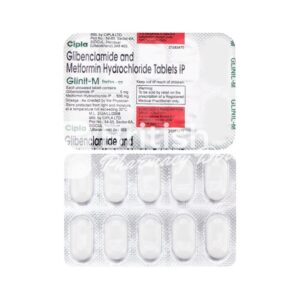
In brief
- In our pharmacy, you can buy glucovance without a prescription, with delivery in 5–14 days throughout the United Kingdom. Discreet and anonymous packaging.
- Glucovance is used to treat type 2 diabetes; it combines glyburide (a sulfonylurea that increases insulin secretion) and metformin (which lowers hepatic glucose production and improves peripheral glucose uptake).
- The usual dose is one tablet of 2.5/500 mg or 5/500 mg once or twice daily with meals; titrate in increments of no more than 2.5/500 mg every 2+ weeks, up to a usual maximum of 20 mg glyburide / 2000 mg metformin per day in divided doses.
- The form of administration is an oral film‑coated tablet taken with food.
- The glyburide component begins to lower blood glucose within about 1–3 hours, while the metformin component’s full glycaemic effect develops over days to weeks.
- The glyburide effect typically lasts about 12–24 hours; metformin’s glucose‑lowering effect is sustained with regular dosing.
- Do not consume alcohol — alcohol increases the risk of lactic acidosis with metformin and can worsen or unpredictably precipitate hypoglycaemia with glyburide.
- The most common side effect is gastrointestinal upset (nausea, diarrhoea, abdominal discomfort); hypoglycaemia is also a common and important adverse effect.
- Would you like to try glucovance without a prescription?
Basic Glucovance Information
- INN (International Nonproprietary Name): Glyburide and Metformin Hydrochloride.
- Brand Names Available In United Kingdom: Not uniformly available in the EU; branded generics with compositionally equivalent products are common and availability varies by country and local formulary.
- ATC Code: A10BD02.
- Forms & Dosages: Tablets commonly supplied as 2.5 mg/500 mg (pale orange) and 5 mg/500 mg (yellow) in bottles of 100; other international variants may include lower strengths such as 1.25 mg/250 mg in some generics.
- Manufacturers In United Kingdom: Not specified.
- Registration Status In United Kingdom: Not specified; approval and marketing vary across regions and branded generics may be listed on national databases.
- OTC / Rx Classification: Prescription-only (Rx) everywhere according to available product information.
Critical Warnings & Restrictions
High‑Risk Groups (Elderly, Pregnancy, Chronic Illness)
Are you worried this tablet might be unsafe for someone older, pregnant or unwell?
Check renal function (eGFR) before starting and at regular intervals while on therapy.
Do not start or continue if eGFR is below 30 mL/min/1.73m² — this is an absolute contraindication.
Do not use with hepatic impairment or in patients with metabolic acidosis, including diabetic ketoacidosis or lactic acidosis.
Pregnancy and breastfeeding require specialist management because glibenclamide (glyburide) crosses the placenta and metformin in pregnancy is usually managed through antenatal diabetes services.
Elderly patients need the lowest starting doses and slow titration due to increased risks of hypoglycaemia and lactic acidosis.
Before prescribing, run a safety screening checklist: renal test, liver tests, alcohol history, heart‑failure history, current medicines, and pregnancy test where applicable.
Absolute Contraindications: eGFR <30 mL/min/1.73m²; metabolic acidosis; known hypersensitivity; acute conditions that can alter renal function.
Relative Contraindications: elderly, heart failure, hepatic impairment, alcohol misuse, hypoxaemic conditions, recent iodinated contrast exposure.
This combination is a prescription‑only medicine in the UK and elsewhere; supply without a valid prescription is not lawful.
Interaction With Activities (Driving, Workplace Safety Under UK Law)
Worried about driving or work after you start treatment?
The glyburide component can cause hypoglycaemia which affects concentration and reaction times.
Self‑monitor blood glucose frequently when starting or changing dose and whenever symptoms suggest low blood glucose.
Do not drive if experiencing hypoglycaemic symptoms or if you are unable to recognise or treat them.
People in safety‑sensitive roles (professional drivers, machine operators) should have an occupational health review and a documented risk assessment.
Use this checklist for notifying DVLA and your employer: recent severe hypoglycaemia, loss of hypoglycaemia awareness, frequency of low glucose events, and treating clinician advice.
Report serious adverse reactions to the MHRA using the Yellow Card scheme.
Q&A — “Can I Drive After Taking It In The UK?”
If your blood glucose is stable, you can recognise and treat hypoglycaemia, and you have had no recent severe episodes, driving is usually permitted.
If you have had a severe hypoglycaemic episode you must inform the DVLA — rules vary by licence type, so seek clinician advice.
Report episodes that cause loss of consciousness or seizure to your clinician and via the MHRA Yellow Card if serious.
Usage Basics
INN, Brand Names Available In The UK
Which names will you see on a prescription or in conversation with your pharmacist?
The INN is Glyburide and Metformin Hydrochloride for the combination tablet.
Note that glyburide is also known internationally as glibenclamide, so clinicians and patients may encounter both terms.
International brand names include Glucovance, Glycomet‑GP and Glucored Plus, though availability in the UK is variable and branded generics are more common.
In UK practice, fixed‑dose combinations may be less commonly stocked than the separate components, so check your local formulary.
Brand Examples: Glucovance; Glycomet‑GP; Glucored Plus.
INN vs Brand: INN = generic international name; brand = marketed trade name used by manufacturers.
Legal Classification (POM, P, GSL)
Is it a prescription medicine or can it be bought over the counter?
This combination is classified as prescription‑only medicine (POM) in the available product information and should be supplied on a valid prescription in the UK.
NHS routes for supply include FP10 prescriptions, electronic repeat dispensing and the NHS Electronic Prescription Service where eligible.
Pharmacists have a key role in counselling and ensuring prescriptions are appropriate; supplying without a prescription is illegal.
| Prescription Route | How It Works |
|---|---|
| FP10 | Paper prescription issued by GP or prescriber for NHS supply. |
| Electronic Prescription Service (EPS) | Prescriptions sent electronically to nominated pharmacy for dispensing. |
| Private Prescription | Paid supply against a private prescriber’s prescription. |
Dosing Guide
Standard Regimens (NHS Guidelines)
How should dosing start and change?
Typical starting regimens are 1 tablet of 2.5 mg/500 mg or 5 mg/500 mg once or twice daily with meals.
Titration should be cautious, increasing by no more than 2.5 mg/500 mg per day every two weeks or longer as clinically indicated.
The usual maximum total daily dose is 20 mg glyburide and 2000 mg metformin in divided doses.
Adherence to diet and exercise is essential alongside pharmacotherapy.
Prescribers should follow local NHS formulary protocols for dosing and monitoring.
| Dose Step | Action | Monitoring |
|---|---|---|
| Start | 2.5 mg/500 mg once daily with a meal | Baseline eGFR, LFTs, SMBG plan |
| Titrate | Increase by 2.5 mg/500 mg every ≥2 weeks | Check symptoms, SMBG logs, eGFR as indicated |
| Maintenance | Up to 20 mg/2000 mg daily in divided doses | Periodic eGFR, HbA1c every 3–6 months |
Adjustments For Comorbidities
How does illness change dosing or eligibility?
Do not use if eGFR is below 30 mL/min/1.73m²; check renal function before starting and periodically thereafter.
Hepatic impairment is a contraindication and the drug should not be used in liver failure.
Elderly patients need lower starting doses and more frequent monitoring.
Use caution in heart failure, significant alcohol misuse or conditions that cause hypoxaemia.
Stop the metformin component temporarily for radiological procedures involving intravascular iodinated contrast as per local radiology guidance.
Q&A — “What If I Miss A Dose?”
Take the missed dose as soon as you remember unless the next dose is due soon.
Do not double up doses to make up for a missed one.
If missed or irregular dosing causes symptoms or repeated missed doses affect control, contact your GP or NHS 111 for advice.
Interaction Chart
Food And Drinks (Alcohol, Tea/Coffee, Diet Habits)
Patients often ask whether their diet or drinks change how the medicine works.
Alcohol increases the risk of lactic acidosis associated with metformin and can potentiate hypoglycaemia from glyburide, so patients should limit intake and avoid binge drinking.
High‑carbohydrate meals affect blood glucose and may increase the risk of hypoglycaemia if sulfonylurea dose is too high relative to intake.
Caffeine has minimal direct effect on glucose but can mask some hypoglycaemia symptoms such as tiredness.
Refer patients for dietary counselling and structured education such as DESMOND or local NHS diabetes education programmes.
- Foods/drinks to moderate: high‑alcohol drinks, irregular meal patterns, very low‑carb diets without medical supervision.
- Practical tip: always carry a fast‑acting carbohydrate and wear medical ID if you are on insulin secretagogues or insulin.
Common Drug Conflicts (MHRA Yellow Card Data)
What other medicines interact with the combination?
Co‑prescribing with other sulfonylureas or insulin increases hypoglycaemia risk and requires dose review.
Drugs that impair renal function (for example some NSAIDs and nephrotoxic agents) increase metformin risk and need monitoring.
Iodinated contrast media increase the risk of renal injury and lactic acidosis; follow local guidance for temporary discontinuation.
Pharmacists should check interactions at dispensing and report adverse reactions via the MHRA Yellow Card.
| Interacting Drug/Group | Effect | Clinical Action |
|---|---|---|
| Insulin or other sulfonylureas | Increased hypoglycaemia | Reduce dose/monitor SMBG closely |
| NSAIDs, ACE inhibitors | Potential renal function impact | Monitor renal function; adjust metformin if needed |
| Iodinated contrast | Risk of renal injury and lactic acidosis | Hold metformin around procedure per radiology guidance |
User Reports & Trends
What do patients actually say about taking this combination?
Patient information pages such as NHS.uk and forums like Patient.info and community sites report common themes rather than individual medical advice.
Gastrointestinal side effects — nausea and diarrhoea — are frequently attributed to metformin and are a top complaint.
Episodes of hypoglycaemia are commonly reported and usually linked to the glyburide component.
Patients often express a preference for separate components, as this allows independent titration of metformin or glibenclamide.
Availability concerns and cost are also recurring themes in community threads.
Clinicians should address common concerns in consultations: safety monitoring, SMBG plans, mitigation of GI effects and strategies for preventing hypoglycaemia.
- Top patient concerns: side‑effects (GI), hypoglycaemia, drug availability and cost.
- Checklist for clinicians: review renal status, discuss hypoglycaemia action plan, offer diet/education referral, consider separate agents if titration needed.
Monitor MHRA Yellow Card trends for any new safety signals.
Access & Purchase Options
Boots, LloydsPharmacy, Superdrug
Where can patients collect this medicine locally?
Community pharmacies such as Boots, LloydsPharmacy and Superdrug dispense prescription medicines against a valid prescription.
Pharmacists must provide counselling at the point of supply and confirm appropriate monitoring has been arranged.
Chains may occasionally stock branded generics; availability on the NHS electronic prescribing system should be checked.
Counselling checklist for pharmacy supply: confirm recent renal test, explain hypoglycaemia signs and treatment, discuss GI side effects and when to seek help.
Online Pharmacies And NHS E‑Prescriptions
Can it be ordered online safely?
Legitimate UK online pharmacies use the NHS Electronic Prescription Service (EPS) for NHS prescriptions or accept private e‑prescriptions.
Always verify General Pharmaceutical Council (GPhC) registration and use the NHS.uk pharmacy finder to confirm legitimacy.
Avoid foreign or unverified sellers because of the risk of falsified medicines.
Regional prescription charges differ: England has a per‑item charge unless exempt, while Scotland, Wales and Northern Ireland generally have free prescriptions.
| Supply Route | Verification | Typical Cost Notes |
|---|---|---|
| Community Pharmacy (Boots/Lloyds/etc.) | GPhC registered, NHS EPS | Subject to NHS charging rules or private prescription cost |
| Online UK Pharmacy | GPhC registration, EPS/private e‑prescription | Check private price; ensure legal supply |
| Overseas/Unverified Seller | Not recommended | Risk of falsified medicines — avoid |
In our online pharmacy, glucovance is available without a prescription, with discreet delivery to United Kingdom in 5-14 days.
Mechanism & Pharmacology
Simplified Explanation
How does the combination lower blood glucose?
The two mechanisms act together: glyburide (a sulfonylurea) stimulates pancreatic beta cells to release insulin.
Metformin (a biguanide) reduces hepatic glucose production and improves peripheral glucose uptake.
The ATC classification for the combination is A10BD02.
Glyburide has a faster onset and carries an immediate hypoglycaemia risk, while metformin’s benefits accrue more gradually and provide long‑term metabolic improvements.
Clinical implications include a higher short‑term risk of hypoglycaemia and common GI adverse effects from metformin, and the need for renal monitoring.
- Clinical implications: increased hypoglycaemia risk, GI side effects, need for renal monitoring.
Clinical Terms
Definitions to help patients and clinicians.
Sulfonylurea: a class of drugs that increase insulin secretion from the pancreas.
Insulin Secretagogue: medication that stimulates insulin release.
Biguanide: class of drugs that includes metformin; reduces hepatic gluconeogenesis.
eGFR: estimated glomerular filtration rate, a measure of kidney function.
Lactic Acidosis: a rare but serious accumulation of lactate associated with metformin in certain settings.
Storage: store at up to 25°C and protect tablets from moisture and light.
Indications & Off‑Label Uses
MHRA‑Approved Uses
What is this combination licensed to treat?
The primary indication is type 2 diabetes mellitus as an adjunct to diet and exercise where monotherapy with either agent alone is insufficient.
It is intended for chronic glycaemic control under prescription and routine monitoring.
Document the clinical indication clearly on prescriptions and follow local formulary guidance.
Off‑Label Practices In NHS And Private Care
Do clinicians ever use it beyond the licence?
Some specialist situations may favour a fixed‑dose combination for adherence, but many clinicians prefer separate metformin and sulfonylurea products to allow independent titration.
Off‑label paediatric use is not recommended as the combination is not approved for children.
Any off‑label prescribing should be supported by multidisciplinary discussion, informed consent and a clear monitoring plan documented in the notes.
Key Clinical Findings
What outcomes should clinicians look for in the literature?
Planned evidence reviews should include systematic reviews, recent randomised controlled trials and observational cohorts from 2022–2025 comparing the combination with metformin alone or other add‑ons.
Key endpoints are HbA1c reduction, hypoglycaemia rates, hospital admissions for lactic acidosis, renal outcomes and cardiovascular events.
Look to NICE and Diabetes UK guidance for current recommendations and to PubMed, BMJ and clinical trial registries for recent studies.
Be aware that sulfonylurea safety data are older and study heterogeneity is common when comparing combination tablets to separate agents.
| Outcome | What To Watch |
|---|---|
| HbA1c Reduction | Magnitude versus metformin monotherapy or DPP‑4/SGLT2 add‑ons |
| Hypoglycaemia | Rate and severity attributable to sulfonylurea component |
| Renal/Acidosis Events | Incidence of lactic acidosis and renal deterioration |
Alternatives Matrix
NHS Prescribing Alternatives (Comparison Table)
| Option | Mechanism | Typical HbA1c Reduction | Hypoglycaemia Risk | Weight Effect | Monitoring Needs |
|---|---|---|---|---|---|
| Metformin Monotherapy | Biguanide — lowers hepatic glucose production | Moderate | Low | Weight Neutral/Loss | Renal function (eGFR) baseline and periodic |
| Metformin + DPP‑4 Inhibitor (e.g., sitagliptin) | Incretin pathway + biguanide | Moderate | Low | Weight Neutral | Renal adjusted dosing for some agents |
| Metformin + SGLT2 Inhibitor | Renal glucose excretion + biguanide | Moderate | Low | Weight Loss | Renal function, genital infection monitoring |
| Metformin + Sulfonylurea (Separate) | Secretagogue + biguanide | Moderate | Higher | Weight Gain Possible | SMBG, renal function |
| Insulin | Exogenous insulin replacement | High | High | Weight Gain Possible | Intensive SMBG, training |
Related combination brands include Janumet (sitagliptin/metformin) and Avandamet (rosiglitazone/metformin) in the broader landscape.
Pros And Cons Checklist
Use this clinician checklist when choosing therapy.
- Consider efficacy needed and target HbA1c.
- Assess hypoglycaemia risk and patient ability to detect lows.
- Review renal function and cardiovascular profile.
- Factor weight effects and patient preferences for dosing.
- Consider cost, formulary status and availability.
Document shared decision making and rationale in the clinical record.
Common Questions
Patients ask clear, practical questions in consultations; here are 4 commonly heard ones.
Will It Make Me Gain Weight?
Sulfonylureas, including glyburide (glibenclamide), are associated with weight gain in some patients.
Metformin is weight neutral or associated with modest weight loss, so net effect varies between individuals.
Discuss diet and exercise strategies, and consider alternatives if weight gain is a concern.
How Often Should I Check My Kidneys?
Check eGFR at baseline before starting and periodically thereafter according to baseline renal function and age.
Typical practice is an annual renal check for stable patients, with more frequent monitoring for elderly people or those with borderline eGFR.
Increase monitoring frequency if there is intercurrent illness, dehydration or new interacting medicines.
Can It Cause Lactic Acidosis?
Lactic acidosis is rare but serious and is associated with the metformin component in settings of renal impairment, dehydration, severe infection or hepatic failure.
Stop metformin during acute illness, dehydration or before radiological contrast procedures as per local guidance.
Seek immediate medical care for unexplained muscle pain, rapid breathing, severe abdominal pain or persistent vomiting.
Micro‑FAQ: What If I Experience Severe Hypoglycaemia?
Treat immediately with 15–20 g fast‑acting carbohydrate if conscious, call 999 for loss of consciousness or seizure and inform your clinician.
Report severe episodes and consider medication review and DVLA notification where required.
NHS Cost & Access Comparison Table
Where and how much might patients expect to pay?
| Source/Pharmacy | Typical Private Price Range (Per Pack) | NHS Prescription Charge (England) | Exemption Categories | Availability Of Generics/Brands |
|---|---|---|---|---|
| Boots | £20–£60 (varies by pack size and brand) | State current amount at publication | Age, benefits, pregnancy, war veterans, certain medical conditions | Branded generics occasionally stocked |
| LloydsPharmacy | £20–£60 | State current amount at publication | As above | Varies by local stock |
| NHS GP Dispensing | Varies if private only | State current amount at publication | As above (region dependent) | Depends on local formulary |
| Online UK Registered Pharmacies | £18–£70 | State current amount at publication | As above | Generics and branded equivalents available |
| Nation | Are Prescriptions Free? |
|---|---|
| England | No — per item charge unless exempt |
| Scotland | Yes — prescriptions are free |
| Wales | Yes — prescriptions are free |
| Northern Ireland | Yes — prescriptions are free |
Registration & Regulation
MHRA Approval Process
How are combination products licensed and monitored in the UK?
Combination products are subject to MHRA licensing and pharmacovigilance; post‑Brexit the MHRA maintains UK licensing and safety oversight.
Check the MHRA database for licence status, SPC and patient information leaflets, and for any safety alerts or recalls.
- Regulatory milestones to check: licence status, Summary of Product Characteristics (SPC), Patient Information Leaflet (PIL), Yellow Card reports.
NHS Prescribing Framework
What must prescribers and pharmacists do under NHS governance?
Ensure indication is appropriate, provide counselling, arrange baseline monitoring (renal and hepatic tests), and document prescriptions and monitoring plans.
Follow local formulary and shared‑care agreements where available and escalate to specialist services if needed.
Use a checklist at every prescribing step: indication, baseline bloods, patient education, monitoring schedule and clear follow‑up arrangements.
Storage & Handling
UK Household Storage (Cold/Damp Climate)
Where is it safe to keep your tablets at home?
Store at room temperature up to 25°C and protect from moisture and light.
Avoid storing tablets in bathrooms or above kitchen sinks where humidity is high.
Keep in the original, light‑resistant container and out of reach of children and pets.
When travelling, carry medicines in original packaging with prescription and keep them within controlled temperatures where possible.
Guidance From NHS And Pharmacists
How should pharmacists package and advise on supplies?
Use tamper‑evident packs for postal deliveries and include clear labelling such as “take with meals” and “recognise and treat hypoglycaemia”.
Advise patients to return unused tablets to pharmacy for safe disposal rather than household waste.
- Key counselling points on the label: take with food, carry fast‑acting carbohydrate, seek help for severe symptoms, report adverse events via Yellow Card.
Guidelines For Proper Use
UK Pharmacist Counselling Style
What should a pharmacist cover during each supply?
Confirm current medicines and allergies and check pregnancy/breastfeeding status before supply.
Explain dual action: glyburide increases insulin secretion and metformin reduces hepatic glucose production.
Clarify dosing schedule and advise to take with meals to reduce GI effects.
Teach hypoglycaemia signs and treatment and provide a written action plan for lows.
Discuss GI side‑effect mitigation such as dose titration and taking with food.
Set out a monitoring plan including baseline eGFR and periodic follow‑up and advise when to stop the metformin component (acute illness, dehydration, before contrast).
Encourage reporting of suspected adverse reactions via the MHRA Yellow Card.
NHS Patient Safety Advice
What ongoing checks keep long‑term treatment safe?
Arrange regular blood tests including HbA1c and eGFR and schedule an annual review.
Provide sick‑day rules and emphasise stopping metformin during significant illness or dehydration.
Update driving records and workplace risk assessments if hypoglycaemia occurs and offer medicines use review and adherence support.
For urgent problems: contact GP out‑of‑hours, NHS 111 or call 999 for severe hypoglycaemia or suspected lactic acidosis.
Signpost to Diabetes UK and local diabetes teams for education and support.
Delivery Across United Kingdom
| City | Region | Delivery Time |
|---|---|---|
| London | Greater London | 5–7 days |
| Birmingham | West Midlands | 5–7 days |
| Manchester | Greater Manchester | 5–7 days |
| Glasgow | Scotland | 5–7 days |
| Leeds | West Yorkshire | 5–7 days |
| Edinburgh | Scotland | 5–7 days |
| Bristol | South West | 5–9 days |
| Newcastle | North East | 5–9 days |
| Nottingham | East Midlands | 5–9 days |
| Sheffield | South Yorkshire | 5–9 days |
| Cardiff | Wales | 5–9 days |
| Belfast | Northern Ireland | 5–9 days |
| Plymouth | South West | 5–9 days |
| Norwich | East of England | 5–9 days |