
Rulide
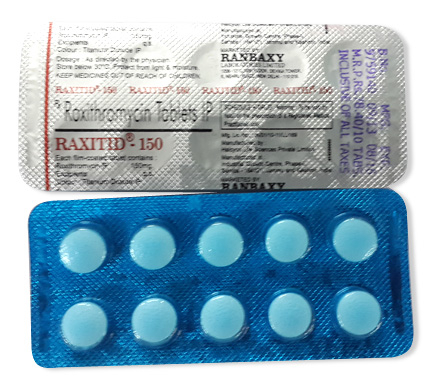
Rulide
- In pharmacies, rulide (roxithromycin) is generally a prescription-only medicine (Rx) in most countries, though in some places pharmacies may dispense it without a prescription or receipt; availability and legality vary locally—check national regulations and pharmacy policy.
- Rulide is used to treat bacterial infections such as respiratory tract infections (pharyngitis, tonsillitis, bronchitis, community-acquired pneumonia), skin and soft tissue infections, impetigo and non‑gonococcal urethritis; it is a macrolide antibiotic that inhibits bacterial protein synthesis by binding to the 50S ribosomal subunit.
- Usual adult dosages include 150 mg every 12 hours or 300 mg once daily for many infections (treatment courses typically 5–10 days); for non‑gonococcal urethritis 300 mg once daily is commonly used; children are dosed by weight (about 5–8 mg/kg/day).
- Administered orally as film‑coated tablets (150 mg, 300 mg), or as dispersible tablet/oral suspension formulations where available; take with or without food according to product instructions.
- Rulide begins to act soon after absorption; antibacterial activity starts within hours, with symptomatic improvement often seen within 24–48 hours in many infections.
- The duration of action at typical doses covers approximately 12–24 hours (hence twice‑daily dosing for 150 mg or once‑daily dosing for 300 mg); full treatment courses usually last 5–10 days depending on the infection and clinical response.
- Avoid excessive alcohol while taking antibiotics; alcohol does not generally prevent roxithromycin working but may increase gastrointestinal side effects and should be limited—avoid alcohol if you have hepatic impairment.
- The most common side effects are gastrointestinal (nausea, vomiting, abdominal pain, diarrhoea); other frequent reactions include headache and mild skin rash or hypersensitivity.
- Would you like to try rulide without a prescription?
Rulide
Basic Rulide Information
- INN (International Nonproprietary Name): Roxithromycin.
- Brand Names Available In United Kingdom: Not specified.
- ATC Code: J01FA06.
- Forms & Dosages: Film‑coated tablets 150 mg and 300 mg; dispersible tablets and oral suspensions available under generic roxithromycin in some markets.
- Manufacturers In United Kingdom: Not specified.
- Registration Status In United Kingdom: Not specified.
- OTC / Rx Classification: Prescription‑only medicine (Rx) in all markets.
Critical Warnings & Restrictions
Who should be most careful before taking rulide or roxithromycin?
High-Risk Groups
- Pregnant or breastfeeding women should discuss treatment with their prescriber before starting roxithromycin.
- Elderly patients often have multiple medicines so review for interactions and monitor liver function as appropriate.
- People with chronic liver disease need close monitoring and roxithromycin is contraindicated in severe liver impairment.
- Patients with known macrolide allergy must not take roxithromycin.
- People with cardiac rhythm disorders, especially known QT prolongation, require caution due to additive QT risk with macrolides.
- Neonates and young children require weight‑based dosing and paediatric assessment; use paediatric formularies for exact doses.
- Key Real Data: Roxithromycin is contraindicated with known macrolide allergy and in severe liver impairment.
- Monitoring Needs: Use caution in mild–moderate hepatic dysfunction and in patients with QT prolongation or those taking ergot derivatives.
Checklist For Prescribers/Pharmacists
- Confirm allergy status to roxithromycin and other macrolides such as azithromycin, clarithromycin and erythromycin.
- Review recent liver function tests where hepatic impairment is suspected or known.
- Check concomitant drugs for QT‑prolonging agents, ergot derivatives and CYP interactions (see Interaction Chart).
- Advise patients on signs of severe reaction including anaphylaxis, severe diarrhoea or jaundice and provide clear instructions to seek urgent care.
Interaction With Activities
Will roxithromycin affect my ability to drive or work safely?
Roxithromycin may cause dizziness in some people.
Do not drive or operate machinery if you feel dizzy, have blurred vision or feel confused after taking the medicine.
Q&A — “Can I Drive After Taking It In The UK?”
Short answer: Usually yes if you feel alert and unaffected.
Stop driving and seek advice if you experience dizziness, blurred vision or confusion after taking roxithromycin.
Report serious adverse effects via the MHRA Yellow Card scheme.
Usage Basics
What is rulide and how is it presented in practice?
INN, Brand Names Relevant To UK Context
- INN
- Roxithromycin is a macrolide antibiotic with ATC code J01FA06.
- Brand Availability
- Rulide/Rulid are trade names used in some countries such as Australia, France and Italy, but brand availability in the United Kingdom is not specified in the product data; generic roxithromycin tablets, films and suspensions exist in global markets.
Legal Classification (POM, P, GSL) — UK Specifics
- Roxithromycin is a Prescription‑Only Medicine (POM) across markets and requires a valid prescription.
- In the United Kingdom it must be supplied by a registered prescriber and dispensed via registered pharmacies, including community chains and accredited online providers.
- Prescribers and pharmacists should report supply issues to the prescriber or local pharmacy and confirm local stock before advising patients.
Dosing Guide
How is roxithromycin normally dosed for adults and children?
Standard Regimens
- Typical adult regimens include 150–300 mg every 12 hours depending on the indication and severity of infection.
- Some clinicians use 300 mg once daily for convenience when appropriate for the indication.
- Most treatment courses are 5 to 10 days according to clinical response and the infection site.
- For community‑acquired pneumonia common dosing is 150–300 mg every 12 hours.
- Children receive weight‑based dosing, typically around 5–8 mg/kg/day; check paediatric formularies for exact regimens and formulations such as suspensions or dispersible tablets.
Adjustments For Comorbidities
- No routine renal dose adjustment is normally required because hepatic metabolism predominates.
- Avoid roxithromycin in severe hepatic impairment and use caution in mild to moderate hepatic dysfunction with monitoring.
- Monitor elderly patients for signs of hepatic or renal decline and review all concomitant medicines for interactions.
Checklist For Prescribers
- Confirm the diagnosis and that a macrolide is indicated (for example when penicillin allergy is present or atypical pathogens suspected).
- Select the correct dose and formulation (150 mg versus 300 mg; dispersible or suspension for children).
- Decide treatment length and plan follow‑up to review clinical response within 48–72 hours for more serious infections.
Q&A — “What If I Miss A Dose?”
Take the missed dose as soon as you remember.
If it is nearly time for your next dose, skip the missed dose and continue the scheduled dosing.
Do not double up doses to make up for a missed tablet and contact your pharmacist or GP if several doses are missed.
Interaction Chart
Which foods, drinks and medicines can affect roxithromycin treatment?
Food And Drinks
- There are no strict food restrictions for roxithromycin tablets but take with water to aid swallowing.
- Alcohol does not cause a direct pharmacokinetic interaction with roxithromycin but can worsen side‑effects such as nausea and dizziness.
- Avoid heavy drinking while taking antibiotics to reduce the chance of gastrointestinal upset.
- Grapefruit is not noted as a major interaction with roxithromycin in the product data, but patients should always check the medication leaflet.
Common Drug Conflicts (Items To Screen)
| Drug/Class | Interaction | Clinical Action |
|---|---|---|
| Ergot Derivatives | Risk of ergotism when combined with macrolides. | Avoid concomitant use; choose alternative therapy. |
| QT‑Prolonging Drugs | Potential additive risk of QT interval prolongation with macrolides. | Review ECG history, avoid combination where possible and monitor cardiac status. |
| Strong CYP3A4 Substrates | Roxithromycin has less CYP inhibition than erythromycin but interactions are possible with some substrates. | Review concomitant medicines (for example certain statins or immunosuppressants) and monitor or adjust dosing where indicated. |
- Checklist: review current prescription medicines, over‑the‑counter products and herbal remedies such as St John’s wort before starting roxithromycin.
- Report suspected interactions or adverse reactions to the MHRA Yellow Card scheme.
User Reports & Trends
What do patients commonly say about rulide and roxithromycin online?
- Patients frequently report effective symptom relief for bacterial throat and respiratory infections when roxithromycin is used appropriately.
- Gastrointestinal upset such as nausea and diarrhoea are commonly described side‑effects in patient forums.
- Occasional rash or headache is reported but severe allergic reactions are uncommon in most accounts.
- Many users appreciate the convenience of a once‑daily 300 mg regimen when that option is used for adherence.
- Forum discussions increasingly reflect awareness of antibiotic stewardship, with patients asking about testing and delayed prescribing.
- Some users notice difficulty sourcing branded Rulide and report pharmacies supplying generic roxithromycin instead.
- Note: anecdotal reports are useful for tolerability signals but do not replace clinical evidence; report side‑effects to your pharmacist or via the MHRA Yellow Card scheme.
Access & Purchase Options
Where can patients obtain roxithromycin in the United Kingdom?
High‑Street Pharmacies
- Major pharmacy chains such as Boots, LloydsPharmacy and Superdrug will dispense roxithromycin on presentation of a valid prescription.
- Stock and brand availability vary by region; pharmacies may supply branded or generic roxithromycin depending on supply.
- Bring a completed paper prescription or an NHS e‑prescription to your chosen pharmacy for dispensing.
- Pharmacists will check for interactions, counsel on dose and side‑effects and update your pharmacy medication record.
Online Pharmacies And NHS E‑Prescriptions
- When using online pharmacies choose a GPhC‑registered provider that requires a valid prescription and shows clear contact details.
- Accredited online services that link with NHS e‑prescribing can be convenient for repeat prescriptions and pharmacist counselling.
- In our online pharmacy, rulide is available without a prescription, with discreet delivery to United Kingdom in 5-14 days.
- Payment and cost: in England standard NHS prescription charges apply unless exempt, while prescriptions are free in Scotland, Wales and Northern Ireland.
- Private prescription costs vary among community and online pharmacies; check prices and pharmacist services before purchase.
Mechanism & Pharmacology
How does roxithromycin work against bacteria?
Simplified Explanation (Patient‑Facing)
- Roxithromycin is a macrolide antibiotic that binds the bacterial 50S ribosomal subunit to inhibit protein synthesis.
- The drug is generally bacteriostatic but may be bactericidal at higher concentrations for certain organisms.
- It is used for infections where macrolide activity is appropriate, for example in penicillin‑allergic patients or where atypical pathogens are suspected.
Clinical Terms (Prescriber/Pharmacist)
- ATC Code
- J01FA06.
- Forms
- Film‑coated tablets 150 mg and 300 mg; dispersible tablets and oral suspensions are available under generic roxithromycin in some markets.
- Pharmacokinetics
- Roxithromycin is primarily metabolised hepatically with limited renal excretion, which explains why routine renal dose adjustment is generally unnecessary but hepatic caution is advised.
- Clinical Implication
- Roxithromycin can be a suitable macrolide where penicillin allergy exists and for coverage of atypical respiratory pathogens, bearing in mind local resistance patterns.
Indications & Off‑Label Uses
When is roxithromycin prescribed and what off‑label uses exist?
MHRA‑Approved Uses And Common NHS Indications
- Treatment of bacterial respiratory tract infections such as pharyngitis, tonsillitis, bronchitis and community‑acquired pneumonia.
- Skin and soft tissue infections including impetigo.
- Non‑gonococcal urethritis.
- Typical treatment durations are 5–10 days depending on site and clinical response.
Off‑Label Practices In NHS And Private Care
- Occasional off‑label use occurs for atypical or mixed infections when macrolide susceptibility is likely and alternatives are unsuitable.
- Roxithromycin may be chosen when penicillin allergy limits first‑line options, with clear documentation and informed consent.
- Emphasise that roxithromycin is not effective for viral infections such as colds or influenza and should not be prescribed for those conditions.
- Always consider local resistance patterns and stewardship principles before selecting a macrolide.
Key Clinical Findings
What are the main clinical takeaways for roxithromycin use in the UK and EU?
- Historical clinical trials support roxithromycin efficacy for respiratory and skin infections when used for susceptible organisms.
- UK and EU guidance increasingly emphasise antimicrobial stewardship and prefer narrow‑spectrum agents where suitable.
- There have been limited new large randomised trials specifically for roxithromycin in recent years, so clinicians rely on susceptibility data and class effects.
- Monitor local microbiology for macrolide resistance rates to guide empirical therapy.
- Record outcomes and adverse events in primary care records to inform local formularies and prescribing choices.
Alternatives Matrix
Which antibiotics are commonly chosen instead of roxithromycin?
| Drug | Typical Dose | Dosing Convenience | Side‑Effects | Common Indications | Resistance Considerations |
|---|---|---|---|---|---|
| Roxithromycin | 150–300 mg every 12 h or 300 mg once daily | Once or twice daily options | GI upset, headache, rash | Respiratory, skin, non‑gonococcal urethritis | Macrolide resistance varies by region |
| Azithromycin | Typical short‑course regimens (e.g. once daily) | Once daily, shorter course | Generally well tolerated; GI effects possible | Respiratory infections, atypical pathogens | Emerging resistance in some pathogens |
| Clarithromycin | Typical twice daily dosing | Twice daily | CYP interactions, GI effects | Respiratory infections | More CYP interactions; monitor for drug interactions |
| Erythromycin | Older dosing schedules | Multiple daily doses | More gastrointestinal side‑effects | Various macrolide indications | Less favourable tolerability |
| Amoxicillin | Typical penicillin dosing | Simple dosing but dependent on formulation | Usually well tolerated; allergy possible | First‑line for many respiratory infections if susceptible | Preferred where organism is penicillin‑sensitive |
- Prescribing tip: choose an alternative based on the clinical indication, allergy status, local resistance and interaction profile.
Common Questions
What do patients ask most often about roxithromycin?
- Can I take it while pregnant or breastfeeding? — Discuss with your prescriber; use only when clearly necessary and after risk‑benefit assessment.
- Will it treat a sore throat? — Only if the sore throat is bacterial such as streptococcal; clinicians may use Centor criteria, rapid testing or delayed prescribing.
- Is it addictive? — No; antibiotics including roxithromycin are not addictive but misuse promotes resistance.
- How do I report side‑effects? — Contact your pharmacist or GP and report serious or unexpected reactions via the MHRA Yellow Card scheme.
NHS Cost & Access Comparison Table
| Source/Pharmacy | Typical Private Price Range (Generic) | NHS Prescription Applicability | Exemption Status / Notes |
|---|---|---|---|
| Boots | Approx. £10–£30 depending on formulation | Dispensed on NHS prescription where clinically indicated | England: standard prescription charge applies unless exempt |
| LloydsPharmacy | Approx. £10–£30 | Available on NHS prescription | Scotland/Wales/Northern Ireland: prescriptions free |
| Superdrug | Approx. £10–£30 | Dispense on prescription | Private prices vary; check with pharmacy |
| Online Registered Pharmacies | Similar price range; check provider | Require valid prescription; some link with NHS e‑prescribing | Verify GPhC registration and read patient reviews |
| NHS Prescription (GP / NHS e‑prescription) | Not applicable | Dispensed at community pharmacy; regional rules apply | Check local exemption criteria for charges |
| Region | Prescription Cost Note |
|---|---|
| England | Standard charge per item applies unless patient is exempt |
| Scotland | Prescriptions free for patients |
| Wales | Prescriptions free for patients |
| Northern Ireland | Prescriptions free for patients |
Prices and availability fluctuate; confirm with your pharmacy and check eligibility for prescription exemptions such as age, income or medical conditions.
Registration & Regulation
How is roxithromycin authorised and governed in the UK?
MHRA Approval Process
- Roxithromycin products must comply with MHRA authorisation or be licensed via mutual recognition in the UK.
- Check current MHRA and BNF entries for licensed indications and specific product formulations.
- Prescription‑only status is enforced and pharmacists must only supply with a valid prescription.
NHS Prescribing Framework
- Prescribing must align with NHS antimicrobial stewardship policies and local formularies.
- Primary care clinicians should document indication, duration and follow‑up and report safety issues through the Yellow Card scheme.
- POM
- Prescription‑Only Medicine.
- MHRA
- Medicines and Healthcare products Regulatory Agency.
- GPhC
- General Pharmaceutical Council, regulator for pharmacies and pharmacists.
- NHS E‑Prescribing
- Electronic prescription services used to transmit prescriptions to pharmacies.
Storage & Handling
How should patients store roxithromycin at home in the UK climate?
UK Household Storage
- Store roxithromycin in the original packaging below 25°C and protect it from moisture.
- Avoid keeping the medicine in bathrooms or locations with high humidity.
- Keep all medicines out of reach of children and pets.
- Do not use beyond the stated expiry date.
Guidance From NHS And Pharmacists
- Check the expiry date before taking the medicine and do not share antibiotics with others.
- Return unused or expired antibiotics to the pharmacy for safe disposal.
- When travelling, carry medication in the original box with the prescription and consult your prescriber for longer supplies.
Guidelines For Proper Use
What should pharmacists and patients do to use roxithromycin safely?
UK Pharmacist Counselling Style
- Ask about allergies, current medicines and whether the patient is pregnant or breastfeeding.
- Explain the prescribed dose, timing and the importance of completing the course unless advised otherwise.
- Describe likely side‑effects such as gastrointestinal symptoms and rash, and explain when to stop and seek urgent care.
- Advise on reporting concerns and the Yellow Card system for serious adverse reactions.
NHS Patient Safety Advice
- Complete the full prescribed course unless told otherwise by your clinician.
- Avoid unnecessary antibiotic use to reduce resistance and discuss non‑antibiotic options where appropriate.
- Seek follow‑up if symptoms worsen or fail to improve after 48–72 hours for severe infections.
- Keep the patient information leaflet and use pharmacy medication records to support repeat prescriptions and counselling.
Practical tip: if you have multiple medicines, bring a full list or the medicines themselves to the pharmacy for an interaction check at the point of dispensing.
Delivery Across United Kingdom
| City | Region | Delivery time |
|---|---|---|
| London | England | 5-7 days |
| Birmingham | England | 5-7 days |
| Manchester | England | 5-7 days |
| Glasgow | Scotland | 5-7 days |
| Liverpool | England | 5-7 days |
| Leeds | England | 5-7 days |
| Sheffield | England | 5-9 days |
| Bristol | England | 5-7 days |
| Newcastle | England | 5-9 days |
| Nottingham | England | 5-9 days |
| Belfast | Northern Ireland | 5-7 days |
| Cardiff | Wales | 5-7 days |
| Southampton | England | 5-9 days |