Rocaltrol
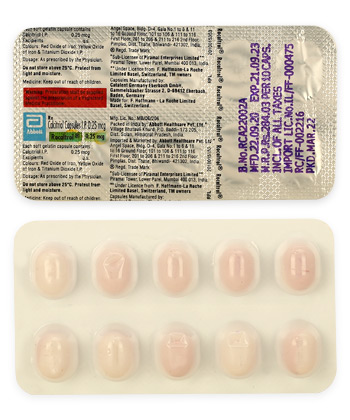
Rocaltrol
- Although officially a prescription-only medicine, in our pharmacy you can buy rocaltrol without a prescription, with delivery in 5–14 days throughout the United Kingdom. Discreet and anonymous packaging available.
- Rocaltrol (calcitriol) is used to treat and prevent hypocalcaemia, secondary hyperparathyroidism due to chronic kidney disease, renal osteodystrophy and hypoparathyroidism. It is the active form of vitamin D (1,25‑dihydroxyvitamin D3) and works by increasing intestinal absorption of calcium and phosphate, mobilising calcium from bone and modulating parathyroid hormone secretion.
- Usual starting doses are 0.25 mcg once daily in adults (increase by 0.25 mcg every 2–4 weeks as needed); typical maintenance doses range up to 1–2 mcg/day depending on response. In hypoparathyroidism similar regimens apply; paediatric dosing is weight-based at about 0.01–0.02 mcg/kg/day with careful monitoring.
- Administered orally (capsules 0.25 mcg and 0.5 mcg; oral solution 1 mcg/mL). An injectable form (1 mcg/mL) is used in hospital settings; topical formulations exist for psoriasis in selected markets.
- Effects on serum calcium are usually seen within 24–48 hours; clinical improvement may take several days to weeks depending on the condition treated.
- Calcium‑regulating effects require daily dosing; calcitriol has a relatively short plasma half‑life (around several hours), though biochemical effects on calcium can persist for 1–2 days, so ongoing daily therapy is common for chronic conditions.
- Avoid excessive alcohol. There is no specific interaction requiring complete abstinence, but heavy drinking can worsen bone health and calcium metabolism and may increase the risk of adverse effects—discuss alcohol use with your prescriber.
- The most common side effect is hypercalcaemia, which may present as nausea, vomiting, constipation, abdominal pain, muscle weakness and headache; severe hypercalcaemia can cause arrhythmia or renal impairment.
- Would you like to try rocaltrol without a prescription?
Rocaltrol


Critical Warnings, Restrictions And Patient Protection
Basic Rocaltrol Information
- INN (International Nonproprietary Name): Calcitriol
- Brand Names Available In United Kingdom: Rocaltrol and generic calcitriol (brand availability may vary by supplier)
- ATC Code: A11CC04
- Forms & Dosages: Capsules 0.25 mcg and 0.5 mcg; oral solution 1 mcg/mL; injectable 1 mcg/mL ampoules (mainly hospital use); topical formulations for psoriasis in selected regions
- Manufacturers In United Kingdom: Not specified
- Registration Status In United Kingdom: Not specified
- OTC / Rx Classification: Prescription Only Medicine (POM)
Calcitriol (Rocaltrol) is an active vitamin D analogue with narrow therapeutic window and mandatory monitoring.
High‑Risk Groups (Elderly, Pregnancy, Chronic Illness)
Patients ask: "Who needs extra care on calcitriol?"
Calcitriol requires careful use in groups at greater risk of hypercalcaemia or adverse outcomes.
Absolute contraindications are hypercalcaemia, vitamin D toxicity, and known hypersensitivity to calcitriol or excipients.
Older people should start at lower doses and be monitored more frequently because age increases the risk of hypercalcaemia.
Pregnancy and breastfeeding are situations where calcitriol should be used only if clearly needed.
Discuss risks and benefits with the obstetric team and record informed consent when initiating treatment in pregnancy or lactation.
Patients with severe cardiac disease, sarcoidosis, certain malignancies, or on digitalis require specialist review and tighter monitoring.
ECG monitoring is advised if significant hypercalcaemia or arrhythmia is suspected in a patient taking digitalis.
- High‑risk features: advanced age, existing hypercalcaemia risk, active malignancy, sarcoidosis, history of renal stones, severe heart disease, concurrent digitalis therapy, baseline high phosphate
Baseline Tests Checklist:
- Serum calcium
- Serum phosphate
- Renal function (serum creatinine and eGFR)
Interaction With Activities (Driving, Workplace Safety Under UK Law)
Patients commonly worry about driving or working while on active vitamin D therapy.
Calcitriol may cause dizziness or drowsiness, commonly as part of hypercalcaemia symptoms.
Advise patients not to drive or operate heavy machinery if they feel dizzy, drowsy or have visual disturbance while taking calcitriol.
Employers and occupational health should be informed when treatment could impair safety‑critical roles such as driving, operating machinery, or healthcare work with sharps.
When To Avoid Driving Or Work Tasks (Checklist):
- Any dizziness, drowsiness or confusion after starting calcitriol or after a dose change
- New visual disturbance or sudden weakness
- Recent laboratory evidence of hypercalcaemia
- If advised by a clinician or occupational health assessment
Q&A — “Can I Drive After Taking It In The UK?”
Q: Can I drive after taking calcitriol?
A: If you feel well and have no dizziness, drowsiness or visual disturbance you may drive.
A: If symptoms of hypercalcaemia such as weakness or confusion appear, do not drive and seek medical advice promptly.
A: Report any adverse effects affecting fitness to drive to the DVLA where relevant and discuss with your prescriber.
Usage Basics
INN, Brand Names Available In The UK
People often mix up plain vitamin D and active vitamin D; this section clarifies names and forms.
The International Nonproprietary Name (INN) is calcitriol.
Branded Rocaltrol (originator Roche) and multiple generics circulate internationally and may be listed by suppliers in the UK market.
Common formulations include capsules (0.25 mcg and 0.5 mcg), oral solution (1 mcg/mL) and IV ampoules used in hospitals.
Topical calcitriol exists for psoriasis in some regions but is not interchangeable with oral or IV therapy.
- Capsules: 0.25 mcg, 0.5 mcg
- Oral solution: 1 mcg/mL
- Injectable ampoules: 1 mcg/mL (hospital use)
- Topical cream/ointment: for psoriasis in selected markets
Legal Classification (POM, P, GSL)
Calcitriol is classified as a prescription only medicine (POM) across markets.
In the UK it requires a clinician’s prescription from a GP or specialist and is subject to NHS prescribing rules.
Electronic prescriptions and e‑repeat services are widely used in primary care.
Pharmacists must verify identity and are expected to provide counselling at supply.
- POM
- Prescription Only Medicine; requires a prescription from an authorised prescriber.
- P
- Pharmacy medicine; supply under a pharmacist’s supervision (not applicable to calcitriol).
- GSL
- General Sales List; available without pharmacist supervision (not applicable to calcitriol).
Dosing Guide
Standard Regimens (NHS Practice)
Typical questions: "How much should I start with, and how will it be adjusted?"
Typical adult starting dose for chronic kidney disease or hypoparathyroidism is 0.25 mcg daily.
Doses are usually titrated in 0.25 mcg increments every 2–4 weeks based on serum calcium results.
Many patients remain between 0.25 and 1.0 mcg per day, with specialist regimens sometimes up to 1–2 mcg per day when needed.
Paediatric dosing is weight‑based at approximately 0.01–0.02 mcg/kg/day with adjustments guided by laboratory monitoring.
Mandatory laboratory monitoring includes serum calcium, phosphate and renal function at baseline and during titration.
| Indication | Typical Starting Dose | Adjustment Steps |
|---|---|---|
| CKD / Secondary Hyperparathyroidism (Adult) | 0.25 mcg once daily | Increase by 0.25 mcg every 2–4 weeks guided by serum calcium; usual range 0.25–1.0 mcg |
| Hypoparathyroidism (Adult) | 0.25 mcg once daily | Titrate based on serum calcium; maintenance varies up to 2 mcg/day in specialist care |
| Paediatric | 0.01–0.02 mcg/kg/day | Adjust with lab monitoring and clinical response |
Adjustments For Comorbidities
No routine dose reduction is required for renal impairment as calcitriol is indicated for CKD‑related conditions.
Use caution in hepatic disease where data are limited and monitor clinically.
Start lower and monitor more closely in the elderly because of increased hypercalcaemia risk.
Adjust doses when patients take calcium supplements or thiazide diuretics as these can increase serum calcium.
Q&A — “What If I Miss A Dose?”
Q: Missed dose?
A: Take the missed dose as soon as you remember unless it is nearly time for the next dose.
A: Do not double up to make up a missed dose.
A: If uncertain, contact your pharmacy or prescriber and keep your next blood tests as scheduled.
Interaction Chart (Summary For Clinicians & Patients)
Food And Drink Interactions
There are no major food restrictions with calcitriol but diet matters for calcium intake.
Large oral calcium loads from supplements or high‑calcium diets can increase the risk of hypercalcaemia when combined with calcitriol.
Alcohol may worsen gastrointestinal side effects and should be taken in moderation.
Dietary Points:
- Be consistent with calcium intake while monitoring is in progress.
- Avoid sudden high‑calcium meals or extra supplements unless advised by your clinician.
Calcium‑Rich Foods To Moderate (Checklist):
- Hard cheeses and full‑fat dairy
- Fortified foods such as some breakfast cereals
- Calcium‑fortified drinks and large portions of oily fish with bones
Common Drug Conflicts (MHRA Yellow Card Relevance)
Important drug interactions include:
| Drug | Interaction Effect | Management |
|---|---|---|
| Thiazide Diuretics | Reduce renal calcium excretion and may raise serum calcium | Review concurrent use; monitor calcium more frequently |
| Digitalis Glycosides | Risk of cardiac arrhythmia if hypercalcaemia occurs | Specialist review and ECG if symptomatic; careful monitoring |
| Aluminium‑Containing Antacids / Bile Acid Sequestrants | May alter absorption of some formulations | Separate dosing times and review adherence |
| Anticonvulsants (enzyme inducers) | May affect vitamin D metabolism and dose requirements | Monitor serum calcium and adjust as necessary |
Pharmacists should review the patient’s full medicines and report suspected safety issues via the MHRA Yellow Card scheme.
User Reports & Trends
What do UK patients say online about calcitriol and Rocaltrol?
- Frequent concerns about how often blood tests will be needed during titration.
- Worry about hypercalcaemia and recognition of its symptoms.
- Confusion between native vitamin D (cholecalciferol) and active vitamin D (calcitriol).
- Questions about breastfeeding and pregnancy safety.
- Occasional supply and dispensing queries, especially when branded stock is limited.
Anecdotal reports from forums such as NHS patient pages or community threads are useful for lived experience but should not override clinician advice.
Checklist For Clinic Appointments:
- Bring the most recent serum calcium result.
- List all supplements and medicines, especially calcium or thiazides.
- Note any symptoms such as nausea, constipation, or new weakness.
Access & Purchase Options In The UK
Major Chains And Hospital Pharmacies
Calcitriol is dispensed from community and hospital pharmacies on prescription.
Large chains such as Boots and LloydsPharmacy commonly stock or can order branded or generic calcitriol depending on local formulary choices.
For formulary or brand queries contact your local pharmacy or hospital medicines information service.
- Bring your prescription and a current medicines list when collecting.
- Be prepared to show ID if the pharmacy requests verification.
- Ask the pharmacist about lab monitoring schedules at collection.
Online Pharmacies And NHS E‑Prescriptions
NHS e‑prescriptions and many UK online pharmacies can dispense calcitriol provided there is a valid prescription and UK address.
In our online pharmacy, rocaltrol is available without a prescription, with discreet delivery to United Kingdom in 5-14 days.
Beware of unregulated vendors overseas when shopping online; check regulator status.
Safe Online Purchase Checklist:
- MHRA registration or clear UK pharmacy contact details
- Visible pharmacist contact and verified dispensing label
- Secure payment and UK delivery address
Mechanism & Pharmacology
Simplified Explanation
Many patients ask: "How does calcitriol work compared with ordinary vitamin D?"
Calcitriol is the active form of vitamin D, chemically 1α,25‑dihydroxycholecalciferol.
It increases intestinal absorption of calcium, mobilises calcium from bone and modulates parathyroid hormone activity.
These mechanisms correct hypocalcaemia and manage conditions such as secondary hyperparathyroidism in chronic kidney disease.
The ATC code A11CC04 places calcitriol among vitamin D3 analogues used to correct calcium metabolism.
Clinical Terms And Implications
Patient friendly definitions help with understanding laboratory goals and safety.
- Active Vitamin D
- Calcitriol; the hormonally active molecule that acts on gut, bone and parathyroid gland.
- Hypocalcaemia
- Low serum calcium which can cause muscle cramps, paraesthesia or seizures if severe.
- Secondary Hyperparathyroidism
- Excess parathyroid hormone driven by low calcium or chronic kidney disease.
Onset of action can be quick for biochemical changes, but clinical monitoring is essential because symptom improvement may mask rising calcium levels.
Indications & Off‑Label Uses
MHRA‑Approved Uses (UK/EU)
Approved indications focus on conditions where activated vitamin D corrects calcium balance.
Primary approved uses include treatment and prevention of hypocalcaemia, secondary hyperparathyroidism in chronic kidney disease, renal osteodystrophy and hypoparathyroidism.
Specialist initiation is often required for some indications and continued shared‑care arrangements may be used.
Off‑Label Practices In NHS & Private Care
Topical calcitriol is licensed for moderate plaque psoriasis in some markets but is pharmacologically distinct from oral or IV forms and is not interchangeable.
Off‑label systemic uses are uncommon and should be supported by specialist guidance and documented rationale.
- Approved: Hypocalcaemia, secondary hyperparathyroidism (CKD), renal osteodystrophy, hypoparathyroidism.
- Off‑Label / Regionally Licensed: Topical calcitriol for psoriasis (not interchangeable with systemic forms).
Key Clinical Findings (UK/EU Focus, 2022–2025)
Practitioners will find recent thematic literature highlights useful when reviewing formulary choices.
UK and EU literature since 2022 has emphasised the safety of active vitamin D in CKD when tightly titrated and monitored.
Comparative analyses have considered benefits versus synthetic analogues for parathyroid hormone suppression and the balance of calcium and phosphate outcomes.
Ongoing evaluation of cardiovascular and phosphate‑binding outcomes remains a research focus.
Suggested Sources:
- NICE guidance and technology appraisals for CKD and bone disease
- Renal Association clinical practice guidelines
- BMJ reviews and specialist nephrology journals
Clinicians should consult up‑to‑date NICE or nephrology guidance and peer‑reviewed journals for trial specifics and local formulary decisions.
Table Template For Summarising Studies: Study – Population – Key Outcome – Clinical Takeaway.
Alternatives Matrix
NHS Prescribing Alternatives (Comparison Table)
| Drug | Indication | Route | Pros | Cons | Typical NHS Usage |
|---|---|---|---|---|---|
| Alfacalcidol (One‑Alpha) | Hypocalcaemia, CKD, hypoparathyroidism | Oral | Easier titration in some formularies | Requires activation to calcitriol; slightly different kinetics | Common alternative where local formulary prefers it |
| Paricalcitol (Zemplar) | Secondary hyperparathyroidism | IV or oral | Targeted PTH suppression with potentially less hypercalcaemia | Cost and availability may limit use | Used in specialist renal units |
| Cholecalciferol (Vitamin D3) | Vitamin D deficiency | Oral | Low cost and widely available | Not effective for advanced CKD‑related hypocalcaemia | First‑line for simple deficiency, not for CKD hypocalcaemia |
Pros And Cons Checklist
Key points for prescribers when choosing an active vitamin D product:
- Ease of titration and dosing increments.
- Monitoring burden for calcium and phosphate.
- Cost and local availability on the NHS formulary.
- Renal adaptability and specialist familiarity.
- Side‑effect profile, particularly hypercalcaemia risk.
Common Questions From UK Patients (Clinic Style)
- Q: Can I take vitamin D tablets alongside calcitriol? A: Only under clinician advice; extra cholecalciferol may be unnecessary or unsafe and serum calcium must be monitored.
- Q: Is this safe in pregnancy? A: Only if benefits outweigh risks and with specialist oversight and recorded consent.
- Q: How often will I need blood tests? A: Baseline, then frequent checks during titration (often every 2–4 weeks) then intervals depending on stability.
- Q: Can I take Rocaltrol with my thiazide diuretic? A: Inform your prescriber; extra monitoring is usually required due to raised calcium risk.
Contact your pharmacist or GP for personalised guidance whenever your clinical situation changes.
NHS Cost & Access Comparison
The table templates below help patients and prescribers compare private and NHS access; do not treat the price column as current market data.
| Source/Pharmacy | Typical Private Price Range (Variable) | NHS Prescription Charge Status | Exemption Notes |
|---|---|---|---|
| Community Pharmacy (Chain) | Not specified | Subject to NHS prescription charge in England unless exempt | Check exemptions for age, benefit status, pregnancy |
| Hospital Pharmacy | Not specified | Usually supplied as part of hospital care | Supply depends on clinic and specialist prescribing |
| Online UK Pharmacy | Not specified | Prescription required; private purchase varies | Confirm pharmacist contact and registration |
| Region | Prescription Charge |
|---|---|
| England | Prescription charge usually applies unless exempt |
| Scotland | Prescriptions are generally free |
| Wales | Prescriptions are generally free |
| Northern Ireland | Prescriptions are generally free |
Actual private prices vary by supplier and brand; check local pharmacy or NHS.uk for current information.
Registration & Regulation
MHRA Approval And Reporting
Calcitriol is a prescription medicine subject to regulation by national authorities.
Prescriptions should follow the product licence and local formulary guidance.
Report suspected adverse drug reactions via the MHRA Yellow Card scheme and check for current safety communications.
Brand and generic variations may differ in excipients and packaging but are generally considered bioequivalent.
NHS Prescribing Framework
Follow local formulary recommendations and any GP/specialist shared‑care agreements in place.
Document monitoring plans clearly in the patient record and use electronic prescribing when available.
Storage & Handling (UK Household & Travel)
Household Storage Guidance
Store calcitriol at room temperature, typically 15–25°C, away from light and moisture.
Do not freeze the oral solution and keep all products in their original packaging until use.
Keep medicines out of the reach of children and dispose of expired product via a pharmacy take‑back service.
- Home storage checklist: original packaging, cool dry place, out of children’s reach.
- Travel checklist: carry in original box with label, keep within temperature limits, carry a copy of prescription if crossing borders.
Pharmacy Handling & Transport
Pharmacies should store calcitriol according to the manufacturer’s recommendations and label supplies with dosing and monitoring reminders.
For hospital IV use follow aseptic single‑use ampoule procedures and local sterile handling policies.
Guidelines For Proper Use (Pharmacist Counselling & NHS Safety Advice)
UK Pharmacist Counselling Style (Succinct Checklist)
Key counselling points to give at supply:
- State the indication and confirm the prescribed dose and timing.
- Explain what to do if a dose is missed and warn against doubling doses.
- Describe symptoms of hypercalcaemia to watch for: nausea, vomiting, constipation, muscle weakness, excessive thirst.
- Emphasise the need for baseline and follow‑up blood tests and how to access results.
- Advise when to seek urgent care, such as severe vomiting, chest pain, or altered consciousness.
NHS Patient Safety Advice
Patients should keep an up‑to‑date medicines list and inform all prescribers that they are taking calcitriol.
Avoid self‑adjusting calcium or vitamin D supplements without clinical advice.
Report side effects promptly to the healthcare team and consider using the Yellow Card service for suspected adverse reactions.
- When To Seek Emergency Help
- Severe vomiting, severe weakness, chest pain, difficulty breathing, or altered consciousness require urgent assessment.
Delivery Across United Kingdom
| City | Region | Delivery Time |
|---|---|---|
| London | Greater London | 5-7 days |
| Birmingham | West Midlands | 5-7 days |
| Manchester | Greater Manchester | 5-7 days |
| Glasgow | Scotland | 5-7 days |
| Liverpool | Merseyside | 5-7 days |
| Leeds | West Yorkshire | 5-7 days |
| Sheffield | South Yorkshire | 5-9 days |
| Edinburgh | Scotland | 5-7 days |
| Bristol | South West England | 5-9 days |
| Cardiff | Wales | 5-9 days |
| Newcastle | North East England | 5-9 days |
| Belfast | Northern Ireland | 5-7 days |
| Nottingham | Nottinghamshire | 5-9 days |
| Southampton | South East England | 5-9 days |
| Plymouth | South West England | 5-9 days |
Additional Practical Notes
Rocaltrol, calcitriol tablets or solution should always be dispensed with clear labelling and a monitoring plan on the label or in the accompanying leaflet.
Pharmacists and prescribers should check for interactions with thiazide diuretics and digitalis and counsel patients accordingly.
When supply issues arise, check national drug registries or contact the local medicines information service for parallel import alternatives.
Where brand switches occur, inform the patient about possible differences in excipients and confirm dosing accuracy.
Final Checklist For Patients Starting Calcitriol
- Confirm diagnosis and indication with prescriber.
- Have baseline serum calcium, phosphate and renal function measured.
- Understand the dosing schedule and what to do if a dose is missed.
- Know the symptoms of hypercalcaemia and when to seek urgent care.
- Keep all prescribers and the pharmacist informed about other medicines and supplements.