Tolvaptan
In brief
- Tolvaptan is regulated as a prescription-only (Rx) medicine in the countries listed (FDA/EMA/Health Canada/TGA/MHRA approvals). While some pharmacies or online sellers may claim to supply it without a prescription, obtaining or using tolvaptan without a valid prescription is not legal in many jurisdictions and may be unsafe—always consult a healthcare professional.
- Tolvaptan is used to treat hyponatraemia (eg, SIADH, heart failure, cirrhosis) and to slow progression of autosomal dominant polycystic kidney disease (ADPKD). It is a selective vasopressin V2 receptor antagonist (aquaretic) that increases free water excretion and raises serum sodium.
- Usual doses: for ADPKD a typical regimen starts 45 mg in the morning plus 15 mg in the afternoon with titration as tolerated (up to regimens such as 90/30 mg by specialist guidance); for hyponatraemia start at 15 mg once daily and titrate as needed up to a maximum of 60 mg/day.
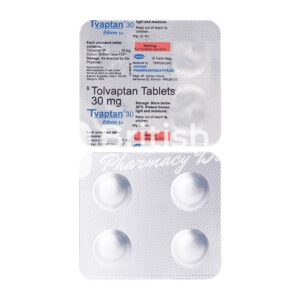
- Administered orally as film‑coated tablets (available in 15 mg, 30 mg, 45 mg and 60 mg strengths depending on region).
- The aquaretic effect generally begins within a few hours (commonly 2–4 hours) with measurable rises in serum sodium often seen within 6–8 hours after the first dose.
- The duration of action is typically up to about 24 hours; the terminal half‑life is approximately 12 hours, so once‑daily dosing is commonly used depending on indication and response.
- Avoid excessive alcohol while taking tolvaptan: alcohol can worsen dehydration and may increase risk of adverse effects, and tolvaptan carries potential liver toxicity so concurrent heavy alcohol use is not advised.
- The most common side effect is increased thirst (also frequently reported: dry mouth, increased urination/polyuria, nausea, diarrhoea and fatigue).
- Would you like to try tolvaptan without a prescription? Please note that tolvaptan is prescription‑only in most countries, and using it without medical supervision can be unsafe and is not recommended—consult a doctor or pharmacist first.
Basic Tolvaptan Information
- INN (International Nonproprietary Name): Tolvaptan.
- Brand Names Available In United Kingdom: Jinarc; Tolvaptan Accord — tablets typically 15mg, 30mg and 45mg supplied by Accord Healthcare and Otsuka.
- ATC Code: C03XA01.
- Forms & Dosages: Oral tablets 15mg, 30mg, 45mg, and 60mg in some regions; typical packaging is blister packs of 10–30 tablets.
- Manufacturers In United Kingdom: Otsuka Pharmaceutical Co., Ltd. and Accord Healthcare supply tolvaptan brands in the UK.
- Registration Status In United Kingdom: Registered with the UK MHRA.
- OTC / Rx Classification: Prescription-only medicine (POM) — not available over the counter.
Critical Warnings & Restrictions
Begin with safety: tolvaptan is a prescription-only medicine linked to serious liver injury and must not be started or continued without specialist oversight.
Absolute contraindications include severe hepatic impairment, hypovolaemia or anuria, and known hypersensitivity to tolvaptan or any excipient.
Pregnant or breastfeeding people must avoid tolvaptan; effective contraception is recommended for people of childbearing potential while taking it.
Older adults require lower starting doses and close monitoring for dehydration, falls and rapid shifts in serum sodium.
Patients with moderate renal impairment or multiple comorbidities should only start treatment after nephrology or hepatology review.
- Checklist — Contraindications: severe hepatic impairment; hypovolaemia or anuria; hypersensitivity to tolvaptan.
- Checklist — Required Baseline Tests: liver function tests, serum sodium, renal function and clinical volume assessment.
- Checklist — Who Must Be Notified: prescribing specialist (renal/hepatic), GP, and pharmacist involved in dispensing and monitoring.
High-Risk Groups (Elderly, Pregnancy, Chronic Illness)
Pregnant or breastfeeding people must not take tolvaptan because safety has not been established and the drug is contraindicated in this group.
Older adults commonly start at lower doses and need close monitoring for dehydration, orthostatic hypotension and falls risk.
People with chronic liver disease should not receive tolvaptan if significant hepatic impairment is present; even milder liver disease requires caution.
Those with moderate renal impairment, multiple cardiovascular comorbidities or frailty should only begin therapy following specialist assessment and with a documented monitoring plan.
Interaction With Activities (Driving, Workplace Safety Under UK Law)
Tolvaptan commonly causes thirst, increased urination (polyuria) and fatigue, all of which can impair concentration and physical control.
Patients must be counselled that these effects might affect their ability to drive or operate machinery.
- Symptoms Affecting Tasks: dizziness, excessive thirst, frequent urination causing distraction, drowsiness or fatigue.
- When To Notify DVLA/Employer: if side effects impair safe driving or if employed in a safety-critical role (heavy machinery, transport, healthcare with sharps), inform the prescribing clinician and employer as required.
Q&A — “Can I Drive After Taking It In The UK?”
Q: Can I drive after taking tolvaptan?
A: Do not drive if you experience dizziness, excessive thirst, drowsiness, or frequent urination that affects your concentration or control.
A: Tell your prescribing clinician and follow DVLA guidance for medical conditions that may affect driving.
A: Always follow the pharmacist’s counselling at collection and reassess fitness to drive if symptoms persist.
Usage Basics
INN, Brand Names Available In The UK
The international nonproprietary name is tolvaptan.
- Jinarc → strengths: 15mg, 30mg, 45mg → manufacturer: Otsuka.
- Tolvaptan Accord → strengths: 15mg, 30mg, 45mg → manufacturer: Accord Healthcare.
- Tablet Presentation → oral tablets in blister packs, labelled in English for UK supply.
Legal Classification (POM, P, GSL)
Tolvaptan is a Prescription-Only Medicine (POM) throughout the UK and cannot legally be supplied without a prescription.
Prescriptions may be handwritten or issued electronically via NHS e-prescribing services (EPS).
Dispensing requires pharmacist counselling and a documented monitoring arrangement recorded in the patient’s clinical notes.
- POM = prescription required.
- MHRA = United Kingdom medicines regulator responsible for registration and safety guidance.
Dosing Guide
Standard Regimens (NHS Guidelines)
For autosomal dominant polycystic kidney disease (ADPKD), typical initiation is 45mg in the morning with 15mg in the afternoon, titrated as tolerated up to 90mg/30mg daily under specialist direction.
For hyponatraemia due to SIADH, heart failure or cirrhosis, initiation commonly starts at 15mg once daily and can be titrated up to 60mg per day according to response and safety monitoring.
Duration depends on indication: long-term maintenance under specialist supervision for ADPKD, and usually short-term (days to weeks) for hyponatraemia with frequent sodium checks.
Adjustments For Comorbidities
Tolvaptan is not approved for children and therefore should not be used in paediatric patients.
Elderly patients should start at lower doses and be monitored for dehydration, electrolyte imbalance and falls.
Severe renal failure is generally a contra‑indicator and moderate renal impairment requires specialist caution.
Significant hepatic impairment is an absolute contraindication because of serious liver injury risk.
- Checklist: baseline LFTs, baseline serum sodium and renal function, then a repeated monitoring schedule agreed with the specialist (monthly LFTs initially and frequent sodium checks when correcting hyponatraemia).
Q&A — “What If I Miss A Dose?”
Q: What if I miss a dose?
A: Take the missed dose as soon as you remember on the same day.
A: If it is near the next scheduled dose, skip the missed dose and do not double up.
A: Contact your specialist if multiple doses are missed or if vomiting prevents absorption.
Interaction Chart
Food And Drinks (Alcohol, Tea/Coffee, Diet Habits)
Tolvaptan causes aquaresis — loss of free water — so alcohol can worsen dehydration and orthostatic symptoms and should be limited while taking the drug.
Caffeinated drinks may increase diuresis and thirst; advise patients to monitor fluid balance rather than drink excessively.
- Avoid heavy drinking while taking tolvaptan.
- Monitor caffeine intake and be mindful of increased nocturia when drinking tea or coffee late in the day.
Common Drug Conflicts (MHRA Yellow Card Data)
The major interaction is with CYP3A4 inhibitors such as ketoconazole, clarithromycin and grapefruit, which can increase tolvaptan exposure and the risk of hepatotoxicity.
Potent CYP3A4 inducers may reduce tolvaptan efficacy.
Co-prescribing with other agents that affect sodium or water balance, for example loop diuretics or thiazides, increases the risk of dehydration and electrolyte disturbance.
| Drug | Interaction Type | Clinical Action |
|---|---|---|
| Ketoconazole, Clarithromycin, Grapefruit | Potent CYP3A4 inhibition → increased tolvaptan levels | Avoid co-prescribing; consider alternative or specialist review and dose adjustment |
| Rifampicin, Carbamazepine | CYP3A4 induction → reduced tolvaptan effect | Monitor response; specialist may need to adjust therapy |
| Loop Diuretics, Thiazides | Added diuresis and electrolyte disturbance | Review fluid balance and electrolytes frequently; adjust other diuretics as needed |
User Reports & Trends
Patients on forums and NHS information pages commonly report pronounced thirst and frequent urination that affects sleep and social life.
Other frequent complaints include nausea, diarrhoea and fatigue, while rarer concerns focus on liver test monitoring and access to specialist follow-up.
- Reported Side Effects: thirst; polyuria; dry mouth; nausea; diarrhoea; fatigue.
- Patient Concerns: difficulty adhering to dosing because of nocturia; anxiety about liver monitoring; difficulty accessing renal specialists for prescriptions.
Example anonymised forum quotes for context:
- “I wake twice a night to pee and it’s affecting my shifts at work.”
- “My consultant arranged monthly blood tests but I still worry about my liver enzymes.”
Clinicians should treat these reports as signals to reinforce counselling, ensure monitoring schedules are clear and apply shared decision-making about quality-of-life trade-offs.
- Checklist For Clinicians: acknowledge impact on sleep and work; plan monitoring visits; offer practical advice about dosing times to reduce nocturia where possible.
Access & Purchase Options
Boots, LloydsPharmacy, Superdrug
Major UK pharmacy chains including Boots and LloydsPharmacy, community pharmacies and NHS hospital pharmacies dispense tolvaptan on a valid prescription.
Expect pharmacist counselling and confirmation of baseline monitoring arrangements when collecting the medicine.
- Documents To Bring: valid prescription, photographic ID, and summary care record or details of recent blood tests where available.
Online Pharmacies And NHS E-Prescriptions
E-prescriptions (EPS) from GP surgeries or hospitals can be sent to a nominated pharmacy and authorised online pharmacies will dispense on receipt of a valid prescription.
Always verify the pharmacy is MHRA-registered and avoid overseas sellers without UK regulation.
- Checklist: verify MHRA licence; avoid overseas sources without regulation; set up nomination for EPS via your GP surgery.
In our online pharmacy, tolvaptan is available without a prescription, with discreet delivery to United Kingdom in 5-14 days.
Mechanism & Pharmacology
Simplified Explanation
Tolvaptan is a selective vasopressin V2 receptor antagonist that blocks vasopressin action in the renal collecting duct.
Blocking V2 receptors reduces water reabsorption and increases free-water excretion (aquaresis) without major sodium loss, which helps correct hyponatraemia in suitable patients.
In ADPKD, reduced vasopressin signalling lowers intracellular cAMP in kidney tubular cells, slowing cyst growth and hence preserving renal function over time.
- Effects: increased urine output of free water; reduced dilutional hyponatraemia; slowing of cyst progression in ADPKD.
Clinical Terms
- Vasopressin V2 Receptor Antagonist → blocks V2 receptors in collecting ducts to reduce water reabsorption.
- Aquaresis → excretion of free water with limited electrolyte loss.
- cAMP → intracellular messenger implicated in cyst growth in ADPKD.
Pharmacokinetics are important: tolvaptan is oral, metabolised in the liver via CYP3A4, which explains many drug interactions and the need for liver monitoring.
Indications & Off-Label Uses
MHRA-Approved Uses
Tolvaptan is licensed for adults with autosomal dominant polycystic kidney disease (ADPKD) to slow renal function decline in eligible patients.
It is also indicated for euvolaemic or hypervolaemic hyponatraemia (for example SIADH, heart failure or cirrhosis) that has not responded to fluid restriction.
Specialist prescribing and monitoring arrangements are required for both indications.
Off-Label Practices In NHS And Private Care
Off-label use is uncommon due to the drug’s safety profile, but compassionate or trial-based prescribing may occur under specialist supervision.
NHS commissioning typically restricts tolvaptan to eligible patients demonstrating rapid ADPKD progression according to local criteria.
- Typical Eligibility Checkpoints: confirmed ADPKD diagnosis, evidence of rapid progression, informed consent, baseline LFTs and renal function.
- Required Baseline Investigations: serum sodium, renal function, liver function tests, and often imaging (MRI/ultrasound) to document kidney volume where applicable.
Key Clinical Findings
Randomised trials and post-marketing experience show that tolvaptan slows the increase in total kidney volume and reduces the rate of eGFR decline in ADPKD compared with placebo.
These benefits must be balanced against safety signals, most notably serious but uncommon liver injury, which led to regulatory requirements for regular liver function monitoring and risk minimisation measures.
For hyponatraemia, tolvaptan can effectively increase serum sodium when fluid restriction has failed, but careful titration is required to avoid overly rapid correction and the risk of osmotic demyelination.
- Principal Benefits: slows ADPKD progression in selected patients; corrects hyponatraemia when conservative measures fail.
- Principal Risks: hepatotoxicity requiring monitoring; dehydration and rapid sodium correction risks.
Alternatives Matrix
NHS Prescribing Alternatives (Comparison Table)
| Agent | Route | Typical Indication | Advantages | Disadvantages |
|---|---|---|---|---|
| Tolvaptan | Oral | ADPKD; hyponatraemia | Targets vasopressin signalling; effective for ADPKD progression | Requires liver monitoring; POM; cost and specialist oversight |
| Conivaptan | IV | Hyponatraemia (hospital use) | Useful in acute inpatient correction | Limited UK use; IV only |
| Standard Diuretics (Furosemide, Thiazides) | Oral/IV | Fluid control in heart failure or oedema | Widely available and familiar to prescribers | Do not slow ADPKD progression; affect electrolytes differently |
| Conservative Management | Non-drug | Hyponatraemia | Low cost; no drug toxicity | Often ineffective for persistent hyponatraemia |
Pros And Cons Checklist
- Efficacy For ADPKD Progression — tolvaptan has trial evidence of benefit; alternatives generally do not slow cyst growth.
- Need For Monitoring — tolvaptan requires regular LFTs; many alternatives do not.
- Safety Profile — tolvaptan carries hepatotoxicity risk; diuretics carry other electrolyte and renal risks.
- Ease Of Use — oral dosing is convenient but aquaresis can affect daily life.
- Cost And Access — specialist commissioning often limits NHS access; private prescribing varies in price.
Common Questions
- Who Is Eligible For Tolvaptan On The NHS? Eligibility commonly requires confirmed ADPKD with evidence of rapid progression or specialist-managed hyponatraemia unresponsive to fluid restriction; local policies vary — check with the renal clinic.
- How Often Are Liver Tests Needed? Baseline LFTs followed by monthly monitoring initially (often for the first 18 months) then every three months or per local protocol; urgent review for jaundice, dark urine or severe fatigue.
- Will My Sodium Rise Too Quickly? Rapid correction is a recognised risk; dosing is titrated with close sodium monitoring, particularly in the first 24–72 hours for acute hyponatraemia.
- Can I Stop If Side Effects Are Bothersome? Discuss with your specialist — stopping may be appropriate for severe adverse effects and alternatives can be planned.
Signposts: contact your renal clinic or NHS 111 for urgent concerns and follow-up with your specialist team for routine queries.
NHS Cost & Access Comparison Table
| Source/Pharmacy | Typical Private Price Range (GBP) | NHS Prescription Charge (England) | Exemptions |
|---|---|---|---|
| Community Pharmacy (Boots, Lloyds) | Private: variable | Standard charge per item unless exempt | Children, elderly, low income and certain medical exemptions in England; Scotland/Wales/Northern Ireland generally free |
| Hospital Pharmacy (Specialist Supply) | Usually supplied on NHS to eligible patients | NHS supply subject to local policy | Supply commonly free to eligible ADPKD patients via hospital clinics |
| Region | Notes |
|---|---|
| England | Standard prescription fee applies where relevant; many eligible ADPKD patients obtain NHS supply. |
| Scotland | Prescriptions generally free. |
| Wales | Prescriptions generally free. |
| Northern Ireland | Prescriptions generally free. |
Recommended action: verify local CCG/NHS Trust commissioning policy and use pharmacy checklist to confirm stock or special ordering for Jinarc or Tolvaptan Accord.
Registration & Regulation
MHRA Approval Process
Tolvaptan is MHRA-registered in the United Kingdom and authorised by EMA and FDA in other jurisdictions.
Post-authorisation safety measures for tolvaptan include mandatory hepatic monitoring and risk minimisation materials provided by manufacturers.
- Regulatory milestones: FDA approval (2009); EMA central authorisations for Jinarc/Samsca; MHRA registration in the UK.
- Boxed warnings and risk-minimisation focus on liver injury.
NHS Prescribing Framework
Prescribing tolvaptan requires clear documentation of indication, baseline tests, monitoring plan and informed consent.
Local Trust formulary status and commissioning decisions may restrict prescribing to renal specialists and specialist clinics.
- Documentation And Reporting Steps: record baseline investigations, monitoring schedule and adverse events; report serious adverse reactions via the MHRA Yellow Card scheme.
Storage & Handling
UK Household Storage (Cold/Damp Climate)
Store tolvaptan tablets below 25°C in the original container and keep away from moisture and reach of children.
In damp UK homes avoid storing tablets in bathrooms; instead use a dry cupboard or bedroom drawer.
- Ideal storage locations: kitchen cupboard away from the sink, bedside drawer, or hallway cupboard that stays dry.
- Items to avoid: bathrooms, car glove boxes in summer, freezing conditions.
Guidance From NHS And Pharmacists
When transporting medicines after collection or by post, ensure packaging protects tablets from moisture and temperature extremes.
Pharmacies follow supplier guidance for storage (tolvaptan standard ambient storage is below 25°C) and should counsel patients on travel dosing and timing to avoid excessive nocturia during travel.
- Transport tips: keep medication in original packaging, avoid placing in checked luggage where temperatures vary, and carry a copy of the prescription and clinical contact details.
- Action if tablets look discoloured or broken: do not take them and return to the dispensing pharmacy for inspection.
Guidelines For Proper Use
UK Pharmacist Counselling Style
Pharmacists should use structured counselling that covers indication, dosing schedule, expected effects and safety monitoring.
Counselling should include the likely effects of aquaresis such as thirst and polyuria, instructions about liver testing and how to recognise signs of liver injury.
- Counselling Template: indication; dosing times; common side effects; interactions (CYP3A4); monitoring schedule; when to seek urgent care (jaundice, severe abdominal pain, sudden weakness).
NHS Patient Safety Advice
Before initiation, document baseline LFTs, renal function and serum sodium and obtain informed consent discussing benefits and risks.
Monitor monthly LFTs initially and ensure patients know symptoms of liver injury and the importance of avoiding CYP3A4 inhibitors.
- Baseline tests: LFTs, serum sodium, eGFR and clinical volume status.
- Monitoring timeline: monthly LFTs initially, then at intervals per local protocol; frequent sodium checks when correcting hyponatraemia.
- Escalation steps: stop drug and seek urgent review for signs of liver injury or severe adverse effects.
Delivery Across United Kingdom
| City | Region | Delivery time |
|---|---|---|
| London | England | 5-7 days |
| Birmingham | England | 5-7 days |
| Manchester | England | 5-7 days |
| Glasgow | Scotland | 5-7 days |
| Leeds | England | 5-7 days |
| Edinburgh | Scotland | 5-7 days |
| Bristol | England | 5-7 days |
| Newcastle | England | 5-9 days |
| Cardiff | Wales | 5-9 days |
| Belfast | Northern Ireland | 5-9 days |
| Nottingham | England | 5-9 days |
| Sheffield | England | 5-9 days |
| Southampton | England | 5-9 days |
| Reading | England | 5-9 days |