
Erythroped
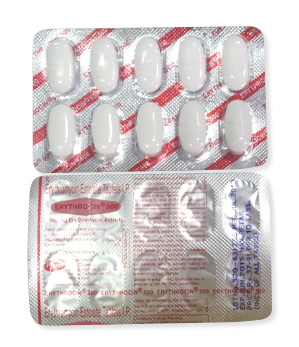
Erythroped
- In our pharmacy, you can buy erythroped without a prescription, with delivery in 5–14 days throughout the United Kingdom. Discreet and anonymous packaging.
- Erythroped is an erythromycin antibiotic used to treat a range of bacterial infections, including respiratory tract infections, skin infections, diphtheria, streptococcal pharyngitis, chlamydial infections and some other susceptible infections. It works by binding to the bacterial 50S ribosomal subunit and inhibiting protein synthesis, which stops bacteria from growing.
- The usual adult dose is 250–500 mg every 6 hours, depending on the infection. For children, the usual dose is 30–50 mg/kg/day in divided doses, adjusted to the condition and age.
- The form of administration is oral tablets, capsules, oral suspension, or granules for suspension.
- The effect of the medication begins within about 1–2 hours after taking it, although improvement in symptoms may take longer.
- The duration of action is around 6 hours, which is why it is commonly taken every 6 hours.
- Do not consume alcohol, as it may increase stomach irritation and add strain to the liver, especially if you are already feeling unwell or have liver problems.
- The most common side effects are nausea, vomiting, diarrhoea, abdominal pain, and other gastrointestinal upset; rash can also occur.
- Would you like to try erythroped without a prescription?
Erythroped
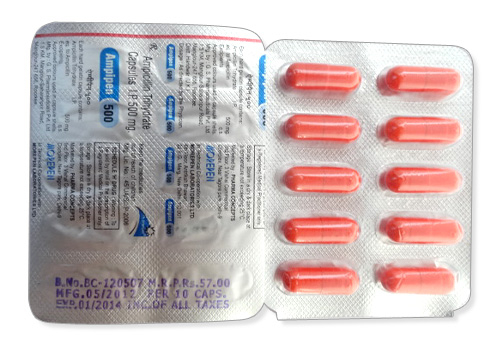
Basic Erythroped Information
- INN (International Nonproprietary Name): Erythromycin
- Brand names available in United Kingdom: Erythrocin; international names include Ery-Ped, Eryc, E.E.S. 200/400, Erythrocin and Erythroped
- ATC Code: J01FA01
- Forms & dosages: Tablets 250 mg and 500 mg; oral suspension 125 mg/5 ml and 250 mg/5 ml; delayed-release capsules 250 mg and 333 mg; granules for suspension
- Manufacturers in United Kingdom: Major global producers and many generic manufacturers supply erythromycin; local brand availability varies
- Registration status in United Kingdom: Prescription-only medicine
- OTC / Rx classification: Prescription-only (Rx)
Safety First: Who Should Not Self-Manage
High-Risk Groups And When Not To Self-Manage
Thinking of ordering erythroped for a sore throat, chest infection or skin problem?
That is sensible only if a clinician has already said erythromycin is appropriate for you.
It is a prescription-only medicine in UK practice, and it should not be bought casually online without a valid prescription.
Extra review is needed in older adults, during pregnancy, and in anyone with chronic illness, liver disease or heart disease.
Do not take it, and seek advice first, if any of the following apply:
- Known allergy or hypersensitivity to erythromycin or other macrolides.
- Pre-existing liver disease.
- Previous cholestatic jaundice or hepatic dysfunction with erythromycin.
- Myasthenia gravis.
- History of QT prolongation, arrhythmia, fainting episodes or a doctor has warned about rhythm problems.
If you are unsure, contact your GP, NHS 111, urgent care or, for severe symptoms, 999.
Serious Symptoms That Need Urgent Action
Jaundice, dark urine, severe abdominal pain, palpitations, fainting, rash, swelling and breathing difficulty are not symptoms to ignore.
That is the kind of safety thinking the MHRA expects: spot harm early, act quickly and do not push through worrying reactions.
Stop the medicine only if a clinician advises it, except in an emergency where urgent help is needed straight away.
Micro-FAQ: Can Erythromycin Affect Driving?
A: It may if you feel dizzy, unwell or have blurred vision. Do not drive if symptoms affect safety.
What Erythroped Is And How It Is Named In The UK
Erythroped And Erythromycin In The UK
Erythroped is one of the brand names used internationally for erythromycin, the INN for this macrolide antibiotic.
In the UK, Erythrocin is the listed brand name, and erythromycin may also appear simply as a generic medicine on the label.
The ATC code is J01FA01, which places it in the macrolide antibacterial group.
People may see tablets, erythromycin capsules or erythromycin suspension depending on age, infection and local supply.
How UK Patients May Recognise The Medicine
Packaging can vary by manufacturer, and the box may show a local brand name, the generic name, or both.
Some products are labelled clearly as erythromycin 250 mg or erythromycin 500 mg, while others use different brand styling or bottle formats.
- INN
- The international nonproprietary name; here, erythromycin.
- Brand name
- The manufacturer’s name for the product, such as Erythrocin or Erythroped.
- Generic medicine
- A medicine sold under its common drug name rather than a single branded label.
- Macrolide
- A group of antibiotics that includes erythromycin, clarithromycin and azithromycin.
Legal Status And NHS Prescribing In The United Kingdom
Prescription-Only Medicine In The UK
Erythromycin is a prescription-only medicine in UK practice.
It is usually supplied after a GP review, an out-of-hours assessment, urgent care consultation, hospital discharge plan or private clinician appointment.
That matters because resistance patterns, allergies, liver disease and QT risk all affect whether it is suitable.
National guidance and local formulary choices can vary, so the medicine may be selected differently from one area to another.
Electronic Prescriptions And Pharmacist Supply
In the UK, prescriptions are often sent electronically through EPS, then collected from a pharmacy at a convenient time.
Boots, LloydsPharmacy, Superdrug and many independent community pharmacies dispense it when stock is available.
Pharmacist counselling is a key part of UK care, especially for antibiotics, because dose timing, interactions and side effects all need explaining.
- GP or out-of-hours prescription.
- Hospital discharge prescription.
- Private clinician prescription.
- Pharmacy dispensing through EPS or paper prescription.
Who It Is For And When Clinicians Use It
MHRA And NHS-Relevant Uses
Erythromycin is used for respiratory tract infections, skin infections, diphtheria, streptococcal pharyngitis, syphilis, chlamydia and other susceptible infections.
Choice of antibiotic depends on local resistance patterns and clinician judgement.
Typical courses are usually 7 to 14 days, with 10 days for strep throat and at least 14 days for diphtheria.
For some infections, longer or intermittent regimens may be used, for example in rheumatic fever prevention.
Why A Prescriber May Choose Erythromycin
It can be useful when penicillin cannot be used, or when the organism is known to be susceptible.
That said, erythromycin tablets, erythromycin oral suspension and erythromycin capsules are not interchangeable without checking the exact product and dose.
| Condition | Typical Adult Dose | Paediatric Dose | Duration |
|---|---|---|---|
| Respiratory tract infections | 250–500 mg every 6 hours | 30–50 mg/kg/day in divided doses | 7–14 days |
| Skin infections | 250–500 mg every 6 hours | As above | 7–14 days |
| Diphtheria | 250–500 mg every 6 hours | As above | Minimum 14 days |
| Streptococcal pharyngitis | 250 mg every 6 hours | 20–40 mg/kg/day | 10 days |
Take with food if stomach upset occurs, and complete the full course even if you feel better early.
How Erythromycin Works
Mechanism Of Action
Erythromycin is a macrolide antibiotic that stops bacteria making proteins.
By doing that, it slows bacterial growth and helps the immune system clear the infection.
Its ATC code, J01FA01, identifies it as part of the macrolide group used for systemic bacterial infections.
Clinical Terms Made Easy
- Bacteriostatic
- Helps stop bacteria multiplying, rather than killing every organism directly.
- Spectrum
- The range of bacteria a medicine can work against.
- Resistance
- When bacteria become harder to treat with a given antibiotic.
- Susceptibility
- When bacteria are likely to respond to the antibiotic.
That is why clinicians sometimes choose between erythromycin suspension, erythromycin tablets and erythromycin capsules based on the person and the infection.
Dosage Forms And Strengths You May See
Available Formulations And Strengths
UK patients may see tablets, delayed-release capsules, oral suspension or granules for suspension.
The source strengths include tablets 250 mg and 500 mg, suspension 125 mg/5 ml and 250 mg/5 ml, and delayed-release capsules 250 mg and 333 mg.
Packaging is usually in blister packs, bottles or sachets, depending on the form.
What Matters When Choosing A Form
Suspension is often used for children because it allows weight-based dosing and easier swallowing.
Tablets and capsules are more common for adults, especially when a standard dose is needed.
Some suspensions need refrigeration after reconstitution, while others can be kept at room temperature, so the label must always be checked.
| Form | Strength | Practical Use |
|---|---|---|
| Tablets | 250 mg, 500 mg | Often used in adults |
| Oral suspension | 125 mg/5 ml, 250 mg/5 ml | Often used in children or people who cannot swallow tablets |
| Delayed-release capsules | 250 mg, 333 mg | Useful where a capsule is preferred and prescribed |
| Granules for suspension | Varies | Mixed before use, then shaken well |
Micro-FAQ: Is Erythroped The Same As Erythrocin?
A: They contain the same INN, erythromycin, but brand names and formulations can differ by country and manufacturer.
Usual Dosing And Missed Dose Advice
Typical Adult And Paediatric Dosing
Common adult regimens are 250–500 mg every 6 hours by mouth for respiratory and skin infections.
For streptococcal pharyngitis, 250 mg every 6 hours is a standard adult regimen in the source data.
Some infections use 500 mg every 6 hours.
Children are usually dosed by weight, commonly 30–50 mg/kg/day in divided doses, or 20–40 mg/kg/day for strep throat depending on indication.
The prescriber’s directions always take priority over general dosing ranges.
What To Do If A Dose Is Missed
Take the missed dose as soon as it is remembered unless it is nearly time for the next one.
If that is the case, skip the missed dose and go back to the usual schedule.
Do not double up.
Shake oral suspension well before measuring a dose, and use the measuring device supplied.
- Check the label and strength.
- Confirm the time of the last dose.
- Take with food if stomach upset is a problem.
- Watch for rash, vomiting, jaundice or palpitations.
Micro-FAQ: What If I Vomit After Taking It?
A: Ask a pharmacist or prescriber for advice; whether a dose should be repeated depends on timing and symptoms.
Dose Adjustments And Special Populations
Children, Older Adults And Weight-Based Dosing
Children are usually dosed by weight, which is why erythromycin suspension is often used.
Older adults do not have a fixed dose adjustment, but comorbidities and adverse effects need closer monitoring.
A frail older patient with heart disease or liver disease may need a different antibiotic altogether.
Liver, Kidney And Heart Considerations
Pre-existing liver disease is a contraindication, and any signs of hepatitis need urgent review.
Renal impairment usually does not require adjustment unless severe, but caution is still sensible.
QT prolongation and arrhythmias are important cardiac risks, especially in people already taking rhythm-affecting medicines.
- Avoid use in pre-existing liver disease.
- Be cautious with severe kidney problems.
- Review cardiac history and QT risk.
- Use extra care in pregnancy, older age and chronic illness.
Side Effects, Hepatotoxicity And When To Stop
Common And Rare Adverse Effects
The more common effects are nausea, vomiting, diarrhoea, abdominal pain and rash.
More serious reactions include hepatotoxicity, jaundice, arrhythmias and severe allergic reactions such as anaphylaxis.
Rare hearing loss has been reported, especially with high IV doses.
That is why it helps to separate expected stomach upset from danger signs that need prompt action.
Patient Advice On Side Effects
Contact a pharmacist for mild stomach upset, a GP or NHS 111 for ongoing diarrhoea or rash, and urgent care if you feel faint, develop swelling or have breathing difficulty.
If jaundice, dark urine or abdominal pain appear, stop and seek medical advice promptly because those can be signs of liver injury.
| Symptom | Likely Seriousness | Action |
|---|---|---|
| Nausea, vomiting, diarrhoea | Common | Speak to a pharmacist if troublesome |
| Rash | May be mild or allergic | Seek advice if it spreads or worsens |
| Jaundice, dark urine, abdominal pain | Serious | Get urgent medical advice |
| Palpitations, fainting, breathing difficulty, swelling | Emergency | Seek urgent care or call 999 |
Interactions With Medicines, Food And Daily Habits
Common Drug Interactions
Erythromycin interacts with statins, warfarin and digoxin, so every other medicine needs to be checked before it is supplied.
Interaction risk also increases with other medicines that can prolong the QT interval.
That includes prescribed drugs, over-the-counter treatments and herbal products, which is why a full medicine list matters at the pharmacy.
Food, Alcohol, Tea And Daily Habits
Take it with food if stomach upset occurs, unless the label or prescriber says otherwise.
There is no safe blanket message for alcohol, so moderation and pharmacist advice are the sensible approach.
Tea and normal daily meals do not usually cause a special issue, but if a product has been reconstituted, follow the storage and administration instructions exactly.
- Statins.
- Warfarin.
- Digoxin.
- Any medicine that can affect heart rhythm.
- Any herbal or over-the-counter product you take regularly.
Micro-FAQ: Can I Take It With Breakfast?
A: Yes, if food helps stomach upset, unless your prescriber or label says otherwise.
How UK Patients Can Access It
Where You Can Obtain It
In the UK, erythromycin is usually supplied through Boots, LloydsPharmacy, Superdrug, independent community pharmacies and registered online pharmacies.
Supply depends on stock and generic availability, so the exact brand may vary from one branch to another.
Our online pharmacy offers erythroped without a prescription, with discreet delivery to the United Kingdom in 5–14 days, but the medicine itself remains prescription-only in normal UK clinical practice and should still be used only when clinically appropriate.
What To Check Before Buying Online
Safe online buying starts with a valid prescription requirement, UK pharmacy registration, a pharmacist available for consultation and a secure supply chain.
Claims such as “buy erythromycin online” without any prescription check should be treated with caution.
- Check the pharmacy is UK-registered.
- Confirm a pharmacist can answer questions.
- Make sure prescription checks are in place.
- Look for secure payment and delivery details.
- Read the product name, strength and instructions carefully.
Cost, Charges And Regional Differences
England, Scotland, Wales And Northern Ireland
Prescription charges apply in England, while Scotland, Wales and Northern Ireland have free prescriptions.
In England, exemption categories may apply, which can reduce or remove the charge for eligible patients.
That is one reason generic erythromycin is often discussed alongside prescription charge rules rather than only the medicine cost itself.
Typical Cost Considerations
Generic erythromycin is usually cheaper than many branded options, but the final price depends on whether it is supplied on the NHS or privately.
Private pricing varies by pharmacy, pack size and formulation, so exact figures are not reliable without a live quote.
| Source | Typical Cost Band | NHS Charge | Exemptions |
|---|---|---|---|
| NHS prescription in England | Usually the standard prescription charge | Applies | Yes, for eligible groups |
| NHS prescription in Scotland, Wales and Northern Ireland | Usually no charge | Not applicable | Not needed for standard dispensing |
| Private pharmacy supply | Varies by product and service | Not applicable | Not applicable |
Storage, Transport And Household Handling
How To Store Erythromycin Safely
Tablets and capsules should be kept at 15–25°C in a dry place, away from light and moisture.
Suspensions must follow the label instructions, because some need refrigeration after reconstitution while others do not.
Keep every form out of reach of children.
Practical UK Household Tips
Do not store medicines in a damp bathroom if it can be avoided.
Leave them in the original packaging so the strength and expiry date are easy to check.
For school bags, travel or shared households, a simple storage routine prevents mix-ups.
- Keep in the original box or bottle.
- Check the expiry date before use.
- Store away from heat, light and moisture.
- Secure medicines away from children.
- Shake oral suspension well before each dose.
Alternatives And When A Clinician May Switch
Comparison With Related Macrolides
Clarithromycin, azithromycin and roxithromycin are related macrolides with different dosing patterns and practical advantages.
Clarithromycin has a longer half-life and less frequent dosing, while azithromycin is often once daily and may be chosen for broader indications.
Roxithromycin is a structural analogue and is not widely available in the US.
| Drug | ATC Code | Main Difference |
|---|---|---|
| Erythromycin | J01FA01 | Long-standing use, multiple formulations, more frequent dosing |
| Clarithromycin | J01FA09 | Longer half-life, less frequent dosing |
| Azithromycin | J01FA10 | Once-daily dosing, broader indications |
| Roxithromycin | J01FA06 | Structural analogue |
- Long clinical experience.
- Multiple formulations for different ages.
- Useful in selected susceptible infections.
- GI effects and interactions are common drawbacks.
Final Patient Counselling And Follow-Up
What Pharmacists And Prescribers Should Tell Patients
Patients do best when they know why the antibiotic was chosen, how long to take it and what side effects matter.
That includes completing the full course, even if symptoms settle early, and reporting worsening symptoms rather than waiting until the end of treatment.
UK pharmacist counselling usually covers timing, interactions, missed doses and when to seek help, because these details make a real difference to safety.
Common Patient Questions
Can it be stopped when you feel better? No, not unless the prescriber says so, because stopping early can mean the infection is not fully treated.
Is it safe in pregnancy? That needs individual review, especially if there is liver disease, heart disease or other medicines involved.
What if diarrhoea or a rash appears? Mild symptoms may need pharmacist advice, but worsening symptoms, swelling or breathing difficulty need urgent assessment.
Can you drive or work after taking it? Only if you feel well enough and are not dizzy, blurred or unwell.
- Take exactly as prescribed.
- Finish the course unless a clinician tells you to stop.
- Report jaundice, dark urine, abdominal pain or palpitations quickly.
- Tell the pharmacy about every medicine you use.
- Seek urgent help for swelling, fainting or breathing difficulty.
Delivery Across United Kingdom
| City | Region | Delivery time |
|---|---|---|
| London | England | 5-7 days |
| Birmingham | England | 5-7 days |
| Manchester | England | 5-7 days |
| Leeds | England | 5-7 days |
| Liverpool | England | 5-7 days |
| Edinburgh | Scotland | 5-7 days |
| Glasgow | Scotland | 5-7 days |
| Cardiff | Wales | 5-7 days |
| Belfast | Northern Ireland | 5-7 days |
| Sheffield | England | 5-9 days |
| Bristol | England | 5-9 days |
| Newcastle upon Tyne | England | 5-9 days |
| Nottingham | England | 5-9 days |
| Southampton | England | 5-9 days |