Sinequan
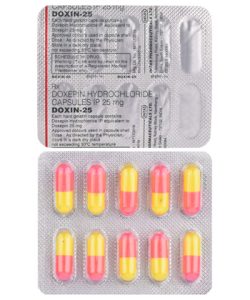
In brief
- Sinequan (doxepin) is a prescription-only medicine (Rx) in the UK and most other markets and should normally be obtained from a pharmacy with a valid prescription; some online sellers or unregulated outlets may claim to supply without a prescription but this is not legal or safe.
- Sinequan is used for depression, anxiety and in low doses (as Silenor) for insomnia; it is a tricyclic antidepressant that inhibits the reuptake of norepinephrine and serotonin and has strong antihistamine (H1) and anticholinergic effects that contribute to sedation.
- Typical adult doses for depression/anxiety start at about 75 mg/day (divided or at night), usual range 75–150 mg/day, with maximums up to 300 mg/day; for insomnia the Silenor formulation is 3–6 mg at bedtime; elderly and those with hepatic/renal impairment should start at lower doses (eg 25–50 mg/day).
- Administered orally: capsules (commonly 10, 25, 50, 75, 100 mg), oral solution (10 mg/mL in some markets) and low‑dose tablets (3 mg, 6 mg) for insomnia.
- Sedative effects can be seen within 30–60 minutes; antidepressant benefits typically take 1–3 weeks to become evident.
- Antidepressant effects are generally maintained with once‑daily or divided dosing and may persist with ongoing therapy (roughly 24 hours per dose); the low‑dose insomnia formulation provides overnight sedation (typically covering the sleep period, ~6–8 hours).
- Do not drink alcohol with sinequan — alcohol increases sedation, dizziness and other adverse effects and can be dangerous when combined with tricyclic antidepressants.
- The most common side effect is drowsiness (also common: dry mouth, dizziness, blurred vision, constipation, urinary retention, weight gain and orthostatic hypotension).
- Would you like to try sinequan without a prescription?
Critical Warnings & Restrictions
Basic Sinequan Information
- INN (International Nonproprietary Name): Doxepin
- Brand Names Available In United Kingdom: Sinequan and generic doxepin products
- ATC Code: N06AA12
- Forms & Dosages: Capsules 10mg, 25mg, 50mg, 75mg, 100mg; oral solution 10 mg/mL in some markets; Silenor tablets 3mg and 6mg for insomnia
- Manufacturers In United Kingdom: Generics supplied by manufacturers such as Mylan and Teva; local generics also available
- Registration Status In United Kingdom: Registered as prescription only (Rx); generic approval prevalent
- OTC / Rx Classification: Prescription only (Rx)
Are You Worried About Safety?
Doxepin is a prescription‑only medicine and must be managed with clear safety checks before and during treatment.
Escalate immediately for red flags such as new or worsening suicidal thoughts, sudden chest pain, fainting, severe shortness of breath or sudden visual changes.
For urgent deterioration or suspected overdose call 999 or attend the nearest emergency department without delay.
Report all serious adverse events to the MHRA via the Yellow Card scheme.
Absolute contraindications include known hypersensitivity to doxepin or other tricyclic antidepressants, narrow‑angle glaucoma, urinary retention and MAOI use within the past 14 days.
Relative contraindications include advanced age, significant hepatic or renal impairment, cardiac conduction abnormalities, pregnancy and lactation; specialist input is advised where these apply.
Overdose may present with severe drowsiness, confusion, cardiac arrhythmias and seizures and requires urgent hospital assessment.
Prescriber safety tools should include a checklist, a patient safety card and an overdose escalation flowchart (image).
- Absolute Contraindications: Known doxepin/TCA hypersensitivity; narrow‑angle glaucoma; urinary retention; MAOI within 14 days.
- Relative Contraindications: Elderly; severe hepatic/renal impairment; cardiac conduction disorders; pregnancy and lactation.
- Checklist For Prescribers: Complete drug and allergy history.
- Checklist For Prescribers: Baseline ECG if cardiac risk factors present.
- Checklist For Prescribers: Pregnancy test where indicated and documented consent.
- Checklist For Prescribers: Record keeping in line with MHRA and local formulary policies.
High‑Risk Groups
Elderly patients are more sensitive to anticholinergic effects, sedation and orthostatic hypotension.
Start elderly patients at the lower end of dosing, for example 25–50 mg/day, and titrate carefully with close monitoring for falls and confusion.
Pregnancy and lactation require specialist obstetric or maternal mental‑health input and clear documentation of consent and monitoring plans.
Patients with severe hepatic or renal impairment should have reduced starting doses and longer titration intervals due to altered metabolism and excretion.
Cardiac disease or history of suicidality requires a baseline ECG and discussion with cardiology or mental‑health teams as appropriate.
Enhanced monitoring and a crisis plan are needed where suicidality is a concern.
- Elderly
- Start low (25–50 mg/day), review weekly initially for sedation, anticholinergic effects and falls.
- Pregnancy And Lactation
- Treat only when benefits outweigh risks and document specialist advice and a monitoring plan.
- Hepatic/Renal Impairment
- Reduce starting dose and extend titration; consider plasma monitoring where available.
- Cardiac Disease/Suicidality
- Obtain baseline ECG and consider cardiology input for conduction disorders; set up enhanced follow‑up.
- Monitoring Frequency Checklist: Weekly review for the first month, then monthly reviews while stabilising.
Interaction With Activities
Patients commonly ask whether doxepin affects day‑to‑day activities such as driving or operating machinery.
Doxepin can cause drowsiness, dizziness, blurred vision and orthostatic hypotension which may impair driving ability.
Under UK law, patients must not drive if any medicine affects their ability to drive and commercial drivers should consult DVLA guidance and their employer.
Avoid high‑risk tasks such as heavy machinery operation or unsupervised night‑shift duties until tolerance is established.
Record workplace and driving advice in the patient notes for medico‑legal clarity.
- Avoid driving or operating machinery if drowsy or dizzy.
- Commercial drivers should follow DVLA and occupational health advice.
- Discuss phased return to work and reasonable adjustments if sedation persists.
- GP/Pharmacist Counselling Checklist: Discuss driving, workplace risks, symptoms to expect and when to stop activities and seek advice.
Q&A — “Can I Drive After Taking It In The UK?”
Short answer: You should not drive if you feel drowsy, dizzy or otherwise impaired.
The DVLA requires drivers to stop driving if any medicine affects their ability to drive and to inform their GP where impairment persists.
Avoid driving for the first 24–48 hours after starting treatment or after a dose increase and reassess once stable.
Document the advice you were given and seek re‑assessment if symptoms continue.
Usage Basics: INN, Brands And Legal Status
Which medicine are we discussing? The INN is doxepin and it is a tricyclic antidepressant listed with ATC code N06AA12.
Sinequan is the traditional brand name noted for use in the UK and export markets and generic doxepin products are widely available.
Silenor is a low‑dose preparation (3–6 mg) used for insomnia in some markets and is distinct from standard doxepin capsules.
Other international brand examples include Quitaxon in Spain and Doquel in Australia.
Doxepin products are classified as prescription‑only medicines in the UK and other major markets.
| INN | Key Brand Names | Common Forms |
|---|---|---|
| Doxepin | Sinequan; Silenor; Quitaxon; Doquel; Generic doxepin | Capsules 10–100 mg; oral solution 10 mg/mL; Silenor tablets 3–6 mg |
Dosing Guide
Patients often ask what dose will help their mood or sleep and how quickly it will work.
- Depression/Anxiety (Adults): Typical starting dose 75 mg/day, given at night or divided, usual range 75–150 mg/day, with maximum reported up to 300 mg/day.
- Insomnia (Silenor): 3–6 mg at bedtime for short‑term use.
- Paediatric: Not recommended for children under 12; limited data for older children and use only with caution.
- Elderly: Start low at 25–50 mg/day and titrate cautiously.
- Hepatic/Renal Impairment: Reduce starting dose and prolong titration intervals with close monitoring.
Titration should be individualised and guided by clinical response and tolerability.
| Indication | Starting Dose | Usual Range |
|---|---|---|
| Depression/Anxiety | 75 mg/day | 75–150 mg/day (up to 300 mg/day reported) |
| Insomnia (Silenor) | 3 mg at bedtime | 3–6 mg nightly |
- Titration Checklist: Confirm baseline vitals, ECG if indicated, weekly early follow‑ups, and patient education on side effects.
Q&A — “What If I Miss A Dose?”
Take the missed dose as soon as you remember unless it is close to the next scheduled dose.
Do not double up doses to make up for a missed dose.
If several doses have been missed or vomiting prevents absorption, contact your pharmacist or GP for advice.
Keep a simple checklist: take when remembered, do not double, contact for repeated missed doses, do not abruptly stop without advice.
Interaction Chart: Drugs, Foods And Alcohol
Key interactions must be checked before prescribing or dispensing doxepin.
MAOIs are contraindicated within 14 days of doxepin due to potentially severe interactions.
Combining doxepin with other serotonergic drugs, including some SSRIs, increases the risk of serotonin syndrome.
Additive anticholinergic effects occur with other antimuscarinic medicines and increase risks of dry mouth, blurred vision and urinary retention.
Caution is required with QT‑prolonging medicines because doxepin can affect cardiac conduction.
Alcohol increases sedation and should be avoided while taking doxepin.
| Interaction | Clinical Effect | Action Required |
|---|---|---|
| MAOIs (within 14 days) | Severe reactions; contraindicated | Do not co‑prescribe; ensure 14‑day washout |
| SSRIs/Other Serotonergic Drugs | Risk of serotonin syndrome | Monitor closely; consider alternatives |
| Anticholinergics | Increased dry mouth, urinary retention, constipation | Avoid combinations where possible and monitor |
| QT‑Prolonging Drugs | Increased arrhythmia risk | Obtain ECG and review concurrent meds |
| Alcohol | Increased sedation | Avoid alcohol during treatment |
- High‑Risk Combinations: MAOI, multiple serotonergic agents, other TCAs, strong anticholinergics, QT‑prolonging drugs.
- Medication Reconciliation Checklist: Review all prescription, OTC and herbal products at each review.
Suspected severe interactions or unexpected serious adverse events should be reported to the MHRA Yellow Card scheme.
User Reports & Trends
Patients commonly report side effects such as drowsiness, dry mouth and weight gain when taking doxepin.
Many users note beneficial sleep effects at low doses, especially with Silenor formulations, while mood responses can be mixed.
Online forums and NHS patient pages show reporting bias towards either clear benefit or troublesome side effects, so anecdote should be weighed carefully.
The trend in UK practice has been to favour SSRIs as first‑line treatment for depression due to better tolerability, with TCAs like doxepin used for specific indications or where SSRIs are unsuitable.
Doxepin retains niche roles such as low‑dose insomnia treatment and secondary choices for depression when indicated.
- Common Patient Themes: Drowsiness, dry mouth, benefit for sleep at low doses, weight gain, mixed mood responses.
- Anecdote
- Individual patient reports from forums and patient sites that suggest experience but do not quantify risk.
- Evidence
- Clinical trials and systematic reviews that measure efficacy, safety and prevalence of side effects.
Interpret reports by checking prevalence data and consulting clinical guidance before changing therapy.
Access & Purchase Options In The United Kingdom
NHS access to doxepin is via GP or mental‑health services and many prescriptions are issued electronically through EPS.
Prescription charging varies across the UK; England generally charges per item while Scotland, Wales and Northern Ireland provide prescriptions free to patients.
Community pharmacies such as Boots, LloydsPharmacy and Superdrug dispense doxepin and generics.
Private psychiatrists and clinics may issue private prescriptions, with costs varying by prescriber and clinic.
In our online pharmacy, sinequan is available without a prescription, with discreet delivery to United Kingdom in 5-14 days.
| Access Route | How To Obtain | Notes |
|---|---|---|
| NHS GP | Prescription via GP or e‑prescription | Possible charge in England; check NHS guidance |
| Mental Health Services | Specialist assessment and prescription | Useful for complex cases |
| Private Prescriber | Private psychiatric prescription | Costs vary; quicker access in some cases |
| Community Pharmacy | Dispense from prescription | Check accreditation and supply |
| Online Pharmacies | Private supply with prescription | Verify MHRA registration and GPhC accreditation |
- Safe Online Purchase Checklist: Verify GPhC accreditation, MHRA registration, secure payment and valid prescription before ordering.
Mechanism & Pharmacology
Doxepin is a tricyclic antidepressant that inhibits the reuptake of norepinephrine and serotonin.
The drug has strong antihistaminic activity which explains marked sedation at low doses.
Anticholinergic properties account for common side effects such as dry mouth, blurred vision, urinary retention and constipation.
Being extensively metabolised in the liver, dosing should be reduced and titration slowed in hepatic impairment.
Antidepressant benefit may take 1–3 weeks to manifest and requires monitoring for response and adverse effects.
- Mechanism
- Norepinephrine and serotonin reuptake inhibition; strong H1 antagonism.
- Pharmacodynamic Effects
- Antidepressant action, sedation, anticholinergic side effects.
- Clinical Consequences
- Useful for sleep at low doses; monitor for anticholinergic burden and cardiac effects.
Indications & Off‑Label Uses
MHRA‑approved indications include depression and related anxiety disorders where a tricyclic antidepressant is appropriate.
Silenor (low‑dose doxepin tablets 3–6 mg) is approved for insomnia in specific markets.
Off‑label uses include neuropathic pain, chronic urticaria due to antihistaminic effects, and some sleep disorders when clinicians document rationale and monitoring.
- Approved Uses: Depression and anxiety spectrum disorders; Silenor for insomnia at 3–6 mg.
- Off‑Label Uses: Neuropathic pain, chronic urticaria and selected sleep conditions with documented rationale.
- Off‑Label Prescribing Checklist: Evidence review, documented consent, monitoring plan and clear record in notes.
Key Clinical Findings & Evidence
Recent comparative data indicate TCAs retain antidepressant efficacy similar to SSRIs but carry a higher adverse‑event burden.
Randomised trials and Silenor data support low‑dose doxepin for sleep maintenance in selected patients.
Monitoring endpoints in clinical practice include validated symptom scales, side‑effect checklists and ECG where cardiac risk exists.
Primary evidence sources include NICE guidance, Cochrane reviews, RCTs and MHRA product information.
- Key Outcome Measures: Depression rating scales, sleep measures, side‑effect incidence and ECG changes.
| Indication | Primary Evidence Source |
|---|---|
| Depression | NICE guidance; Cochrane reviews; RCT data |
| Insomnia (low dose) | Silenor clinical trial data; regulatory product information |
Alternatives Matrix
Choosing the right treatment depends on comorbidities, tolerability and patient preference.
| Drug | Typical Dose | Pros | Cons | Monitoring Needs |
|---|---|---|---|---|
| Doxepin | 75–150 mg/day (varies) | Effective antidepressant; sedating | Higher anticholinergic and cardiac risk | ECG if cardiac risk; monitor anticholinergic effects |
| Amitriptyline | 25–150 mg/day | Well established for pain and depression | Similar anticholinergic burden | ECG if indicated; monitor side effects |
| Sertraline (SSRI) | 50–200 mg/day | Better tolerability; first‑line for depression | Sexual side effects; initial activation | Monitor mood, interactions and hyponatraemia risk |
- Pros/Cons Checklist For Doxepin: Pro — effective and sedating; Con — anticholinergic effects, cardiac risk, caution in elderly and pregnancy.
- Therapy Selection Checklist: Consider insomnia, cardiac risk, pregnancy status, and drug interactions when choosing therapy.
Common Questions From UK Patient Consultations
What side effects should I expect? Drowsiness, dry mouth, dizziness, blurred vision, constipation and weight gain are common.
How long until the drug works? Antidepressant effects usually take 1–3 weeks to develop, with continued assessment over months.
How do I stop treatment? Taper gradually under clinical supervision to avoid discontinuation symptoms.
Is it safe in pregnancy or breastfeeding? Use only if clearly needed and after specialist discussion.
- Pharmacist Counselling Checklist: Confirm indication, dose, likely timeline, common side effects, driving advice and missed‑dose instructions.
Provide a patient information leaflet and a safety card summarising red flags and emergency steps with every supply.
NHS Cost & Access Comparison Table
The table below is a practical structure to compare purchase options and local costs and should be populated locally with current prices.
| Source/Pharmacy | Typical Retail Price (Private) | NHS Prescription Charge (England) | Exemption Status | Notes |
|---|---|---|---|---|
| Boots | Not specified | See NHS current charge | Depends on exemptions | Community pharmacy dispensing |
| LloydsPharmacy | Not specified | See NHS current charge | Depends on exemptions | Community pharmacy dispensing |
| Superdrug | Not specified | See NHS current charge | Depends on exemptions | Community pharmacy dispensing |
| NHS Prescription | Not applicable | See NHS current charge | Exemptions apply nationally | Regional policies vary |
| Online Accredited Pharmacies | Not specified | See NHS current charge | Depends on exemptions | Verify GPhC and MHRA credentials |
| Region | Prescription Policy |
|---|---|
| England | Charges per item generally apply |
| Scotland | Prescriptions generally free |
| Wales | Prescriptions generally free |
| Northern Ireland | Prescriptions generally free |
- Exemption Checklist: Check age, income, medical exemptions and regional guidance when claiming free prescriptions.
Registration & Regulation
The MHRA oversees licensing, pharmacovigilance and safety communications for medicines in the UK.
Doxepin products, including Sinequan and generics, are prescription‑only and subject to prescription controls.
NICE guidance informs NHS prescribing and local formularies may place restrictions on TCA use.
- Regulatory Checkpoints: Marketing authorisation, local formulary status and MHRA safety alerts.
- Reporting Process: Use the Yellow Card scheme to report suspected adverse reactions and follow local reporting protocols.
Electronic prescribing (EPS) and record keeping should reflect any safety communications and patient consent for off‑label use where applicable.
Storage & Handling
Store doxepin at room temperature between 15–30°C and protect from moisture and excessive heat.
Keep medicines in their original packaging and store out of reach of children.
When transporting medication, carry it in the original packaging with the prescription label intact.
Return unwanted medicine to a pharmacy for safe disposal and do not flush medicines down the toilet.
- Patient Storage Checklist: Store at room temperature, keep original packaging, avoid bathroom humidity and keep out of reach of children.
Pharmacies should check blister packs or bottles for expiry dates and ensure labelling complies with dispensing standards.
Guidelines For Proper Use & Pharmacist Counselling
When counselling, open with the patient’s main concern and confirm the indication for therapy.
Explain the dose, schedule and likely timeline for benefit and emphasise common side effects such as drowsiness and dry mouth.
Highlight red flags including chest pain, fainting, severe dizziness, new suicidal thoughts and signs of urinary retention.
Provide missed‑dose advice and clear driving and work guidance.
Advise women who are pregnant or breastfeeding to seek specialist input before continuing treatment.
- Counselling Script Points: Indication, dose and schedule, expected onset, common side effects, red flags, missed dose and driving advice.
- Pharmacist Roles: Medication review, interaction checks, Yellow Card reporting and liaising with prescribers for ECG or dose changes.
- Patient Safety Actions
- Provide a written patient information leaflet, a safety card and arrange follow‑up or reminder for review.
- Pharmacist‑To‑GP Communication Template
- Summarise indication, dose, baseline checks completed, interactions identified and requested actions such as ECG or specialist referral.
Delivery Across United Kingdom
| City | Region | Delivery Time |
|---|---|---|
| London | England | 5–7 days |
| Birmingham | England | 5–7 days |
| Manchester | England | 5–7 days |
| Glasgow | Scotland | 5–7 days |
| Leeds | England | 5–7 days |
| Liverpool | England | 5–7 days |
| Bristol | England | 5–7 days |
| Newcastle Upon Tyne | England | 5–9 days |
| Sheffield | England | 5–9 days |
| Nottingham | England | 5–9 days |
| Cardiff | Wales | 5–9 days |
| Belfast | Northern Ireland | 5–9 days |
| Edinburgh | Scotland | 5–9 days |
Final Practical Notes
Always confirm prescription status and complete a medication reconciliation before dispensing doxepin.
Use the Yellow Card scheme for suspected serious adverse reactions and document all clinical decisions in the patient record.
When in doubt about cardiac risk, hepatic impairment, pregnancy or suicidality seek specialist advice before initiating doxepin.
For private purchase or queries about supply, confirm prescriber details and ensure the patient has appropriate follow‑up arranged.