Ziprasidone
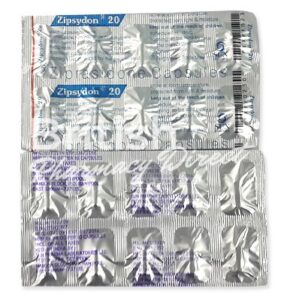
In stock
20mg · 40mg · 80mg
from 35,16 £
In brief
- Ziprasidone is a second-generation antipsychotic used for schizophrenia and bipolar mania in countries where it holds a licence.
- Strengths of 20 mg, 40 mg and 80 mg, in packs of 30 to 360 (80 mg up to 180).
- No ziprasidone product is licensed in the UK, so this imported, unlicensed medicine is used on the prescriber’s own responsibility.
What ziprasidone does and what it treats
Ziprasidone is classed as an atypical, or second-generation, antipsychotic and is taken by mouth twice a day. It blocks dopamine D2 receptors together with several serotonin receptors, a combination intended to calm psychotic symptoms such as hallucinations and delusions while keeping movement side effects lower than with older antipsychotics. Where it is licensed, its main uses are schizophrenia in adults and manic or mixed episodes of bipolar disorder. It is not meant for behavioural problems in older people with dementia, a group in whom antipsychotics are linked with higher mortality.
Its position in the UK
A search of the electronic medicines compendium returns no ziprasidone product, so there is no UK SmPC or patient leaflet for it and no brand on the British market. In practice this makes it an unlicensed medicine in the UK. A prescriber can still choose an unlicensed product for an individual patient, but takes on extra responsibility for that decision and would normally consider licensed antipsychotics first, such as risperidone, olanzapine, quetiapine or aripiprazole. Stock for this page comes from abroad and is sold as an imported product.
Strengths in the range
This listing covers three strengths. The 20 mg and 40 mg versions come in packs of 30, 60, 90, 120, 180 or 360 units; the 80 mg version in 30, 60, 90, 120 or 180. Because the product carries no UK licence, there is no British leaflet to fall back on, so it helps to keep the outer pack and show it to the prescriber or pharmacist at each appointment. None of the three strengths is marketed in Britain under any name, so a UK pharmacist may be unfamiliar with them and may wish to check the details.
How ziprasidone is usually taken
In its licensed markets the adult starting dose is typically 40 mg twice a day, adjusted after a few days according to response, up to a usual maximum of 80 mg twice daily. Each dose goes down with a meal: food considerably improves how much of the medicine is absorbed, and a dose swallowed on an empty stomach can be noticeably less effective. Missing meals therefore matters more than with many other antipsychotics. Changes to the dose, or stopping treatment, should go through the prescriber.
The heart rhythm question
The best-known concern with this medicine is its effect on the QT interval on an ECG, which in rare cases can lead to a dangerous irregular heartbeat. For that reason it is avoided in people with a known long QT, a recent heart attack, uncompensated heart failure or certain arrhythmias, and it should not be combined with other medicines that prolong QT, including some antiarrhythmics, antibiotics and other antipsychotics. A baseline ECG, and checks of potassium and magnesium, are usually advised. Fainting, palpitations or a racing heart need urgent attention. Carbamazepine can lower blood levels, and the antipsychotic action may work against levodopa or dopamine agonists used for Parkinson’s disease. Alcohol and other sedating medicines can deepen drowsiness.
Possible side effects
Commonly reported effects include sleepiness, dizziness, restlessness, tremor or stiffness, headache, nausea, constipation, dry mouth and blurred vision. Like other antipsychotics it can raise prolactin and, rarely, cause neuroleptic malignant syndrome or tardive dyskinesia, and serious skin reactions have been described. Compared with some medicines in its class, weight gain and metabolic changes tend to be less marked. With no UK licence in place, the choice to use ziprasidone at all, and at what strength, lies with the treating prescriber.