Tetracycline
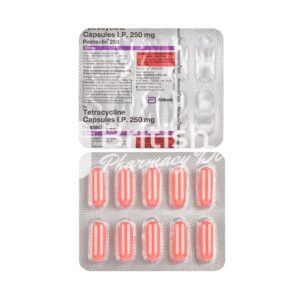
In brief
- In many pharmacies tetracycline is available; systemic oral and injectable forms are generally prescription-only (Rx) in most countries, but topical and ophthalmic preparations may be sold OTC in some regions — in some pharmacies it is possible to buy tetracycline without a prescription.
- Tetracycline is a broad‑spectrum antibiotic used for respiratory, urinary, skin (including acne), chlamydial and certain intracellular infections; it works by binding the bacterial 30S ribosomal subunit and inhibiting protein synthesis.
- Usual dosage: adults commonly 250–500 mg orally every 6 hours for many infections; acne often 250 mg twice daily or topical 3% ointment; some severe infections may use 500 mg every 6–12 hours; prophylaxis regimens may use 250 mg daily. Not recommended for children under 8 years except in severe cases (typical paediatric dosing 25–50 mg/kg/day divided).
- Form of administration: oral tablets/capsules and syrup, topical ointment (3%), eye ointment (1%), and less commonly as powder/vial for injection.
- Onset time: absorbed within about 1–2 hours after oral dosing; clinical symptomatic improvement is often seen within 48–72 hours depending on the infection.
- Duration of action: each dose generally provides therapeutic levels for approximately 6–12 hours; treatment courses are typically 7–14 days for acute infections and weeks to months for acne or chronic conditions.
- Alcohol warning: avoid excessive alcohol while taking tetracycline as it may worsen gastrointestinal side effects and impede recovery; moderate alcohol intake is not directly contra‑indicated but is best avoided.
- The most common side effect is gastrointestinal upset, particularly nausea, vomiting or diarrhoea; photosensitivity and tooth discolouration (in developing teeth) are also important concerns.
- Would you like to try tetracycline without a prescription?
Basic Tetracycline Information
- INN (International Nonproprietary Name): Tetracycline
- Brand Names Available In United Kingdom: Achromycin V (EU), Tetracycline Actavis (EU/Eastern Europe), generic tetracycline tablets and ointments supplied by multiple manufacturers (brand availability varies by wholesaler)
- ATC Code: J01AA07 (systemic tetracyclines); additional ATC listings include A01AB13, D06AA04, S01AA09, S02AA08, S03AA02
- Forms & Dosages: Tablets/capsules 100 mg, 250 mg, 500 mg; oral syrup 125 mg/5 mL; topical ointment 3%; eye ointment 1%; powder/vial 500 mg and 1 g (injectable less common)
- Manufacturers In United Kingdom: not specified (major global suppliers include Pfizer, Heritage Pharmaceuticals, Actavis, SEARLE, Alvogen; local UK suppliers may source generics from these manufacturers)
- Registration Status In United Kingdom: authorised as prescription medicines for systemic forms; topical/ophthalmic licences vary by product and jurisdiction of licence holder
- OTC / Rx Classification: Systemic tetracycline is prescription-only (POM); some topical or ophthalmic preparations may be pharmacy-only (P) or prescription-only depending on licence
Critical Warnings & Restrictions (Patient Safety First)
High‑Risk Groups (Elderly, Pregnancy, Chronic Illness)
Who should never be given tetracycline without careful review is a common question.
Pregnancy and breastfeeding are absolute contraindications for tetracycline because of fetal and infant tooth and bone effects.
Children under eight years are contraindicated owing to permanent tooth discolouration and enamel hypoplasia.
Known hypersensitivity to tetracyclines is an absolute contraindication.
Use with extreme caution in renal impairment and in severe hepatic impairment; dose adjustments or alternative agents may be required.
Expired tetracycline tablets or ointments must be discarded because expired products have been associated with Fanconi‑like syndrome.
Pharmacists and prescribers in the UK must follow MHRA guidance and NHS advice when assessing risk.
Check pregnancy and breastfeeding status and age before supply, and document counselling in the patient medication record (PMR).
- Consultation Checklist For Pharmacists And Prescribers
- Confirm patient name, date of birth and age
- Ask and record pregnancy and breastfeeding status; consider a pregnancy test if indicated
- Review current medicines and allergies (including prior tetracycline reaction)
- Assess renal and hepatic function history
- Advise on photosensitivity and interactions with calcium/iron/antacids
- Explain storage and expiry risks, including Fanconi‑like syndrome from expired product
- Document all advice in PMR and advise Yellow Card reporting for suspected adverse reactions
Interaction With Activities (Driving, Workplace Safety Under UK Law)
Tetracycline can cause dizziness, vertigo and nausea in some people, which may affect alertness.
The drug is also linked to photosensitivity reactions that increase sunburn risk.
Advise patients to use high‑factor sunscreen and protective clothing while outdoors during treatment.
Workers who operate machinery or work outdoors (eg construction, agriculture) should receive specific counselling about sun exposure and symptoms that impair concentration.
Q&A — Can I Drive After Taking It In The UK?
Short answer: usually yes, but only if you feel well and free of dizziness or severe nausea.
If dizziness, vertigo or severe nausea occur, do not drive and seek advice from a pharmacist or prescriber.
Follow DVLA and MHRA advice and record any suspected adverse reactions on the Yellow Card scheme.
Usage Basics
INN, Brand Names Available In The UK
Tetracycline is the International Nonproprietary Name used across clinical practice and prescriptions.
Brands and generics available across Europe include Achromycin V and Tetracycline Actavis, while local wholesalers supply generic 250 mg and 500 mg tablets and topical 3% ointments and 1% eye ointments.
Brand availability varies; community pharmacy stock often reflects generic supply from major manufacturers such as Actavis and Pfizer.
Legal Classification (POM, P, GSL)
Systemic tetracycline (oral tablets and injections) is a Prescription‑Only Medicine (POM) throughout the UK.
Topical and ophthalmic forms may be either POM or pharmacy‑only (P) depending on the licensed product.
| Form | Typical Legal Status |
|---|---|
| Oral Tablets/Capsules (100–500 mg) | Prescription‑Only Medicine (POM) |
| Topical Ointment (3%) | Pharmacy‑Only (P) or POM depending on licence |
| Eye Ointment (1%) | Pharmacy‑Only (P) or POM depending on licence |
NHS electronic prescriptions are accepted for systemic tetracycline when the medicine is appropriately prescribed.
Follow local standard operating procedures for verification and identification checks before supply.
Dosing Guide
Standard Regimens (NHS Guidelines)
Typical adult dosing for many infections is 250–500 mg orally every six hours.
For acne, a common regimen is 250 mg twice daily or topical 3% ointment depending on severity and licence.
Severe or atypical infections may require 500 mg every 6 to 12 hours.
Treatment duration varies: acute infections often 7–14 days; acne and other chronic conditions may continue for weeks to months with periodic review.
- Common Regimens By Indication
- Respiratory Tract Infection: 250–500 mg every 6 hours for 7–14 days
- Uncomplicated UTI: 250–500 mg every 6 hours for 7–14 days (use guided by local susceptibilities)
- Chlamydia: 250–500 mg every 6 hours depending on regimen and guidance
- Acne Vulgaris: 250 mg twice daily or topical 3% ointment; assess benefit over weeks to months
- Q Fever/Severe Atypicals: 500 mg every 6–12 hours as part of specialist regimens
Adjustments For Comorbidities
Children under eight years are generally contraindicated from systemic use due to dental and bone risks; in life‑threatening situations, dosing is 25–50 mg/kg/day divided every six hours.
Renal impairment and severe hepatic dysfunction require caution; consider dose reduction or alternative antibiotics in severe organ impairment.
Elderly patients usually receive standard doses but require monitoring for renal or hepatic accumulation and adverse effects.
Q&A — What If I Miss A Dose?
Take the missed dose as soon as you remember unless it is close (about two hours) to the next scheduled dose.
Do not take a double dose to make up for a missed one and consult a pharmacist if unsure.
Interaction Chart
Food And Drinks (Alcohol, Tea/Coffee, Diet Habits)
Absorption of tetracycline is significantly reduced by calcium, iron, magnesium and aluminium‑containing products.
Avoid dairy products, calcium supplements, iron preparations, antacids and magnesium within two hours before or after a dose.
Caffeine and strong tea or coffee can exacerbate gastrointestinal upset for some patients.
Alcohol does not have a direct pharmacokinetic interaction, but patients are advised to avoid alcohol when unwell or if they develop nausea.
| Substance | Advice |
|---|---|
| Dairy/Calcium | Avoid within 2 hours of dosing; reduces absorption |
| Iron Supplements | Avoid within 2 hours of dosing; significant chelation interaction |
| Antacids (Mg/Al) | Avoid within 2 hours of dosing; reduces efficacy |
| Caffeine, Tea, Coffee | May worsen GI side effects; moderate intake advised |
| Alcohol | No direct interaction, but avoid if experiencing side effects |
Common Drug Conflicts (MHRA Yellow Card Data)
Tetracycline interacts with several drug classes that require monitoring or alternative therapy.
Concurrent use with systemic retinoids is linked to increased risk of intracranial hypertension; avoid combination where possible.
Anticoagulant effect may be potentiated; monitor INR in patients on warfarin and counsel regularly.
Methoxyflurane and certain other agents may have serious interactions; review hospital and emergency medication lists carefully.
Chelation with metal cations (calcium, iron, magnesium) reduces absorption and efficacy.
There are anecdotal reports of reduced oral contraceptive efficacy with antibiotics; advise backup contraception if vomiting or diarrhoea occurs.
- Pharmacist Action Checklist
- Review full medication list and OTC supplements
- Counsel on timing with cations (2-hour spacing)
- Advise INR monitoring if on warfarin
- Document interaction counselling in PMR
User Reports & Trends
Patients commonly search about tetracycline acne treatment and report mixed experiences online.
Common themes across NHS Choices, Patient.info and forums include good acne control for many users, frequent nausea and photosensitivity complaints, and concerns about tooth discolouration in children.
Many patients now prefer doxycycline or minocycline because of simpler dosing and perceived tolerability.
- Effectiveness For Acne — many users report improvements over weeks when adherent.
- Nausea And GI Upset — commonly reported; counselling on taking with water and avoiding lying down helps.
- Photosensitivity — frequent complaint; sunscreen and protective clothing recommended.
- Concerns About Children — strong resistance to tetracycline use in under‑8s due to tooth issues.
- Preference For Alternatives — doxycycline and minocycline are commonly mentioned as better tolerated.
- Broad‑spectrum
- Active against a wide range of bacteria, including Gram‑positive, Gram‑negative and atypicals.
- Superinfection
- An overgrowth of non‑susceptible organisms such as Candida during antibiotic therapy.
- Photosensitivity
- Heightened sensitivity to ultraviolet light causing sunburn‑type reactions.
Clinicians should triangulate forum reports with published studies and MHRA Yellow Card data when assessing safety signals.
Access & Purchase Options
High‑Street Chains And E‑Pharmacies
Community pharmacies such as Boots, LloydsPharmacy and Superdrug dispense prescriptions and offer NHS repeat dispensing services.
Online pharmacies are increasingly common but must be MHRA‑registered and require a valid prescription for POM products.
In our online pharmacy, tetracycline is available without a prescription, with discreet delivery to United Kingdom in 5-14 days.
NHS E‑Prescriptions And Cost Structures
In England, most people pay the standard NHS prescription charge unless exempt; prescriptions are free in Scotland, Wales and Northern Ireland for residents.
Private prescriptions incur consultation and dispensing fees which vary by provider.
| Source | Typical Access Steps | NHS Exemption Notes |
|---|---|---|
| Community Pharmacy | Present NHS or private prescription; pharmacist verifies PMR and supplies | Standard NHS charge applies in England unless exempt |
| Online Pharmacy | Submit e‑prescription or complete online consultation; registered provider dispenses | Must be MHRA‑registered; private fees apply for non‑NHS supply |
| Private Clinic | Consultation with prescriber and private prescription issued | Private prescription charges apply; no NHS exemptions |
Always verify pharmacy registration and check PMR for allergies, pregnancy status and interactions before supply.
Mechanism & Pharmacology
Simplified Explanation
Tetracyclines are bacteriostatic antibiotics that inhibit bacterial protein synthesis.
The mechanism is binding to the 30S ribosomal subunit and preventing attachment of aminoacyl‑tRNA, which halts protein assembly.
They have activity against many Gram‑positive, Gram‑negative organisms and atypical pathogens.
Clinical Terms
- Bacteriostatic vs Bactericidal
- Bacteriostatic drugs inhibit growth; bactericidal drugs kill bacteria outright.
- MIC
- Minimum inhibitory concentration, the lowest drug concentration that inhibits visible growth.
- Half‑Life
- The time taken for plasma drug concentration to fall by half; influences dosing interval.
- Bioavailability
- Proportion of an oral dose that reaches systemic circulation; tetracycline absorption is reduced by metal cations.
- Chelation
- Binding of tetracyclines to divalent cations (eg calcium, iron) that reduces absorption.
- PK Points: Oral formulations have variable absorption and are affected by food and cations.
- Topical formulations deliver local antibiotic action with minimal systemic absorption.
- Store at 15–25°C, protected from moisture and light; do not use ointments past expiry due to safety risks.
Indications & Off‑Label Uses
MHRA‑Approved Uses
Approved indications include uncomplicated respiratory and urinary tract infections, acne vulgaris (systemic or topical depending on licence), and certain ophthalmic and dermatological infections.
ATC classification for systemic tetracyclines is J01AA07.
Off‑Label Practices In NHS And Private Care
Off‑label use may be considered for specific bite wound protocols, prophylaxis in certain exposures, or dermatology regimens when alternatives are contraindicated.
- Prescriber Checklist For Off‑Label Use
- Perform an evidence search and document the rationale
- Obtain informed consent and document discussion
- Plan monitoring and safety follow‑up
- Record decision and monitoring in the clinical notes
Key Clinical Findings (UK/EU Studies 2022–2025)
Recent comparative studies increasingly favour doxycycline or minocycline over older tetracycline for acne and many community infections because of improved pharmacokinetics and tolerability.
Resistance patterns vary by region; local antibiogram data should guide empirical prescribing.
- Check local resistance data before routine use of systemic tetracycline for common infections.
- Consider doxycycline where evidence shows better outcomes for certain indications.
- Reserve systemic tetracycline for indicated cases and where alternatives are unsuitable.
Refer to NHS trust antibiograms and MHRA safety updates for the latest safety signals and resistance trends.
Alternatives Matrix
NHS Prescribing Alternatives (Comparison Table)
| Agent | Dosing Convenience | Side‑Effect Profile | Resistance/Notes |
|---|---|---|---|
| Tetracycline | Frequent dosing (q6h) | GI upset, photosensitivity, interactions with cations | Established; absorption issues with cations |
| Doxycycline | Once or twice‑daily dosing | Generally better tolerated; photosensitivity still possible | Preferred in many modern regimens |
| Minocycline | Once or twice‑daily | Acne efficacy; risk of autoimmune reactions and skin pigmentation | Useful in dermatology but watch long‑term risks |
| Macrolides (eg Azithromycin) | Once‑daily options | GI upset, QT prolongation risk | Consider resistance patterns and cardiac risk |
| Clindamycin | Variable | Risk of C. difficile; local use for skin infections | Use with caution in patients at risk of severe diarrhoea |
- Pros And Cons Checklist
- Tetracycline: broad spectrum but frequent dosing and absorption limitations
- Doxycycline: convenient dosing and better bioavailability
- Minocycline: effective for acne but carries pigmentation and autoimmune risks
Common Questions (Patient FAQs)
Can Children Take Tetracycline?
No, children under eight years should not take tetracycline except in life‑threatening situations; alternatives are preferred.
Is It Safe In Pregnancy?
No, tetracycline is contraindicated in pregnancy and breastfeeding due to fetal and infant tooth and bone risks.
Will It Affect My Contraception?
Antibiotics including tetracycline are not known to routinely reduce hormonal contraception efficacy, but advise backup methods if vomiting or diarrhoea occurs.
How To Reduce Stomach Upset?
Take with a full glass of water and avoid lying down immediately afterwards.
Consider taking with a small, non‑dairy snack if tolerated to reduce nausea.
- Quick Pharmacy Handout Checklist
- Confirm pregnancy status and contraception
- Explain dosing times and 2‑hour spacing from cationic supplements
- Advise sun protection and what to do for missed doses
NHS Cost & Access Comparison Table
| Source | Typical Private Price Range (250/500 mg Pack) | NHS Prescription Charge (England) | Exemption Status |
|---|---|---|---|
| NHS Prescription (community pharmacy) | Varies if private; often not applicable for NHS supply | Standard charge per item (England) | Exemptions apply (age, certain benefits, pregnancy, etc.) |
| Boots / Lloyds / Superdrug (NHS or Private) | Private supply typically variable; contact pharmacy for price | Standard charge applies for NHS prescriptions | Check local exemptions and entitlements |
| Online Pharmacy (private supply) | Private consultation + medicine cost; prices vary widely | Not applicable unless linked to NHS e‑prescription | No NHS exemption for private supply |
Patients in England usually pay the NHS prescription charge unless exempt; prescriptions are free in Scotland, Wales and Northern Ireland for residents.
Topical formulations may be OTC or prescription‑only depending on the licence; price varies widely between private providers.
Registration & Regulation
MHRA Approval Process
Tetracycline and its salts are authorised in the UK and EU and are typically prescription‑only for systemic forms.
Prescribers and pharmacists should consult the product SPC for specific brand‑level guidance (eg Actavis generics).
NHS Prescribing Framework
Prescribing must include a clear clinical indication, documented allergy status and pregnancy check, and a monitoring plan if appropriate.
Report suspected adverse reactions to the MHRA Yellow Card scheme and escalate suspected severe reactions as required.
- Pharmacovigilance Checklist
- Record indication and counselling in clinical notes or PMR
- Document pregnancy checks and consent
- Submit Yellow Card reports for serious or unexpected adverse events
Storage & Handling
UK Household Storage (Cold/Damp Climate)
Store oral tablets between 15–25°C, protected from moisture and light.
Do not freeze oral formulations and avoid storage in bathrooms or damp rooms.
Keep ointments in original tubes and do not use past the expiry date; expired tetracycline can cause Fanconi‑like syndrome if used.
Keep all medicines out of reach of children and pets.
Guidance From NHS And Pharmacists
Use pharmacy medicines‑return schemes for safe disposal of expired or unwanted medicines.
Provide a short tear‑off handout with storage pictograms for patients who receive topical or systemic tetracycline.
| Storage Situation | Recommendation |
|---|---|
| Home (cupboard) | Store at room temperature (15–25°C), dry, away from sunlight |
| Travel | Keep in original packaging; avoid extreme heat and humidity |
- Patient Checklist: Temperature control, humidity avoidance, check expiry before use, return to pharmacy for disposal.
Guidelines For Proper Use (Patient‑Centred Counselling)
UK Pharmacist Counselling Style
Use teach‑back methods to confirm the patient understands dose timing and interactions, particularly the 2‑hour rule for cationic supplements.
Advise on sun protection measures and actions to take for missed doses or severe side effects.
Document all counselling notes in the PMR and offer written patient information to support adherence.
NHS Patient Safety Advice
Complete the full course unless directed by the prescriber to stop early.
Watch for severe diarrhoea, as C. difficile infection is a recognised risk with antibiotic use and needs urgent review.
Report rashes or other severe reactions promptly and consider Yellow Card reporting for suspected adverse drug reactions.
- Patient Checklist
- Take with a full glass of water; do not lie down immediately after dose
- Space doses from dairy, iron and antacids by approximately two hours
- Use sunscreen and avoid prolonged UV exposure while on treatment
- Do not give to children under eight or to pregnant/breastfeeding women
Delivery Across United Kingdom
| City | Region | Delivery Time |
|---|---|---|
| London | England | 5–7 days |
| Birmingham | England | 5–7 days |
| Manchester | England | 5–7 days |
| Glasgow | Scotland | 5–7 days |
| Leeds | England | 5–7 days |
| Liverpool | England | 5–7 days |
| Bristol | England | 5–7 days |
| Edinburgh | Scotland | 5–7 days |
| Sheffield | England | 5–9 days |
| Newcastle Upon Tyne | England | 5–9 days |
| Belfast | Northern Ireland | 5–9 days |
| Cardiff | Wales | 5–9 days |
| Nottingham | England | 5–9 days |
| Southampton | England | 5–9 days |
| Leicester | England | 5–9 days |