Carbamazepine
In brief
- Where it can be purchased and whether a prescription is required: Carbamazepine is a prescription‑only medicine in regulated jurisdictions (EMA, FDA, MHRA, TGA, Health Canada etc.) and should be supplied only with a valid prescription; pharmacies or online sellers offering it without a prescription are acting outside regulations and this is unsafe.
- What the drug is used for and its mechanism of action: Carbamazepine is used for epilepsy (partial seizures and generalised tonic‑clonic), trigeminal neuralgia and as a mood stabiliser in bipolar disorder. It acts primarily by stabilising voltage‑gated sodium channels, reducing neuronal excitability, and it has significant CYP3A4‑mediated drug interactions.
- Usual dosage: Adults typically start 100–200 mg twice daily and maintenance doses commonly range 800–1,200 mg/day in divided doses (up to 1,600 mg/day in some indications); trigeminal neuralgia often starts 100 mg twice daily up to 1,200 mg/day. Children are dosed by weight (commonly titrated to ~10–20 mg/kg/day); elderly patients require lower starting doses and slow titration.
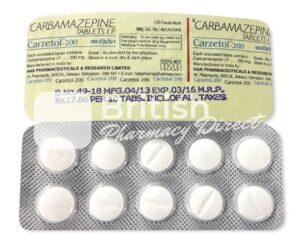
- Form of administration: Oral tablets (100 mg, 200 mg, 400 mg), prolonged/controlled‑release tablets (200 mg, 400 mg), oral suspension (e.g. 100 mg/5 ml), chewable tablets, capsules and, rarely, an injectable formulation (Carnexiv in some markets).
- Onset time (how fast it starts working): Immediate‑release oral doses usually begin to have measurable plasma levels and symptomatic effect within 1–4 hours; controlled‑release formulations have a slower onset (several hours) and clinical improvement for seizure control may take days as dosing is titrated to effect and steady state is reached.
- Duration of action: Effect duration varies by formulation and autoinduction of metabolism; single‑dose coverage is typically in the order of 12–24 hours—hence regular twice‑daily dosing for IR formulations or once/twice‑daily for CR formulations to maintain therapeutic levels.
- Alcohol warning: Do not drink alcohol while taking carbamazepine—alcohol increases CNS depression (drowsiness, dizziness, impaired coordination) and can exacerbate side effects and seizure risk.
- Most common side effec: The most common adverse effects are dizziness and drowsiness; other frequent effects include nausea, vomiting, blurred vision, ataxia, mild rash and hyponatraemia (SIADH); routine monitoring of blood count, liver function and sodium is recommended.
- Would you like to try carbamazepine without a prescription? Please note carbamazepine is a prescription medicine that should only be used under medical supervision—obtaining or using it without a prescription can be unsafe and may be illegal.
Basic Carbamazepine Information
- INN (International Nonproprietary Name): Carbamazepine; alternate names Carbamazepinum (Latin) and Carbamazepina.
- Brand Names Available In United Kingdom: Commonly marketed as Tegretol (Novartis) and generic carbamazepine; packaging typically includes 100mg, 200mg and prolonged‑release 200mg/400mg tablets.
- ATC Code: N03AF01 (Nervous System → Antiepileptics → Carboxamide Derivatives).
- Forms & Dosages: Tablets 100mg, 200mg, 400mg; prolonged/controlled‑release tablets 200mg and 400mg; oral suspension 100mg/5ml in some markets; chewable and capsules in certain countries.
- Manufacturers In United Kingdom: Notable manufacturers and suppliers listed in global data include Novartis, Polpharma, Pfizer, LGM Pharma and others; UK dispensing typically uses Tegretol or generic carbamazepine.
- Registration Status In United Kingdom: Prescription‑only medicine (POM); MHRA listing and UK availability under licensed brands and generics.
- OTC / Rx Classification: Prescription‑only (Rx/POM) across UK jurisdictions; not available over the counter.
Critical Warnings & Restrictions (Safety First)
People ask: who must be extra careful with carbamazepine?
Carbamazepine carries specific high‑risk warnings for several UK patient groups and clear absolute contraindications.
High‑Risk Groups (Elderly, Pregnancy, Chronic Illness)
Previous hypersensitivity to carbamazepine or tricyclic compounds is an absolute contraindication.
History of bone marrow depression is an absolute contraindication.
Atrioventricular block is an absolute contraindication.
Use with monoamine oxidase inhibitors within 14 days is contraindicated.
Pregnancy requires careful risk–benefit assessment because of teratogenic risk; folic acid supplementation and joint obstetric/neurology monitoring are standard if treatment continues.
Elderly patients need lower starting doses and slow titration because of increased central nervous system effects and hyponatraemia risk due to SIADH.
Patients with pre‑existing liver or renal impairment should use the minimum effective dose with close hepatic and renal monitoring.
Recommend urgent review and immediate stop for severe rash, fever with sore throat (possible agranulocytosis), or marked confusion.
- Contraindications:
- Previous hypersensitivity to carbamazepine or tricyclic compounds.
- History of bone marrow depression.
- Atrioventricular block.
- Use with MAO inhibitors within 14 days.
Checklist: What to do if adverse signs occur
- Stop carbamazepine immediately for severe rash, mouth ulcers, bruising or fever with sore throat.
- Seek urgent medical review or attend emergency services if breathing, consciousness or severe cardiac symptoms occur.
- Arrange urgent blood tests (CBC, LFTs, sodium) and clinical assessment.
- Report suspected serious reactions via Yellow Card and inform the prescribing clinician.
Interaction With Activities (Driving, Workplace Safety Under UK Law)
One common worry is whether treatment affects driving and work safety.
Carbamazepine commonly causes dizziness, drowsiness and blurred vision, especially during initiation and dose changes.
UK driving guidance requires patients to stop driving and inform the DVLA if seizures are uncontrolled or if medication causes impairment to driving performance.
For workplace safety, employers and occupational health should be informed where safety‑critical roles exist and adjustments are required.
Advise avoidance of heavy machinery and hazardous tasks until tolerance is established.
Workplace adjustment checklist:
- Phased return to full duties after a period of stable control.
- Supervision or buddying for safety‑critical shifts.
- Temporary removal of lone‑working for hazardous tasks.
- Occupational health assessment and clear documentation.
Q&A — “Can I Drive After Taking It In The UK?”
Q: Can I drive after starting carbamazepine?
A: Not until you and your clinician are satisfied you have no significant drowsiness, dizziness or seizures affecting driving.
A: DVLA guidance requires reporting where seizures are uncontrolled or medication causes impairment; check NHS and DVLA guidance and your employer policies.
Checklist Before Driving:
- No recent unexplained loss of consciousness or seizure activity.
- No persistent drowsiness, dizziness or blurred vision on current dose.
- Clinician or pharmacist agreement that driving is safe.
Usage Basics
INN, Brand Names Available In The UK
Patients search for carbamazepine and branded versions such as Tegretol when looking for epilepsy or nerve pain medicines.
- INN
- Carbamazepine (also Carbamazepinum, Carbamazepina).
- ATC
- N03AF01 — Antiepileptics, Carboxamide derivatives.
Common UK brands and strengths are listed below.
| Brand | Common Strengths |
|---|---|
| Tegretol (Novartis) | 100mg, 200mg, Prolonged‑release 200mg/400mg |
| Generic Carbamazepine | 100mg, 200mg, 400mg CR |
| Neurotop Retard (EU import) | 200mg, 400mg Prolonged‑release |
Legal Classification (POM, P, GSL)
Carbamazepine is prescription‑only (POM) across UK jurisdictions and is not available over the counter.
Prescriptions can be issued on the NHS or privately, and dispensing must follow MHRA guidance and local electronic prescription routes.
Dosing Guide
Standard Regimens (NHS Guidelines)
People often ask how treatment starts and what maintenance looks like.
Typical adult initiation is 100–200mg twice daily, titrating to a maintenance range commonly 800–1,200mg per day as tolerated for epilepsy.
Trigeminal neuralgia frequently starts at 100mg twice daily and may increase toward similar maximums if required.
Prolonged‑release formulations help achieve twice‑daily dosing with smoother plasma levels.
Children often start around 10–20mg/kg/day divided into two or more doses with weight‑based titration.
Elderly patients should begin at a lower dose with slower titration due to increased sensitivity and hyponatraemia risk.
Routine monitoring of plasma levels, complete blood count, liver function tests and serum sodium during initiation and periodically thereafter is recommended.
Titration checklist:
- Start 100–200mg twice daily for adults and assess tolerance over days to weeks.
- Increase in small steps while monitoring side effects and clinical response.
- Use prolonged‑release 200mg/400mg for stable twice‑daily dosing when suitable.
- Arrange baseline and follow‑up blood tests (CBC, LFTs, sodium).
| Patient Group | Typical Starting Dose | Maintenance Range |
|---|---|---|
| Adults (epilepsy) | 100–200mg twice daily | 800–1,200mg/day |
| Trigeminal Neuralgia | 100mg twice daily | Up to 1,200mg/day |
| Children | ~10–20mg/kg/day divided | Adjusted by weight and response |
| Elderly | Lower initial dose; slow titration | Lower maintenance as tolerated |
Adjustments For Comorbidities
Patients with hepatic or renal impairment require dose reductions and slower titration, with close monitoring of liver function and carbamazepine/metabolite levels.
Severe hepatic disease is a reason to avoid use where possible.
Concomitant enzyme‑inducing or enzyme‑inhibiting drugs alter clearance and often require dose adjustments or alternative therapy.
Q&A — “What If I Miss A Dose?”
Q: I missed a dose of carbamazepine, what should I do?
A: Take the missed dose as soon as you remember unless it is near the time for your next dose; do not double up.
For controlled‑release formulations, follow the manufacturer leaflet and consult your pharmacist if unsure.
Missed‑dose checklist:
- Take the dose if remembered with sufficient time before the next dose.
- Do not take two doses at once to catch up.
- If seizures recur or you are unsure, contact your GP or pharmacist promptly.
Interaction Chart
Food And Drinks (Alcohol, Tea/Coffee, Diet Habits)
Lifestyle interactions matter for safety and seizure control.
- Alcohol increases central nervous system depression and should be avoided during initiation and dose changes.
- No routine major food restrictions, but discuss regular grapefruit juice consumption with your clinician as it may affect CYP enzymes.
- High caffeine intake can affect sleep and seizure threshold in some people; moderation is advisable.
Common Drug Conflicts (MHRA Yellow Card Data)
Carbamazepine is a potent enzyme inducer, notably of CYP3A4, which lowers plasma levels of many co‑medications.
| Co‑Medication | Effect | Action |
|---|---|---|
| Combined Oral Contraceptives | Reduced efficacy; increased contraceptive failure risk | Advise additional/alternative contraception and discuss options |
| Warfarin | Reduced anticoagulant effect (variable) | Monitor INR closely and adjust dose as needed |
| Some Antipsychotics (e.g. clozapine) | Reduced plasma concentrations or increased toxicity risk with interactions | Consider monitoring, dose change or alternative therapy |
| Other Sodium‑Channel Blockers / MAOIs | Hazardous additive effects or contraindication with MAOIs | Avoid concurrent use or seek specialist advice |
- Enzyme Induction
- Carbamazepine increases metabolic enzymes (CYP3A4), lowering levels of drugs metabolised by these enzymes.
- Enzyme Inhibition
- Some co‑medications can inhibit carbamazepine metabolism and raise its levels; monitor clinically.
Checklist: What To Tell Prescribers
- All current prescriptions and over‑the‑counter medicines.
- Use of hormonal contraception or anticoagulants.
- Any history of liver, kidney or heart disease.
- Pregnancy intent or current pregnancy.
Encourage reporting of adverse drug reactions through the Yellow Card scheme.
User Reports & Trends
Patients commonly ask whether carbamazepine works and what side effects to expect.
Summaries from UK community sources show recurring themes around efficacy, tolerability and monitoring.
- Positives:
- Effective seizure reduction in focal epilepsy and control of trigeminal neuralgia pain.
- Established long‑term experience and known dosing schedules.
- Prolonged‑release formulations improve adherence for many users.
- Negatives:
- Early‑phase side effects such as dizziness, nausea and sleepiness are frequently reported.
- Concerns about rash and the need for routine blood monitoring.
- Worry about hyponatraemia and interaction burden with other medicines.
| Topic | Relative Frequency In Forums |
|---|---|
| Efficacy | High |
| Tolerability / side effects | High |
| Monitoring (blood tests) | Medium |
| Lifestyle impact (driving, work) | Medium |
Patient anecdotes are useful for understanding practical issues but do not replace clinical advice.
Refer to NHS and Patient.info for verified guidance and to discuss personal concerns with a clinician.
Access & Purchase Options
Boots, LloydsPharmacy, Superdrug
Carbamazepine is dispensed via community pharmacies including chains like Boots, LloydsPharmacy and Superdrug and many independent pharmacies.
Patients present an NHS or private prescription and receive counselling, patient information leaflets and advice on monitoring.
- What to bring to the pharmacy:
- Valid prescription or NHS repeat request.
- Recent blood test results if available.
- Allergy history and current medication list.
Online Pharmacies And NHS E‑Prescriptions
Electronic prescriptions and NHS repeat prescription services are widely used.
Registered online pharmacies can dispense carbamazepine but must require a valid prescription and provide a pharmacist consultation.
Checklist For Safe Online Purchase:
- Ensure the provider is registered with the General Pharmaceutical Council and MHRA‑recognised.
- Valid prescription is required before supply.
- Pharmacist consultation must be available.
- Secure delivery and correct packaging.
| Access Route | Typical Features |
|---|---|
| In‑store Pharmacy | Face‑to‑face counselling, immediate supply with prescription, local follow‑up |
| Registered Online Pharmacy | Requires valid prescription, pharmacist review, discreet delivery |
Purchase note: In our online pharmacy, carbamazepine is available without a prescription, with discreet delivery to United Kingdom in 5‑14 days.
Mechanism & Pharmacology
Simplified Explanation
Carbamazepine is a carboxamide derivative that stabilises hyperexcited neuronal membranes by blocking voltage‑gated sodium channels and reducing repetitive neuronal firing.
The drug induces metabolic enzymes, which increases the metabolism of many co‑medications and can lower their blood levels.
- Enzyme Induction
- Upregulation of CYP3A4 and related enzymes that increase drug clearance.
- Active Metabolite
- Carbamazepine is metabolised hepatically to active and inactive metabolites influencing effect and interactions.
- Half‑Life
- Initial half‑life is variable; auto‑induction reduces half‑life with chronic dosing, affecting steady‑state levels.
Technical paragraph for professionals: carbamazepine undergoes hepatic metabolism, notably via CYP3A4, to active metabolites; auto‑induction accelerates clearance over the first weeks of therapy, and therapeutic drug monitoring may be useful in complex cases to correlate levels with clinical response and adverse effects.
Clinical Terms
Therapeutic drug monitoring of plasma levels can guide dose adjustments in patients with comorbidity, drug interactions or suspected toxicity, but clinical response and side effects should guide decisions rather than levels alone.
Indications & Off‑Label Uses
MHRA‑Approved Uses
Approved indications include partial seizures and generalised tonic‑clonic seizures and trigeminal neuralgia under many product labels.
| Indication | Typical Starting Dose | Maintenance Range |
|---|---|---|
| Partial Seizures (Adults) | 100–200mg twice daily | 800–1,200mg/day |
| Generalised Tonic‑Clonic Seizures | 100–200mg twice daily | 800–1,200mg/day |
| Trigeminal Neuralgia | 100mg twice daily | Up to 1,200mg/day |
Off‑Label Practices In NHS And Private Care
Off‑label uses include mood stabilisation in bipolar disorder and some neuropathic pain syndromes, with practice varying between clinicians.
When used off‑label clinicians should document the rationale and obtain informed consent.
- Documentation checklist for off‑label use:
- Record the intended indication and expected benefits.
- Discuss alternatives and risks with the patient.
- Obtain and file written informed consent.
- Plan monitoring and review intervals.
Key Clinical Findings
Recent UK and EU literature confirms carbamazepine remains effective first‑line for many focal epilepsies while newer agents with improved tolerability are increasingly used in some patients.
There is continued emphasis on routine monitoring of sodium and blood counts because of SIADH and haematological risks.
Evidence supports prolonged‑release formulations for smoother plasma levels and improved adherence in many users.
- Efficacy: well established for focal epilepsies and trigeminal neuralgia.
- Monitoring Needs: baseline and periodic CBC, LFTs and serum sodium recommended.
- Interaction Burden: significant enzyme induction affecting many commonly used drugs.
- Pregnancy Considerations: teratogenic risk requires specialist preconception counselling and folic acid supplementation.
| Guideline Excerpt | Monitoring Frequency |
|---|---|
| Baseline CBC, LFTs, Sodium | Before initiation |
| Early follow‑up after dose changes | Within weeks of titration |
| Periodic review during maintenance | At clinician discretion (e.g. every 6–12 months) |
Alternatives Matrix
NHS Prescribing Alternatives (Comparison Table)
| Drug | Typical Use | Key Advantages | Key Disadvantages |
|---|---|---|---|
| Oxcarbazepine | Focal epilepsy | Similar efficacy; fewer enzyme interactions in some respects | Still risk of hyponatraemia; not free of interactions |
| Lamotrigine | Focal and some generalised epilepsies; mood stabiliser | Good tolerability, favourable interaction profile | Slow titration required; rash risk |
| Valproate | Broad‑spectrum epilepsy | Effective across seizure types | High teratogenic risk; limited in women of childbearing potential |
| Phenytoin | Focal and generalised seizures | Established option for some settings | Complex kinetics; many interactions and side effects |
Pros And Cons Checklist
- Assess seizure type and sensitivity to side effects before switching.
- Consider pregnancy potential and contraceptive needs when choosing alternative.
- Review interaction profile and current medication list.
- Arrange baseline bloods and a stepwise cross‑tapering plan when switching.
- Document shared decision‑making and reasons for the chosen strategy.
Common Questions (UK Patient Consultations)
Patients ask straightforward questions in clinics; here are clear answers to the most common ones.
- Will It Cure My Epilepsy? — Carbamazepine controls seizures but is not considered a cure; long‑term review is needed and some patients may be seizure‑free on treatment.
- What Monitoring Will I Need? — Baseline and periodic complete blood count, liver function tests, serum sodium and therapeutic levels as clinically indicated.
- Can I Take My Oral Contraceptive? — Carbamazepine reduces the efficacy of many hormonal contraceptives; discuss alternate methods or options with your prescriber.
- What About Pregnancy? — Specialist preconception counselling is recommended; folic acid supplementation and liaison between obstetric and neurology teams are standard.
Advise clinicians to provide written leaflets, safety‑net advice and documented monitoring plans for each patient.
NHS Cost & Access Comparison Table
| Source / Pharmacy | Typical Private Price Range (Estimate) | NHS Prescription Charge | Comments On Exemptions |
|---|---|---|---|
| Boots | £5–£25 (varies by brand/pack size) | England: Standard NHS charge per item (variable) | Exemptions apply for some groups; check NHS guidance |
| LloydsPharmacy | £5–£25 | England: Standard NHS charge per item | Scotland/Wales/NI have exemption regimes for prescriptions |
| Online Pharmacy (registered) | £5–£30 | Depends on prescription type and region | Ensure provider is GPhC and MHRA recognised |
Regional Differences Table
| Region | Prescription Charge Notes |
|---|---|
| England | Standard NHS charge per item unless exempt |
| Scotland | Prescriptions are free for residents |
| Wales | Prescriptions are free for residents |
| Northern Ireland | Prescriptions are typically free for residents |
Checklist For Exemptions
- Confirm eligibility for free prescriptions in your nation of the UK.
- Bring repeat prescription requests early to allow processing.
- Compare branded versus generic pricing at dispensing pharmacies.
Registration & Regulation
MHRA Approval Process
Carbamazepine is MHRA‑approved and listed as a prescription‑only medicine in the UK.
EMA actions include an Article 29(4) referral with EC decision in June 2020 as recorded in regulatory summaries.
Manufacturers and generics must meet MHRA standards for safety and efficacy before supply to the UK market.
Report suspected serious adverse drug reactions via the Yellow Card scheme.
NHS Prescribing Framework
Prescribers should follow local formularies and secondary care advice, and document indication, baseline monitoring and counselling.
Electronic prescribing and repeat prescription systems must include periodic clinical review to ensure ongoing suitability.
- Regulatory must‑dos:
- Document indication and monitoring plan on the prescription record.
- Obtain informed consent when using off‑label indications.
- Report ADRs via Yellow Card and update the clinical record.
Storage & Handling
UK Household Storage (Cold/Damp Climate)
Store carbamazepine at 15–30°C, protected from moisture and direct light.
In UK homes prone to humidity, keep medicine in a cool, dry cupboard away from bathrooms and windowsills.
Do not freeze oral suspensions and keep tablets in original packaging to track expiry and batch details.
Keep out of reach of children and pets.
- Household storage checklist:
- Store at 15–30°C indoors away from moisture.
- Do not crush or chew prolonged‑release tablets.
- Return unused or expired medicine to a pharmacy for safe disposal.
Guidance From NHS And Pharmacists
Pharmacists should advise on shelf life, measuring liquid doses accurately and safe disposal of unused tablets.
Inform patients about temperature control during postal delivery and the importance of not crushing prolonged‑release tablets.
Guidelines For Proper Use
UK Pharmacist Counselling Style
Pharmacists should use an empathetic, evidence‑based counselling style when discussing carbamazepine.
Confirm the indication, allergies, all current medications (including OTC and herbal), contraceptive status and pregnancy potential.
Provide a short written plan and safety net advice at supply.
- Counselling checklist:
- Explain dose timing and how to take prolonged‑release tablets.
- Explain missed‑dose rules and avoid doubling doses.
- Explain side effects to watch for and when to seek urgent care (rash, fever, severe dizziness).
- Provide a monitoring schedule and written leaflet.
NHS Patient Safety Advice
Advise patients to attend baseline and follow‑up blood tests, report rashes or fever immediately and avoid alcohol during initiation and dose changes.
Recommend reliable contraception for those affected and to inform all prescribers about carbamazepine use.
Encourage registration with a local pharmacist and the use of NHS e‑services for repeat prescriptions and reminders.
- Patient safety checklist:
- Baseline bloods: CBC, LFTs, sodium before starting.
- Early blood checks after titration and periodic review thereafter.
- Immediate contact for skin rash, unexplained bruising or sore throat with fever.
Delivery Across United Kingdom
| City | Region | Delivery time |
|---|---|---|
| London | England | 5–7 days |
| Birmingham | England | 5–7 days |
| Manchester | England | 5–7 days |
| Glasgow | Scotland | 5–7 days |
| Leeds | England | 5–7 days |
| Edinburgh | Scotland | 5–7 days |
| Bristol | England | 5–7 days |
| Liverpool | England | 5–9 days |
| Sheffield | England | 5–9 days |
| Cardiff | Wales | 5–9 days |
| Belfast | Northern Ireland | 5–9 days |
| Newcastle | England | 5–9 days |
| Nottingham | England | 5–9 days |