Atomoxetine
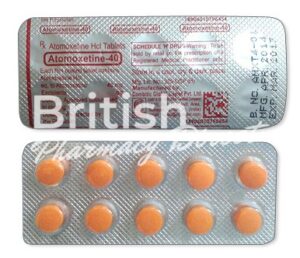
In stock
10mg · 18mg · 25mg
from 31,34 £
In brief
- Atomoxetine is a non-stimulant option for treating attention deficit hyperactivity disorder (ADHD), licensed in the UK for children from age six, for adolescents and for adults.
- Available in 10mg and 18mg strengths (packs of 30 to 360) and 25mg (packs of 30 to 180).
- An imported generic; atomoxetine is prescription-only in the UK, where it is also marketed as Strattera, and treatment is started by a doctor experienced in ADHD.
Atomoxetine: raising noradrenaline to improve focus
Atomoxetine works by blocking the reuptake of noradrenaline, a chemical messenger in the brain, so that more of it stays available in the areas that govern attention. This can ease inattention, hyperactivity and impulsiveness. Methylphenidate and lisdexamfetamine are stimulants; this medicine is not, and it is not a controlled drug either. Its licence covers children aged six or older, adolescents and adults, with the medicine forming one part of a broader plan that can also involve psychological, educational and social measures. The full benefit can take several weeks to appear.
10mg, 18mg or 25mg in packs of up to 360
Strengths on this page stop at 25mg: there are 10mg, 18mg and 25mg versions of this imported generic. Packs of 30, 60, 90, 120, 180 and 360 are available for 10mg and 18mg, and packs of 30, 60, 90, 120 and 180 for 25mg. These lower strengths are mainly used when treatment is being started and for children whose dose is calculated by weight; in the UK, licensed strengths go up to 100mg.
Who starts treatment in the UK
Atomoxetine is a Prescription Only Medicine, also marketed in the UK under the brand name Strattera. According to the SmPC, treatment should be started by a paediatrician, a child and adolescent psychiatrist or a psychiatrist with experience of ADHD. Before the first dose the doctor checks heart health, blood pressure and pulse, and these are measured again after each dose change and at least every six months. In adults, symptoms dating back to childhood should be confirmed before treatment begins.
Setting the daily amount
For children and teenagers weighing up to 70kg, the starting dose is about 0.5mg per kilogram of body weight a day, raised after at least seven days to a target of roughly 1.2mg/kg a day. Adults and young people over 70kg start on 40mg a day for at least a week, with a usual maintenance dose of 80mg; adults may take 80mg to 100mg, and 100mg is the maximum. It is taken once a day in the morning, or split into two doses in the morning and late afternoon or early evening, with or without food. If the liver is moderately impaired, doses are cut by half; with severe impairment they fall to one quarter of the usual amount. The need to carry on should be reassessed if treatment continues beyond a year.
Who should not take Atomoxetine
It must not be used within two weeks of an MAOI antidepressant, with narrow-angle glaucoma, with phaeochromocytoma, or with severe heart, blood vessel or cerebrovascular disease. CYP2D6 inhibitors such as fluoxetine and paroxetine raise its blood levels, salbutamol – particularly at high doses – can add to the rise in heart rate, and care is needed with other medicines that affect serotonin. Mention any history of heart problems, fits, mood disorders or liver disease before starting.
Effects to watch for during treatment
Children commonly lose some appetite and may get tummy ache, feel or be sick, have headaches or feel sleepy; heart rate and blood pressure tend to rise slightly. Adults more often report dry mouth, nausea, poor appetite, trouble sleeping, sweating, constipation and sexual or urinary problems. Dizziness on standing up, and fainting, can occur. Contact the doctor promptly about thoughts of self-harm, new aggression or hostility, or signs of liver injury such as dark urine, yellowing of the skin or pain in the upper abdomen. Children’s growth is also followed during treatment. It is for the prescribing doctor to judge whether atomoxetine is appropriate, and in what dose.