Quetiapine
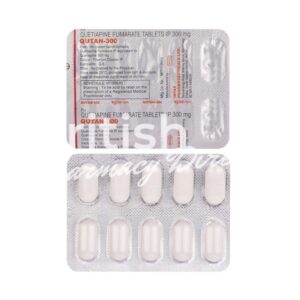
In brief
- Quetiapine comes in five strengths at British Pharmacy Direct: 25mg tablets in packs up to 360, 50mg and 100mg up to 180, 200mg up to 120, 300mg up to 90 (minimum pack 30); UK delivery takes 9–21 days.
- This atypical antipsychotic works on dopamine and serotonin receptors and is prescribed for schizophrenia, for manic episodes, and for bipolar depression.
- It is not licensed for behavioural symptoms of dementia, as older people with dementia face a greater risk of stroke and death; the treating team should plan any dose rise.
- Taking it with strong CYP3A4 inhibitors such as clarithromycin, ketoconazole or certain HIV drugs is contraindicated, and QT prolongation is possible.
- Common effects include constipation, a pounding heart and a bigger appetite; abrupt withdrawal may cause sleeplessness and nausea, and a sore throat or fever must be reported. It is POM in Britain.
Basic quetiapine information
- INN (international nonproprietary name): Quetiapine
- Brand names available in the United Kingdom: Seroquel, Seroquel XL, and generic quetiapine
- ATC code: N05AH04
- Forms and dosages: Immediate-release tablets 25 mg, 50 mg, 100 mg, 150 mg, 200 mg, 300 mg, 400 mg; prolonged-release tablets 50 mg, 150 mg, 200 mg, 300 mg, 400 mg
- Manufacturers in the United Kingdom: AstraZeneca, plus generic manufacturers such as Mylan, Sandoz, Apotex, Accord Healthcare and Zydus
- Registration status in the United Kingdom: Prescription only (Rx)
- OTC / Rx classification: Prescription only medicine
Quetiapine in the United Kingdom: what patients should know
Critical warnings and patient protection for UK patients
Thinking about quetiapine for the first time can feel daunting, especially if you are already managing other health conditions.
Extra caution is needed for older adults, anyone with diabetes, cardiovascular disease, epilepsy or a seizure history, liver impairment, and people taking medicines that can interact with quetiapine.
Pregnancy and breastfeeding also need a proper discussion with a UK prescriber, because the balance of benefit and risk has to be reviewed for the individual patient.
In the UK, quetiapine is prescription only and should not be shared with anyone else or used without a clinical review.
Sedation, dizziness, and orthostatic hypotension can make people feel light-headed when standing up, and that raises the risk of falls, especially at night or when getting up quickly.
Until the effects are known, avoid driving, cycling in traffic, or operating machinery at work.
Red flag symptoms needing urgent medical advice:
- Fainting or near-fainting.
- Chest pain or a racing heartbeat that does not settle.
- Severe rash or swelling.
- High fever with muscle stiffness or confusion.
- Severe drowsiness, poor responsiveness, or trouble breathing.
Quick question
Can I drive after taking quetiapine in the UK? Only if you are fully alert and your prescriber says it is safe; many people should avoid driving at first.
Quetiapine in plain English
Quetiapine is the international nonproprietary name, often shortened to the INN, for a second-generation antipsychotic.
It is listed under ATC code N05AH04 and is widely known in the UK through brand names such as Seroquel and Seroquel XL, alongside generic quetiapine tablets.
UK legal status and pack formats
In British practice, quetiapine is a prescription-only medicine, not a pharmacy medicine and not a general sale product.
- Immediate-release tablets
- Tablets that release the medicine soon after swallowing, usually taken more than once daily.
- XR or XL tablets
- Prolonged-release tablets designed to release quetiapine more slowly, often allowing once-daily use.
Available strengths include immediate-release tablets from 25 mg to 400 mg, and prolonged-release tablets from 50 mg to 400 mg.
What quetiapine is used for in the NHS
The core licensed uses are schizophrenia and bipolar disorder, including treatment of mania and bipolar depression.
It may also be used as part of long-term maintenance when a clinician thinks ongoing treatment is needed to help keep symptoms stable.
In some NHS settings, quetiapine is added to other treatment plans when a specialist psychiatrist decides the benefit outweighs the risks.
Off-label prescribing must be clinically justified and monitored.
Doctors may consider it when:
- A specialist mental health team is following the patient.
- Standard options have not worked well enough.
- Sleep, agitation, or mood symptoms need careful specialist management.
- There is a clear plan for review, monitoring, and dose adjustment.
Quick question
Is quetiapine used for sleep in the UK? Sometimes, but this is generally off-label and should only be considered by a clinician due to side effects and dependence on sedation.
How quetiapine works
Quetiapine changes dopamine and serotonin signalling in the brain, which can help reduce hallucinations, delusions, mood swings, and agitation.
As a second-generation antipsychotic, it is often chosen when a prescriber wants symptom control with a particular side-effect balance.
| Simple term | Clinical term |
|---|---|
| Brain chemical balance | Dopamine and serotonin modulation |
| Calming psychosis | Antipsychotic action |
| Settling mood swings | Mood-stabilising effect in bipolar disorder |
Standard dosing in adults
Doses are titrated over several days so side effects are less likely to hit all at once.
| Condition | Starting dose | Target dose range | Maximum daily dose |
|---|---|---|---|
| Schizophrenia | 50 mg twice daily IR | 300 to 400 mg/day | 750 mg/day IR |
| Bipolar mania | 50 mg once or twice daily | Up to 400 mg/day | 800 mg/day |
| Bipolar depression | 50 mg once or twice daily | Up to 300 mg/day | 300 mg/day |
Prolonged-release quetiapine is often prescribed once daily, which can suit people who prefer a simpler routine.
Taking it at the same time each day helps build a habit, and many people take it in the evening if drowsiness is an issue.
Swallow XR or XL tablets whole, without crushing or chewing.
Dose adjustments for children, older adults, and organ problems
Quetiapine is not licensed in the UK for children and adolescents under 18; any use in younger patients is specialist-led.
Older adults usually need lower starting doses and slower increases because orthostatic hypotension, confusion, and falls are more likely.
Liver impairment usually means a lower starting dose and cautious titration, often with very close review.
Kidney impairment does not usually require a major dose change, but monitoring is still sensible.
Monitoring checklist:
- Blood pressure, especially when standing.
- Drowsiness and daytime alertness.
- Weight and appetite.
- Blood glucose checks if there is diabetes risk.
Quick question
What if I miss a dose? Take it when remembered unless the next dose is near; never double up.
Common and serious side effects
Many people notice drowsiness, dizziness, dry mouth, constipation, weight gain, increased appetite, headache, or a mild increase in heart rate.
These effects can be more noticeable during the first few days, especially while the dose is being increased.
More serious problems can include severe low blood pressure, QT-related heart rhythm issues, metabolic changes, and very rarely neuroleptic malignant syndrome.
Urgent help is needed if you faint, develop chest pain, have a severe rash, or get high fever with muscle stiffness.
Contact NHS 111 or urgent care now if you have:
- Repeated fainting.
- Severe dizziness when standing.
- Chest pain or palpitations.
- Severe rash, swelling, or breathing difficulty.
- High fever, confusion, or muscle rigidity.
Interactions with alcohol, food, and medicines
Alcohol can increase sedation and falls risk, so it is best avoided or discussed carefully with a prescriber.
Caffeine, strong tea, and shifting sleep patterns may also affect how people feel day to day, especially when starting treatment.
Interaction risk matters most when someone is already taking several medicines, which is common in UK primary care and mental health practice.
| Interaction level | Examples | Practical advice |
|---|---|---|
| Avoid | Potent CYP3A4 inhibitors such as ketoconazole | Do not combine without specialist advice. |
| Caution | Other sedatives, some antidepressants, medicines affecting heart rhythm | Needs review because sedation and rhythm effects may add up. |
| Usually manageable | Single medicines with no known interaction | Still mention all prescriptions, OTC items, and supplements. |
NHS access and prescriptions
In the UK, quetiapine is commonly obtained through NHS prescriptions or private prescribing, with electronic prescriptions sent to community pharmacies.
In our online pharmacy, quetiapine is available without a prescription, with discreet delivery to the United Kingdom in 9–21 days.
Brand names, strengths, and packaging you may see
UK patients may see Seroquel, Seroquel XL, or generic quetiapine on the box, depending on the supply available.
- Tablet
- A solid oral dosage form swallowed with water.
- XR or XL
- Prolonged-release tablets for slower medicine release.
- Blister pack
- Tablets sealed in individual pockets for protection and convenience.
Packaging is often 30 or 60 tablets, usually in blisters or bottles.
Evidence from clinical practice
The main evidence supports quetiapine for schizophrenia and bipolar disorder, where symptom control can be important for daily functioning and relapse prevention.
In real-world practice, clinicians balance that benefit against sedation, weight gain, and metabolic effects, because tolerability affects adherence.
People respond differently, so one patient may do well on quetiapine while another may need a different option.
| Evidence area | What it supports | What to remember |
|---|---|---|
| Well supported | Schizophrenia, mania, bipolar depression | Regular review still matters. |
| Mixed | Off-label use for sleep or distress | Needs careful justification. |
| Specialist only | Complex treatment-resistant cases | Monitoring burden is higher. |
Alternatives and comparative options
Other atypical antipsychotics used in the UK include olanzapine, risperidone, aripiprazole, and clozapine.
Each has its own pattern of sedation, weight gain, prolactin effects, and monitoring needs.
| Medicine | Best for | Common downsides | Monitoring needs |
|---|---|---|---|
| Quetiapine | Schizophrenia and bipolar disorder when sedation or flexible dosing is helpful | Drowsiness, weight gain, dizziness | Weight, glucose, blood pressure |
| Olanzapine | Strong symptom control in some patients | Weight gain and metabolic effects | Metabolic monitoring |
| Risperidone | Common first-line option in many settings | Prolactin-related effects | Review of side effects and movement symptoms |
| Aripiprazole | When less sedation is wanted | Can be activating for some people | Clinical review and side-effect checks |
| Clozapine | Treatment-resistant schizophrenia | Higher monitoring burden | Specialist blood monitoring |
Pros and cons checklist:
- Pros: Flexible dosing, familiar brand names such as Seroquel XL, and established NHS use.
- Cons: Sedation, orthostatic hypotension, weight gain, and interaction risk.
How to use quetiapine safely
Follow the prescription exactly and do not stop suddenly unless a clinician tells you to do so.
If you are given XR or XL tablets, swallow them whole and do not crush them.
Treatment may last weeks, months, or years depending on whether it is for an acute bipolar episode or long-term schizophrenia maintenance.
If doses are missed, take the next dose when remembered unless the next one is close, and never double up.
An overdose can cause drowsiness, tachycardia, hypotension, or coma, and emergency help is needed straight away.
Storage and travel checklist:
- Keep at room temperature, ideally 15 to 30°C.
- Store in the original packaging.
- Protect from moisture and light.
- Keep out of reach of children.
UK patient counselling, pharmacist support, and common questions
Most UK pharmacists will talk through timing, drowsiness, alcohol caution, missed doses, and what to do if side effects become troublesome.
That counselling is available through NHS and community pharmacy services, and it is often the quickest way to clear up practical worries.
People commonly ask questions when switching brands, for example between Seroquel XL and generic prolonged-release quetiapine, or when starting a new strength.
Adherence helps, so a simple routine such as taking the dose after brushing teeth can make a real difference.
Home monitoring is sensible if the medicine is new: watch for sedation, dizziness on standing, increased appetite, and changes in weight or blood sugar.
Book a review if the dose changes, if side effects become harder to tolerate, or if mood and psychotic symptoms are not improving as expected.
Quick questions
Do I need a prescription for quetiapine? Yes – in the UK quetiapine is a prescription-only medicine.
What should I ask my prescriber or pharmacist? Ask about sedation, weight gain, interactions, dose changes, and whether IR or XR is best for you.
Delivery across the United Kingdom
| City | Region | Delivery time |
|---|---|---|
| London | England | 9–21 days |
| Birmingham | England | 9–21 days |
| Manchester | England | 9–21 days |
| Leeds | England | 9–21 days |
| Liverpool | England | 9–21 days |
| Edinburgh | Scotland | 9–21 days |
| Glasgow | Scotland | 9–21 days |
| Cardiff | Wales | 9–21 days |
| Belfast | Northern Ireland | 9–21 days |
| Sheffield | England | 9–21 days |
| Newcastle upon Tyne | England | 9–21 days |
| Nottingham | England | 9–21 days |
| Leicester | England | 9–21 days |
| Aberdeen | Scotland | 9–21 days |
If quetiapine has been prescribed for you, the key is simple: take it consistently, watch for sedation and dizziness, and keep your prescriber or pharmacist informed about any other medicines you use.
That steady approach is what helps make treatment safer and more predictable over time.