Ddavp
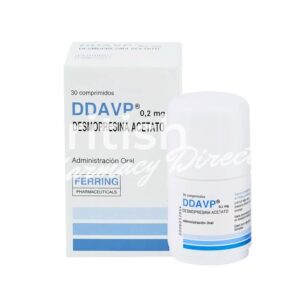
In brief
- In our pharmacy, you can buy DDAVP without a prescription, with delivery across the United Kingdom in 9–21 days; discreet and anonymous packaging is available.
- DDAVP (desmopressin) is used to treat central diabetes insipidus, nocturnal enuresis (bedwetting) and certain bleeding disorders; it is a synthetic vasopressin (antidiuretic) analogue that acts on renal V2 receptors to increase water reabsorption and reduce urine output.
- The usual dose varies by indication: for nocturnal enuresis commonly 120–240 µg at night as an oral lyophilisate (melt); for central diabetes insipidus in adults typically 300–600 µg/day orally in divided doses or 10–40 µg/day intranasally, titrated to response.
- Forms of administration include oral tablets, intranasal spray or drops and, in hospital settings, intravenous or subcutaneous injection.
- Onset of effect is relatively rapid—about 30–60 minutes after intranasal dosing and roughly 1 hour after an oral tablet.
- Duration of action depends on route and dose but commonly lasts 6–24 hours (oral tablets often 8–12 hours; intranasal preparations may act for up to a day depending on dose).
- Do not consume excessive alcohol; alcohol can disturb fluid balance and increase the risk of water intoxication and hyponatraemia—fluid intake is usually restricted around dosing as advised by a clinician.
- The most common side effect is headache; other frequent effects include nausea, nasal irritation with intranasal use and, importantly, hyponatraemia (low blood sodium) which can be serious.
- Would you like to try DDAVP without a prescription?
Basic DDAVP information
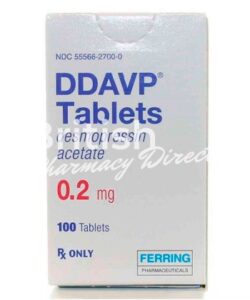
- INN (international nonproprietary name): Desmopressin (desmopressin acetate)
- Brand names available in the United Kingdom: DDAVP, DDAVP Melt, DesmoMelt, Desmotabs, Desmospray, Noqdirna, Octim; generic desmopressin
- ATC code: H01BA02
- Forms and dosages: tablets 100 micrograms and 200 micrograms; oral lyophilisates (melts) 120 micrograms and 240 micrograms; nasal spray 10 micrograms per dose; injection 4 micrograms/mL
- Manufacturers in the United Kingdom: Ferring Pharmaceuticals (DDAVP); generic desmopressin from several manufacturers
- Registration status in the United Kingdom: Licensed by the MHRA
- OTC / Rx classification: Prescription-only medicine (POM)
Critical safety, warnings and patient protection (UK focus)
If you or someone you care for is starting DDAVP, the immediate priority is avoiding hyponatraemia.
Restricting fluid around doses is essential to reduce the risk of water retention and low sodium.
Patients who must not take DDAVP without specialist review include those with recent major surgery, uncontrolled illness causing rapid fluid shifts, or conditions placing them at high risk of hyponatraemia.
Escalate safety concerns to MHRA or NHS teams and report suspected adverse reactions through the Yellow Card scheme.
Stop DDAVP and seek urgent medical care if new confusion, severe headache, persistent nausea or vomiting, seizures, or sudden weight gain occur.
Measure serum sodium at baseline, again within three to seven days after starting or after a dose change, and whenever symptoms suggest hyponatraemia.
Record sodium results in the patient’s GP record and communicate abnormal results to the prescriber and specialist teams.
High-risk settings include recent surgery, acute illness, persistent vomiting or diarrhoea, and any circumstance that causes rapid fluid shifts.
Consider temporary cessation of DDAVP in acute illness and liaise with specialist teams, community diabetes nurses, or continence nurses as appropriate.
Use the following checklist to protect patients before supply or at initiation.
- Confirm prescription source is a valid POM (prescriber identity and clinic/hospital documented).
- Provide a written patient information leaflet covering fluid restriction and red flags.
- Supply a “Do Not Drink Excess Fluid” card to be kept with the medication.
- Document consent and the safety-netting advice in the patient medication record.
- Arrange a follow-up phone call or clinic review within one week of initiation or dose change.
| Sodium timeline | Symptoms to watch for | Action required |
|---|---|---|
| Baseline | None or baseline polyuria/thirst | Record result; avoid starting if low |
| 3–7 days after start/change | Headache, nausea, confusion, drowsiness | Measure serum sodium; consider dose reduction or stop |
| Any time with symptoms | Seizure, severe vomiting, sudden weight gain | Stop DDAVP and seek urgent care; admit if severe |
High-risk groups (elderly, pregnancy, chronic illness)
Elderly patients have a higher risk of hyponatraemia because of reduced renal reserve, polypharmacy, and lower muscle mass.
Start at the lowest effective dose in older adults and monitor serum sodium more frequently.
Review concomitant medicines that increase hyponatraemia risk such as SSRIs and diuretics and consider deprescribing where safe.
Consider specialist geriatric input or urology/paediatric team involvement for titration and ongoing review when necessary.
In pregnancy and breastfeeding, desmopressin is used only when clinically necessary for central diabetes insipidus or certain bleeding disorders under multidisciplinary obstetric and haematology supervision.
Avoid unnecessary dose increases during pregnancy and monitor maternal sodium and fetal wellbeing as part of the shared care plan.
Patients with chronic illness such as heart failure, chronic kidney disease or advanced liver disease have altered fluid handling and higher risk of adverse effects.
Use DDAVP with caution in these groups and liaise with nephrology, cardiology or hepatology when eGFR is reduced or fluid balance is labile.
When DDAVP is used for bleeding disorders such as von Willebrand disease or mild haemophilia A, follow haematology protocols and limit fluid intake after doses as advised.
High-risk conditions:
- Advanced age (>65 years)
- Pregnancy and breastfeeding under specialist care
- Chronic kidney disease or eGFR reduction
- Heart failure or significant liver disease
- Concurrent use of hyponatraemia‑inducing drugs
Monitoring actions by role:
- GP: Check baseline and follow-up sodium; request specialist advice for abnormal results.
- Specialist: Lead titration and set monitoring frequency; advise on temporary cessation during intercurrent illness.
- Pharmacist: Check recent sodium, counsel on fluid restriction and drug interactions at supply.
Q&A — “Can I drive after taking it in the UK?”
Only drive if you remain symptom-free following treatment with DDAVP.
Desmopressin itself rarely impairs driving but hyponatraemia can cause confusion, drowsiness, dizziness or seizures which affect fitness to drive.
The DVLA requires you to inform them if a medicine causes impaired awareness or if you have experienced a seizure.
Follow prescriber advice and avoid driving until serum sodium is normal and symptoms have resolved.
Do not drive if:
- You feel drowsy, dizzy, confused or have had a seizure.
- Your prescriber has advised against driving after a dose change.
- You have a recent abnormal sodium result associated with symptoms.
Contacts:
- NHS 111 for urgent advice outside GP hours
Usage basics
INN, brand names available in the United Kingdom
The INN is desmopressin (as desmopressin acetate), marketed in the UK as DDAVP and other brands.
Licensed formulations in the UK include sublingual melts, standard tablets and hospital injectable forms for supervised use.
Brand examples in UK practice are DDAVP® (brand), DesmoMelt® (sublingual) and Desmotabs® (tablets), while hospitals often use generic desmopressin acetate.
| Formulation | Typical route | Common UK brand names | Typical indication |
|---|---|---|---|
| Sublingual melt | Sublingual | DesmoMelt® | Nocturnal enuresis; diabetes insipidus (selected patients) |
| Tablets | Oral | Desmotabs® | Nocturnal enuresis; maintenance in central DI |
| Nasal spray | Intranasal | DDAVP® (historic use) | Restricted use; variable absorption |
| Injectable | IV/SC | Generic desmopressin acetate | Hospital haemostasis; acute DI management |
Legal classification and supply route
Desmopressin for community use is a prescription-only medicine (POM) in the United Kingdom.
NHS e‑prescription, handwritten FP10 and private prescriptions are accepted by community pharmacies.
Hospital injections and parenteral supplies are given within secondary care settings under inpatient or clinic protocols.
Electronic repeat dispensing and shared care agreements are common for long‑term diabetes insipidus or enuresis management.
Pharmacists should check recent monitoring, especially serum sodium, before dispensing repeats.
- Supply routes: NHS e‑prescription; FP10; private prescription; hospital supply for inpatient use.
- Pharmacist queries at supply: Confirm indication, most recent sodium result, and fluid restriction advice provided.
Dosing guide (NHS-aligned practical overview)
Standard regimens (Primary-care/NHS guidance)
There is no single dose that fits all; dosing is driven by indication and patient response.
For nocturnal enuresis, short‑term oral desmopressin using melts or tablets is typically prescribed at the lowest effective dose for planned periods under prescriber instruction.
Central diabetes insipidus requires specialist‑led titration starting low and adjusting to control polyuria and polydipsia while avoiding hyponatraemia.
Titration principle: start low, assess symptoms and weight and check serum sodium within three to seven days of starting or after dose changes.
- Indication-specific starting points (general only): low-dose oral melt for enuresis; specialist starting regimen for DI.
- Monitoring after dose change: weight, input/output diary, serum sodium at 3–7 days, symptom review.
Q&A — “What if I miss a dose?”
Take the missed dose as soon as you remember unless it is close to the next scheduled dose; do not double up.
For single nocturnal doses, skip the missed dose and take the next dose the following night as prescribed.
If you repeatedly miss doses and symptoms return such as excessive thirst or urination, contact your GP, pharmacy or specialist nurse and arrange a sodium check.
- Patient actions: Take a single missed dose if remembered early; do not double doses.
- Call emergency services if: seizures, sudden collapse or severe confusion occur.
Interaction chart (foods, alcohol, and common drugs)
Food and drink interactions
The critical interaction is with fluid intake rather than specific foods.
Advise restricting fluid for one to two hours before and eight to twelve hours after desmopressin depending on formulation and local protocol.
Alcohol increases diuresis and can heighten the risk of hyponatraemia around dosing, so avoid alcohol near the dosing period.
Caffeine increases urine output and should be moderated at night for patients using desmopressin for bedwetting.
- Foods/drinks to avoid around dose: large volumes of water, alcohol, and excessive caffeinated drinks late evening.
- Bedtime routine modifications: empty bladder before dose, reduce evening fluid intake, avoid late-night snacks that prompt drinking.
Common drug conflicts
Drugs that increase the risk of hyponatraemia should be reviewed before starting DDAVP.
These include SSRIs, SNRIs, tricyclics, carbamazepine, oxcarbazepine, cyclophosphamide, NSAIDs and diuretics.
ACE inhibitors and ARBs may also require closer sodium monitoring when combined with DDAVP.
Pharmacists and prescribers should encourage Yellow Card reporting for suspected adverse drug reactions and document any changes to therapy.
| Drug class | Interaction mechanism | Monitoring action |
|---|---|---|
| SSRIs / SNRIs | Increase ADH effect and hyponatraemia risk | Check sodium at baseline and within 3–7 days of starting DDAVP |
| NSAIDs | Potentiate antidiuretic effect | Review need for NSAID; monitor symptoms and sodium |
| Thiazide diuretics | Cause sodium loss and increase hyponatraemia risk | Consider dose review and closer sodium monitoring |
Immediate flags:
- Recent start of an SSRI/SNRI or diuretic concurrent with DDAVP initiation.
- New symptoms of confusion, headache, nausea or seizures after a medication change.
Legal status and availability in the UK
In our online pharmacy, DDAVP is available without a prescription, with discreet delivery to the United Kingdom in 9–21 days.
Mechanism and pharmacology (simplified and clinical)
Simplified explanation
Desmopressin is a synthetic analogue of vasopressin that acts on renal V2 receptors to increase water reabsorption and reduce urine volume.
Clinical terms
Sublingual melts provide predictable absorption while nasal absorption may be more variable and subject to regulatory limits for some indications.
Onset and duration depend on formulation and guide dosing intervals chosen by specialists.
- V2 receptor: renal receptor that promotes aquaporin insertion in collecting ducts.
- Aquaporin: water channel increasing water reabsorption in the kidney.
- ADH: antidiuretic hormone, endogenous vasopressin that desmopressin mimics.
Formulation PK differences: sublingual melts have reliable bioavailability; tablets vary; nasal products historically show variable absorption.
Indications and off‑label uses (MHRA-approved vs practice)
MHRA-approved uses
Desmopressin is licensed for central diabetes insipidus and short‑term management of nocturnal polyuria/enuresis where indicated.
Intravenous or subcutaneous desmopressin is used in hospital for certain bleeding disorders under haematology guidance.
Off-label practices in NHS/private care
For adult nocturia due to nocturnal polyuria, desmopressin (Noqdirna) is prescribed after urological assessment and where other measures have failed.
Haematology units may use tailored desmopressin protocols for von Willebrand disease with local documentation and informed consent.
- Licensed indications: central DI; selected nocturnal polyuria/enuresis.
- Off-label uses: bespoke haematology protocols.
- Pre-prescribing assessment checklist: baseline sodium, review concomitant medicines, assess fluid habits and provide written safety instructions.
Alternatives matrix
NHS prescribing alternatives (comparison table)
| Option | Mechanism | Typical setting | Pros | Cons |
|---|---|---|---|---|
| Desmopressin | Antidiuretic analogue (V2 receptor) | Primary care / specialist | Rapid effect on nocturnal urine; simple dosing | Risk of hyponatraemia; requires fluid restriction |
| Enuresis alarm | Behavioural conditioning | Home / community | No medication risks; durable benefits | Requires motivation and time; variable adherence |
| Bladder training | Behavioural therapy | Primary care / physiotherapy | Non‑pharmacological; no drug risks | Slow to show effect; needs patient engagement |
| Urology referral / surgery | Procedural / corrective | Secondary care | May address underlying anatomical issues | Invasive; not appropriate for simple nocturnal polyuria |
- Pros/cons checklist for alternatives: consider alarm therapy first-line for children, desmopressin for selected responders, review urology if structural causes suspected.
Common questions (from UK patient consultations)
Q: How long will it take to work?
A: Most patients notice reduced night urine within one to three nights if the dose is effective.
- If no effect: confirm correct timing and fluid restriction, review dose with prescriber, and consider switching formulation.
Q: Is it safe long-term?
A: Long-term use is possible under specialist follow-up but requires periodic sodium and blood pressure checks and review of continuing indication.
Q: Can children use it?
A: Yes, selected children may use desmopressin following paediatric assessment and adherence to paediatric dosing and monitoring protocols.
- Red flags requiring urgent review: seizures, severe vomiting, sudden confusion, collapse, or very rapid weight gain.
For urgent concerns contact your GP, specialist nurse, or NHS 111 outside working hours.
Registration and regulation (MHRA and NHS prescribing framework)
MHRA approval process and reporting
MHRA licences desmopressin products and issues safety updates should formulations or indications change.
Serious adverse drug reactions must be reported via the Yellow Card scheme by prescribers, pharmacists and patients.
NHS prescribing framework
Shared care agreements commonly support long‑term management, with the specialist setting monitoring frequency and GPs providing routine prescribing when safe.
Electronic prescribing eases access but does not replace the need for documented sodium monitoring and clinical review before issuing repeats.
- Regulatory steps: follow SmPC, local formulary and MHRA alerts when prescribing.
- Prescriber checklist before repeats: confirm last sodium, reason for treatment and planned review date.
Storage and handling (UK household and pharmacy guidance)
Household storage in UK climate
Store desmopressin at room temperature as per the product leaflet and protect from moisture and frost.
UK homes can be damp so advise keeping medication in the original box in a dry place out of reach of children.
Pharmacy handling and transport
Pharmacies should follow manufacturer storage instructions, record batch numbers and advise temperature‑stable transport for home delivery.
- Household do/don’t: do not store in bathroom; keep away from heat sources; keep in original packaging.
- Pharmacy dispensing checklist: provide leaflet, document counselling, batch number and expiry date in PMR.
Guidelines for proper use (pharmacist counselling and NHS patient safety)
UK pharmacist counselling style (what to cover on supply)
Use brief teach-back methods to confirm the patient knows the name of the medicine, indication and route of administration.
Explain when to take the dose, strict fluid advice and the red‑flag symptoms that require urgent care.
Document counselling content in the patient medication record and ensure the patient understands when their sodium will be checked.
NHS patient safety advice (practical steps)
Provide a printed or emailed patient card showing dosing, fluid restriction instructions and emergency contacts.
Arrange follow-up laboratory tests and if the patient is a child, inform the school or guardian about the administration plan.
- Counselling points checklist: dosing time, fluid restriction window, when to check sodium, side effects and who to contact.
- Escalation contacts: GP surgery, NHS 111, local A&E and specialist nurse contact details if provided.
Delivery across the United Kingdom
| City | Region | Delivery time |
|---|---|---|
| London | England | 9–21 days |
| Birmingham | England | 9–21 days |
| Manchester | England | 9–21 days |
| Glasgow | Scotland | 9–21 days |
| Edinburgh | Scotland | 9–21 days |
| Leeds | England | 9–21 days |
| Bristol | England | 9–21 days |
| Liverpool | England | 9–21 days |
| Newcastle | England | 9–21 days |
| Sheffield | England | 9–21 days |
| Nottingham | England | 9–21 days |
| Belfast | Northern Ireland | 9–21 days |
| Cardiff | Wales | 9–21 days |
| Aberdeen | Scotland | 9–21 days |