Hydroquinone
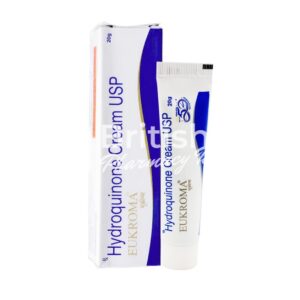
In brief
- Hydroquinone may be available to buy without a prescription in some countries and through certain pharmacies, but in many regulated markets it is prescription-only, especially for strengths above 2%. Availability and rules vary by country, so local regulations should be checked before purchase.
- Hydroquinone is used to lighten areas of hyperpigmentation such as melasma, post-inflammatory hyperpigmentation, and age spots. It works by inhibiting tyrosinase, an enzyme involved in melanin production, thereby reducing pigment formation in the skin.
- The usual dose is a thin layer of 2% to 4% cream applied to the affected area once or twice daily, depending on the condition and product strength.
- The form of administration is topical, most commonly as a cream, but it is also available as a gel, lotion, or combination cream with other ingredients such as tretinoin or corticosteroids.
- The effect may begin gradually within a few weeks, but visible lightening often takes around 4 to 8 weeks of regular use.
- The duration of action lasts only while the medicine is used; treatment courses are usually limited to 2 to 4 months, and prolonged use without medical supervision is not recommended.
- Avoid or limit alcohol if possible, as it does not directly interact with topical hydroquinone, but alcohol may worsen skin irritation, dehydration, or inflammation in some people.
- The most common side effects are skin redness, mild burning or stinging, dryness, peeling, and irritation; less commonly, allergic contact dermatitis or excessive lightening may occur.
- Would you like to try hydroquinone without a prescription?
Critical Safety Warnings And UK Patient Protection
Basic Hydroquinone Information
- INN (International Nonproprietary Name): Hydroquinone
- Brand names available in United Kingdom: Brand names vary by country and manufacturer; examples seen internationally include Eldoquin, Lustra, Melanex, Melquin, Albothyl Hydrochinon, HQderm, Iklen, Melalite, Iluma, Benoquin, Movate, Funbact A, Eldoquin Forte, and Benoquin Forte.
- ATC Code: D11AX11
- Forms & dosages: Cream 2%, 4%, 5%; gel 2%, 4%; lotion 2%, 4%; combination products with tretinoin, corticosteroids, and sunscreen in some regions.
- Manufacturers in United Kingdom: Not specified.
- Registration status in United Kingdom: Prescription-led in most regulated markets for 2%-4% and higher strengths; local status must be checked before supply.
- OTC / Rx classification: Prescription in most regulated markets; some regions allow lower-strength OTC supply.
Who Should Avoid Hydroquinone Or Only Use It Under Specialist Advice
Hydroquinone is not a casual cosmetic brightening cream, and in the UK it may be prescription-only or supplied only after pharmacist or specialist counselling.
The main red flags are known allergy or hypersensitivity, eczema, broken skin, recent sunburn, and pregnancy or breastfeeding unless a specialist has explicitly advised use.
Extra caution is needed with psoriasis, atopic dermatitis, prior reactions to phenols or resorcinol, vitiligo, and fragile older skin.
Red flag symptoms needing urgent review: blistering, rapidly spreading rash, facial swelling, severe eye pain or eye contact, darkening of the treated area, or intense burning that does not settle.
NHS/MHRA Safety Points, Eye Exposure, Broken Skin, And Overuse Risks
The hazard profile is serious: hydroquinone may cause allergic skin reactions, serious eye damage, and is suspected of causing genetic defects and cancer, with aquatic toxicity also listed in the safety data.
That is why it should only be used on intact skin, never rubbed into the eyes or mucous membranes, and never layered over irritated or cracked skin.
Stop immediately if severe irritation, blistering, or unexpected darkening appears, and ask a pharmacist, GP, or dermatologist to review the treatment plan.
In the UK, patient protection also means checking local approval status, receiving pharmacist counselling at supply, and reporting suspected adverse effects through the MHRA Yellow Card system.
Can I Use Hydroquinone If I’m Pregnant Or Breastfeeding?
Not unless a specialist has advised it, because controlled safety data are lacking and pregnancy or breastfeeding is listed as an absolute contraindication outside specialist care.
What Hydroquinone Is
INN, Phenol Derivative, And ATC Classification
Hydroquinone is the International Nonproprietary Name for a topical depigmenting agent used exclusively on the skin for pigment disorders.
It is a phenol derivative, more specifically a benzenediol organic compound, and its ATC code is D11AX11 within dermatological preparations.
- INN
- The standard global non-proprietary name: hydroquinone.
- ATC code
- D11AX11.
- Phenol derivative
- A benzene-ring compound with dermatological action.
- Topical use
- Applied only to the skin, never taken by mouth.
How It Is Described In Clinical And Pharmacy Settings
In practice, hydroquinone is discussed as a prescription-strength treatment for hyperpigmentation rather than a general skin whitener.
Patients usually ask about hydroquinone cream 4%, hydroquinone for hyperpigmentation, or hydroquinone for melasma treatment, but the goal is targeted fading of dark patches, not whole-face cosmetic bleaching.
Legal Status And UK Access
Prescription Routes, Private Clinics, And Pharmacy Supply
Access varies across markets, and in the UK hydroquinone is generally treated as a specialist-led medicine rather than an everyday over-the-counter buy.
Depending on strength and source, supply may come through NHS prescribing, private dermatology, or a registered online pharmacy using an e-prescription pathway.
In our online pharmacy, hydroquinone is available without a prescription, with discreet delivery to United Kingdom in 5-14 days.
That convenience does not remove the need for counselling, because the main safety decisions still concern skin suitability, duration of treatment, and sun protection.
MHRA Approval, Online Pharmacies, And How To Verify Legitimacy
Before ordering, it is wise to check that the product is MHRA-authorised where relevant and supplied by a registered UK pharmacy.
Packaging and strength can vary by region, and products imported from other markets may look different even when the active ingredient is the same.
| Access route | Typical process | Safety checks |
|---|---|---|
| NHS | Prescribed through a GP or specialist | Diagnosis, suitability, and treatment length review |
| Private clinic | Dermatology assessment and private prescription | Condition-specific advice and follow-up |
| Online pharmacy | Registered pharmacy supply, sometimes with e-prescription | Identity, product legitimacy, and pharmacist counselling |
Brand Names, Strengths, And Formulations
Common Hydroquinone Products And Package Sizes
Brand names differ by country, so a patient may recognise Eldoquin, Melalite, Movate, or HQderm from overseas pharmacies, but the UK will see variable availability and packaging.
Global packaging commonly ranges from 15 g to 60 g tubes, with 2%, 4%, and sometimes 5% strengths depending on the market.
Cream, Gel, Lotion, And Combination Products
Creams are the most common form, while gels and lotions are used less often for oily skin or larger treatment areas.
Combination products may include tretinoin, corticosteroids, or sunscreen, and triple combination creams are used in some settings for refractory melasma.
| Form | Strength | Typical tube size | Notes |
|---|---|---|---|
| Cream | 2%, 4%, 5% | 15 g to 60 g | Most widely available |
| Gel | 2%, 4% | Not specified | Less common, often for oily skin |
| Lotion | 2%, 4% | Not specified | For larger surface areas |
| Combination | Various | Varies | May include tretinoin, corticosteroid, or sunscreen |
Contraindications And Higher-Risk Groups
Absolute Contraindications
Hydroquinone should not be used where the skin barrier is already compromised or where a serious sensitivity risk is known.
- Known allergy or hypersensitivity to hydroquinone or excipients.
- Eczema, broken skin, or recent sunburn on the treatment area.
- Pregnancy or breastfeeding unless specialist care has been agreed.
Relative Contraindications And Monitoring Needs
Some patients can use hydroquinone only with extra caution and follow-up, because the skin may react more easily or pigment change may be less predictable.
- Psoriasis or atopic dermatitis near the area being treated.
- Previous reaction to phenols or resorcinol.
- Vitiligo, because further depigmentation may occur.
- Children under 12 years, where safety and efficacy are not established.
- Possible liver or kidney impairment, where formal data are lacking.
- Older adults, who may have more fragile skin and need closer monitoring.
Is Hydroquinone Safe For Older Adults?
There is no specific dose adjustment for older adults, but fragile skin and increased sensitivity mean closer monitoring is sensible.
Indications And Where It Fits In Treatment
Melasma, Post-Inflammatory Hyperpigmentation, Lentigines
Hydroquinone is used for melasma, post-inflammatory hyperpigmentation, and age spots or lentigines, where pigment has become visibly darker than surrounding skin.
Typical strengths are 2% to 4%, used once or twice daily, and results are gradual rather than immediate.
UK Specialist Use Versus Off-Label Cosmetic Expectations
In the UK, hydroquinone is usually specialist-led and may be prescribed after a proper diagnosis rather than purchased for casual cosmetic use.
It works best when the trigger for pigmentation is addressed as well, especially ultraviolet exposure, because sun protection is essential for any hydroquinone melasma treatment or hydroquinone hyperpigmentation treatment.
| Condition | Typical strength | Frequency | Duration |
|---|---|---|---|
| Melasma | 2% to 4% | 1 to 2 times daily | 2 to 4 months |
| Lentigines | 2% to 4% | Once daily | Up to 3 months |
| Post-inflammatory hyperpigmentation | 2% to 4% | 1 to 2 times daily | 2 to 6 months |
Correct Use And Application Technique
Step-By-Step Application Advice
The usual routine is simple, but the details matter because overuse and irritation are the main reasons treatment goes wrong.
- Cleanse the affected skin gently.
- Pat the area dry before applying.
- Apply a thin layer only to the darkened patch.
- Wash hands afterwards.
- Use SPF 30+ every day and limit UV exposure.
Avoiding Eyes, Mucous Membranes, And Broken Skin
Keep hydroquinone away from the eyes, lips, nostrils, and any broken or irritated skin.
If a clinician or pharmacist suggests patch testing, follow that advice rather than testing it yourself on a large area.
What If I Miss A Dose?
Apply it as soon as remembered, skip it if the next dose is nearly due, and never double apply.
Dosing Guide And Treatment Duration
Typical Regimens By Condition
Hydroquinone should be used for a defined course, not indefinitely, because stronger or longer use does not automatically mean better results.
| Condition | Frequency | Typical duration | Review point |
|---|---|---|---|
| Melasma or hyperpigmentation | 1 to 2 times daily | 2 to 4 months | At the end of the agreed trial |
| Lentigines or age spots | Once daily | Up to 3 months | If fading is not progressing |
| Post-inflammatory hyperpigmentation | 1 to 2 times daily | 2 to 6 months | Reassess efficacy and irritation |
When To Stop And Seek Review
Stop and seek review if there is no improvement after the agreed course, if irritation becomes persistent, or if the skin starts to darken rather than fade.
Do not continue beyond 4 to 6 months without supervision, because long-term use increases the risk of chronic adverse effects and exogenous ochronosis.
Missed Doses And Overdose Guidance
What To Do If You Forget An Application
If a dose is missed, apply it when remembered unless the next application is close, then simply continue as normal.
Excess Use, Eye Contact, Or Swallowing
Topical overdose usually presents as excess irritation, so wash the product off and watch the skin closely.
- Apply as soon as remembered if the dose is due.
- Wash off excess if too much has been applied.
- Call NHS 111 or urgent care if the skin reaction is severe.
- Seek emergency help immediately if swallowed or if large amounts are ingested.
Severe toxicity may include methemoglobinaemia and acute dermatitis.
Side Effects And Long-Term Safety
Common Mild Reactions
The more common effects are usually local and mild at first, especially when treatment begins.
Moderate Reactions And When To Stop
Allergic contact dermatitis, irritant dermatitis, and nail discoloration are more serious warnings to stop and ask for advice.
Rare But Serious Long-Term Risks
Exogenous ochronosis is the rare but important long-term risk, and it is associated particularly with prolonged or high-strength use.
In simplified patient language, the main safety message is that hydroquinone can irritate the skin, damage the eyes badly if misused, and should not be used casually or for too long.
| Symptom | Severity | Action |
|---|---|---|
| Redness | Mild | Monitor and seek advice if persistent |
| Mild burning or stinging | Mild | Reduce irritation triggers and reassess |
| Dryness or mild peeling | Mild | Use only as directed |
| Allergic contact dermatitis | Moderate | Stop and seek medical advice |
| Irritant dermatitis | Moderate | Stop and get reviewed |
| Ochronosis | Serious | Stop immediately and arrange specialist review |
Interactions And Lifestyle Precautions
Other Topical Products And Skin Irritants
Hydroquinone interactions are mainly with other skin products rather than food.
- Avoid harsh exfoliants and strong peels unless advised.
- Use benzoyl peroxide only if a clinician specifically recommends it.
- Do not overuse retinoids alongside hydroquinone without advice.
- Ask a pharmacist before combining with multiple active creams.
Alcohol, Heat, Sunlight, And Workplace Exposure
Alcohol, tea, and coffee do not have meaningful direct interactions with hydroquinone.
The biggest practical issue is sun exposure, because it worsens pigmentation and irritation, so sunscreen, shade, and sensible clothing really matter.
If an unexpected reaction occurs, MHRA Yellow Card reporting is the right route for UK patients and clinicians.
Alternatives To Hydroquinone
Prescribed And Over-The-Counter Options
Patients often compare hydroquinone cream 4% with tretinoin, azelaic acid, kojic acid, arbutin creams, corticosteroid-containing depigmenting creams, and tranexamic acid for melasma.
When Another Treatment May Be Better
A gentler option may suit sensitive skin, while triple combination creams may be considered in refractory melasma under careful supervision.
| Treatment | Effectiveness | Irritation risk | Prescription status | Typical use |
|---|---|---|---|---|
| Hydroquinone | High for targeted pigment fading | Moderate | Usually prescription-led | Hydroquinone hyperpigmentation treatment |
| Tretinoin | Useful for cell turnover | Moderate to high | Usually prescription | Often combined with other agents |
| Azelaic acid | Moderate | Lower to moderate | Varies | Suitable for some sensitive skin types |
| Kojic acid | Moderate | Can irritate | Varies | Used in pigment products |
| Arbutin | Milder | Lower | Varies | Gentler cosmetic option |
| Tranexamic acid | Helpful in melasma | Varies by route | Prescription in many settings | Melasma-focused treatment |
Cost And Access In The UK
England Prescription Charges Versus Scotland, Wales, And Northern Ireland
In the UK, prescription charges apply in England, while Scotland, Wales, and Northern Ireland typically provide free prescriptions.
Private Prescribing, Online Pharmacies, And Major Chains
Hydroquinone may be fulfilled through private prescribing or via regulated online pharmacies, and major UK pharmacy chains such as Boots, LloydsPharmacy, and Superdrug may be part of the access pathway depending on the item and local stock.
Cost varies with strength, brand, whether the product is compounded, and whether it is imported.
| Source | Likely access route | Cost category |
|---|---|---|
| NHS in England | Prescription fulfilment | Prescription charge applies |
| Scotland, Wales, Northern Ireland | Prescription fulfilment | Typically free prescription |
| Private clinic | Private prescription | Varies by consultation and product |
| Online pharmacy | Registered supply | Varies by strength and brand |
How Hydroquinone Works In The Skin
Simple Explanation For Patients
Hydroquinone helps fade dark patches by reducing melanin production in pigment cells over time.
Clinical Mechanism And Why Results Take Time
In clinical language, it is a topical phenolic depigmenting agent that affects melanogenesis, so results appear gradually rather than overnight.
- Melanin
- The pigment that gives skin its colour.
- Melanogenesis
- The process by which pigment is made.
- Depigmenting agent
- A medicine that reduces excess pigment.
Overuse can disrupt normal pigmentation and increase adverse effects, which is why treatment length matters as much as strength.
Storage And UK Pharmacist Advice
How To Store It At Home
Store hydroquinone below 25°C, protect it from light and moisture, do not freeze it, and keep it in the original tightly sealed container.
That means avoiding bathroom cupboards, radiators, damp rooms, and a hot car glovebox during winter or summer travel.
What Pharmacists Should Reinforce At Supply
Good counselling should cover where to apply it, how long to use it, what side effects to watch for, and when to return for review.
- Keep out of reach of children.
- Never share the product with anyone else.
- Use only on the prescribed or agreed area.
- Check for eye exposure or skin irritation each day.
- Stop and seek advice if darkening or blistering appears.
Delivery Across United Kingdom
| City | Region | Delivery time |
|---|---|---|
| London | England | 5-7 days |
| Birmingham | England | 5-7 days |
| Manchester | England | 5-7 days |
| Liverpool | England | 5-7 days |
| Leeds | England | 5-7 days |
| Sheffield | England | 5-7 days |
| Bristol | England | 5-7 days |
| Newcastle upon Tyne | England | 5-7 days |
| Nottingham | England | 5-9 days |
| Leicester | England | 5-9 days |
| Aberdeen | Scotland | 5-9 days |
| Glasgow | Scotland | 5-7 days |
| Edinburgh | Scotland | 5-7 days |
| Cardiff | Wales | 5-7 days |
| Belfast | Northern Ireland | 5-7 days |