Protopic
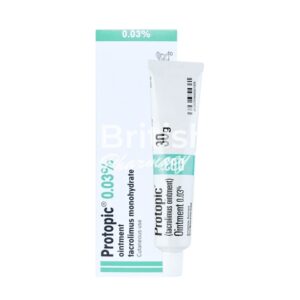
In brief
- Protopic is available from pharmacies and online suppliers; it is officially prescription-only in most countries (FDA/EMA), but some pharmacies and online vendors may sell it without a prescription—check local regulations and supplier policies.
- Protopic (tacrolimus ointment) is used to treat moderate-to-severe atopic dermatitis; it is a topical calcineurin inhibitor that reduces T‑cell activation and inflammatory cytokine release, providing a steroid‑free anti‑inflammatory effect.
- Usual dosage: apply a thin layer of 0.03% or 0.1% ointment to affected areas twice daily for adults (0.03% is used for children 2–15 years); continue until lesions clear, then consider maintenance dosing once or twice weekly to prevent relapse.
- Form of administration: topical ointment applied to the skin; do not apply to mucous membranes, open wounds or use under occlusive dressings.
- Onset time: some patients notice symptomatic relief within days, with more noticeable improvement typically within 1–3 weeks; local burning or stinging may occur immediately after application but is usually transient.
- Duration of action: therapeutic benefit is maintained with regular use and can be sustained with maintenance dosing (once or twice weekly); long‑term use has been studied for up to several years in selected patients.
- Alcohol warning: avoid applying alcoholic or alcohol‑based products to treated skin; some people report flushing or increased sensitivity with alcohol after application, so avoid excessive alcohol exposure of the treated areas.
- The most common side effect is transient burning or stinging at the application site; other common effects include itching, redness and occasional local infections (e.g. herpes simplex).
- Would you like to try protopic without a prescription?
Basic Protopic Information
- INN (International Nonproprietary Name): Tacrolimus.
- Brand Names Available In United Kingdom: Protopic and generic versions such as Tacrolimus Sandoz are marketed in the EU and are the brands patients in the United Kingdom will commonly encounter.
- ATC Code: D11AH01 — Tacrolimus (Topical calcineurin inhibitors).
- Forms & Dosages: Ointment 0.03% for children aged two years and above and adults, and ointment 0.1% for adults and adolescents aged 16 years and above; commonly supplied in tubes (for example 30g or 60g).
- Manufacturers In United Kingdom: Original product from Astellas Pharma with generic supplies from companies such as Sandoz across EU markets; availability in the UK depends on national supply and tendering.
- Registration Status In United Kingdom: Regulated in the EU/EMA and available as prescription-only topical tacrolimus formulations; national availability follows MHRA guidance and local formularies.
- OTC / Rx Classification: Prescription-only medicine (POM) in virtually all markets; a valid prescription is required.
Critical Warnings & Restrictions
Immediate Safety Actions For UK Patients
Protopic (tacrolimus ointment) is a prescription-only medicine in the United Kingdom and must be used according to pharmacist, GP or specialist advice and the patient information leaflet.
Do not use Protopic if there is a known hypersensitivity to tacrolimus or to ointment excipients such as mineral oil or paraffin.
Avoid application to active skin infections including herpes simplex, varicella and overt bacterial infections until infection is treated and controlled.
Significant immunocompromise such as recent transplant, current systemic immunosuppressant therapy or uncontrolled HIV is an absolute contraindication to topical tacrolimus use unless supervised by a specialist.
Report any new or unusual adverse effects to the MHRA Yellow Card scheme and ask your GP or pharmacist for assistance in reporting.
Do not apply tacrolimus ointment to mucous membranes, open wounds or under occlusive dressings.
Minimise sun exposure on treated areas and advise regular sun protection and avoidance of deliberate UV phototherapy on treated sites.
At dispensing use a checklist to confirm contraindications, pregnancy and breastfeeding status, current systemic immunosuppressants and presence of active skin infection.
High-Risk Groups (Elderly, Pregnancy, Chronic Illness)
- Children under 2 years: not approved for use.
- Children 2–15 years: 0.03% ointment only should be used.
- Adolescents ≥16 years and adults: 0.1% or 0.03% depending on clinician decision and site.
- Elderly: same standard regimen but monitor for increased skin sensibility due to age-related barrier changes.
- Pregnancy and breastfeeding: use only if the potential benefit outweighs risk and after specialist or GP advice.
Q&A — Can I Drive After Taking It In The UK?
Short answer: Yes; topical tacrolimus has minimal systemic absorption and is not associated with drowsiness or impaired driving.
If you experience severe local adverse effects, dizziness or visual disturbance — which are rare — do not drive and seek medical advice.
If workplace duties include hazardous machinery, follow your employer health-and-safety guidance and document the counselling given.
Usage Basics
INN, Brand Names Available In The UK And Forms
- INN
- Tacrolimus.
- Brands
- Protopic (Astellas) and generic equivalents such as Tacrolimus Sandoz are available in EU markets and are common in UK supply chains.
- Forms
- Topical ointment only, in 0.03% and 0.1% strengths supplied in tubes (common tube sizes include 30g and 60g).
Legal And NHS Context
- Tacrolimus topical products are MHRA-regulated and supplied on prescription via NHS or private clinics.
- England usually applies an NHS per-item prescription charge unless the patient is exempt; Scotland, Wales and Northern Ireland have different prescription exemption policies.
- Community pharmacies including national chains counsel patients on safe use at dispensing.
- Prescriptions may be issued by GP, dermatologist or a private prescriber as clinically appropriate.
Dosing Guide
Standard Regimens (NHS-Style Guidance)
- Apply a thin layer of ointment to affected area twice daily until the skin clears; most patients see improvement within 1–3 weeks.
- Discontinue treatment once the lesion is clear.
- For maintenance, once or twice weekly application to previously affected sites reduces relapses and is supported by regulatory guidance and long-term studies up to four years.
| Age Group | Concentration |
|---|---|
| Children 2–15 years | 0.03% ointment only |
| Adolescents ≥16 years | 0.1% or 0.03% depending on clinician |
| Adults | 0.03% or 0.1% ointment |
Adjustments For Comorbidities
- Children under 2 years: not approved — do not use.
- Hepatic or renal impairment: no routine topical dosage adjustment is required due to minimal systemic exposure, but monitor when applied to very thin or compromised skin.
- Elderly patients: use standard regimen but observe for increased skin sensitivity.
- Avoid in patients who are immunocompromised unless managed by a specialist team.
Q&A — What If I Miss A Dose?
Apply as soon as you remember unless it is almost time for the next scheduled application.
Do not double up doses to make up for a missed application.
For maintenance regimens given once or twice weekly, apply only on the planned maintenance days.
In the event of accidental ingestion or very large overdose, seek urgent medical attention.
Interaction Chart
Food, Drink And Lifestyle Interactions
- Systemic dietary interactions are not expected because topical tacrolimus is minimally absorbed.
- Sensitivity or flushing after alcohol applied to treated skin has been reported rarely; avoid alcohol on treated areas if this occurs.
- Avoid sun exposure on treated sites and use sunscreen, as UV exposure increases the risk of cutaneous reactions.
- Do not undergo UV phototherapy to areas where tacrolimus ointment has been applied.
Drug Interactions And MHRA Yellow Card Data
| Concomitant Systemic Immunosuppressants | Risk | Action |
|---|---|---|
| Oral or systemic calcineurin inhibitors, systemic corticosteroids, biologic immunosuppressants | Increased overall immunosuppression and infection risk despite minimal topical absorption | Avoid concurrent use unless specialist-managed; document risk-benefit and monitor closely; report suspected interactions via Yellow Card. |
User Reports & Trends
Patients on UK forums commonly describe tacrolimus ointment as a steroid-sparing option that works well on sensitive sites such as the face, eyelids and flexures.
- Pros: reduction in flare frequency, suitability for long-term intermittent maintenance, and lower risk of skin thinning compared with topical corticosteroids.
- Cons: initial burning or stinging, occasional herpes simplex flares and anxiety over theoretical long-term cancer warnings in the product literature.
| Complaint | Typical Patient Frequency | SPC Listed Frequency |
|---|---|---|
| Burning/stinging at application | Common patient report | Very common / Common |
| Local viral infections (herpes) | Occasional forum reports | Less common |
| Long-term cancer concern | Frequent anxiety and headlines | Labelled as a theoretical precaution; epidemiological causal link not confirmed |
Clinical trials and EMA/NHS data support effectiveness and an acceptable long-term safety profile in indicated groups with maintenance regimens noted up to four years in selected studies.
For search visibility and patient education, headings and meta descriptions should reflect common search phrasing such as Protopic ointment, tacrolimus ointment 0.03% and eczema ointment to match patient intent.
Access & Purchase Options
High-Street Chains And NHS Prescribing
- Dispensing points include Boots, LloydsPharmacy, Superdrug clinics in some locations, independent community pharmacies and hospital pharmacies.
- Availability of Protopic or a particular generic depends on local stock and procurement arrangements.
- Prescriptions are issued by GP, dermatology clinics or private prescribers as clinically necessary.
Online Pharmacies And E-Prescriptions
NHS electronic prescribing (EPS) is widely used and allows patients to nominate a pharmacy for collection.
Online pharmacies that are GPhC-registered can supply prescription medicines against a valid prescription.
Always confirm that an online provider is GPhC-registered and that products are MHRA-approved; avoid unregulated suppliers.
- Point-of-sale checklist: valid prescription, GPhC registration visible, batch and expiry check on receipt.
In our online pharmacy, protopic is available without a prescription, with discreet delivery to United Kingdom in 5-14 days.
Mechanism & Pharmacology
Simplified Patient Explanation
- Mechanism
- Topical calcineurin inhibition reduces T-cell activation and downstream inflammatory cytokines in the skin.
- Effect
- Reduced eczema inflammation without the steroid-associated risk of skin atrophy.
- Clinical Implication
- Many patients report onset of improvement within 1–3 weeks and the product is useful for sensitive skin areas.
Clinical/Pharmacological Details For Professionals
| Pharmacokinetic Note | Monitoring Triggers |
|---|---|
| Minimal systemic absorption with topical application; absorption may rise on very inflamed or denuded skin. | Widespread application, occlusion, compromised epidermal barrier or concurrent systemic immunosuppression should prompt specialist review. |
Indications & Off-Label Uses
MHRA/EMA-Approved Uses
- Approved for moderate-to-severe atopic dermatitis in adults and in children from age two.
- Strength guidance: 0.03% for children aged two to 15 years; 0.1% for adults and adolescents aged 16 years and above.
- Typically used second-line where topical corticosteroids are unsuitable or insufficient.
Off-Label Practices Seen In UK NHS/Private Care
- Off-label use can include treatment for certain inflammatory dermatoses such as lichen planus, vitiligo or steroid‑resistant facial dermatoses in specialist settings.
- Off-label prescribing should be specialist-led with documented consent and a monitoring plan.
- Checklist For Off-Label Prescribing: evidence summary, informed consent recorded, and a monitoring schedule documented.
Key Clinical Findings
- Pivotal EU evidence shows tacrolimus ointment is effective and for many patients comparable to mid‑potency topical corticosteroids for controlling atopic dermatitis.
- Long‑term intermittent maintenance once or twice weekly reduces relapse frequency with safety data reported up to four years in selected cohorts.
- Common adverse events include transient burning or stinging at application, local viral infections such as herpes simplex, and folliculitis.
- Regulators maintain a precautionary cancer‑related label due to theoretical concerns extrapolated from systemic calcineurin inhibitors, but epidemiological evidence has not confirmed a causal link for topical use.
| Study Type | Population | Main Outcome | Safety Signals |
|---|---|---|---|
| Randomised comparative trials | Adults and children with moderate-to-severe atopic dermatitis | Efficacy comparable to mid-potency steroids on many sites | Transient application site reactions common; no confirmed topical cancer signal |
| Long-term maintenance studies | Selected patients on intermittent once/twice weekly use | Reduced relapse frequency over months to years | Acceptable tolerability up to four years in cohorts studied |
Alternatives Matrix
NHS Prescribing Alternatives (Comparison Table)
| Product | Typical Indication | Pros | Cons | Suitability For Face/Eyelids | Cost Considerations |
|---|---|---|---|---|---|
| Topical Corticosteroids (various potencies) | First-line for many eczema flares | Rapid onset of action | Risk of skin atrophy with prolonged use | Less suitable for long-term use on face/eyelids | Generally lower cost and widely available on prescription |
| Pimecrolimus (Elidel) | Mild-to-moderate atopic dermatitis | Steroid-free option for sensitive skin | Cream formulation; may be less potent in some areas | Suitable for face/eyelids | Availability varies; cost may be similar to tacrolimus generics |
| Crisaborole (where available) | Mild-to-moderate eczema | Non-steroidal PDE4 inhibitor | Availability in UK variable; cost can be higher | Suitable for face in many patients | Prescription-only; cost and access vary |
| Emollients | All severities as adjunctive therapy | Essential for skin barrier support and prevention | Do not control severe inflammation alone | Safe for face | Low cost and OTC options widely available |
Pros And Cons Checklist
- Risk Of Skin Atrophy: High with steroids, low with topical tacrolimus.
- Onset Of Action: Corticosteroids often faster; tacrolimus has onset usually within 1–3 weeks.
- Irritation Risk: Tacrolimus commonly causes transient burning or stinging on initiation.
- Maintenance Suitability: Tacrolimus is suitable for intermittent maintenance on sensitive sites.
- Cost/Availability: Varies by brand and pharmacy; check local supply and prescription charges.
- Monitoring Needs: Specialist involvement for off-label use or in immunocompromised patients.
Common Questions
Can Children Use Protopic?
Yes: 0.03% ointment is licensed for children aged two to 15 years.
Children under two years must not be treated with tacrolimus ointment as safety and efficacy are not established.
Refer complex paediatric cases to a paediatric dermatologist.
Can I Use It During Pregnancy Or Breastfeeding?
Topical tacrolimus is used with caution during pregnancy or lactation and only where the clinician judges the benefit outweighs the risks.
Discuss with your GP or specialist and document the decision.
Can I Apply To Infected Skin?
No — treat the infection first with appropriate antiviral or antibacterial therapy and re-assess before starting tacrolimus ointment.
Is It Safe Long-Term?
Intermittent maintenance regimens up to four years have shown acceptable safety in selected studies.
Monitor for persistent irritation, new infections and report suspected adverse effects via the MHRA Yellow Card scheme.
NHS Cost & Access Comparison Table
| Source/Pharmacy | Typical Private Price Range (Approx.) | NHS Prescription Charge (England) | Exemption Status / Notes |
|---|---|---|---|
| Boots / Lloyds / Superdrug (dispensed on prescription) | £30–£90 per tube depending on brand and size. | Standard NHS per-item charge applies in England unless exempt. | Scotland, Wales and Northern Ireland have different prescription schemes and exemptions. |
| Online Pharmacy (GPhC-registered) | Similar price band; check postage and verification process. | As above if dispensed on NHS prescription. | Verify GPhC registration and that a valid prescription is required. |
| Hospital Dermatology Clinic | Usually supplied via clinic prescription. | No private charge if supplied on NHS clinic prescription. | Supply depends on local formulary decisions. |
| Region | Prescription Cost/Notes |
|---|---|
| England | Standard NHS prescription charge per item applies unless patient is exempt. |
| Scotland | Prescriptions are generally free for patients registered with NHS Scotland. |
| Wales | Prescriptions are generally free for patients registered with NHS Wales. |
| Northern Ireland | Prescription arrangements vary; check local Health Service guidance. |
Registration & Regulation
MHRA Approval & SPC Access
- Tacrolimus topical products are regulated by MHRA in the UK consistent with EMA approvals.
- Protopic is the original product from Astellas; generics such as Tacrolimus Sandoz are available in EU markets.
- Summary of Product Characteristics (SPC) and patient information leaflets are accessible via regulator and company websites and should be read before use.
Prescribing Framework And Safety Reporting
- Prescription-only (POM) status requires a valid prescription for supply.
- Clinicians should document indication, age-appropriate concentration, any off‑label consent and monitoring arrangements.
- Suspected adverse drug reactions should be reported through the MHRA Yellow Card system; pharmacies can help patients with reporting.
Storage & Handling
Manufacturer And NHS Guidance
- Store below 25°C and do not freeze.
- Keep the tube tightly closed and protected from light.
- Check the package insert for shelf life; typically around three years unopened and commonly 12 months after opening.
- Avoid exposure to extremes of temperature during transport.
UK Household Tips (Cold/Damp Climate)
- Keep the tube in a dry room away from steamy bathrooms and windows to avoid humidity exposure.
- When travelling, carry in hand luggage to avoid freezing in aeroplane holds and check expiry and batch details on receipt.
- Return unused medicine to a pharmacy for safe disposal rather than flushing.
Guidelines For Proper Use
UK Pharmacist Counselling Style (Points To Cover At Dispensing)
- Confirm the indication and demonstrate applying a thin layer to the affected area twice daily during flares.
- Review contraindications including immunosuppression and active infection.
- Advise about expected transient stinging or burning and how to manage it.
- Counsel on avoiding mucous membranes, open wounds and occlusive dressings and on sun protection.
- Provide the patient information leaflet and explain how to report side effects via Yellow Card.
- Short Checklist For Dispensing: correct concentration for age, pregnancy/breastfeeding status checked, current systemic immunosuppressants reviewed, and follow-up arranged.
NHS Patient Safety Advice And Follow-Up
- Recommend a review within two to six weeks to assess response and tolerability.
- Advise patients to stop treatment and seek GP review if persistent irritation or signs of infection develop.
- Encourage a simple treatment diary noting dates, site treated, response and any adverse effects to aid follow-up.
Delivery Across United Kingdom
| City | Region | Delivery Time |
|---|---|---|
| London | Greater London | 5-7 days |
| Birmingham | West Midlands | 5-7 days |
| Manchester | Greater Manchester | 5-7 days |
| Glasgow | Scotland | 5-7 days |
| Leeds | West Yorkshire | 5-7 days |
| Edinburgh | Scotland | 5-7 days |
| Cardiff | Wales | 5-7 days |
| Belfast | Northern Ireland | 5-7 days |
| Bristol | South West England | 5-9 days |
| Liverpool | Merseyside | 5-9 days |
| Sheffield | South Yorkshire | 5-9 days |
| Newcastle | Tyne and Wear | 5-9 days |
| Nottingham | Nottinghamshire | 5-9 days |
Summary And Practical Next Steps
Protopic (tacrolimus ointment) is an effective steroid‑free topical option for moderate-to-severe atopic dermatitis, particularly useful on delicate areas.
Follow prescription guidance on strength and age limits: 0.03% for children two to 15 years, and 0.1% for adults and adolescents aged 16 years and up per the product information.
Check for contraindications including immunocompromise and active infections before initiating therapy and document a follow-up plan.
Advise patients to protect treated skin from ultraviolet exposure and to report adverse events through the MHRA Yellow Card system.
When counselling, demonstrate a thin-layer application, explain maintenance options and provide written information to support safe use.