Warticon
In brief
- In our pharmacy you can buy Warticon without a prescription, with delivery across the United Kingdom in 5–14 days and discreet packaging; note that in many countries podophyllotoxin products are prescription-only and high‑concentration podophyllum resin formulations should only be supplied/used under healthcare supervision.
- Warticon (podophyllotoxin) is used to treat external genital, anal and some plantar warts; it is an antimitotic agent that binds tubulin and inhibits microtubule assembly, causing mitotic arrest and local cytotoxicity of wart tissue.
- Usual dosage: for podophyllotoxin 0.5% gel/cream — self‑apply twice daily for 3 days then 4 days off, repeat up to 4 cycles; for podophyllum resin (10–25%) — professional application once weekly (washed off after 1–4 hours) for up to 6 weeks.
- Form of administration: topical only — cream, gel or solution applied directly to the wart; resin solutions and higher concentrations should be applied by a healthcare professional, while 0.5% podophyllotoxin gels/creams are for patient self‑application.
- Onset time: local effects (irritation/burning) can occur within minutes to hours; reduction in wart size is often seen within 1–2 weeks, though visible clearance may take several weeks.
- Duration of action: treatment courses are organised in cycles (3 days on/4 days off) for up to 4 cycles and should not exceed approximately 6 weeks continuous use; therapeutic effect persists until the wart resolves, with no long‑term systemic action expected from correct topical use.
- Alcohol warning: there is no specific interaction between topical podophyllotoxin and alcoholic drinks, but avoid alcohol if you develop systemic symptoms from misuse or overdose; also avoid using alcohol‑containing topical products on the treated area to reduce additional irritation.
- The most common side effect is local skin irritation — burning, redness, swelling and itching at the application site (mild erosion or ulceration can also occur).
- Would you like to try “warticon” without a prescription?
Critical Warnings & Restrictions (Safety First)
Basic Warticon Information
- INN (International Nonproprietary Name): Podophyllotoxin; Podophyllum resin or Podophyllin (for crude resin extract).
- Brand Names Available In United Kingdom: Condyline, Warticon, Wartec — typically supplied as 0.5% cream/solution/gel (podophyllotoxin) in creams/tubes or dropper bottles.
- ATC Code: D06BB04 (Podophyllotoxin / Podophyllum resin topical). D = Dermatologicals; D06 = Antibiotics and chemotherapeutics for dermatological use; D06BB = Other chemotherapeutics.
- Forms & Dosages: Topical solution 10%, 20%, 25% (resin) in 3–10 mL vials; topical cream/gel 0.5% in 3–5 g tubes (pure podophyllotoxin, safer).
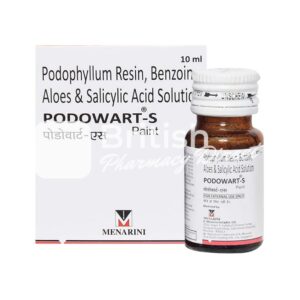
- Manufacturers In United Kingdom: Not specified; worldwide suppliers include Meda, Glenmark, Himalaya, Taro, Mylan, Dr. Reddy’s and regional suppliers such as Antibiotice Iași and Terapia presenting as Podowart.
- Registration Status In United Kingdom: Cream and solution forms (for example Condyline, Podofilox variants) are approved by national agencies in the EU/UK for topical wart treatment.
- OTC / Rx Classification: Prescription (Rx) only due to toxicity and improper-use risk; not OTC except rare low‑concentration exceptions.
High-Risk Groups (Elderly, Pregnancy, Chronic Illness)
Pregnancy is an absolute contraindication because podophyllotoxin and podophyllum resin are teratogenic and embryotoxic.
Children are contraindicated for podophyllotoxin/podophyllum products because of increased systemic absorption risk and greater toxicity potential.
Elderly patients require caution due to thinner, more fragile skin and a higher risk of severe local irritation with topical treatments.
Patients with a compromised skin barrier, such as eczema or psoriasis, or those with large or multiple lesions should only use podophyllotoxin or resin under specialist supervision.
Patients with significant liver or renal disease should have specialist input before extensive application, since large-area exposure increases the risk of systemic effects.
People living with HIV or those receiving therapies that cause bone marrow suppression should seek specialist advice before treatment because systemic toxicity, though rare, can be serious if absorption occurs.
- Absolute Contraindications: Pregnancy; known hypersensitivity to podophyllum/podophyllotoxin; application to mucosal surfaces.
- Relative Contraindications: HIV/AIDS; very large or multiple lesions; compromised skin integrity (eczema, severe psoriasis).
Interaction With Activities (Driving, Workplace Safety Under UK Law)
Topical podophyllotoxin has negligible systemic sedative effects when used correctly and does not usually impair driving ability.
If local irritation is severe or systemic symptoms such as dizziness, nausea or confusion occur after misuse or overdose, patients must not drive.
Under UK workplace safety expectations, employees should inform employers where treatment causes visible skin irritation that may affect safety-critical roles.
Q&A — “Can I Drive After Taking It In The UK?”
Normally yes — topical application does not impair driving.
If you experience systemic symptoms (dizziness, nausea, confusion) or severe local reactions, stop driving and seek urgent medical advice.
Report suspected adverse reactions via the MHRA Yellow Card Scheme.
Usage Basics
INN, Brand Names Available In The UK
The International Nonproprietary Name is podophyllotoxin for the standardised active ingredient and podophyllum resin or podophyllin for crude extracts.
In the UK market the common brand names are Condyline, Warticon and Wartec for podophyllotoxin 0.5% formulations supplied as gel, cream or small dropper solutions.
When discussing treatment clinically, prioritise the INN for clarity while using brand names like Warticon or Condyline for patient recognition and SEO relevance.
Legal Classification (POM, P, GSL)
Podophyllotoxin and podophyllum resin products are prescription-only medicines (POM) in the UK because of the risk of toxicity with misuse.
Podophyllotoxin 0.5% gel is a prescription-only product but is commonly used for patient self-application under clinic supervision.
Pharmacists must counsel patients, confirm pregnancy status and advise on safe application before supply.
- POM = Prescription Only Medicine.
- MHRA = Medicines and Healthcare products Regulatory Agency.
- Quick Dispensing Checklist For Pharmacists:
- Confirm pregnancy status and effective contraception if relevant.
- Clarify exact application site and whether mucosa is involved.
- Advise on wash-off times for resin products and practical application for 0.5% gels.
- Supply the patient information leaflet and explain Yellow Card reporting.
Dosing Guide
Standard Regimens (NHS Guidelines)
Podophyllotoxin 0.5% gel or cream is usually self-applied twice daily for 3 days followed by 4 days without treatment; this 7‑day cycle may be repeated up to four times (maximum about six weeks).
Podophyllum resin solutions (commonly 10–25%, frequently 25%) are applied by a healthcare professional once weekly and are washed off after 1–4 hours.
For plantar warts or very thick lesions clinicians may debride or pare the lesion before applying the resin to improve contact.
Adjustments For Comorbidities
Use podophyllotoxin sparingly and restrict application to small areas in patients with comorbidities.
Monitor elderly patients closely for severe irritation even though no formal dose adjustment is specified.
In liver or renal impairment there is no routine dose change, but avoid extensive application to reduce the risk of systemic absorption.
Children should not receive podophyllotoxin or podophyllum resin unless a specialist directs and documents the rationale.
Q&A — “What If I Miss A Dose?”
For podophyllotoxin gel, skip the missed application and continue with the planned schedule; do not double up doses.
If you miss an entire treatment cycle, consult the prescriber to re-assess before restarting.
For clinician-applied resin, rearrange the clinic appointment according to the clinic’s advice.
Interaction Chart
Food And Drinks (Alcohol, Tea/Coffee, Diet Habits)
There are no clinically important food or drink interactions with correctly used topical podophyllotoxin.
Because systemic absorption is minimal with appropriate application, alcohol or dietary factors do not usually affect treatment.
If systemic symptoms develop after misuse, avoid alcohol and seek urgent medical review.
Common Drug Conflicts (MHRA Yellow Card Data)
Systemic interactions are rare but become a theoretical concern if large areas are treated or the skin barrier is broken.
Concomitant drugs that depress bone marrow could increase harm if systemic absorption occurs; report suspected interactions to the MHRA Yellow Card Scheme.
| Drug/Group | Interaction Type | Action |
|---|---|---|
| Topical Corticosteroids | Increased local absorption if skin compromised | Avoid concurrent large-area use; monitor site for irritation |
| Systemic Immunosuppressants | Higher risk if systemic absorption occurs | Consider specialist input; limit treated area |
| Bone-Marrow-Suppressing Chemotherapy | Theoretical increased systemic toxicity risk | Avoid extensive application; consult oncology team |
| Local Skin-Damaging Agents (eg TCA, cantharidin) | Excessive local irritation when combined | Do not apply simultaneously; space treatments |
- Clinician Checklist: confirm concurrent cytotoxic or immunosuppressive therapy.
- Confirm pregnancy status and recent topical procedures (TCA, cryotherapy).
- Advise patients to report unexpected systemic symptoms immediately.
User Reports & Trends
Patients commonly report local irritation such as burning, redness and pain at the application site on NHS Choices, Patient.info and community forums.
Users describe variable efficacy and frustration with repeat clinic visits when initial self-treatment fails.
Search interest for terms like “Buy Podowart online” increases in areas with restricted clinic access and patients frequently ask pharmacists about over-the-counter availability despite POM classification.
- Positives: 0.5% podophyllotoxin gel is easy to self-apply and avoids clinic visits for small external warts.
- Negatives: Painful irritation, occasional ulceration, and treatment failure leading to cryotherapy are common themes.
There is a growing trend for online pharmacies and e-prescriptions with patients requesting electronic consultations and home delivery.
Advice to patients: report adverse effects via the Yellow Card Scheme and use regulated UK pharmacies or NHS e-prescriptions rather than unverified suppliers.
Access & Purchase Options
Boots, LloydsPharmacy, Superdrug
Major UK pharmacy chains dispense podophyllotoxin on prescription with pharmacist counselling and pregnancy checks.
Availability varies by local stock and some sexual health clinics supply treatment directly in‑clinic.
- Checklist For Patients Visiting A Pharmacy: bring the prescription, have ID if requested, provide recent treatment history and confirm contraception status if relevant.
Online Pharmacies And NHS E-Prescriptions
Electronic prescribing (EPS) allows GPs and sexual health clinics to send prescriptions to nominated pharmacies including regulated online providers.
Patients should beware unregulated international suppliers that may supply incorrect concentrations such as 25% resin for self‑use which increases toxicity risk.
For safety, use MHRA-registered UK pharmacies and NHS e-prescriptions where possible.
- Documents To Have Ready For Private Clinic E-Prescriptions: contact details, pregnancy status, and photos of lesions only if requested by the clinician.
In our online pharmacy, warticon is available without a prescription, with discreet delivery to United Kingdom in 5–14 days.
Mechanism & Pharmacology
Simplified Explanation
Podophyllotoxin is an antimitotic cytotoxic agent that binds to tubulin and inhibits microtubule assembly.
This action arrests mitosis and leads to necrosis of rapidly dividing wart tissue.
Podophyllum resin contains podophyllotoxin plus other compounds and is more irritant and less predictable in concentration than standardised 0.5% podophyllotoxin gel.
Clinical Terms
ATC classification is D06BB04 for topical podophyllotoxin/podophyllum resin preparations.
Systemic absorption is minimal with correct topical use, but resin formulations at higher concentrations (10–25%) present a greater risk of systemic uptake if misused.
- Antimitotic = stops cell division.
- Mitotic inhibitor = prevents spindle formation.
- ATC = Anatomical Therapeutic Chemical code.
Application → Mitotic Arrest → Wart Necrosis
| Product | Typical Use | Safety Profile |
|---|---|---|
| Podophyllotoxin 0.5% Gel/Cream | Self-application for external genital warts | Safer; standardised concentration |
| Podophyllum Resin 10–25% | Clinician-applied, strong concentrations | More irritant; higher toxicity risk |
Indications & Off-Label Uses
MHRA-Approved Uses
Licensed indications include external genital and perianal warts and select cutaneous warts, depending on the product SPC.
Podophyllotoxin 0.5% gel is intended for patient self-application; resin solutions are clinician-applied.
Always follow the product SPC and local NHS guidance for indication and regimen.
Off-Label Practices In NHS And Private Care
Off-label use is limited and uncommon; some clinicians may try topical podophyllotoxin for selected cutaneous warts after other options fail.
It is not recommended for mucosal surfaces such as the vagina, cervix, rectum or urethra or on open wounds.
Alternatives such as imiquimod, cryotherapy and trichloroacetic acid are often preferred where off-label concerns exist.
- Off-Label Decision Checklist: document clinical justification, obtain informed consent and arrange close follow-up.
Key Clinical Findings
Systematic reviews and RCTs up to mid‑2024 indicate that podophyllotoxin 0.5% is effective for external genital warts with cure rates comparable to some clinician-applied therapies for selected patients.
Resin solutions are effective but cause more local irritation and require clinic application.
Local adverse effects are common and systemic toxicity is rare but can be serious if misused, including bone marrow suppression and neuropathy.
Clinicians and patients are encouraged to report suspected adverse events via the MHRA Yellow Card Scheme.
| Outcome | Summary |
|---|---|
| Efficacy | Effective for external genital warts with variable response rates |
| Common Adverse Effects | Local burning, redness, pain, mild erosion |
| Typical Time To Response | Several weeks; may require multiple cycles |
| Retreatment Rates | Some patients require alternative clinic-based therapies |
Alternatives Matrix
NHS Prescribing Alternatives (Comparison Table)
| Treatment | Mode | Typical Use | Pros | Cons |
|---|---|---|---|---|
| Podophyllotoxin 0.5% Gel/Cream | Topical self-apply | External genital warts; small lesions | Home use; standardised dose | Local irritation; contraindicated in pregnancy |
| Podophyllum Resin 10–25% | Clinician-applied | Clinic-managed lesions | Effective; single‑visit applications | More irritant; dosing less predictable |
| Imiquimod | Topical immune response modifier | External genital warts | Non-cytotoxic mechanism | Local inflammation; longer treatment course |
| Cryotherapy | Liquid nitrogen | Various cutaneous warts | Immediate clinic procedure | Can be painful; multiple visits |
| Trichloroacetic Acid (TCA) | Clinic-applied chemical cautery | Selected external warts | No systemic absorption | Requires clinic skill; local erosion |
Pros And Cons Checklist
- Discuss efficacy, tolerability and need for clinic visits with the patient.
- Consider pregnancy and breastfeeding contraindications when choosing therapy.
- Document the shared decision and provide written patient information.
- Consider cost and NHS availability alongside patient preference.
Common Questions (Patient-Centred)
- Q: Can I Have Sex During Treatment?
Avoid sexual contact where lesions are being treated until cleared because viral transmission can continue.
Condoms may reduce but do not eliminate risk; discuss with the sexual health clinic for tailored advice.
- Q: Is It Safe In Pregnancy?
No — podophyllotoxin and podophyllum resin are contraindicated in pregnancy; stop treatment and seek immediate advice if pregnancy is possible.
- Q: How Long Before Warts Disappear?
Some lesions respond within weeks, while others need multiple cycles or clinic procedures; set realistic expectations during counselling.
- Q: What If Treatment Blisters Or Ulcerates?
Stop application, wash the area with water and seek urgent advice from a GP or sexual health clinic if severe or spreading.
When To Seek Urgent Care: severe local pain, spreading redness, fever, dizziness, unexplained bruising or bleeding — these may indicate systemic toxicity or secondary infection.
NHS Cost & Access Comparison Table
| Source | Typical Cost (Private) | NHS Prescription Charge | Notes |
|---|---|---|---|
| Boots / LloydsPharmacy / Superdrug | £15–40 (varies by pack & brand) | England: NHS prescription charge applies; Scotland/Wales/NI: generally free | Must be prescribed; pharmacist counselling provided |
| Sexual Health Clinics | Often free | N/A | Clinic supplies product or treats in clinic |
| Online Pharmacies | Prices vary | Depends on prescription status | Use MHRA-registered UK pharmacies; beware international suppliers |
- Prescription Exemptions: under‑16s, pregnant women, those on low income and other exemption categories — present exemption documentation where required.
Registration & Regulation
MHRA Approval Process
Podophyllotoxin and podophyllum resin products are regulated by the MHRA in the UK and manufacturers must comply with licensed indications and SPCs.
Adverse reactions and safety concerns should be reported via the MHRA Yellow Card Scheme.
Off-label use is permitted with documented informed consent and clinical justification.
NHS Prescribing Framework
Podophyllotoxin is a prescription-only medicine and is commonly prescribed by GPs and sexual health clinics or applied in clinic when resin is used.
Electronic prescribing (EPS) streamlines access but prescribers and private providers must perform the same safety checks as NHS clinics.
- Prescriber Checklist: confirm pregnancy status, counsel on correct application, advise storage and advise on Yellow Card reporting.
Storage & Handling
UK Household Storage (Cold/Damp Climate)
Store podophyllotoxin and resin products at 15–30°C and protect from light in the original container.
Avoid bathroom humidity, extremes of heat or cold and keep all medicines out of reach of children and pets.
Do not share medication with others and check expiry dates before use.
Guidance From NHS And Pharmacists
Return unused product to a pharmacy for safe disposal rather than flushing or pouring down the sink.
- Patient Storage Checklist: check expiry date, keep in original pack, store away from heat sources, do not share medication, wash hands after application or use gloves if advised.
Guidelines For Proper Use (Practical Counselling)
UK Pharmacist Counselling Style
Pharmacists should verify the correct product, pregnancy status, precise site of application and prior treatments before supply.
Use teach-back to confirm the patient understands the 3‑days-on, 4‑days-off schedule for podophyllotoxin 0.5% and any wash-off instructions for resin.
Provide written instructions, the patient information leaflet and Yellow Card reporting information at supply.
- Counselling Checklist: identify lesion, explain schedule, outline wash-off and contact precautions, advise contraception if relevant.
NHS Patient Safety Advice
Apply podophyllotoxin only to the wart; avoid healthy skin and mucosal surfaces.
Stop treatment and seek urgent help if severe irritation, blistering, ulceration or systemic symptoms such as nausea, dizziness or unexplained bruising occur.
Encourage follow-up with the GP or sexual health clinic if there is no improvement after the recommended cycles.
Micro-resources: consult the product SPC, report adverse events via Yellow Card and contact local sexual health clinics for urgent advice.
Delivery Across United Kingdom
| City | Region | Delivery Time |
|---|---|---|
| London | Greater London | 5-7 days |
| Birmingham | West Midlands | 5-7 days |
| Manchester | Greater Manchester | 5-7 days |
| Leeds | West Yorkshire | 5-7 days |
| Glasgow | Scotland | 5-7 days |
| Sheffield | South Yorkshire | 5-7 days |
| Liverpool | Merseyside | 5-7 days |
| Newcastle Upon Tyne | Tyne and Wear | 5-9 days |
| Bristol | South West England | 5-9 days |
| Cardiff | Wales | 5-9 days |
| Belfast | Northern Ireland | 5-9 days |
| Norwich | East of England | 5-9 days |
| Nottingham | Nottinghamshire | 5-9 days |
| Southampton | South East England | 5-9 days |