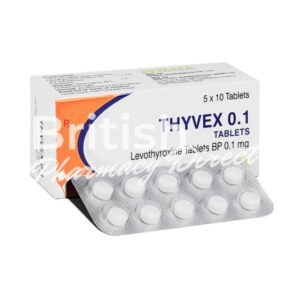
Levothyroxine
In stock
25mcg · 100mcg · 50mcg · 200mcg · 75mcg · 125mcg
from 45,10 £
In brief
- Levothyroxine is a synthetic form of thyroxine, the hormone made by the thyroid gland, used to treat an underactive thyroid (hypothyroidism) in adults and children.
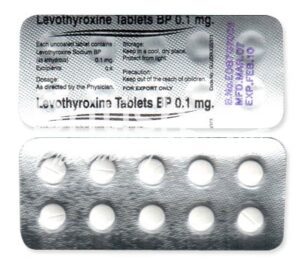
- Six strengths: 25, 50, 100 and 200mcg (packs of 100–400 tablets), plus 75 and 125mcg (100 or 200 tablets).
- An imported generic; in the UK levothyroxine tablets are prescription-only and are produced by several licence holders.
Levothyroxine: replacing missing thyroid hormone
Levothyroxine is the standard treatment when the thyroid gland does not produce enough thyroxine. Without enough of this hormone the body’s metabolism slows down, which can lead to tiredness, weight gain, feeling cold, constipation, dry skin and low mood. Its licensed uses cover an underactive thyroid in adults, babies born with the condition (congenital hypothyroidism), children who develop it later on, and juvenile myxoedema. For most people treatment carries on for life, with the dose guided by blood tests for thyroid-stimulating hormone (TSH). It is not a slimming aid and should never be taken to lose weight.
Tablet sizes and how many come in each pack
You can choose from six strengths of this imported generic. Packs of 100, 200, 300 and 400 tablets exist for the 25mcg, 50mcg, 100mcg and 200mcg strengths, whereas 75mcg and 125mcg are limited to 100 or 200. With several strengths to hand, a daily dose can be made up precisely – 150mcg, for instance, from one 100mcg and one 50mcg tablet. Bear in mind that the strength is given in micrograms (mcg), not milligrams: 100mcg is a tenth of a milligram.
How Levothyroxine is supplied in Britain
In the UK this is a Prescription Only Medicine. Tablets are made by a number of licence holders, and an oral solution is available for people who cannot swallow tablets. Some patients notice a difference when they move from one product to another, so it is worth telling your doctor if your tablets change; your thyroid levels may then be rechecked.
Starting dose and gradual increases
The SmPC suggests that adults under 50 without heart disease start on 100mcg a day, increased by 50mcg every three to four weeks until the right level is reached, usually somewhere between 100mcg and 200mcg daily. Anyone over 50 is started more cautiously, on 50mcg or less. With heart disease, the starting dose is 25mcg a day or 50mcg on alternate days, rising by 25mcg roughly every four weeks. If signs of too much hormone appear, the dose is lowered or held back for a day or two and then restarted at a lower level. Take the tablets once a day, preferably before breakfast or the first meal of the day.
Reasons Levothyroxine may be unsuitable
It must not be taken with thyrotoxicosis (an overactive thyroid), adrenal insufficiency or an allergy to any of the ingredients, and it is not started during an acute heart attack, acute myocarditis or pancarditis. Tell your doctor if you have angina, heart failure or diabetes – diabetes medicines sometimes need adjusting once thyroid treatment begins – and if you are pregnant or planning a pregnancy.
Food, supplements and interacting medicines
Calcium and iron supplements, indigestion remedies, sucralfate and colestyramine can stop the hormone being absorbed, so leave four to five hours between them and your thyroid tablet. Absorption can also drop in people taking omeprazole or another proton pump inhibitor. Rifampicin, carbamazepine, phenytoin, barbiturates and St John’s wort can speed up its breakdown, and oestrogens, including some contraceptives and HRT, may increase the dose needed. Levothyroxine can strengthen the effect of warfarin, so extra clotting tests may be arranged. Amiodarone, sertraline, imatinib and orlistat can also affect thyroid levels.
What unwanted effects usually mean
Provided the dose matches what the body needs, side effects are unusual – the tablets are only topping up a hormone that should already be there. Most problems point to too much thyroid hormone: a fast or irregular heartbeat, palpitations, chest pain, tremor, sweating, feeling hot, diarrhoea, restlessness, headache, poor sleep and weight loss. Contact your doctor if these appear, and get urgent help for chest pain. Your GP or prescriber decides on the right strength and how often your blood should be tested.