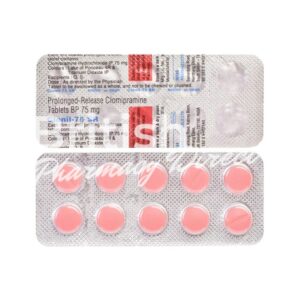
Anafranil
In brief
- Anafranil (clomipramine) is a prescription-only medicine (POM) in the UK and is normally dispensed by pharmacies with a prescription.
- Anafranil is used mainly to treat obsessive–compulsive disorder (OCD) and occasionally depressive or anxiety disorders; it is a tricyclic antidepressant that potently inhibits serotonin reuptake (and to a lesser extent noradrenaline reuptake) and has anticholinergic, antihistaminic and antiadrenergic effects.
- Usual doses: for OCD adults start 25 mg at bedtime and increase gradually (commonly by 25 mg increments); typical maintenance 100–250 mg/day divided (maximum commonly quoted 250 mg/day); for depression doses are often individualised up to about 150 mg/day; elderly and those with comorbidity should start low and titrate slowly.
- Anafranil is given orally as capsules (10 mg, 25 mg and 50 mg).
- Onset: some symptomatic improvement may be noticed within 1–2 weeks, but meaningful clinical benefit typically takes 2–4 weeks and full effect may take 6–12 weeks for many patients.
- Duration of action: effects from a single dose last approximately 24 hours; sustained therapeutic benefit requires daily dosing and may persist while treatment continues.
- Do not consume alcohol (alcohol increases sedation, may worsen side effects and can lower the seizure threshold when combined with tricyclic antidepressants).
- The most common side effect is dry mouth (with other frequent effects including drowsiness, dizziness, constipation, blurred vision, orthostatic hypotension, tachycardia, sweating and weight gain).
- Would you like to try Anafranil without a prescription?
Basic Anafranil information
- INN (international nonproprietary name): Clomipramine
- Brand names available in the United Kingdom: Anafranil (capsules 10 mg, 25 mg, 50 mg); generic clomipramine
- ATC code: N06AA04
- Forms and dosages: Capsules 10 mg, 25 mg, 50 mg
- Manufacturers in the United Kingdom: Novartis (originator); generic manufacturers include Sun Pharma, Zydus, Torrent and Teva
- Registration status in the United Kingdom: Prescription-only medication (Rx)
- OTC / Rx classification: Prescription-only medication (Rx)
Critical warnings and restrictions — safety first (UK focus)
Are there patients who must never take Anafranil or need special checks before starting?
High-risk groups (elderly, pregnancy, chronic illness)
Clomipramine is a prescription-only tricyclic antidepressant with important safety limits and a higher anticholinergic burden than many SSRIs.
Absolute contraindications include recent myocardial infarction, concurrent monoamine oxidase inhibitors, known hypersensitivity to clomipramine or other tricyclics, and severe liver disease.
- Recent myocardial infarction — do not prescribe.
- Concurrent MAO inhibitor therapy — absolute contraindication (serotonin syndrome risk).
- Known hypersensitivity to clomipramine or other tricyclic antidepressants.
- Severe hepatic impairment — avoid unless specialist advises.
Use extreme caution in the elderly because anticholinergic effects increase confusion, constipation and fall risk.
People with cardiac disease should have a baseline ECG because clomipramine can affect conduction and cause orthostatic hypotension or tachycardia.
Pregnant or breastfeeding women need a documented risk–benefit discussion with their prescriber before starting or changing dose.
Patients with a history of seizures may be at increased risk because clomipramine can lower the seizure threshold.
Patients with urinary retention, prostatic hypertrophy or closed-angle glaucoma need specialist review before treatment.
- Checklist for baseline tests: ECG, liver function tests, medication review for interactions.
- Checklist for medication review: identify MAOIs, other serotonergic drugs, QT-prolonging medicines, strong CYP inhibitors/inducers.
- Document MHRA guidance in clinical records and advise GP or psychiatrist review prior to initiation or dose changes.
Interaction with activities (driving, workplace safety under UK law)
Will Anafranil affect my ability to drive or work safely?
Clomipramine commonly causes drowsiness, dizziness and blurred vision which can impair driving and the operation of machinery.
Advise patients not to drive or operate heavy machinery until they know how the medicine affects them.
In safety-sensitive roles notify occupational health and employers as required by Health and Safety Executive guidance.
- Avoid alcohol as it increases sedation and impairs judgement.
- Do not drive until you know how Anafranil affects you.
- Report new or worsening side effects to your prescriber or pharmacist.
Record counselling about driving and workplace safety in pharmacy or clinic notes and give written advice to the patient.
Q&A — “Can I drive after taking it in the UK?”
Short answer: No until you know how it affects you.
Drowsiness, slowed reactions and blurred vision are common with Anafranil and may make driving unsafe.
If you experience these effects, stop driving and inform your prescriber.
For regulated professions such as aircrew, professional drivers and operators of heavy machinery, seek an occupational health fitness-for-work assessment.
Report serious adverse events to the MHRA Yellow Card scheme.
Usage basics
What is Anafranil and how is it labelled in the UK?
INN, brand names available in the UK
- INN
- Clomipramine
- Brand
- Anafranil
- ATC
- N06AA04
- Available capsule strengths in the UK: 10 mg, 25 mg, 50 mg.
Legal classification (POM, P, GSL)
How is Anafranil supplied in the United Kingdom?
Clomipramine (Anafranil) is classified as a prescription-only medicine (POM) in the UK and must be supplied against a valid prescription.
- GP or primary care prescription.
- Psychiatrist or secondary care initiation.
- NHS electronic prescriptions and the NHS e-Prescription Service for repeat supplies.
- Hospital outpatient clinics where specialists may initiate and monitor treatment.
Keep medicines in their original packaging and use pharmacist counselling services when collecting Anafranil.
Dosing guide
How is Anafranil usually started and adjusted for OCD and other conditions?
Standard regimens (NHS guidance)
Typical initiation for obsessive-compulsive disorder begins with 25 mg at bedtime and increases by 25 mg every few days as tolerated.
Maintenance doses for OCD commonly fall between 100 mg and 250 mg per day divided into two or three doses, with the maximum usually 250 mg per day.
For depression or other off-label uses dosing is individualised and often stays below 150 mg per day.
- Titration steps checklist: start 25 mg nightly, increase by 25 mg every 3–7 days as tolerated until target dose.
- Monitoring checklist during titration: blood pressure and heart rate, ECG if cardiac history or high dose, weight and bowel habit, electrolytes if using diuretics.
- Review plan: schedule follow-up within 2–4 weeks after starting or changing dose.
Adjustments for comorbidities
Do doses change for older patients or those with liver or kidney problems?
Elderly patients should start at the lowest adult dose and titrate slowly because of increased sensitivity to anticholinergic and orthostatic effects.
There are no formal dose adjustments defined for liver or renal impairment, so use clinical judgement and monitor closely in patients with organ impairment.
Patients with seizure disorders require careful assessment because clomipramine can lower seizure threshold and may be contraindicated or need specialist input.
- Monitoring points: baseline ECG for cardiac disease, regular review for orthostatic hypotension, check for urinary retention and constipation.
- Consult cardiology if significant conduction abnormalities or QT prolongation are present.
- Refer to psychiatry for dose decisions above typical maintenance ranges or for complex comorbidity management.
Q&A — “What if I miss a dose?”
If you miss a single dose take it as soon as you remember unless it is near the time of the next scheduled dose.
Do not double doses to make up for a missed tablet.
If multiple doses have been missed contact your prescriber or pharmacist for guidance and consider restarting at a lower dose under supervision if advised.
For urgent UK advice use NHS 111 or local out-of-hours services.
Interaction chart
Which foods, drinks and medicines interact with Anafranil?
Food and drinks (alcohol, tea/coffee, diet habits)
Alcohol increases sedation and can worsen depression or suicidal thoughts and should be avoided while taking clomipramine.
Caffeine in tea and coffee may exacerbate anxiety or tremor in some patients taking clomipramine.
There are no major grapefruit juice warnings specific to clomipramine, but always review supplements and herbal remedies.
- Avoid alcohol while taking Anafranil.
- Limit caffeine if anxiety or tremor increases after starting treatment.
- Discuss herbal supplements such as St John’s wort with your pharmacist as they can increase serotonin risk.
Common drug conflicts
Which medicines must be checked before co-prescribing clomipramine?
| Drug class | Interaction | Action |
|---|---|---|
| MAO inhibitors | High risk of serotonin syndrome | Do not co-prescribe; allow recommended washout period |
| Other serotonergic drugs (SSRIs, SNRIs, triptans) | Increased serotonin syndrome risk | Monitor closely; adjust dosing or avoid combination |
| QT-prolonging drugs (some antipsychotics, antiarrhythmics) | Increased risk of arrhythmia and conduction changes | Avoid combinations when possible; baseline and follow-up ECG |
| Anticholinergic agents (antihistamines, some antipsychotics) | Raised anticholinergic burden causing confusion, urinary retention | Minimise additive anticholinergic drugs; counsel patient |
- Checklist for medication review: list current medicines, check for MAOIs and serotonergic agents, note QT-prolonging medicines, review OTC antihistamines and antimuscarinics.
- Encourage reporting of suspected interactions or adverse effects to the MHRA Yellow Card scheme.
Legal status and availability in the UK
In our online pharmacy, Anafranil is available without a prescription, with discreet delivery to the United Kingdom in 9–21 days.
Mechanism and pharmacology
How does clomipramine work to reduce obsessive thoughts and compulsive behaviours?
Simplified explanation
Clomipramine is a tricyclic antidepressant that potently inhibits serotonin reuptake while also affecting noradrenaline and several receptor systems.
This multi-receptor activity produces therapeutic benefit in obsessive-compulsive disorder but also explains the greater anticholinergic and sedative side-effect profile compared with SSRIs.
- Serotonin reuptake
- Blockade increases serotonin signalling and underlies anti-OCD efficacy.
- Anticholinergic effects
- Muscarinic blockade causes dry mouth, constipation and blurred vision.
- Noradrenaline action
- Noradrenergic effects can contribute to tachycardia and blood pressure changes.
Clinical terms (for clinicians)
What should prescribers know about clomipramine pharmacology and kinetics?
Clomipramine is well absorbed orally and undergoes hepatic metabolism with active metabolites and renal excretion of metabolites.
CYP-mediated interactions are possible so check for strong CYP inhibitors or inducers when reviewing medicines.
| Receptor action | Clinical effect |
|---|---|
| Serotonin reuptake inhibition | Anti-OCD efficacy; serotonin syndrome risk with other serotonergic drugs |
| Muscarinic antagonism | Dry mouth, constipation, urinary retention, blurred vision |
| Antihistaminic action | Sedation, weight gain |
| Adrenergic blockade | Orthostatic hypotension, tachycardia |
Indications and off-label uses
What is clomipramine licensed for and where is it used off-label?
MHRA-approved uses
Clomipramine (Anafranil) is licensed in the UK for depressive illness and for obsessional and phobic states.
| Indication | Typical dosing range |
|---|---|
| Obsessive-compulsive disorder | 100–250 mg/day (maintenance); initiate 25 mg at bedtime and titrate |
In UK practice clomipramine is typically considered when SSRIs are ineffective or not tolerated, often under psychiatric supervision for higher doses.
Off-label practices in NHS and private care
When might clomipramine be used beyond its licence?
Specialist clinicians sometimes use clomipramine off-label for treatment-resistant depression, severe panic disorder or certain chronic pain syndromes where other treatments have failed.
- Checklist for off-label prescribing: document clinical rationale, obtain informed consent, set monitoring schedule and review date.
- Coordinate long-term use with psychiatry and document shared care arrangements.
Alternatives matrix
What are NHS alternatives to Anafranil for OCD and how do they compare?
NHS prescribing alternatives (comparison table)
| Drug | Class | Typical efficacy for OCD | Side-effect burden | Monitoring needs |
|---|---|---|---|---|
| Sertraline | SSRI | Good | Lower anticholinergic, nausea, insomnia | Routine; ECG rarely needed |
| Fluoxetine | SSRI | Good | Lower anticholinergic, activating in some | Routine monitoring |
| Paroxetine | SSRI | Good | Anticholinergic effects possible, sexual dysfunction | Routine monitoring |
| Clomipramine | TCA | Very effective for refractory OCD | Higher anticholinergic and cardiac effects | Baseline ECG for at-risk patients; closer monitoring |
| CBT / ERP | Psychological therapy | High when available and adhered to | No drug side effects | Therapy availability and access monitoring |
- Checklist for choosing a treatment: pregnancy plans, cardiac history, drug interactions, prior response to SSRIs, access to psychological therapies.
Pros and cons checklist
How should clinicians frame the choice with patients?
- Pros: strong anti-OCD efficacy, useful second-line when SSRIs fail.
- Cons: anticholinergic effects, cardiac conduction risks and more monitoring needed.
- Decision aid template: list patient priorities, comorbidities, monitoring capacity and agree a follow-up plan.
Common questions
Which questions do patients ask most often about Anafranil?
- How long until it works? — Improvements often begin at 2–6 weeks; full benefit for OCD may take longer; do not stop early.
- Will it make me sleepy? — Yes, sedation is common initially; taking the dose at night reduces daytime drowsiness.
- Is it addictive? — It is not classically addictive, but withdrawal symptoms can occur with abrupt cessation; taper gradually.
- Can I breastfeed? — Clomipramine transfers into breast milk; discuss risks and benefits with the prescriber and consider specialist advice.
Follow-up actions: contact GP or prescriber for worsening mood or suicidal thoughts, seek urgent help for signs of serotonin syndrome, and use NHS 111 for urgent non-emergency advice.
Registration and regulation
What regulatory steps apply to prescribing and reporting Anafranil in the UK?
MHRA approval process
Clomipramine and Anafranil are regulated within the UK and any serious suspected adverse reactions should be reported to the MHRA Yellow Card scheme.
- Checklist for regulatory steps: licence check, ensure lawful prescription, document indication and monitoring plan.
- Report serious adverse reactions via Yellow Card and keep clear records of dose and monitoring.
NHS prescribing framework
How should shared care and follow-up be arranged within the NHS?
Initiate follow-up plans such as review within 1–2 weeks after a dose change and schedule baseline ECG if cardiac risk exists or high doses are planned.
- Checklist for shared-care transfer: document consent, monitoring responsibilities, review dates and contact details for secondary care.
- Use local formularies to determine if specialist initiation is required before primary care continuation.
Storage and handling
How should Anafranil be stored in a typical UK household?
UK household storage (cold/damp climate)
Store clomipramine at 20–25°C, protected from light and moisture and keep in original packaging and out of reach of children.
Avoid storing tablets or capsules in bathrooms where condensation is common; a cool, dry cupboard is better.
When travelling carry medicines in their original labelled packaging with a copy of the prescription.
- Checklist for safe storage: original box, temperature-stable cupboard, out of children’s reach, avoid bathroom humidity.
- Checklist for travel: carry a prescription copy, keep in hand luggage when flying, avoid extreme temperatures.
Guidance from NHS and pharmacists
How should patients dispose of unused Anafranil?
Return unused or expired medicines to a community pharmacy for safe disposal and do not flush them down the toilet.
- Checklist for disposal: use pharmacy medicines return service, do not flush, ask pharmacist about local take-back schemes.
- Pharmacist counselling points: label dosing times, warn about driving, interactions and provide written leaflets.
Guidelines for proper use — practical UK counselling points
What should a pharmacist always tell a patient when dispensing Anafranil?
UK pharmacist counselling style
Explain the purpose of Anafranil clearly and state that it is used to treat OCD and sometimes depressive symptoms when appropriate.
Describe the expected timeline for effect, common side effects such as dry mouth and drowsiness, and highlight driving risks and interactions with MAOIs and other serotonergic drugs.
- Counselling script checklist: purpose, timeline, common side effects, driving and workplace advice, what to do for missed doses, overdose signs (cardiac arrhythmia, severe sedation) and emergency actions.
- Provide a short patient handout template listing contact numbers for GP, 111 and crisis services and MHRA Yellow Card information.
NHS patient safety advice
What safety follow-ups should be arranged under NHS care?
Advise baseline ECG where cardiac history exists or for older adults and avoid abrupt stopping; taper gradually to reduce withdrawal effects.
Discuss pregnancy and breastfeeding plans and advise immediate contact if mood worsens or suicidal thoughts appear.
- Checklist for safety follow-ups: ECG if indicated, review within 2–4 weeks of initiation or dose change, consider combined psychological therapy for OCD.
- Emergency contacts: GP, NHS 111, local mental health crisis teams for severe deterioration.
Delivery across the United Kingdom
| City | Region | Delivery Time |
|---|---|---|
| London | Greater London | 9–21 days |
| Birmingham | West Midlands | 9–21 days |
| Manchester | Greater Manchester | 9–21 days |
| Glasgow | Scotland | 9–21 days |
| Leeds | West Yorkshire | 9–21 days |
| Liverpool | Merseyside | 9–21 days |
| Bristol | South West England | 9–21 days |
| Edinburgh | Scotland | 9–21 days |
| Cardiff | Wales | 9–21 days |
| Belfast | Northern Ireland | 9–21 days |
| Newcastle | North East England | 9–21 days |
| Sheffield | South Yorkshire | 9–21 days |
| Brighton | East Sussex | 9–21 days |
Final notes and practical tips
Many patients start Anafranil worried about side effects and whether it will help their OCD.
Explain clearly that improvement can take several weeks and that common early effects like drowsiness often settle with time or by taking the dose at night.
Keep a written medicines list and share it with your pharmacist and GP whenever doses change.
If you experience severe side effects including chest pain, fainting, severe palpitations, or thoughts of harming yourself, seek emergency medical help immediately.
Report side effects and suspected interactions to the MHRA Yellow Card scheme to help improve safety data in the UK.