Medrol
In brief
- In our pharmacy, you can buy Medrol without a prescription, with delivery in 9–21 days throughout the United Kingdom. Discreet and anonymous packaging is available.
- Medrol (methylprednisolone) is used to treat inflammatory and autoimmune conditions such as rheumatoid arthritis, severe allergies, asthma exacerbations, inflammatory bowel disease and as an immunosuppressant; it is a glucocorticoid that binds glucocorticoid receptors to modify gene transcription, reducing cytokine production and inflammatory cell activity.
- Usual oral doses vary by indication: for mild–moderate inflammation 4–48 mg/day (often 4–16 mg/day); acute allergic/asthmatic flares 24–48 mg/day with tapering; adrenal insufficiency maintenance 4–12 mg/day; severe relapses may require high doses (e.g. IV 500–1,000 mg/day for short courses). Paediatric doses are weight-based (commonly 0.5–1.7 mg/kg/day).
- Administered orally as tablets, intravenously as sodium succinate for IV pulse therapy, intramuscularly as suspensions (Depo formulations) or via vial/ampoule injectables depending on formulation.
- Oral symptom relief often begins within 1–4 hours (for allergic or inflammatory symptoms); intravenous administration produces effects within minutes.
- The anti-inflammatory action typically lasts about 12–36 hours depending on dose and route, though suppression of the hypothalamic–pituitary–adrenal axis may persist longer after repeated or high-dose courses.
- Avoid excessive alcohol while taking Medrol: alcohol can increase gastrointestinal irritation/bleeding risk and may worsen metabolic effects such as glucose control; limiting or avoiding alcohol is advised.
- The most common side effect is increased appetite and weight gain; other frequent effects include insomnia, mood changes, elevated blood sugar and indigestion.
- Would you like to try Medrol without a prescription?
Basic Medrol information
- INN (international nonproprietary name): Methylprednisolone
- Brand names available in the United Kingdom: Medrol; Solu-Medrol; Depo-Medrol
- ATC code: H02AB04
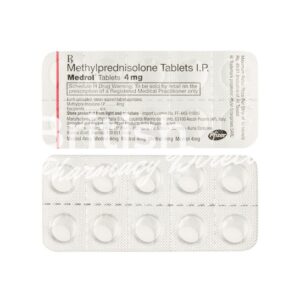
- Forms and dosages: Tablets 2mg, 4mg, 16mg, 100mg; injectables (sodium succinate) 40mg, 125mg, 500mg, 1g; intramuscular depot suspension (Depo-Medrol) 40mg/ml.
- Manufacturers in the United Kingdom: Pfizer
- Registration status in the United Kingdom: Prescription-only medicine (POM)
- OTC / Rx classification: Prescription-only medicine (POM); not available OTC.
Critical warnings, restrictions and patient protection
Medrol (methylprednisolone) is a systemic glucocorticoid with important safety considerations before starting treatment.
The drug is a prescription-only medicine and must be started only after clinician review and documented consent for risks and monitoring where appropriate.
Absolute contraindications include systemic fungal infections, known hypersensitivity to methylprednisolone or excipients, and live vaccines during high-dose therapy.
High-risk groups require special caution and baseline checks before starting treatment.
High-risk groups (elderly, pregnancy, chronic illness)
- Elderly: increased risk of fractures, infection and glucose dysregulation; use the lowest effective dose and monitor bone health.
- Pregnant or breastfeeding women: weigh maternal benefit versus fetal/infant risk and involve obstetric or specialist teams in decision-making.
- Children: dosing is weight based and follows paediatric protocols; growth and adrenal axis effects must be considered.
- People with diabetes: high risk of hyperglycaemia and may need liaison with diabetes services for monitoring and adjustment.
- Hypertension, peptic ulcer disease, osteoporosis, glaucoma, psychiatric history: these conditions require baseline assessment and closer follow-up.
Interaction with activities (driving, workplace safety under UK law)
Some people experience side effects such as dizziness, blurred vision, mood disturbances or severe insomnia while taking methylprednisolone.
If you have symptoms that impair concentration, reaction time or vision you must not drive or operate machinery.
UK law and DVLA guidance require disclosure of any condition or treatment that may affect driving safety when impairment could endanger others, and some employers will request a fitness-for-work assessment.
Monitoring checklist before and during treatment
- Baseline tests: blood pressure, blood glucose (capillary or laboratory), bone risk assessment (FRAX or DEXA where indicated), infection screen if risk factors present.
- Ongoing monitoring: regular BP and glucose checks, mood and sleep review, infection surveillance, eye checks for long courses.
- Regulatory reporting: check MHRA alerts before starting and report adverse reactions via the Yellow Card scheme.
Q&A — Can I drive after taking it in the UK?
Driving may be affected by side effects such as dizziness, blurred vision, severe mood changes or insomnia.
If you feel impaired in concentration or reaction time you must not drive.
Document symptoms with your GP or pharmacist and follow DVLA guidance if impairment is prolonged.
Usage basics
INN, brand names available in the UK
The INN is methylprednisolone, a synthetic systemic glucocorticoid.
In the UK it is available under brand names such as Medrol (tablets), Solu-Medrol (injectable) and Depo-Medrol (depot injection).
In the UK, methylprednisolone is a prescription-only medicine under MHRA rules; no over-the-counter methylprednisolone is available.
Legal classification
Methylprednisolone is a prescription-only medicine (POM) and must be prescribed by an authorised clinician.
There are no GSL or P products of systemic methylprednisolone.
Formulation choices and why they matter
Tablets are suitable for short-term flares and some chronic maintenance regimens and are available in several strengths (2mg, 4mg, 16mg and 100mg).
Intravenous sodium succinate formulations are used for severe relapses or pulse therapy because of rapid systemic onset.
Depot intramuscular suspensions (Depo-Medrol) provide a long-acting intramuscular effect and are used when prolonged local systemic exposure is desired.
| Form | Dosages | Typical packaging |
|---|---|---|
| Tablet | 2mg, 4mg, 16mg, 100mg | Blister strips |
| Injectable (sodium succinate) | 40mg, 125mg, 500mg, 1g | Single/multi-dose vials, ampoules |
| Suspension (IM) | 40mg/ml | Vials (Depo-Medrol) |
Dosing guide
Standard regimens (NHS-style guidance)
Use the lowest effective dose for the shortest period consistent with clinical response.
When possible give doses in the morning to mimic the body’s circadian rhythm and reduce adrenal suppression.
Tapering is required for courses beyond a few days to avoid adrenal insufficiency depending on dose and duration.
- Rheumatoid arthritis / general inflammation: oral 4–48 mg/day depending on severity and response.
- Acute severe allergy / asthma exacerbation: commonly 24–48 mg/day with a short taper.
- Adrenal replacement: maintenance 4–12 mg/day tailored to physiology.
- Severe multiple sclerosis flare: IV pulses up to 500–1000 mg/day for short courses (typically 3–5 days).
Adjustments for comorbidities
Children require weight-based dosing, commonly 0.5–1.7 mg/kg/day, following paediatric protocols and specialist advice.
Elderly patients should receive the lowest effective dose with close monitoring for osteoporosis, infection and glucose changes.
Liver or renal impairment may require dose reduction or closer monitoring due to altered metabolism and clearance.
| Indication | Typical oral dose | Duration |
|---|---|---|
| Rheumatoid arthritis / inflammation | 4–48 mg/day | Variable; titrate to response |
| Acute asthma / allergy | 24–48 mg/day | Short course with taper (5–14 days) |
| Adrenal insufficiency | 4–12 mg/day | Maintenance |
Checklist for taper schedules
- Assess duration and peak daily dose.
- If therapy >3 days consider gradual reduction rather than abrupt stop depending on dose.
- Document taper plan in the patient record and provide a printed schedule to the patient.
Q&A — What if I miss a dose?
Take the missed dose as soon as you remember unless it is close to the next scheduled dose.
Do not double the next dose to make up for a missed dose.
For patients on long-term replacement regimens where timing is critical, contact your GP or pharmacist for tailored advice.
Interaction chart
Food and drinks (alcohol, tea/coffee, diet habits)
Alcohol increases the risk of gastrointestinal irritation and may worsen mood or sleep disturbances while taking methylprednisolone.
Caffeine from tea or coffee can aggravate insomnia or anxiety when combined with steroids and is best limited during courses that cause sleep disturbance.
Encourage a balanced diet, adequate calcium and vitamin D when longer courses are anticipated because of bone health concerns.
Common drug conflicts
| Drug class | Effect | Clinical action |
|---|---|---|
| Enzyme inducers (carbamazepine, rifampicin, phenytoin) | May reduce methylprednisolone exposure | Consider dose increase or monitor response |
| CYP3A4 inhibitors (azole antifungals, some macrolides) | May raise methylprednisolone levels and Cushingoid effects | Monitor for steroid excess; adjust dose if needed |
| NSAIDs | Increased risk of GI bleeding and ulceration | Avoid combination if possible; gastroprotection may be indicated |
| Anticoagulants (warfarin) | Effects on INR may change unpredictably | Monitor INR closely after dose changes |
| Live vaccines | Contraindicated during high-dose therapy | Delay live vaccines until steroid dose is reduced or stopped |
Check current MHRA safety alerts before starting therapy and report suspected interactions via the Yellow Card scheme.
Legal status and availability in the UK
Methylprednisolone is a prescription-only medicine (POM) in the UK.
In our online pharmacy, Medrol is available without a prescription, with discreet delivery to the United Kingdom in 9–21 days.
Mechanism and pharmacology
Simplified explanation
Methylprednisolone is a synthetic glucocorticoid (ATC H02AB04) that binds intracellular glucocorticoid receptors.
Activation of these receptors alters gene transcription to suppress pro-inflammatory cytokines and immune cell activation.
The drug also stabilises cellular membranes, which helps reduce inflammation and immune-mediated tissue damage.
Clinical terms
- Glucocorticoid: a steroid hormone that modulates inflammation and immune responses.
- Adrenal suppression: reduced endogenous cortisol production following prolonged or high-dose external steroid exposure.
- Pulse therapy: short high-dose intravenous regimens used for severe autoimmune relapses.
Pharmacokinetics vary by route and formulation; IV sodium succinate gives rapid systemic exposure, while oral tablets have a variable onset and duration related to dose and formulation.
Compared with prednisolone and dexamethasone the relative potency and half-life differ, and choice of agent depends on clinical goals.
High-dose or prolonged therapy carries a risk of adrenal axis suppression and requires tapering and monitoring.
Indications and off-label uses
MHRA-approved uses
- Inflammatory and autoimmune conditions such as rheumatoid arthritis and polymyalgia.
- Acute severe asthma and allergic reactions.
- Certain dermatological and ophthalmic inflammatory conditions.
- Part of transplant and immunosuppressive regimens.
Off-label practices in NHS and private care
Within NHS and private practice methylprednisolone may be used off-label where local guidance supports its use, for example in specific pain-management protocols or neurologic relapses such as MS pulse therapy when local policy endorses it.
Off-label prescribing must be justified, documented and discussed with the patient, with a monitoring plan recorded in the notes.
Protocol flowchart (oral vs IV)
- Assess severity of the flare or condition.
- If life- or organ-threatening or requiring very rapid control → consider IV pulse therapy (hospital setting).
- If moderate flare or outpatient manageable → consider oral tablets with a defined taper.
- Consider depot IM only when appropriate for prolonged local effect and after discussing risks.
Alternatives matrix
NHS prescribing alternatives (comparison table)
| Drug | Relative potency (approx. mg equivalence) | Common indications | Pros | Cons |
|---|---|---|---|---|
| Methylprednisolone | Reference (variable) | Inflammation, IV pulse therapy, tapers | Available as IV sodium succinate | Requires monitoring; POM |
| Prednisolone | Similar clinical potency (mg for mg varies) | Oral steroid of choice in many formularies | Widespread use, well understood dosing | Less commonly available as IV pulse compared to methylprednisolone |
| Prednisone | Converted to prednisolone in the liver | Oral systemic steroid | Common alternative where prednisolone not available | Requires hepatic activation |
| Dexamethasone | More potent per mg | Short courses, cerebral oedema, antiemetic adjuncts | High potency, long half-life | Greater adrenal suppression risk per dose; different side-effect profile |
| Hydrocortisone | Less potent | Adrenal insufficiency replacement | Closer to physiological cortisol for replacement | Less suitable for high‑dose anti‑inflammatory needs |
Pros and cons checklist for prescribers
- Consider the indication (acute versus chronic) and required speed of onset.
- Decide whether IV pulse therapy is needed for rapid control.
- Account for hepatic activation (prednisone) and renal/hepatic impairment.
- Assess adherence issues related to dose frequency and packaging.
- Review interactions and cumulative steroid exposure across medications.
Common questions
- Will it raise my blood sugar?
Yes.
Methylprednisolone commonly elevates blood glucose, particularly in people with diabetes or impaired glucose tolerance.
Arrange monitoring and liaise with a diabetes team when needed.
- How long until effects start?
Often within hours for severe allergic or asthma relief.
Inflammatory conditions may take several days for full benefit.
- Will I gain weight?
Short-term fluid shifts and increased appetite are common.
Sustained weight gain is more likely with longer courses.
- Can I stop suddenly?
Not after prolonged or high-dose therapy due to risk of adrenal insufficiency.
Taper under medical supervision according to the duration and dose previously used.
When to contact your GP or pharmacist:
- Fever or signs of infection.
- Marked rise in blood glucose or uncontrolled diabetes.
- Severe mood changes or suicidal thoughts.
- Signs of gastrointestinal bleeding (black stools, severe abdominal pain).
Registration and regulation
MHRA approval process
Methylprednisolone products are regulated in the UK as prescription-only medicines with marketing authorisations and SPCs that define licensed indications and use.
The MHRA is responsible for medicine licensing, monitoring safety signals and managing recalls.
NHS prescribing framework
Prescribers should follow local formularies, document indication, dose and duration and supply patient information leaflets when issuing methylprednisolone.
Pharmacovigilance obligations include reporting adverse reactions to the MHRA Yellow Card and informing local medicines governance teams as required.
- Marketing authorisation: official licence to sell a medicine for specified indications.
- SPC: Summary of Product Characteristics — the official product information for prescribers and pharmacists.
- POM: Prescription-only medicine designation.
Storage and handling
UK household storage (cold/damp climate)
Tablets should be stored at room temperature, typically 15–30°C, in a dry place away from bathroom humidity and direct heat.
Keep tablets in their original packaging with clear labelling; do not transfer them into unlabelled containers.
Guidance from NHS and pharmacists
Injectable preparations often require refrigerated storage as stated on the label, commonly 2–8°C, and must not be frozen.
Inspect injectable vials for particulates or discolouration before use and follow the manufacturer’s instructions for storage and handling.
Unused tablets and sharps or unused injections should be returned to a pharmacy for safe disposal or disposed of through local NHS sharps services; never flush medicines down the toilet.
| Form | Storage |
|---|---|
| Tablets | Store 15–30°C in a dry place; keep in original packaging |
| Injectables | Store per label (commonly 2–8°C); do not freeze; inspect vials |
Checklist for storage, transport and disposal
- Keep a waterproof medication list and allergy history in a safe place at home.
- Use insulated transport for refrigerated vials to maintain the cold chain.
- Return unused medicines and sharps to a pharmacy for safe disposal.
- Store medicines out of reach of children in child-safe storage.
Guidelines for proper use
UK pharmacist counselling style
Confirm the indication and allergy history with the patient prior to supply.
Review comorbidities such as diabetes, hypertension and infection risk and counsel on common side effects including appetite changes, insomnia, mood swings and hyperglycaemia.
Provide a written taper schedule.
NHS patient safety advice
Use plain language, provide an NHS leaflet and ask teach‑back questions to confirm understanding of when to stop and what signs require urgent attention.
Advise monitoring plans for BP, glucose and bone protection where long-term therapy is expected, and provide follow-up contact details.
Pharmacist checklist for safe supply
- Confirm the prescription, dose and duration; check for contraindications and interactions.
- Provide clear written instructions and counselling on side effects and warning signs.
- Arrange monitoring and liaise with the prescriber for dose adjustments where necessary.
- Document counselling and supply in the patient record.
Key points for patients:
- Take your dose in the morning unless told otherwise.
- Watch for increased thirst, urination or mood change and report these promptly.
- Do not stop suddenly after long or high-dose courses — follow the taper supplied.
- Carry a list of medications and allergies for emergency care.
Delivery across the United Kingdom
| City | Region | Delivery Time |
|---|---|---|
| London | England | 9–21 days |
| Birmingham | England | 9–21 days |
| Manchester | England | 9–21 days |
| Glasgow | Scotland | 9–21 days |
| Leeds | England | 9–21 days |
| Liverpool | England | 9–21 days |
| Bristol | England | 9–21 days |
| Sheffield | England | 9–21 days |
| Newcastle | England | 9–21 days |
| Nottingham | England | 9–21 days |
| Southampton | England | 9–21 days |
| Belfast | Northern Ireland | 9–21 days |
| Cardiff | Wales | 9–21 days |