Tretinoin Cream
In brief
- You can buy tretinoin cream online in some pharmacies without a prescription, although in most countries it is prescription-only (Rx). Availability, packaging and delivery times may vary by country.
- Tretinoin cream is used for acne vulgaris and, in some cases, photoaging and fine wrinkles. It is a topical retinoid that helps normalise skin cell turnover, unclog pores and reduce comedones.
- The usual dose is to apply a thin layer once daily, usually at night, to the affected skin. Common strengths are 0.025%, 0.05% and 0.1%, with lower strengths often used to start treatment.
- The form of administration is a topical cream applied to the skin.
- It may start to work within a few weeks, but visible improvement in acne usually takes around 6–12 weeks of regular use.
- The duration of action is about 24 hours, which is why it is typically used once daily.
- Avoid alcohol if it worsens skin dryness or irritation, especially when using other drying skincare products; there is no major direct interaction with topical tretinoin, but moderation is sensible.
- The most common side effects are redness, dryness, peeling, burning, itching and increased skin sensitivity to sunlight.
- Would you like to try tretinoin cream without a prescription?
Critical UK Safety Warnings And Patient Protection
Thinking about tretinoin cream for acne or tretinoin for wrinkles can feel straightforward at first, but the safety checks matter more than the marketing.
In the UK, tretinoin is the INN for retinoic acid and it is a prescription-only medicinal product, so it should only be used with proper GP, dermatologist, or pharmacist counselling.
Topical tretinoin is generally contraindicated in pregnancy because retinoids carry a known risk profile, and that caution also applies when pregnancy is being planned or breastfeeding is ongoing.
People with eczema, very sensitive skin, sunburn, or broken skin are more likely to get severe irritation, so a clinician may advise avoiding it or delaying treatment until the skin has settled.
If the skin becomes very sore, the treatment should be stopped and medical advice sought rather than pushing through the reaction.
High-Risk Groups
- Pregnant people.
- People planning pregnancy.
- People breastfeeding.
- People with eczema or eczema-prone skin.
- Children under 12.
- Older adults who are more prone to irritation.
- Patients using other irritants, acids, scrubs, or keratolytics.
Signs To Seek Urgent Advice
- Severe redness that is not settling.
- Swelling.
- Blistering.
- Eye exposure.
- Widespread rash.
If any of those red flags appear, contact a pharmacist, prescriber, NHS 111, or urgent care depending on severity.
Basic Tretinoin Cream Information
- INN (International Nonproprietary Name): Tretinoin.
- Brand names available in United Kingdom: Brand and generic naming may vary through NHS and private supply chains; international examples include Retin-A, Retacnyl, Avita, Atralin, Acnatac, Retirides, and Ketrel.
- ATC code: D10AD01.
- Forms & dosages: Cream 0.025%, 0.05%, 0.1%; gel 0.01%, 0.025%, 0.05%; lotion 0.05% in some markets; capsules 10 mg for APL specialist use.
- Manufacturers in United Kingdom: Local supply can vary by pharmacy and import route; exact UK brand availability is not specified.
- Registration status in United Kingdom: Prescription-only medicinal product under MHRA-regulated prescribing pathways.
- OTC / Rx classification: Prescription-only (Rx).
What Tretinoin Cream Is And How UK Patients May Know It
Ever heard tretinoin described as a “retinoid” and wondered what that means in practice?
Tretinoin is retinoic acid, the INN used internationally for both topical and oral forms, and it sits in ATC code D10AD01 as a topical anti-acne retinoid.
Most UK patients meet it through a prescription rather than the shelves, and they may know it as a brand product, a generic tretinoin cream, or a private-clinic acne treatment.
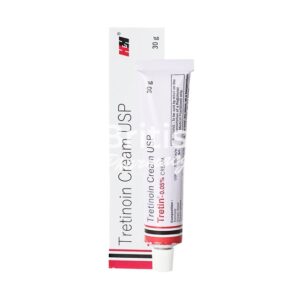
On pharmacy labels, the pack is often a small tube, usually 20g to 30g, which is enough for careful, thin nightly use rather than heavy application.
UK Naming And Availability
Names can differ depending on the supplier, so a patient asking for tretinoin 0.05 cream may be given a different brand name but the same active ingredient.
That is why the pharmacy conversation should focus on the INN, the strength, and the form rather than the marketing name alone.
Usual Forms And Packaging
- INN
- Tretinoin.
- ATC code
- D10AD01.
- Forms
- Creams, gels, lotion in some markets, and oral capsules for specialist oncology use.
- Brand examples
- Retin-A, Retacnyl, Avita, Atralin, Acnatac, Retirides, Ketrel.
UK Legal Status, MHRA Oversight, And Prescription Access
Looking for tretinoin prescription UK guidance usually starts with one rule: it is not an over-the-counter beauty cream.
In nearly all markets, including the UK, tretinoin cream is prescription-only because of its potency and irritation risk, and access should sit within MHRA-aligned prescribing and counselling.
Most people get it through a GP, dermatologist, or private prescriber, then collect it from a registered pharmacy such as Boots, LloydsPharmacy, or Superdrug where available.
Registered online pharmacies can also dispense it when a valid prescription or approved consultation pathway is in place.
NHS Versus Private Routes
| Route | How It Works | Typical Use |
|---|---|---|
| NHS | GP or dermatologist issues an electronic or repeat prescription. | Suitable for ongoing acne management. |
| Private Clinic | Consultation with a private prescriber, then pharmacy dispensing. | Useful when a quicker review is needed. |
| Online Pharmacy | Registered UK service with clinical checks before supply. | Convenient for approved topical prescriptions. |
For some readers, that private route is simply a practical answer to a Friday-evening acne flare and a long wait for a routine appointment.
In our online pharmacy, tretinoin cream is available without a prescription, with discreet delivery to United Kingdom in 5-14 days.
Important Regulatory Point
The product remains a medicinal treatment, not a cosmetic shortcut, even when it is discussed alongside anti-ageing skincare.
Who Tretinoin Cream Is For: Acne, Wrinkles, And Specialist Uses
What should tretinoin actually be used for in everyday dermatology?
The main topical indication is acne vulgaris, and some regions also use it for photoaging and fine wrinkles under clinician guidance.
Oral tretinoin capsules are a separate specialist oncology treatment for acute promyelocytic leukaemia, not a routine skin product.
For acne, adults and adolescents are typically told to apply a thin layer once nightly to affected skin, usually starting with a lower strength if irritation is a concern.
Acne Use
Patients with clogged pores, blackheads, whiteheads, and inflammatory acne are the usual candidates, especially when a retinoid-based routine is needed.
The goal is steady improvement rather than an instant change, so expectations should be set early.
Anti-Ageing Use
Tretinoin 0.05 cream is sometimes used for fine lines and sun-damaged skin, but that should remain guided by a prescriber because irritation is common if the skin barrier is weak.
| Condition | Usual Formulation | Who Should Prescribe |
|---|---|---|
| Acne vulgaris | Cream or gel, often 0.025% to 0.05% | GP, dermatologist, or private prescriber |
| Photoaging and fine wrinkles | Usually 0.05% cream | Dermatologist or experienced prescriber |
| APL | 10 mg oral capsules | Oncology specialist only |
How Tretinoin Cream Works On The Skin
Want the simple version without the jargon?
Tretinoin is a topical retinoid that normalises skin cell turnover, helps keep pores clear, and gradually reduces comedones over time.
That is why tretinoin cream for acne tends to work best when it is used consistently rather than sporadically.
Because the skin is adjusting, some people see an early flare, more dryness, or peeling before the benefits become obvious.
What It Does
- Speeds up turnover of skin cells.
- Helps prevent blocked pores.
- Reduces comedones over time.
- Supports gradual improvement in acne and, in some regions, photoaging.
What It Does Not Do
- It does not work like a spot treatment.
- It does not give instant results.
- It does not replace sun protection.
- It does not suit every skin type at full strength from day one.
Most patients are assessed after 6 to 12 weeks, which is long enough to judge whether the routine is helping.
Available Strengths, Forms, And Example UK-Relevant Product Expectations
Which strength should a patient start with?
That depends on the skin type, the reason for treatment, and how sensitive the person is likely to be.
The commonly listed strengths are cream 0.025%, 0.05%, and 0.1%, plus gel 0.01%, 0.025%, and 0.05%, with lotion and oral capsules in some markets.
For acne, the usual starting point is 0.025% or 0.05%, because those strengths often balance tolerability with benefit.
Why The Formulation Matters
| Form | Best Suited To | Irritation Risk |
|---|---|---|
| Cream | Drier or more sensitive skin | Often easier to tolerate |
| Gel | Oilier skin | Can feel more drying |
| Lotion | Some photoaging routines | Depends on the product base |
That formulation choice matters when a patient already has eczema-prone or reactive skin and wants to avoid unnecessary stinging.
How To Use Tretinoin Cream Safely At Night
How should tretinoin cream be applied so it works without making the face miserable?
Use it once daily at night unless the prescriber has given a different plan.
Start with a gentle cleanser, rinse well, and dry the skin fully before application, because damp skin can increase irritation.
Then apply a thin pea-sized amount to the whole affected area, not just to one spot, since tretinoin is not designed as a dot-on treatment.
Nightly Application Checklist
- Wash with a gentle cleanser.
- Dry the skin completely.
- Apply a pea-sized amount thinly.
- Spread over the affected area, not just individual spots.
- Avoid eyes, lips, nostrils, broken skin, and sunburnt areas.
- Use alternate nights at first if advised.
That “start low and slow” approach is often the difference between staying on treatment and giving up after a week of stinging.
Micro-FAQ: How Long Until I See Results?
Most people need 6 to 12 weeks before the benefit is clear, and early dryness or purging can happen before improvement shows.
Missed Doses, Overuse, And What To Do If Irritation Happens
If a dose is forgotten, apply it when remembered unless the next dose is due soon.
Do not double up, because extra cream does not speed up improvement and usually just increases irritation.
Using more than prescribed can lead to burning, marked redness, excessive peeling, and raw skin, which is usually a sign to pause and reassess.
Reduce, Pause, Seek Advice
- Reduce frequency if the skin is becoming sore.
- Pause treatment if the skin is raw or very inflamed.
- Seek advice from the prescriber or pharmacist if the reaction is strong or not settling.
That is especially important when other acne products are also being used at the same time.
Side Effects, Expected Reactions, And When To Get Urgent Help
Is redness normal, or is the treatment too strong?
Common topical effects include redness, peeling, dryness, burning, itching, photosensitivity, and an early acne flare.
These are often mild to moderate and may improve when the frequency is reduced and a moisturiser is added.
Serious problems are less common, but they need immediate attention if they appear.
| Expected | Urgent |
|---|---|
| Redness | Swelling |
| Peeling | Blistering |
| Dryness | Severe rash |
| Burning or itching | Eye symptoms or allergy signs |
| Early acne flare | Widespread reaction |
That early flare is often called purging, and yes, it can happen, but severe pain or swelling is not normal and needs review.
Interactions With Other Skincare, Medicines, And Sun Exposure
Can tretinoin cream be mixed with the rest of a skincare routine?
It can, but care is needed because benzoyl peroxide, acids, scrubs, alcohol-based toners, and other retinoids can all increase irritation.
That means people using acne regimens need to tell the prescriber about everything applied to the skin, including steroid creams if they are being used for another problem.
Sun sensitivity is another practical issue, so daily sunscreen and avoiding excess UV exposure are part of the treatment, not an optional extra.
Do Not Combine Without Advice
- Benzoyl peroxide.
- Alpha hydroxy acids.
- Beta hydroxy acids.
- Scrubs and abrasive exfoliants.
- Alcohol-based toners.
- Other retinoids.
UK Prescribing, Pharmacy Counselling, And Follow-Up Care
Why does pharmacist counselling matter so much with tretinoin cream?
Because safe use depends on technique, expectations, and checking whether the skin is actually tolerating the product.
When tretinoin is supplied via an NHS e-prescription or a private clinic, pharmacists commonly explain night-time use, moisturising, sunscreen, and the need to avoid pregnancy.
That conversation is especially useful when the patient is new to retinoids and has only seen quick social-media advice.
Who To Ask
| Professional | Best For |
|---|---|
| GP | Initial acne review and NHS prescribing |
| Dermatologist | Complex acne, wrinkling, or skin sensitivity |
| Pharmacist | Use instructions, irritation advice, and medicines checks |
| Emergency care | Severe swelling, blistering, or allergy signs |
Follow-up is usually arranged after several weeks to check adherence, irritation, and benefit.
NHS Cost, Exemption Status, And Regional Differences
How much a patient pays depends on the route and the UK nation involved.
England has prescription charges, while Scotland, Wales, and Northern Ireland generally provide free NHS prescriptions for eligible items.
Private pharmacy prices vary with the strength, brand, and whether a consultation is included, so the final cost is not standardised.
Tretinoin is commonly dispensed in 20g to 30g tubes, which is worth remembering when comparing prices from different channels.
| Region | NHS Charge | Likely Access Route |
|---|---|---|
| England | Prescription charges usually apply | GP, dermatologist, or private pharmacy |
| Scotland | Generally free for NHS items | NHS prescription pathways |
| Wales | Generally free for NHS items | NHS prescription pathways |
| Northern Ireland | Generally free for NHS items | NHS prescription pathways |
| Pharmacy Channel | Likely Price Range | Notes |
|---|---|---|
| NHS Pharmacy | Depends on local charges and exemption status | Based on prescription rules |
| Private Clinic | Varies by consultation and product strength | Includes prescriber review |
| Online Pharmacy | Varies by service and formulation | Registered UK service required |
Exemption certificates and standard NHS charging rules may reduce the cost for eligible patients.
Storage, Transport, And Household Handling
How should tretinoin cream be kept at home so it stays stable?
Store it below 25°C, avoid freezing, protect it from light and excess moisture, and keep the cap tightly closed.
In a UK household, that usually means no steamy bathroom shelf and no spot beside a radiator or sunny windowsill.
It should be kept out of reach of children and never shared with another person, even if their acne looks similar.
Storage Do’s And Don’ts
- Do store below 25°C.
- Do keep away from light and moisture.
- Do close the cap tightly.
- Do keep out of reach of children.
- Do not freeze.
- Do not leave in a hot bathroom or near radiators.
- Do not share prescription medicine.
Alternatives And Comparisons With Other Acne Treatments
Is tretinoin always the best retinoid choice?
Not always, because adapalene may be easier to tolerate, while tazarotene is another prescription topical retinoid and isotretinoin is reserved for severe acne.
That is why Differin vs. Retin-A comparisons usually come down to tolerability, access, and how irritated the skin already is.
Combination products such as Acnatac may be used in some regions, especially when clindamycin is needed alongside a retinoid.
| Treatment | Effectiveness | Irritation Risk | Pregnancy Restriction | Access Route |
|---|---|---|---|---|
| Tretinoin | Strong topical option for acne and some photoaging use | Moderate to high early irritation | Generally contraindicated | Prescription-only |
| Adapalene | Effective acne retinoid | Often easier to tolerate | Still needs careful medical advice | Low strengths may be more accessible in some markets |
| Tazarotene | Prescription topical retinoid | Can be irritating | Not suitable in pregnancy | Prescription-only |
| Isotretinoin | Reserved for severe acne | Systemic side-effect burden is higher | Strict pregnancy prevention rules | Tightly regulated prescription |
- Pros: Good evidence for acne, useful for comedones, long track record.
- Cons: Irritation, dryness, sun sensitivity, pregnancy restrictions.
Common UK Patient Questions About Tretinoin Cream
Can I Use Tretinoin Every Night Straight Away?
Some people can, but many do better starting on alternate nights if their prescriber suggests it, especially with tretinoin 0.05 cream or tretinoin 0.1.
Do I Need Sunscreen In The UK?
Yes, because photosensitivity can still matter even on cloudy days, and daily sunscreen is part of safe use.
Can I Use It In Pregnancy Or While Breastfeeding?
Topical tretinoin is generally contraindicated in pregnancy, and breastfeeding use needs close clinical advice rather than guesswork.
Is Tretinoin Better Than Adapalene For Acne Or Wrinkles?
Tretinoin is often considered the stronger classic topical retinoid, but adapalene may be easier to tolerate, so the better choice depends on the patient and the goal.
Micro-FAQ: Can I Buy Tretinoin Cream Over The Counter In The UK?
No. It is generally prescription-only.
Delivery Across United Kingdom
| City | Region | Delivery time |
|---|---|---|
| London | Greater London | 5-7 days |
| Birmingham | West Midlands | 5-7 days |
| Manchester | North West England | 5-7 days |
| Leeds | West Yorkshire | 5-7 days |
| Glasgow | Scotland | 5-7 days |
| Edinburgh | Scotland | 5-7 days |
| Liverpool | North West England | 5-7 days |
| Bristol | South West England | 5-7 days |
| Cardiff | Wales | 5-7 days |
| Belfast | Northern Ireland | 5-7 days |
| Sheffield | South Yorkshire | 5-9 days |
| Newcastle upon Tyne | North East England | 5-9 days |
| Nottingham | East Midlands | 5-9 days |
| Leicester | East Midlands | 5-9 days |
| Coventry | West Midlands | 5-9 days |
Final Safety Check Before Starting Treatment
Tretinoin cream can be very effective for acne and, in some settings, for fine wrinkles and photoaging, but it works best when the skin is protected rather than pushed.
That means checking pregnancy status, avoiding use on eczema or sunburn, applying it sparingly at night, and expecting a gradual result over weeks rather than days.
If irritation becomes severe, stop and seek advice rather than trying to power through it.
Used carefully, with proper counselling and follow-up, tretinoin remains one of the most useful prescription retinoids in UK skincare and dermatology.