Telmisartan
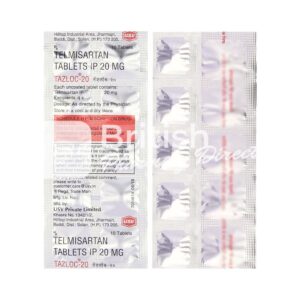
In brief
- Telmisartan is available in many countries only as a prescription medicine, usually supplied under brands such as Micardis, Pritor, Telmisartan Actavis, and related generics. In some pharmacy settings it may be offered without a prescription, but it is officially an Rx medicine and should be used under medical supervision.
- Telmisartan is used to treat hypertension and to reduce cardiovascular risk in suitable patients; it may also be used as an adjunct in diabetic nephropathy. It works as an angiotensin II receptor blocker (ARB), blocking the effects of angiotensin II to relax blood vessels and lower blood pressure.
- The usual dose for hypertension is 40 mg once daily, with a maintenance range of 40–80 mg once daily. For cardiovascular risk reduction, 80 mg once daily is commonly used. Doses may be adjusted by a clinician depending on the condition and patient factors.
- Telmisartan is taken by mouth as tablets, typically in strengths of 20 mg, 40 mg, or 80 mg. It is also available in fixed-dose combination tablets with hydrochlorothiazide or amlodipine in some markets.
- Telmisartan usually begins to lower blood pressure within about 1–2 hours after a dose, although the full antihypertensive effect may take several weeks of regular use to become apparent.
- The duration of action is roughly 24 hours, which is why it is usually taken once daily.
- Alcohol should be avoided or limited, as it can increase dizziness and low blood pressure, especially when starting treatment or after a dose increase.
- The most common side effects are dizziness, low blood pressure, tiredness, back pain, diarrhoea, and raised creatinine or blood urea; muscle aches may also occur.
- Would you like to try telmisartan without a prescription?
Who Should Not Take Telmisartan, And When To Seek Urgent Help
Telmisartan is a prescription-only medicine in the UK, so it should only be started with clinician oversight.
It is not suitable for everyone, especially in pregnancy, severe liver disease, diabetic patients taking aliskiren, hereditary fructose intolerance, severe dehydration, low blood pressure, or if there is a known allergy to telmisartan.
If someone develops fainting, severe dizziness, swelling of the face or lips, reduced urine output, chest pain, or possible kidney problems, urgent medical review is needed.
Speak to a pharmacist, GP, NHS 111, or emergency services depending on how severe the symptoms are.
Before you take telmisartan, check:
- Are you pregnant, trying to conceive, or breastfeeding?
- Do you have severe liver disease or bile flow problems?
- Are you taking aliskiren, especially if you have diabetes?
- Have you had allergy symptoms to telmisartan or similar medicines?
- Are you dehydrated from vomiting, diarrhoea, or heavy sweating?
- Do you have kidney disease, very low blood pressure, or troublesome fainting?
- Do any of your tablets contain sorbitol if you have hereditary fructose intolerance?
High-Risk Groups And When Extra Monitoring Is Needed
- Older people may need closer checks for blood pressure and kidney function.
- People with kidney disease, liver impairment, renal artery stenosis, or volume depletion need extra monitoring.
- Children are not approved for telmisartan use.
- Blood pressure, kidney function, and potassium should be monitored when the clinician advises.
Driving, Machinery, And Workplace Safety In The UK
Some people feel dizzy or light-headed when starting telmisartan or after dose changes.
That matters for drivers, shift workers, and anyone using machinery at work.
Use common sense, follow local employer policies, and do not put yourself or others at risk if your blood pressure feels too low.
Q&A — “Can I Drive After Taking Telmisartan In The UK?”
Only if you do not feel dizzy, sleepy, or faint.
If those symptoms happen, do not drive and ask for advice.
Telmisartan Basics, Brand Names, And Atc Classification
Telmisartan is an angiotensin II receptor blocker, usually called an ARB, and it is mainly used to lower blood pressure.
The INN is Telmisartan, the ATC code is C09CA07, and the combination code with hydrochlorothiazide is C09DA07.
Common brand names include Micardis, Pritor, Telmisartan Actavis, Kinzalkomb, Tolucombi, Actelsar Hct, and Twynsta.
Micardis is the dominant international brand and is often supplied in 28 or 30-tablet blisters.
| Brand | Typical Strengths | Pack Format |
|---|---|---|
| Micardis | 20mg, 40mg, 80mg | Blister strips or bottles |
| Pritor | 20mg, 40mg, 80mg | Standard blister packaging |
| Telmisartan Actavis | 20mg, 40mg, 80mg | Blisters |
| Kinzalkomb | 40/12.5mg, 80/12.5mg | Combination blisters |
| Tolucombi | 80/25mg | Combination tablets |
| Actelsar Hct | 80/12.5mg, 80/25mg | Combination blisters |
How UK Patients Usually Encounter The Medicine
In NHS care, telmisartan may be prescribed as a branded product or as generic telmisartan, depending on stock and prescribing choice.
Pharmacy dispensing can involve brand-to-generic substitution, which is normal when the active ingredient is the same.
Mechanism Of Action In Plain English And Clinical Terms
In simple terms, telmisartan helps blood vessels relax, so blood pressure comes down and the heart does not have to work as hard.
Clinically, it blocks angiotensin II receptors, interrupting the renin-angiotensin system and reducing vasoconstriction.
- ARB
- Angiotensin II receptor blocker, a medicine that blocks the action of angiotensin II.
- Renin-angiotensin system
- A hormone system that helps regulate blood pressure, fluid balance, and blood vessel tone.
- Vasodilation
- Widening of blood vessels, which lowers pressure inside them.
That is why telmisartan is often chosen for long-term blood pressure control and, in at-risk patients, kidney and cardiovascular protection.
There is also research interest in a possible PPAR-gamma effect, but that remains investigational and is not the main reason it is prescribed.
What This Means For Daily Blood Pressure Control
Telmisartan is taken once daily and is designed for steady control over 24 hours.
Food does not significantly affect absorption, so tablets can usually be taken with or without food.
Approved Uses And How Clinicians Choose It
In UK practice, telmisartan is used mainly for hypertension, cardiovascular risk reduction, and adjunct treatment in diabetic kidney disease where appropriate.
The usual adult starting dose for hypertension is 40mg once daily, with maintenance between 40mg and 80mg once daily.
For cardiovascular risk reduction, the usual dose is 80mg once daily.
For diabetic nephropathy, 40mg to 80mg once daily may be used.
| Condition | Starting Dose | Maintenance Dose |
|---|---|---|
| Hypertension | 40mg once daily | 40mg to 80mg once daily |
| Cardiovascular risk reduction | 80mg once daily | As prescribed |
| Diabetic nephropathy | 40mg to 80mg once daily | As prescribed |
Fixed-dose combinations may be used when dual therapy is needed, especially with hydrochlorothiazide.
When A Clinician May Prefer Telmisartan Over Another Arb
Choice often depends on blood pressure response, kidney status, previous side effects, and how easy the regimen is to stick to.
It sits alongside losartan, valsartan, irbesartan, and olmesartan as a standard ARB option.
Standard Dosing, Timing, And Missed-Dose Advice
Telmisartan is usually taken once a day, at the same time each day, to keep blood pressure control steady.
Tablets can be taken with or without food.
The best-established dose range for efficacy is 40mg to 80mg daily.
If a dose is forgotten, take it when remembered unless the next dose is nearly due.
Do not take two doses together to make up for a missed one.
How to take it correctly:
- Take one dose daily unless the prescriber tells you otherwise.
- Pick a regular time that fits your routine.
- Swallow the tablet with water.
- Keep taking it even if you feel well.
- Do not double up after a missed dose.
Dose Changes For Older Adults And People With Liver Or Kidney Problems
Older adults usually do not need an automatic dose reduction, but renal function and blood pressure should be watched more closely.
With liver impairment, caution is needed and a lower starting dose may be considered if available.
In renal impairment, close monitoring is essential, and severe impairment may mean the medicine is not suitable.
Q&A — “What If I Miss A Dose?”
Take it soon, unless the next dose is due soon, and never double the dose.
Medicines, Supplements, And Alcohol That Can Cause Problems
Pharmacy counselling often focuses on potassium supplements, salt substitutes, NSAIDs, other RAAS blockers, diuretics, lithium, and aliskiren.
These can raise the risk of low blood pressure, kidney strain, or hyperkalaemia.
Alcohol can also make dizziness or hypotension worse.
Food does not significantly affect absorption, so there is usually no need to time doses around meals.
| Interaction | Risk | Action Required |
|---|---|---|
| Potassium supplements or salt substitutes | Hyperkalaemia | Check with a pharmacist or GP first |
| NSAIDs | Kidney strain and reduced effect | Use caution and ask before buying OTC painkillers |
| Other RAAS blockers | Higher risk of kidney problems and hyperkalaemia | Avoid unless specifically prescribed |
| Diuretics | Low blood pressure and dehydration | May need monitoring and dose review |
| Lithium | Lithium toxicity risk | Specialist advice needed |
| Aliskiren | Unsafe in diabetic patients | Do not combine in diabetes |
| Alcohol | Dizziness and hypotension | Keep intake sensible and avoid if unwell |
Common Practical Questions From UK Patients
Tea, coffee, and normal meals are usually not a problem.
It is still sensible to ask a pharmacist before buying supplements or painkillers from Boots, LloydsPharmacy, or Superdrug.
That quick check can prevent avoidable interactions and save a nuisance GP call later.
Common, Less Common, And Serious Adverse Effects
Side effects are more likely when treatment starts or after a dose change.
Common effects include dizziness, hypotension, fatigue, back pain, myalgia, diarrhoea, abdominal pain, raised creatinine or blood urea, and rarely cough or upper respiratory tract symptoms.
Mild effects:
- Light-headedness or dizziness.
- Fatigue or low energy.
- Back pain or muscle aches.
- Diarrhoea or abdominal discomfort.
Urgent help needed if you get:
- Fainting or severe dizziness.
- Swelling of the face, lips, tongue, or throat.
- Chest pain.
- Markedly reduced urine output.
- Signs of kidney problems or severe dehydration.
When To Contact A GP Or Pharmacist
Persistent dizziness, swelling, fainting, or signs that kidney function may be worsening should be discussed promptly.
Blood tests matter here, so if the clinician asks for them, it is worth getting them done on time.
Prescription Only Status, NHS Prescribing, And Pharmacy Supply
Telmisartan is prescription only in the UK and is regulated under the usual MHRA and NHS pathways.
Access is typically through a GP prescription, repeat prescription, electronic prescription, or pharmacy dispensing.
Major chains such as Boots, LloydsPharmacy, and Superdrug dispense it routinely, and online pharmacies are increasingly used for convenience.
In our online pharmacy, telmisartan is available without a prescription, with discreet delivery to the United Kingdom in 5-14 days.
Prescription journey:
- Speak to your GP or prescriber about symptoms and blood pressure goals.
- Receive a paper or electronic prescription where appropriate.
- Choose a nominated pharmacy or ask for dispensing at the counter.
- Have the medicine supplied and checked by the pharmacist.
- Use repeat dispensing if suitable for long-term treatment.
How Electronic Prescriptions Work In Practice
EPS lets the prescription go straight to a nominated pharmacy, which is convenient for long-term medicines like telmisartan.
The pharmacist’s counselling role is especially useful because this medicine often needs blood pressure and kidney monitoring over time.
What Telmisartan May Cost In England, Scotland, Wales, And Northern Ireland
Pricing depends on whether the supply is NHS or private, the dose, the brand, and the prescriber’s choice.
England has standard prescription charges, while Scotland, Wales, and Northern Ireland offer free prescriptions.
Exemptions may apply in England for eligible groups and medical circumstances.
| Country | Prescription Cost | Notes |
|---|---|---|
| England | Standard NHS charge may apply | Exemptions may apply |
| Scotland | Free | NHS supply usually free |
| Wales | Free | NHS supply usually free |
| Northern Ireland | Free | NHS supply usually free |
| Private pharmacy supply | Varies | Depends on brand, dose, and service |
Practical Advice On Choosing A Pharmacy
Think about stock levels, generic substitution, home delivery, and repeat supply before choosing a pharmacy.
For any online pharmacy, check that it is properly registered and legitimate before ordering.
How To Keep Telmisartan Effective At Home And On The Move
Store telmisartan below 25°C, in a dry place, and keep it in the original packaging to protect it from moisture.
Bathrooms and damp kitchens are poor storage spots.
Storage do’s and don’ts:
- Do keep the tablets in the original blister or bottle.
- Do store them below 25°C.
- Do keep them dry and out of direct sunlight.
- Do not leave them in hot cars or steamy rooms.
- Do not decant them into loose containers for travel.
What To Do With Damaged Or Expired Tablets
Do not use blister strips that are torn, water-damaged, or past expiry.
Return unused medicine to a pharmacy for safe disposal.
Comparison With Losartan, Valsartan, Irbesartan, And Olmesartan
People often switch within the ARB class because of side effects, blood pressure response, stock issues, or dose preference.
No single ARB is best for everyone, so the decision usually comes down to practical fit rather than a headline winner.
| Drug | Typical Role | Notable Points |
|---|---|---|
| Telmisartan | Blood pressure control and related risk reduction | Once-daily dosing and long-term use |
| Losartan | Blood pressure control | Common alternative, widely used as Cozaar or generic |
| Valsartan | Blood pressure control | Often chosen when an alternative ARB is needed |
| Irbesartan | Blood pressure control | Used in similar hypertension pathways |
| Olmesartan | Blood pressure control | Another standard ARB option |
Pros And Cons Of Telmisartan Compared With Alternatives
Pros: once-daily dosing, strong blood pressure lowering, and long-term use are the main advantages.
Cons: it is prescription only, monitoring is needed, and interactions are similar to other RAAS medicines.
When to ask about a switch:
- Blood pressure is still not controlled.
- Side effects are persistent or troublesome.
- Stock issues keep interrupting supply.
- A combination tablet may make treatment simpler.
Telmisartan With Hydrochlorothiazide And Other Combinations
Combination tablets are used when telmisartan alone does not control blood pressure well enough.
Common formats include MicardisPlus 40/12.5mg, MicardisPlus 80/12.5mg, and MicardisPlus 80/25mg, along with Kinzalkomb, Tolucombi, and Actelsar Hct.
These combinations are classified as C09DA07.
| Type | Example | Typical Use |
|---|---|---|
| Single-agent tablet | Telmisartan 40mg or 80mg | Initial or ongoing blood pressure control |
| Combination tablet | MicardisPlus 40/12.5mg | When one medicine is not enough |
| Combination tablet | MicardisPlus 80/12.5mg | Dual therapy for stronger control |
| Combination tablet | MicardisPlus 80/25mg | Higher-intensity dual therapy |
What Patients Should Know Before Starting A Combination Tablet
There is more need to watch for dehydration, low potassium or sodium, and dizziness.
Pharmacists often ask about other diuretics and OTC medicines because those can change the risk profile.
What Studies Suggest About Blood Pressure And Cardiovascular Outcomes
The evidence base supports telmisartan for hypertension and related cardiovascular risk reduction use in suitable adults.
It is also used in kidney-protection contexts where clinically appropriate.
The investigational PPAR-gamma effect remains a research topic rather than a routine prescribing reason.
Clinically relevant findings and research themes:
- Blood pressure reduction is the main proven effect.
- Long-term use is common in hypertension care.
- Kidney function and potassium monitoring remain important.
- Combination therapy can help when single-agent treatment is not enough.
- Emerging research continues, but routine practice should follow established evidence.
What This Means For Patients In Routine Care
In day-to-day practice, success is judged by blood pressure response, kidney tests, and tolerability.
It is better to follow clinician advice than to act on trial headlines alone.
Micro-Faq Section For Everyday Concerns
Q&A — “How Long Does Telmisartan Take To Work?”
Blood pressure lowering begins within hours to days, with the fuller effect building over a few weeks.
Q&A — “Can Telmisartan Be Taken With Food?”
Yes, tablets can usually be taken with or without food.
Q&A — “What If The Tablet Makes Me Dizzy?”
Sit or lie down, avoid driving, and speak to a pharmacist or GP if it keeps happening.
Q&A — “Is Generic Telmisartan The Same As Micardis?”
Yes, it has the same active ingredient, although the packaging and manufacturer may differ.
Safety-Focused Advice Patients Should Hear At Collection
A good pharmacist check should be simple, clear, and practical.
That means asking about missed doses, dizziness, other medicines, and whether any blood tests are due.
It also means reminding patients to stay hydrated, especially during illness or hot weather.
Do not stop telmisartan suddenly without advice if blood pressure is well controlled.
Pharmacist counselling checklist:
- Confirm how and when to take the tablet.
- Check for dizziness, fainting, or swelling.
- Ask about OTC painkillers, supplements, and salt substitutes.
- Remind the patient about blood pressure and kidney blood tests.
- Explain what to do if a dose is missed.
- Discuss hydration during vomiting, diarrhoea, or hot weather.
- Hypotension
- Blood pressure that is too low, which can cause dizziness or fainting.
- Hyperkalaemia
- Higher-than-normal potassium in the blood.
- Renal function
- How well the kidneys are working, often checked with blood tests.
Delivery Across United Kingdom
| City | Region | Delivery time |
|---|---|---|
| London | England | 5-7 days |
| Birmingham | England | 5-7 days |
| Manchester | England | 5-7 days |
| Leeds | England | 5-7 days |
| Liverpool | England | 5-7 days |
| Bristol | England | 5-7 days |
| Sheffield | England | 5-7 days |
| Newcastle upon Tyne | England | 5-7 days |
| Nottingham | England | 5-9 days |
| Leicester | England | 5-9 days |
| Cardiff | Wales | 5-7 days |
| Edinburgh | Scotland | 5-7 days |
| Glasgow | Scotland | 5-7 days |
| Belfast | Northern Ireland | 5-7 days |