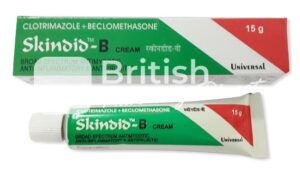
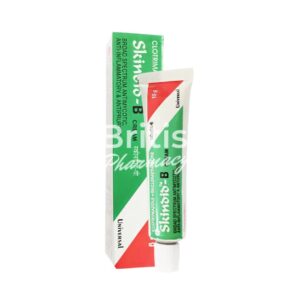
Lotriderm
In brief
- In our pharmacy, you can buy lotriderm without a prescription, with delivery in 5–14 days throughout the United Kingdom. Discreet and anonymous packaging.
- Lotriderm is used to treat fungal skin infections (athlete’s foot, jock itch, ringworm) combining clotrimazole, an antifungal that disrupts fungal cell membrane synthesis, with betamethasone dipropionate, a potent topical corticosteroid that reduces inflammation, itching and redness via glucocorticoid receptor‑mediated effects.
- The usual dose for adults and adolescents 17 years and over is to apply a thin film to the affected area twice daily (morning and evening): up to 2 weeks for tinea corporis/cruris and up to 4 weeks for tinea pedis. Do not exceed 45 g per week.
- Administration is topical — cream (most common) or lotion applied directly to the affected skin areas; avoid use in eyes, mouth or intravaginally.
- Symptom relief (reduced itching and inflammation) is often noticeable within 24–48 hours, while antifungal clearance may take several days of treatment.
- The symptomatic effect of each application typically lasts around 12–24 hours; the recommended treatment course is up to 2–4 weeks depending on the condition, or until symptoms resolve.
- There is no specific requirement to avoid alcoholic drinks with topical use, but avoid alcohol‑based skin products on the treated area and do not apply to broken skin; prolonged or excessive use can increase systemic steroid exposure, so alcohol does not affect efficacy but general caution is advised.
- The most common side effect is local irritation such as burning, stinging or redness at the application site.
- Would you like to try lotriderm without a prescription?
Critical Warnings & Restrictions (Patient Safety First)
Basic Lotriderm Information
- INN (International Nonproprietary Name): Clotrimazole and Betamethasone dipropionate.
- Brand Names Available In United Kingdom: International brands include Lotrisone (North America) and Lotriderm (Canada/Europe/Asia‑Pacific), and generics marketed as “Clotrimazole and Betamethasone Dipropionate Cream”.
- ATC Code: D01AC20.
- Forms & Dosages: Cream 1% clotrimazole / 0.05% betamethasone dipropionate (as 0.643 mg betamethasone dipropionate per 1 g cream); typical packaging 15 g and 30 g tubes.
- Manufacturers In United Kingdom: Not specified; international suppliers include Merck (Lotrisone), Pharmascience, Cipla and others for generics.
- Registration Status In United Kingdom: Not specified; check national agency data for local authorisations.
- OTC / Rx Classification: Prescription Only (Rx) in major markets.
High-Risk Groups
Lotriderm, a clotrimazole and betamethasone dipropionate combination cream, is a potent topical antifungal and steroid product and should be treated as prescription‑only.
Do not use this product if you have known hypersensitivity to clotrimazole, betamethasone dipropionate or any excipients.
Avoid putting the cream in or near the eyes, mouth or vagina; it is not for ocular, oral or intravaginal application.
Children under 17 years: safety and efficacy have not been established and topical steroids increase the risk of systemic absorption and HPA‑axis suppression in infants and children; avoid use unless specifically prescribed.
Pregnant and breastfeeding patients should use the combination only if essential and after a clinician has assessed risks and benefits.
Elderly patients may be more susceptible to local steroid effects such as skin atrophy and should be monitored.
Extensive application, use under occlusion, broken or inflamed skin, or treatment over large surface areas increases the risk of systemic corticosteroid absorption.
Limit the treated area and duration; do not exceed 45 g per week of cream.
- Immediate Red Flags — Stop Use And Contact Your GP Or Pharmacist If You Experience:
- Severe burning, blistering or ulceration at the application site.
- Rapid spread of redness or new pustules around the treated area.
- Signs of systemic corticosteroid exposure: unexplained weight gain, persistent fatigue, severe mood changes (rare with topical use).
- Visual disturbances or severe dizziness after application.
- No improvement after the recommended treatment duration or worsening of symptoms.
Interaction With Activities (Driving, Workplace Safety Under UK Law)
Topical use of Lotriderm does not impair cognition or the ability to drive in almost all cases.
If you experience systemic side‑effects such as dizziness or blurred vision after application—rare with standard use—do not drive or operate machinery and contact your GP or pharmacist.
For workplace safety, cover treated areas as needed to avoid transfer to colleagues or contamination of personal protective equipment.
Any suspected adverse reaction should be reported to the MHRA via the Yellow Card scheme.
Q&A — Can I Drive After Taking It In The UK?
Yes in almost all cases; topical application of Lotriderm does not impair driving or vehicle operation.
Do not drive if you feel unwell after applying the cream—symptoms requiring avoidance of driving include dizziness, blurred vision, fainting or severe disorientation.
If such symptoms occur, stop driving, seek medical advice and report the reaction to the Yellow Card scheme.
Usage Basics
INN, Brand Names Available In The UK
The International Nonproprietary Name (INN) is clotrimazole and betamethasone dipropionate.
Brand names vary by market and generics are common; internationally recognised brands include Lotrisone and Lotriderm but local availability in the UK may differ.
Clinicians in the UK commonly prescribe the generic combination or imported branded equivalents; always confirm the exact product name on the prescription.
- Lotrisone (brand in North America; cream in 15 g and 30 g tubes).
- Lotriderm (brand used in Canada and some international markets).
- Generic labels: “Clotrimazole and Betamethasone Dipropionate Cream”.
Legal Classification (POM, P, GSL)
The clotrimazole and betamethasone dipropionate combination is classified as prescription‑only (POM) in major markets and should be treated as POM in the UK.
It requires a valid prescription and pharmacist counselling prior to supply.
The ATC classification is D01AC20, placing it within antifungals for topical use, imidazole combinations.
| Product Form | Strength | Packaging |
|---|---|---|
| Cream | 1% clotrimazole / 0.05% betamethasone dipropionate (0.643 mg betamethasone dipropionate per g) | 15 g, 30 g tubes |
Dosing Guide
Standard Regimens (NHS‑Aligned)
The usual adult regimen is to apply a thin film to the affected area twice daily, typically morning and evening.
For tinea corporis and tinea cruris, treatment is up to 2 weeks.
For tinea pedis (athlete’s foot), treatment may be up to 4 weeks.
Do not exceed 45 g of cream per week.
Strength most commonly supplied is 1% clotrimazole with 0.05% betamethasone dipropionate in 15 g or 30 g tubes.
Stop treatment earlier if significant adverse effects appear or if your clinician advises.
- Stepwise Application: Wash and dry the area thoroughly.
- Apply a thin film of cream to the affected skin and a small surrounding margin.
- Rub in gently until no visible residue remains.
- Wash your hands after application unless the hands are being treated.
- Store as advised and do not exceed duration limits.
Adjustments For Comorbidities
Children under 17: avoid use as safety and efficacy are not established; only use if prescribed with close monitoring for steroid effects.
Elderly patients do not usually require dose adjustment but should be monitored for skin atrophy and other steroid‑related reactions.
Applying the cream to large, occluded or broken skin increases systemic absorption risk—seek specialist dermatology advice before such use.
In liver or kidney impairment, systemic absorption is negligible with standard topical use, but exercise caution when treating large surface areas.
Q&A — What If I Miss A Dose?
If you miss an application, apply it as soon as you remember.
If it is nearly time for the next dose, skip the missed application and continue as normal.
Do not double the amount of cream to make up for a missed dose.
Interaction Chart
Food And Drinks (Alcohol, Tea/Coffee, Diet Habits)
Standard topical use of clotrimazole and betamethasone dipropionate leads to negligible systemic absorption, so diet and alcohol do not produce clinically relevant interactions.
Excessive or prolonged application, especially on large or occluded areas, may increase percutaneous absorption of the steroid and could theoretically interact with systemic conditions influenced by corticosteroids.
Common Drug Conflicts (MHRA Yellow Card Data)
Systemic drug interactions are unlikely with standard topical use.
Concurrent systemic corticosteroids could increase cumulative risk of HPA‑axis suppression if topical use is extensive or prolonged.
Report any suspected interactions or adverse drug reactions to the MHRA Yellow Card and inform prescribers about all current medications and topical products.
| Interaction | Severity | Action |
|---|---|---|
| Dietary factors (alcohol) | None | No specific action; adhere to recommended use |
| Concurrent systemic corticosteroids | Possible With Extensive Use | Monitor for HPA‑axis suppression; review cumulative steroid exposure |
| Large/occluded area application | Clinically Significant Risk | Avoid or seek specialist advice; stop if systemic signs appear |
User Reports & Trends
UK patient forums and NHS‑linked sites commonly report rapid relief of itch and inflammation within days when the cream is used for infected inflamed tinea.
Users frequently express concern about the steroid component and the safety of repeated or long‑term use.
Transient stinging or local irritation is reported by some users; a minority describe recurrence of symptoms after stopping treatment and require further GP review.
| Sentiment | Typical Comments |
|---|---|
| Positive Relief | Rapid reduction in itch and redness |
| Concerns About Steroids | Worry about long‑term safety and skin thinning |
| Recurrence (Anecdotal) | Some patients report return of symptoms after finishing cream |
Advice For Clinicians: Acknowledge the quick symptomatic relief patients value, explain the limited duration and steroid risks, and document counselling and follow‑up arrangements.
Access & Purchase Options (UK)
High‑Street Pharmacies And Chains
Major chains such as Boots, LloydsPharmacy and Superdrug dispense prescription medicines and provide pharmacist counselling at collection.
Availability of branded Lotriderm or Lotrisone is variable and pharmacies often supply generics titled “clotrimazole and betamethasone dipropionate cream”.
Bring the prescription and be ready to discuss allergies, pregnancy status and any other medications.
Online Pharmacies And NHS E‑Prescriptions
Electronic prescriptions (EPS) are commonly used in the NHS and community pharmacies accept EPS with home delivery options available.
Use only GPhC‑registered online pharmacies to ensure safety and proper verification of private prescriptions.
Private online clinics may issue private prescriptions; ensure identity verification and a legitimate consultation has occurred.
- Checklist For Collection: prescription or EPS code, list of allergies and medicines, pregnancy or breastfeeding status, whether the patient is under 17, and any questions about duration.
Note regional differences for prescription payments: prescription charges apply in England for most adults; prescriptions are largely free in Scotland, Wales and Northern Ireland—confirm current NHS guidance for exemptions.
In our online pharmacy, lotriderm is available without a prescription, with discreet delivery to United Kingdom in 5-14 days.
Mechanism & Pharmacology
Simplified Explanation
Clotrimazole is an imidazole antifungal that inhibits ergosterol synthesis in fungal cell membranes, causing fungal death.
Betamethasone dipropionate is a potent topical corticosteroid that reduces inflammation, itch and redness by acting on glucocorticoid receptors.
The combination treats both the fungal infection and the inflammatory symptoms but carries steroid‑related risks if misused.
Clinical Terms And Classification
The ATC code D01AC20 classifies this product among topical imidazole combinations used for dermatological antifungal therapy.
Typical formulation is 1% clotrimazole with 0.05% betamethasone dipropionate supplied in 15 g or 30 g tubes.
- INN: Clotrimazole and betamethasone dipropionate.
- ATC: D01AC20.
- HPA Axis Suppression: Reduced hormone production from prolonged systemic corticosteroid exposure; rare with normal topical use but possible with excessive application.
- Percutaneous Absorption: Degree of systemic uptake through skin; increases with large treated area, occlusion or thin skin.
Indications & Off‑Label Uses
MHRA‑Aligned/Approved Indications
Indicated for inflammatory fungal skin infections where rapid symptom control is desirable, such as tinea corporis, tinea cruris and tinea pedis when marked inflammation and pruritus are present.
The combination gives both antifungal activity from clotrimazole and anti‑inflammatory relief from betamethasone dipropionate.
Off‑Label And Unsafe Uses
Do not use the cream for diaper dermatitis, rosacea, perioral dermatitis or acne.
It is not for mucosal, ocular, oral or vaginal application.
Avoid prolonged use or application to large surface areas because of the increased risk of systemic corticosteroid effects.
- Do’s: Use for clearly inflamed, confirmed or suspected tinea infections when short‑term symptom control is needed and a prescription is in place.
- Don’ts: Do not apply to the face, genitals, mucous membranes or use in children under 17 unless directed by a prescriber.
- When To See GP: Severe irritation, lack of improvement after the recommended course, signs of systemic steroid exposure, or recurrence of infection.
Key Clinical Findings (Evidence Summary)
Clinical literature shows combination therapy gives quicker symptomatic relief of itch and inflammation compared with antifungal monotherapy in the short term.
There is a theoretical risk that steroids may mask inflammation and delay assessment of fungal eradication if used beyond recommended durations.
Guidance and product information recommend limiting duration—typically 2 weeks for tinea corporis/cruris and up to 4 weeks for tinea pedis—to balance symptom control against steroid risks.
Monitor for local reactions and recurrence; if signs persist or worsen, obtain mycological assessment.
- Symptom Improvement: Faster reduction in itch and redness.
- Mycological Cure Rates: Comparable with antifungal therapy when used appropriately, but long steroid exposure may risk recurrence.
- Recurrence / Masking Risk: Possible if steroid component suppresses visible inflammation without full fungal eradication.
Recommendation For Clinicians: Document the indication, counsel on maximum duration and arrange follow‑up if infection remains after the recommended course.
Alternatives Matrix
NHS Prescribing Alternatives
| Product | Efficacy For Inflammation | Antifungal Potency | Duration Guidance | Steroid Risk | Typical Cost/Access |
|---|---|---|---|---|---|
| Clotrimazole + Betamethasone (Combination) | High symptomatic relief | Good | 2–4 weeks depending on site | High if misused | Prescription; branded or generic |
| Clotrimazole Monotherapy (1% Cream) | Low (no steroid) | Good | 2–4 weeks depending on site | Low | OTC or prescription; cheaper |
| Terbinafine Topical (1% Cream) | Low (no steroid) | High antifungal potency | 1–4 weeks depending on site and formulation | None topical | OTC or prescription |
| Oral Terbinafine | Systemic for extensive disease | Very high | 2–6 weeks depending on infection | Systemic risks; hepatic monitoring | Prescription only |
Pros And Cons Checklist
- Combination: Rapid symptom relief but carries steroid risks and limited duration.
- Antifungal Alone: Lower steroid risk and often preferred for mild inflammation or in children.
- Oral Therapy: Used for refractory, extensive or nail infections—requires prescription and monitoring.
- Prescriber Considerations: Consider site, severity, patient age, pregnancy and prior treatment response.
Common Questions (UK Patient Consultations)
- Can I Use It On My Face? — No; avoid facial application due to thin skin and increased steroid absorption leading to atrophy and steroid‑induced dermatitis.
- Is It Safe During Pregnancy? — Use only if a clinician judges it essential; discuss risks and benefits with your GP or obstetrician.
- Can I Use Moisturisers Or Emollients Alongside It? — Yes; apply emollients between dosing times and avoid mixing products at the same moment to reduce dilution or interaction.
- When Should I See A GP? — If there is no improvement within the recommended treatment period, if signs worsen, if systemic symptoms appear, or if the patient is a child or pregnant.
Report any unexpected adverse reactions via the MHRA Yellow Card scheme.
NHS Cost & Access Comparison Table
| Source | Typical Private Price Range | NHS Prescription Charge Status | Exemption Notes |
|---|---|---|---|
| High‑Street Pharmacy | £8–£25 (typical for branded/generic 15–30 g tube) | Charge Applies In England (check current rate) | Free In Scotland, Wales, Northern Ireland for most patients; exemptions apply by age, maternity and low income |
| Online Pharmacy | £8–£30 with delivery fees varying | Depends on prescription type and origin | Use GPhC‑registered services; check EPS compatibility |
| Private Clinic | Consultation plus prescription; cost varies | Not covered by NHS unless prescribed separately | Patients should verify before purchase |
Branded 15 g/30 g tubes vary in price; generics are typically cheaper.
Patients should confirm NHS exemption status and check local pharmacy prices at point of collection.
Registration & Regulation
MHRA Approval Process And Status
Check MHRA national authorisation as combination products may be marketed under various names or generics; national licences vary.
The combination is generally prescription‑only in major markets; always verify local authorisation and product labelling prior to prescribing or supply.
Report safety concerns via the MHRA Yellow Card scheme.
NHS Prescribing Framework
Prescribers should document indication, duration and counselling when issuing prescriptions for antifungal‑steroid combinations.
Topical steroid stewardship is expected—avoid unnecessary long courses and record follow‑up plans.
Use EPS where available and ensure pharmacy verifies age restrictions and that use in under‑17s was clinician‑directed.
- MHRA: Medicines and Healthcare products Regulatory Agency.
- POM: Prescription Only Medicine.
- EPS: Electronic Prescription Service.
- Yellow Card: UK adverse event reporting scheme.
Storage & Handling
UK Household Storage (Cold/Damp Climate)
Store the cream between 20–25°C when possible and avoid freezing.
Protect the tube from moisture and keep it tightly closed and out of reach of children.
Do not use after the expiry date printed on the tube.
Guidance From NHS And Pharmacists
Return unused or expired medicines to a pharmacy for safe disposal rather than throwing them away.
During postal delivery or travel, avoid exposing the product to extreme temperatures.
Use standard pharmacy packaging for dispatch; avoid unregulated couriers for prescription medicines.
- Do: Keep in a dry place away from radiators and windowsills.
- Do: Keep the cap on and the tube closed between uses.
- Do Not: Flush or bin partially used tubes; return them to pharmacy for disposal.
Guidelines For Proper Use (Pharmacist Counselling & NHS Safety)
UK Pharmacist Counselling Style
Confirm the patient’s identity and prescription and explain the indication and expected timeline for improvement.
Demonstrate application technique: apply a thin film twice daily and rub in gently.
Underline the maximum duration and the 45 g per week limit, and advise about common local side‑effects such as stinging or irritation.
Document counselling in the pharmacy record and provide a written patient leaflet where possible.
NHS Patient Safety Advice
Advise patients not to use the cream on the face, genitals or mucous membranes and not to occlude the treated area unless specifically instructed.
Tell patients to stop treatment and seek medical advice if severe irritation occurs or if there is no improvement after the recommended course.
Ensure prescribers record justification for use in children or during pregnancy and encourage patients to report side‑effects via the Yellow Card scheme.
- Immediate Actions For Patients: Stop use if severe reaction occurs, keep the tube for review, contact GP or pharmacist, and report via Yellow Card.
Delivery Across United Kingdom
| City | Region | Delivery Time |
|---|---|---|
| London | England | 5–7 days |
| Birmingham | England | 5–7 days |
| Manchester | England | 5–7 days |
| Glasgow | Scotland | 5–7 days |
| Leeds | England | 5–7 days |
| Liverpool | England | 5–7 days |
| Newcastle Upon Tyne | England | 5–9 days |
| Bristol | England | 5–7 days |
| Sheffield | England | 5–9 days |
| Edinburgh | Scotland | 5–7 days |
| Cardiff | Wales | 5–7 days |
| Belfast | Northern Ireland | 5–9 days |
| Nottingham | England | 5–9 days |