Clomid
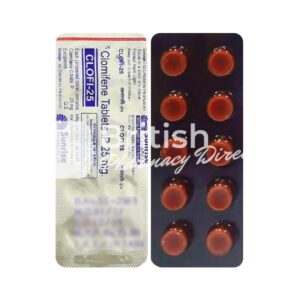
In brief
- Clomid (clomifene/clomiphene) can be purchased from some online pharmacies and in many countries from local pharmacies; it is generally prescription-only in regulated markets, although some pharmacies may supply it without a prescription. Availability and delivery depend on local laws and the seller.
- Clomid is used to treat ovulatory disorders and infertility, especially anovulation and polycystic ovary syndrome (PCOS). It works as a selective oestrogen receptor modulator, helping stimulate the release of hormones that trigger ovulation.
- The usual dose for ovulation induction is 50 mg once daily for 5 days, usually starting on days 2–5 of the menstrual cycle; if needed, the dose may be increased up to 150 mg/day. For off-label male infertility or hypogonadism, 25–50 mg/day may be used under medical supervision.
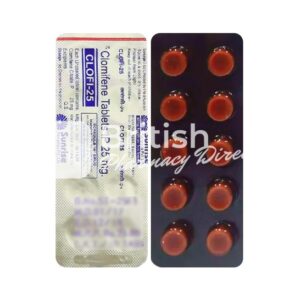
- The form of administration is an oral tablet, most commonly in 50 mg strength, with 25 mg and occasionally 100 mg scored tablets also available.
- It usually starts working within a few days of treatment, with ovulation typically occurring about 5–10 days after the last tablet in a cycle.
- The effect lasts for one treatment cycle, and courses are commonly repeated for up to 6 cycles if needed.
- Alcohol should be avoided or limited, as it may worsen side effects such as dizziness, nausea, and impaired judgement during treatment.
- The most common side effects are hot flushes, abdominal or pelvic bloating, ovarian enlargement or discomfort, nausea, headache, and occasional visual disturbances.
- Would you like to try Clomid without a prescription?
Basic Clomid Information
- INN (International Nonproprietary Name): Clomifene.
- Brand names available in United Kingdom: Clomid, Serophene, Omifin, Clostilbegyt, ClomHEXAL, Klomen, Fertomid/Fertin, Androxal, and other local trade names.
- ATC Code: G03GB02.
- Forms & dosages: Oral tablets only, usually 25 mg, 50 mg, and occasionally 100 mg scored tablets.
- Manufacturers in United Kingdom: International manufacturers and generic suppliers; local availability depends on prescription supply chain.
- Registration status in United Kingdom: Prescription-only medicine supplied through authorised prescribing pathways.
- OTC / Rx classification: Prescription Only (Rx / POM).
What Clomid Is And Why It Needs Careful Use
Worried about whether clomid is right for you, or whether it is safe to order online?
Clomifene is a prescription-only fertility medicine used to help trigger ovulation, so it is not a casual over-the-counter treatment.
In the UK, the safest route is through a clinician or fertility service, because the medicine needs the right diagnosis, the right cycle timing, and proper monitoring.
It is widely used for ovulatory failure, including polycystic ovary syndrome, but it should never be started if pregnancy is possible, if there is liver disease, unexplained uterine bleeding, ovarian cysts not linked to PCOS, hormone-dependent tumours, or a known allergy to the tablet ingredients.
People with fibroids, a history of blood clots, PCOS, or any visual disturbance need extra caution, because the risks can be higher and the treatment plan may need changing.
Red flags that need urgent review:
- Severe abdominal or pelvic pain.
- Breathing difficulty.
- Rapid weight gain.
- Persistent blurred vision or spots.
- Marked abdominal swelling or worsening discomfort.
Visual effects matter for day-to-day safety as well, especially if you drive, use machinery, or work in a safety-sensitive job.
If vision is altered, stop driving and contact a clinician straight away.
Q&A: Can I drive after taking Clomid?
Only if you have no visual disturbance and feel well.
What Clomid Is: Name, Brands, And Pack presentation
People often ask whether clomifene and clomiphene are different medicines.
They are the same active substance, with clomifene as the official INN and clomiphene as the US spelling.
Clomid is the best-known brand, but the medicine also appears as Serophene, Omifin, Clostilbegyt, ClomHEXAL, Klomen, Fertomid, Fertin, and several other regional names.
In practical terms, the product you receive is usually an oral tablet, and that is the only approved form listed in the product data.
Definition list:
- INN: Clomifene.
- Brand: Clomid.
- Form: Oral tablet.
- Strength: 25 mg, 50 mg, and occasionally 100 mg scored tablets.
For UK patients comparing Clomid 50mg Tablets with other ovulation induction tablets, the key point is that there are no approved creams, vials, or non-oral forms.
How Clomifene Works In Plain English
Trying to understand why this fertility medicine works can feel confusing at first.
Clomifene acts like a selective oestrogen receptor modulator-style ovulation stimulant, which means it makes the brain think oestrogen levels are lower than they really are.
That signal encourages the release of hormones that help the ovary mature and release an egg.
It is used to induce ovulation, not to prevent pregnancy, so it has no hormonal contraceptive effect.
What it does:
- Encourages ovulation in people with anovulation or ovulatory disorders.
- Supports fertility treatment pathways, especially where cycles are irregular.
- Can be used under medical supervision in some male fertility pathways.
What it does not do:
- It does not act as a contraceptive.
- It does not replace hormones.
- It is not intended for long-term hormone modulation.
The ATC code is G03GB02, placing it under ovulation stimulants, synthetic.
Micro-FAQ — Does Clomid Contain Hormones?
No, it works by changing hormone signalling rather than replacing hormones.
Who It Is For Under UK Fertility Care
Could clomifene be the next step after a diagnosis of ovulatory failure?
That is the main MHRA- and NHS-aligned use, especially in anovulation linked to PCOS or other ovulatory disorders.
The usual regimen is 50 mg daily for 5 days, started on days 2 to 5 of the menstrual cycle, with the dose adjusted if ovulation does not occur.
Under specialist care, the dose may be increased stepwise up to 150 mg daily, but this is not something to manage casually at home.
Off-label use in men is also described, mainly for infertility or hypogonadism, usually at 25 to 50 mg daily and monitored by a physician.
Female and male use at a glance:
| Use | Typical Starting Dose | Usual Monitoring |
|---|---|---|
| Ovulatory failure / anovulation | 50 mg daily for 5 days | Cycle timing and response |
| Male infertility / hypogonadism | 25 to 50 mg daily | Physician-monitored response |
It is not indicated in children, not routinely used in older adults, and prolonged use beyond 6 cycles is generally not recommended.
If you are searching for clomifene for infertility UK, the safest answer is that the medicine should be matched to your diagnosis, not just your search history.
Dosing, Cycle Timing, And Missed Doses
People often want a straightforward answer on timing, especially when trying to plan treatment around a menstrual cycle.
The standard course is a 5-day treatment cycle, usually started early in the cycle, and repeated for up to 6 cycles if the prescriber advises.
The usual starting dose is 50 mg daily, with increases up to 150 mg daily if there is no ovulation and the specialist feels it is appropriate.
Severe hepatic dysfunction is a contraindication, and renal impairment needs caution because no specific dose adjustment is given.
How to take it safely:
- Start only on the day your clinician has told you to start.
- Take the tablet at the same time each day if possible.
- Do not continue beyond the number of days prescribed.
- Attend follow-up if ovulation monitoring has been arranged.
If a dose is forgotten, take it as soon as remembered unless the next dose is nearly due.
Do not double up.
Q&A: What if I miss a dose?
Take it promptly unless it is nearly time for the next dose.
Side Effects, Risks, And When To Stop
Most people want to know the practical part first: what will this feel like, and when should treatment be stopped?
Common effects include hot flushes, bloating, nausea, vomiting, headache, breast discomfort, mood changes, and ovarian enlargement or discomfort.
Visual disturbance is uncommon but important, and it should never be ignored.
Common adverse effects:
- Hot flushes.
- Abdominal or pelvic bloating.
- Nausea or vomiting.
- Headache.
- Breast discomfort.
- Mood changes.
- Ovarian enlargement or discomfort.
- Blurred vision or spots.
Serious problems are rare but matter because they can become urgent quickly.
Ovarian hyperstimulation syndrome is the key emergency concern, and persistent visual symptoms also need prompt assessment.
Multiple pregnancy is another well-known risk, occurring in about 8 to 10% of successful cycles.
Warning box: seek urgent help now if you notice:
- Severe abdominal or pelvic pain.
- Breathing difficulty.
- Rapid weight gain.
- Marked abdominal swelling.
- Persistent blurred vision.
If vision changes start, stop treatment and get medical advice straight away.
That simple step protects both fertility treatment and everyday safety.
Interactions With Other Medicines And Daily Habits
Before starting fertility treatment, it is sensible to review every prescription, over-the-counter medicine, and supplement already being taken.
That matters most when clomifene is used alongside other fertility medicines, particularly gonadotropins, or as part of a PCOS plan that may also include metformin.
Tell your prescriber if you take:
- Other fertility medicines.
- Injectable hormones such as gonadotropins.
- Metformin.
- Any regular prescription medicine.
- Herbal or vitamin supplements.
No major food interaction is highlighted in the supplied product data, but sensible use still matters.
If nausea or dizziness appears, alcohol should be approached cautiously and routine activities may need to be adjusted.
The same common sense applies to heavy caffeine intake, particularly if it worsens anxiety or sleep during a treatment cycle.
Access In The UK: Prescriptions, Pharmacies, And Online Supply
Where do UK patients usually get clomid, and who explains how to use it properly?
Access is normally through an NHS prescription or private prescription pathway, with dispensing through community pharmacies and online pharmacies that work with valid prescriptions.
Large UK chains such as Boots, LloydsPharmacy, and Superdrug may supply prescription fertility medicines when the prescription is valid and the stock is available.
Online pharmacies are increasingly used for electronic prescriptions and repeat arrangements, but the medicine should still be treated as a monitored treatment, not a simple click-and-buy item.
Pharmacy access and oversight:
| Route | Typical Oversight | Best For |
|---|---|---|
| NHS prescription | GP or fertility clinic | Routine UK care |
| Private prescription | Private clinician | Faster access or specialist review |
| Online pharmacy | Prescriber and pharmacist checks | Convenient home delivery |
Pharmacist counselling is especially important with fertility medicines, because timing, side effects, and red flags all need a plain explanation.
Prescription-only status is there to protect patients from counterfeit products and unsafe self-treatment.
In our online pharmacy, clomid is available without a prescription, with discreet delivery to United Kingdom in 5-14 days.
That kind of buying should still be approached with care, because regulated prescribing and review remain the safest way to use fertility treatment.
Safe online buying checklist:
- Check that the seller is legitimate.
- Look for pharmacist support.
- Avoid unregulated overseas sources.
- Never use tablets without understanding the cycle plan.
Cost, Charges, And Regional Differences Across The UK
Can the price vary depending on where the prescription is filled?
Yes, and quite a lot.
In England, NHS prescription charges usually apply unless an exemption is available, while Scotland, Wales, and Northern Ireland generally offer free NHS prescriptions.
Private prescription prices can vary by pharmacy, strength, and supply source, so the same clomifene tablet may cost differently depending on where it is dispensed.
Typical cost picture:
| Source / Pharmacy | Typical Price Range | NHS Charge | Exemption Status | Regional Difference |
|---|---|---|---|---|
| NHS pharmacy in England | Standard prescription pricing | Applies | Available if exempt | England |
| NHS pharmacy in Scotland | Usually no charge | Free | Generally not needed | Scotland |
| NHS pharmacy in Wales | Usually no charge | Free | Generally not needed | Wales |
| NHS pharmacy in Northern Ireland | Usually no charge | Free | Generally not needed | Northern Ireland |
| Private pharmacy supply | Varies by strength and supplier | Not applicable | Depends on private terms | All regions |
Checking exemption eligibility can save money, especially for repeat fertility treatment.
If you are using private care, ask the pharmacy about the exact price before ordering so there are no surprises at the checkout.
Alternatives To Clomid
Sometimes clomifene is not the best fit, and another treatment makes more sense.
Letrozole, gonadotropins, and metformin are the main alternatives mentioned in UK fertility practice.
Letrozole is increasingly used off-label as an ovarian stimulator.
Gonadotropins, such as FSH or HMG, are injectable options for ovulation induction.
Metformin is used as an adjunct in PCOS rather than as a direct ovulation stimulant on its own.
Comparison at a glance:
| Treatment | Form | Main Use | Practical Point |
|---|---|---|---|
| Clomifene | Oral tablet | Ovulation induction | Simple dosing, monitoring needed |
| Letrozole | Oral tablet | Ovarian stimulation | Increasingly considered in modern pathways |
| Gonadotropins | Injection | Ovulation induction | More intensive monitoring |
| Metformin | Oral medicine | Adjunct in PCOS | Often combined with other care |
Practical differences checklist:
- Oral versus injectable treatment.
- Amount of monitoring needed.
- Multiple pregnancy risk.
- Cause of infertility.
- Previous response to treatment.
The best choice depends on the cause of infertility and the specialist’s judgement.
What The Evidence And Patient Experience Tend To Show
Clomifene remains a long-established ovulation induction option, even though some modern fertility pathways now consider letrozole earlier in treatment.
That balance reflects clinical experience, monitoring needs, and the way individual patients respond.
Recent UK and European fertility guidance continues to frame ovulation induction as a specialist-led area of care.
Common themes in patient discussions:
- Hope that ovulation will start.
- Frustration if cycles take time to respond.
- Hot flushes and bloating.
- Emotional strain during fertility treatment.
- Anxiety about multiple pregnancy.
Many people want quick reassurance, but fertility treatment often needs patience and follow-up rather than one-off dispensing.
That is why pharmacist counselling and clinic monitoring are part of the treatment, not an optional extra.
Common Questions UK Patients Ask
How quickly does it work?
It is usually taken over a 5-day course early in the cycle, with ovulation response checked afterwards if monitoring is planned.
Can it be used with PCOS?
Yes, PCOS is a common reason for use, but it also needs monitoring because ovarian stimulation and ovarian hyperstimulation can be a concern.
Why do I need monitoring?
Monitoring helps confirm whether ovulation is happening and helps spot side effects, especially abdominal pain, ovarian enlargement, or visual symptoms.
What if I get visual symptoms?
Stop treatment and contact a clinician promptly, because altered vision is a warning sign.
If the answer needed is a prescription from the GP, a fertility clinic, or a pharmacist review, the safest path is to ask early rather than guessing.
Q&A: Is Clomid available as 50 mg tablets in the UK?
Yes, 50 mg tablets are the common strength listed in the product data.
Regulation, Legal Status, And Anti-Doping Rules
Why does a medicine like clomifene stay prescription-only in many countries?
Because safety matters, and because the dose, timing, and monitoring can change the result as well as the risk profile.
It is registered in many countries, including markets where national agencies approve use through prescription pathways, and the UK position is aligned with that safety approach.
Legal and clinical points:
- It is prescription-only in major markets.
- It is used through authorised prescribing channels.
- Registration and local availability vary by country.
- Counterfeit products and unregulated supply should be avoided.
Warning box:
Clomifene is on the World Anti-Doping Agency Prohibited List, so athletes must not use it without clearance.
That rule exists because performance and hormone signalling can be affected, and sports bodies treat the medicine as a prohibited anti-estrogen and ovulation stimulant.
Regulation protects patients by supporting the right dose, the right monitoring, and a lower risk of counterfeit medicine.
Storage, Handling, And Travel
Once the tablets arrive, where should they be kept?
Store them below 25°C in a dry place, away from children, and do not use them after the expiry date.
Original packaging is best for travel, because it helps protect the tablets and keeps the label clear.
Storage and travel checklist:
- Keep in the original box or blister pack.
- Avoid damp bathrooms.
- Avoid hot cars and direct sunlight.
- Keep below 25°C.
- Keep out of reach of children.
Pharmacists can also advise on safe carriage if you are going away during a treatment cycle or need repeat supplies.
Practical Use Tips And Counselling Points
How do UK clinicians usually frame safe use of clomid?
They start by checking the diagnosis, reviewing contraindications, explaining the cycle timing, and confirming how monitoring will work.
That conversation also covers vision problems, abdominal pain, and the point at which treatment should stop.
Attendance at follow-up matters, because ovulation monitoring can help show whether the medicine is doing what it should.
It also helps avoid unnecessary repeat cycles when the first course has not worked.
Before you start:
- Confirm the diagnosis.
- Check pregnancy status.
- Review liver history and bleeding symptoms.
- Discuss any cysts, fibroids, or clotting history.
During treatment:
- Follow the exact dose and timing.
- Report visual changes immediately.
- Seek help for severe pelvic pain.
- Do not share tablets with anyone else.
- Do not use during pregnancy.
That simple approach keeps treatment focused, safe, and much more likely to be useful.
Good fertility care is not just about taking a tablet.
It is about matching the medicine to the person, the cycle, and the risk profile.
Delivery Across United Kingdom
| City | Region | Delivery time |
|---|---|---|
| London | England | 5-7 days |
| Birmingham | England | 5-7 days |
| Manchester | England | 5-7 days |
| Liverpool | England | 5-7 days |
| Leeds | England | 5-7 days |
| Glasgow | Scotland | 5-7 days |
| Edinburgh | Scotland | 5-7 days |
| Cardiff | Wales | 5-7 days |
| Belfast | Northern Ireland | 5-7 days |
| Newcastle upon Tyne | England | 5-9 days |
| Sheffield | England | 5-9 days |
| Bristol | England | 5-9 days |
| Nottingham | England | 5-9 days |
| Aberdeen | Scotland | 5-9 days |