Cilostazol
In brief
- Officially cilostazol is a prescription-only medicine in the UK, EU, Canada, Australia and other countries listed; however, availability can vary and some pharmacies or online vendors may supply it without a prescription—check local regulations and consult a healthcare professional before obtaining it.
- Cilostazol is used to relieve walking discomfort from intermittent claudication (peripheral arterial disease). It is a phosphodiesterase III inhibitor that raises intracellular cAMP, producing antiplatelet effects and vasodilation.
- The usual adult dose for intermittent claudication is 100 mg taken orally twice daily, typically at least 30 minutes before breakfast and dinner.
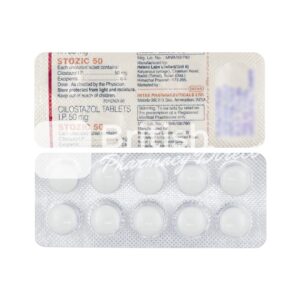
- It is administered orally as a film‑coated tablet (commonly 100 mg; some formulations 50 mg).
- Symptomatic improvement is gradual; some patients notice benefit within weeks, with full effect often taking up to about 12 weeks.
- Duration of effect is consistent with twice‑daily dosing (roughly 12 hours per dose); treatment is usually long‑term with regular review and discontinued if no benefit after about 3 months.
- Avoid excessive alcohol while taking cilostazol, as alcohol can worsen dizziness, hypotension and other side effects; discuss alcohol use with your prescriber.
- The most common side effect is headache (other frequent effects include diarrhoea, palpitations, dizziness and mild tachycardia).
- Would you like to try cilostazol without a prescription?
Basic Cilostazol Information
- INN (International Nonproprietary Name): Cilostazol (also written as シロスタゾール in Japanese sources).
- Brand Names Available In United Kingdom: Pletal; generic cilostazol tablets marketed as Cilostazol in the UK; typical pack presentation is 100 mg tablets in blisters of 56 or 112.
- ATC Code: B01AC23.
- Forms & Dosages: Film-coated tablets 100 mg and 50 mg; typical packaging includes blisters of 10, 14, 30, 56, 60 or 100 units.
- Manufacturers In United Kingdom: Otsuka Pharmaceutical, Accord Healthcare, Mylan and other authorised suppliers.
- Registration Status In United Kingdom: MHRA‑authorised prescription medicine.
- OTC / Rx Classification: Prescription only medicine (POM) in the UK.
Critical Warnings, Restrictions And Patient Protection
High-Risk Groups (Elderly, Pregnancy, Chronic Illness)
Are you worried this medicine might be unsafe for someone with heart or liver problems?
Do not take cilostazol if you have congestive heart failure of any grade.
Pregnancy is an absolute contraindication and cilostazol must not be used by pregnant people.
Severe hepatic or renal impairment are listed as contraindications in the product information and require avoidance.
Elderly patients do not usually require routine initial dose reduction, but they often have comorbidities and need closer monitoring for adverse effects such as dizziness, palpitations and bleeding.
People with uncontrolled hypertension, arrhythmias or active bleeding should not start cilostazol without specialist review.
- Absolute Contraindications: congestive heart failure, severe hepatic impairment, severe renal impairment, pregnancy, known hypersensitivity, active bleeding.
Interaction With Activities (Driving, Workplace Safety Under UK Law)
Can cilostazol affect your ability to drive or operate machinery?
Common adverse effects include headache, dizziness and palpitations which can impair concentration or coordination and therefore affect driving and workplace safety.
Assess your ability to drive or use tools after starting cilostazol and after any dose change.
If you feel dizzy, faint, unusually tired or have palpitations, do not drive and stop operating heavy machinery until you are confident these symptoms have resolved.
Q&A — “Can I Drive After Taking It In The UK?”
If you experience no dizziness, severe headache or palpitations, you may continue to drive.
If symptoms occur after a dose, stop driving and seek medical advice.
Report suspected adverse reactions to the MHRA Yellow Card scheme and discuss any driving concerns with your prescriber or pharmacist.
- Urgent Action Checklist: stop the drug and seek urgent care for chest pain, syncope, severe bleeding, or severe tachycardia.
Usage Basics: Names, Legal Classification And Packaging
INN, Brand Names Available In The UK
Are you checking what to call this medicine and which brands exist in the UK?
The International Nonproprietary Name is cilostazol, marketed in the UK as Pletal and as generics labelled cilostazol.
Typical pack strengths are 100 mg tablets; 50 mg film-coated tablets are also available in some markets.
Common UK pack sizes for 100 mg tablets are blisters of 56 or 112 units supplied by manufacturers such as Otsuka, Accord and Mylan.
Legal Classification (POM, P, GSL)
How can you legally obtain cilostazol in the UK?
Cilostazol is a Prescription Only Medicine (POM) in the UK and must be supplied against a valid prescription issued by a UK-registered prescriber or via authorised NHS electronic prescribing systems.
Community pharmacists must record supply details in the patient medication record (PMR) and provide counselling at each issue in line with UK pharmacy standards.
- Formats Available: 100 mg tablets; 50 mg tablets where supplied; blister packs commonly 56 or 112 tablets.
| UK Brand | Strength | Common Pack Sizes | Typical Manufacturer |
|---|---|---|---|
| Pletal | 100 mg | 56, 112 (blister) | Otsuka |
| Cilostazol (generic) | 100 mg | 56, 112 (blister) | Accord Healthcare / Mylan |
| Cilostazol (generic) | 50 mg | Various blister sizes | Various manufacturers |
Dosing Guide And Administration
Standard Regimens (NHS Guidelines)
How should cilostazol be taken for intermittent claudication?
The typical adult dose is 100 mg orally twice daily, taken at least 30 minutes before breakfast and dinner.
Improvement is gradual and may take weeks, with reassessment recommended at around 12 weeks.
Discontinue if there is no clinically meaningful benefit after three months of treatment.
Adjustments For Comorbidities
What changes are needed for liver, kidney or elderly patients?
Cilostazol is contraindicated in moderate to severe hepatic impairment and is not recommended in severe renal impairment.
Use with caution in mild to moderate renal impairment and monitor for accumulation in frail elderly patients; routine initial dose reduction is not usually required.
Consider medication review where patients are taking multiple cardiovascular medicines due to interaction potential.
Q&A — “What If I Miss A Dose?”
If you miss a dose, take it as soon as you remember unless it is near the time for the next dose.
Do not double up doses to make up for a missed one.
In suspected overdose with tachycardia, hypotension or arrhythmias, seek immediate medical attention.
- Do: Take doses at least 30 minutes before meals; keep a dose diary for twice-daily dosing.
- Don’t: Double doses.
- Monitoring Checklist: pulse, blood pressure, signs of bleeding; reassess walking distance and side effects at 12 weeks.
Interaction Chart: Foods, Drinks And Medicines
Food And Drinks (Alcohol, Tea/Coffee, Diet Habits)
Will food or drink change how cilostazol affects me?
Cilostazol should be taken at least 30 minutes before breakfast and dinner for consistent absorption.
Alcohol may worsen dizziness and hypotension so avoid excessive drinking when starting therapy.
Caffeine is not a formal contraindication but can increase palpitations or headache and should be monitored if these symptoms arise.
Common Drug Conflicts (MHRA Yellow Card Data)
Which medicines interact significantly with cilostazol?
Cilostazol is metabolised by CYP3A4 and CYP2C19, so strong inhibitors (for example certain macrolides, some azole antifungals) can increase plasma levels and raise the risk of adverse effects.
Strong CYP3A4 inducers may reduce effectiveness.
Concomitant use of multiple antiplatelet or anticoagulant agents increases bleeding risk and requires careful review and monitoring.
| High-Risk Co‑Prescription | Interaction Type | Management Advice |
|---|---|---|
| Anticoagulants (e.g. warfarin, DOACs) | Increased bleeding risk | Monitor INR/bleeding; consider specialist advice |
| Dual Antiplatelet Therapy (aspirin + clopidogrel) | Added antiplatelet effect | Assess bleeding risk; monitor closely |
| Strong CYP3A4 Inhibitors (e.g. clarithromycin, some azoles) | Raised cilostazol levels | Avoid or reduce dose and monitor for side effects |
| Strong CYP3A4 Inducers (e.g. rifampicin, some antiepileptics) | Reduced cilostazol effect | Avoid coadministration or monitor clinical response |
- Discuss herbal products such as St John’s wort with a pharmacist prior to use because of enzyme induction risk.
Report unexpected interactions through the MHRA Yellow Card scheme and seek pharmacist review before starting new medicines.
User Reports, Trends And Patient Experience
What do real patients say about cilostazol in the UK?
Patient information sources and forums report many people notice an increase in pain‑free walking distance after a few weeks, but responses vary.
Commonly reported adverse effects include headache, palpitations, diarrhoea and dizziness and some people discontinue treatment because of these symptoms.
Forum and site reports are useful for patient perspective but are subject to selection and reporting bias; clinical decisions should rely on evidence and prescriber advice.
- Benefit
- Increased pain‑free walking distance.
- Onset
- Weeks, often up to 12 weeks for full effect.
- Discontinue If
- No improvement after 3 months or intolerable adverse effects.
- Practical actions for patients: keep a symptom diary, record walking distances, check pulse, avoid driving until stable, contact GP or pharmacist if side effects occur.
Encourage Yellow Card reporting for unexpected reactions to support UK safety monitoring.
Access And Purchase Options In The UK
High-Street Chains (Boots, LloydsPharmacy, Superdrug)
Where can patients get cilostazol in person?
Legitimate UK routes are NHS prescriptions from GP surgeries or hospital clinics and supply through community pharmacies including national chains such as Boots and LloydsPharmacy.
Pharmacies will require a valid prescription and will provide counselling and PMR entry at supply.
Online Pharmacies And NHS E-Prescriptions
Can cilostazol be ordered online?
Supply via registered online pharmacies is possible when patients present a valid prescription from a UK-registered prescriber and use NHS e‑prescribing or private prescription channels.
In our online pharmacy, cilostazol is available without a prescription, with discreet delivery to United Kingdom in 5-14 days.
Always check the pharmacy is MHRA‑registered, offers patient counselling and records the supply in a PMR before purchase.
| Access Route | Pros | Cons | Typical Wait/Cost |
|---|---|---|---|
| NHS Prescription | Low cost for eligible patients; integrated care | GP appointment needed | Varies; NHS prescription charge in England unless exempt |
| Private Prescription | Faster access | Cost to patient | Variable private fee plus medication cost |
| Registered Online Pharmacy | Convenient delivery; e‑prescription compatible | Must verify pharmacy and prescription | Delivery times vary |
- Safe online purchase checklist: pharmacy registration number, NHS/ePCS support, offered counselling, secure payment and clear returns policy.
Mechanism Of Action & Pharmacology
Simplified Explanation
How does cilostazol work to help walking distance?
Cilostazol is a phosphodiesterase III inhibitor that increases intracellular cyclic AMP in platelets and vascular smooth muscle.
This reduces platelet aggregation and produces vasodilation, improving blood flow to the limbs and helping symptoms of intermittent claudication.
Clinical Terms For Prescribers
What should prescribers note pharmacologically?
Cilostazol is classified under ATC code B01AC23 and exerts antiplatelet and vasodilator effects through PDE III inhibition and cAMP elevation.
It is orally absorbed and extensively metabolised by the liver via CYP3A4 and CYP2C19 pathways; hepatic impairment risks accumulation and is a contraindication.
- Pharmacology Pearls: onset over weeks, interaction potential via CYP3A4/2C19, contraindicated in heart failure due to mortality signal with PDE III inhibitors.
Indications And Off‑Label Use
MHRA‑Approved Uses
What is cilostazol licensed for in the UK?
MHRA authorises cilostazol for symptomatic intermittent claudication due to peripheral arterial disease to improve walking distance.
It is not intended for acute ischaemic events.
Off‑Label Practices In NHS And Private Care
Is cilostazol ever used for other conditions?
Occasionally clinicians may consider cilostazol for other microvascular or vasospastic disorders where standard options are limited, but evidence is limited and such uses are off‑label.
- Checklist Before Off‑Label Prescribing: evidence summary, documented risk–benefit discussion, informed consent, monitoring plan and scheduled follow-up (review at 12 weeks).
Prolonged use without documented benefit should prompt discontinuation.
Key Clinical Findings And Evidence
Does evidence support cilostazol for claudication?
Randomised trials and meta-analyses show cilostazol improves pain‑free and maximal walking distance versus placebo in people with intermittent claudication, with benefits often appearing over weeks to months.
The drug’s contraindication in heart failure arises from pooled safety signals for increased mortality with PDE III inhibitors in heart failure populations.
In UK vascular practice, cilostazol is considered where supervised exercise therapy or revascularisation is unsuitable or as an adjunct when appropriate.
| Outcome | Effect | Timing |
|---|---|---|
| Pain‑Free Walking Distance | Improved vs placebo in multiple trials | Weeks to months (up to 12 weeks) |
| Main Adverse Events | Headache, palpitations, diarrhoea, dizziness | Often early in treatment |
Clinicians should consult original trial data and MHRA/NICE guidance for local prescribing decisions.
Alternatives Matrix And Prescribing Choices
NHS Prescribing Alternatives (Comparison Table)
What are the alternatives to cilostazol for intermittent claudication?
| Intervention | Mechanism | Efficacy For Walking Distance | Common Adverse Effects | Suitability |
|---|---|---|---|---|
| Supervised Exercise Therapy | Physiological conditioning | First‑line; high efficacy | Minimal | Preferred where available |
| Pentoxifylline | Hemorheologic agent | Limited benefit; less than cilostazol in some studies | GI upset, dizziness | Alternative if cilostazol contraindicated |
| Clopidogrel / Antiplatelets | Antiplatelet | Reduces vascular events; modest effect on walking distance | Bleeding risk | Used for vascular risk modification |
Pros And Cons Checklist
- Assess heart disease or heart failure—avoid cilostazol if heart failure is present.
- Review hepatic and renal function before prescribing.
- Consider patient preference and access to supervised exercise when choosing therapy.
- Non-pharmacological measures remain essential—smoking cessation, statins and blood pressure control.
Common Patient Questions
How long will it take to work?
Improvement may be noticeable over weeks, with full benefit often by 12 weeks; stop if no benefit after 3 months.
What are the main side effects?
Headache, diarrhoea, palpitations and dizziness are common and often occur early in treatment.
Can I take cilostazol with aspirin or clopidogrel?
Concomitant antiplatelet use increases bleeding risk and requires careful monitoring and clinical judgment.
- Action Flowchart: Mild side effects — discuss with pharmacist/prescriber; Severe chest pain, syncope, severe bleeding, severe tachycardia — stop drug and seek urgent care.
NHS Cost & Access Comparison
How does cost differ between NHS and private routes?
In England, patients usually pay the NHS prescription charge unless exempt; prescriptions in Scotland, Wales and Northern Ireland are generally free to patients.
Pack sizes commonly supplied are 56 or 112 tablets of 100 mg and manufacturers include Otsuka, Accord and Mylan.
| Source | Typical Cost / Charge | Pros | Cons |
|---|---|---|---|
| NHS GP / Hospital | NHS prescription charge in England unless exempt | Integrated care, cheaper for eligible patients | Waiting for appointment |
| Private Prescription | Private consultation fee + medicine cost | Faster access | Higher out‑of‑pocket cost |
| Online Pharmacy | Variable; delivery fee may apply | Convenience; home delivery | Verify pharmacy registration and authenticity |
- Cost assistance checklist: check exemption status, prescription prepayment certificates and local support services.
Registration, Regulation And Reporting
MHRA Approval Process And Safety Monitoring
Who regulates cilostazol in the UK?
Cilostazol is MHRA‑authorised as a prescription medicine and safety is continuously monitored via the Yellow Card scheme.
Healthcare professionals and patients are encouraged to report suspected adverse reactions to the Yellow Card scheme to support ongoing safety surveillance.
NHS Prescribing Framework And Documentation
What documentation is required when starting cilostazol?
Prescribers must issue valid prescriptions and document indication, baseline vitals and plans for review in the patient record.
- Required documentation items on initiation: indication, baseline blood pressure/pulse, hepatic/renal status, review date (e.g. 4–12 weeks) and consent for off‑label uses.
Pharmacists should record supply in the PMR and counsel patients on side effects and Yellow Card reporting.
Storage, Handling And Household Advice
UK Household Storage (Cold/Damp Climate)
How should cilostazol be stored at home in the UK?
Store below 25°C, protect from moisture and light and keep tablets in their original blister packaging until use.
Avoid storing medicines in bathrooms or near radiators where humidity and heat are common in UK homes; a cool, dry cabinet is preferable.
Guidance From NHS And Pharmacists
What about disposal and carers?
Return unwanted or expired medicines to a pharmacy for safe disposal; do not share medication with others.
- Household safety checklist: keep out of reach of children, check expiry dates, do not transfer tablets into unlabelled containers.
- Care home advice: ensure administration records are checked and medication reconciliation occurs at GP review visits.
Guidelines For Proper Use And Pharmacist Counselling
UK Pharmacist Counselling Style And Practical Points
What should a pharmacist tell a patient when supplying cilostazol?
Confirm the indication of intermittent claudication, review contraindications such as heart failure and hepatic impairment and ensure the patient understands administration timing—at least 30 minutes before breakfast and dinner.
Discuss common side effects and when to seek urgent help for chest pain, syncope, severe bleeding or severe tachycardia.
NHS Patient Safety Advice And Follow-Up
What follow-up is appropriate after initiation?
Establish a monitoring plan: baseline blood pressure and pulse, review at 4–12 weeks for tolerability and efficacy, and reassess benefit at 12 weeks for continued therapy.
- Community pharmacist counselling checklist: confirm current medicines, advise on interactions, warn about driving until stable, document supply in PMR and encourage Yellow Card reporting for adverse events.
Provide a brief two‑column handout: “What To Expect” and “When To Contact Your GP Or Pharmacist”.
Delivery Across United Kingdom
| City | Region | Delivery time |
|---|---|---|
| London | England | 5-7 days |
| Birmingham | England | 5-7 days |
| Glasgow | Scotland | 5-7 days |
| Manchester | England | 5-7 days |
| Leeds | England | 5-7 days |
| Edinburgh | Scotland | 5-7 days |
| Bristol | England | 5-7 days |
| Liverpool | England | 5-7 days |
| Newcastle Upon Tyne | England | 5-7 days |
| Sheffield | England | 5-7 days |
| Belfast | Northern Ireland | 5-7 days |
| Cardiff | Wales | 5-7 days |
| Coventry | England | 5-9 days |
| Nottingham | England | 5-9 days |
| Leicester | England | 5-9 days |