Azathioprine
In stock
50mg · 25mg
from 23,69 £
In brief
- Azathioprine is a long-term immunosuppressant used after organ transplants and in several autoimmune and inflammatory diseases.
- Packs run from 30 to 120 tablets at 25 mg and from 30 to 270 at 50 mg.
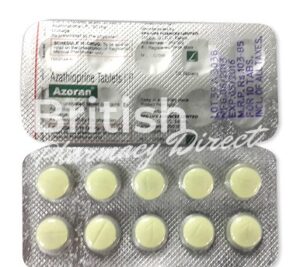
- A POM in the UK, licensed as 25 mg and 50 mg tablets from several companies; the stock here is an imported generic.
How azathioprine works, and for whom
Azathioprine is converted in the body to 6-mercaptopurine, a substance that interferes with the building blocks of DNA in rapidly dividing immune cells. The result is a slower, damped-down immune response. The UK SmPC covers two broad groups of patients. The first are people who have received a kidney, heart or liver transplant, where it helps to stop the new organ being rejected. The second are people with immune-driven diseases: moderate to severe Crohn’s disease or ulcerative colitis, severe rheumatoid arthritis, systemic lupus erythematosus, dermatomyositis and polymyositis, autoimmune chronic active hepatitis, pemphigus vulgaris, polyarteritis nodosa, autoimmune haemolytic anaemia and chronic refractory ITP. In many of these it also lets doctors lower the dose of steroids.
Strengths offered and UK supply
At 25 mg there are four quantities, 30, 60, 90 or 120; the 50 mg strength adds larger packs, giving 30, 60, 90, 120, 240 and 270. Supply for this page is an imported generic. In the UK azathioprine is prescription-only, available as 25 mg and 50 mg tablets from a number of licence holders and as an oral suspension. Treatment is usually started by a hospital team, with the GP often continuing prescriptions and blood tests under a shared-care arrangement.
Dosing by body weight
Doses are calculated per kilogram. After a transplant, up to 5 mg/kg may be given on the first day, followed by a maintenance dose of 1 to 4 mg/kg daily, which in practice continues indefinitely. For other conditions, 1 to 3 mg/kg a day is usual. If there is no improvement after three months, stopping should be considered; in bowel disease, at least a year of treatment is recommended and the benefit may take three to four months to appear. Swallowing each dose after a meal rather than on an empty stomach may lessen any queasiness. The tablets have a film coating and are meant to be taken whole, not divided. Before treatment, testing for TPMT and NUDT15 variants helps identify people who break the medicine down slowly and need much lower doses.
Blood counts and other monitoring
The main danger is bone marrow suppression, so a full blood count is checked weekly for the first eight weeks and at least every three months after that, with liver tests as well. Unexplained bruising or bleeding, a sore throat, fever or other signs of infection should be reported straight away. Because years of immune suppression make skin cancers more likely, it is sensible to cover up in strong sun and apply a high-protection sunscreen. No live vaccine should be given while on the tablets, or until three months or more have passed since the last dose.
Interactions that change the dose
Allopurinol, oxipurinol and thiopurinol block the breakdown of azathioprine, so when they are used together the dose is cut to a quarter of the usual amount; febuxostat is not recommended alongside it. Co-trimoxazole, ACE inhibitors, cimetidine, indometacin and ribavirin can add to the effect on blood counts, and the anticoagulant action of warfarin may be reduced. Pregnancy or plans for it should be discussed with the hospital team.
Unwanted effects to watch for
The SmPC ranks bone marrow depression, mainly a fall in white cells, as very common, together with infections in transplant patients who also take other immunosuppressants. Low platelets and nausea are common, the nausea mainly affecting a minority of people when they first start. Uncommon problems include anaemia, pancreatitis, abnormal liver tests and a hypersensitivity reaction that may bring fever, joint pain, a rash and feeling generally unwell. Hair loss and serious liver injury are rare. The prescriber decides whether azathioprine is the right choice and at what dose.