Atarax
In brief
- Atarax (hydroxyzine) is a prescription-only medicine in most major markets, but some online pharmacies may offer it without a prescription depending on local rules; availability includes tablets and oral solution in various countries.
- Atarax is used for itching due to allergies or dermatitis, anxiety and tension, and sometimes for short-term sedation before procedures. It is a first-generation antihistamine with sedative and anxiolytic effects, working by blocking H1 histamine receptors and reducing activity in the central nervous system.
- The usual dose depends on the indication: for itching, adults commonly take 25 mg 3–4 times daily; for anxiety, 50–100 mg daily in divided doses; for sedation, 50–100 mg as a single dose. Doses are lower in children and should be adjusted by a doctor.
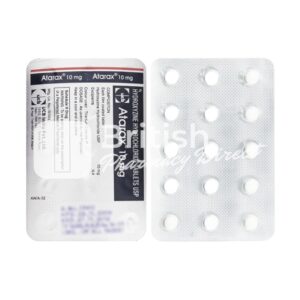
- It is available as tablets, oral solution or syrup, and in some markets injectable solution. Common strengths include 10 mg, 25 mg and 50 mg tablets, and 10 mg/5 ml syrup.
- Atarax usually starts working within about 15–60 minutes, with sedative effects often felt fairly quickly.
- The duration of action is typically around 4–6 hours, though this can vary depending on dose, age and individual response.
- Avoid alcohol, as it can greatly increase drowsiness, dizziness and impaired coordination.
- The most common side effect is drowsiness or sedation. Other common effects include dry mouth, dizziness, headache, blurred vision, fatigue, and sometimes constipation or nausea.
- Would you like to try Atarax without a prescription?
Basic Atarax Information
- INN (International Nonproprietary Name): Hydroxyzine
- Brand Names Available in United Kingdom: Atarax (phased out), generics; Hydroxyzine Hydrochloride Tablets
- ATC Code: N05BB01
- Forms & dosages: Tablets 10 mg, 25 mg, 50 mg; Oral solution/syrup 10 mg/5 ml; Injectable solution 25 mg/ml
- Manufacturers in United Kingdom: Not specified
- Registration status in United Kingdom: Prescription Only (Rx); not available OTC
- OTC / Rx classification: Prescription Only (Rx)
Atarax in the United Kingdom: What Patients Need To Know
Thinking about Atarax for itching or anxiety usually starts with a simple question: who can safely take it?
In the UK, hydroxyzine is the INN for Atarax, and it is a prescription-only medicine with the ATC code N05BB01.
The brand Atarax has been phased out in the UK, so patients are usually supplied hydroxyzine hydrochloride tablets instead.
That matters because the medicine is not a casual antihistamine from the chemist shelf, and it needs proper screening for QT risk, liver and kidney problems, pregnancy, and other medicines.
High-risk groups and absolute contraindications
Hydroxyzine should not be used if there is a known allergy to hydroxyzine or any excipient in the tablet.
It should also be avoided in early pregnancy, in prolonged QT interval, and when there are risk factors for QT prolongation, because of the recognised cardiac arrhythmia risk.
Severe hepatic or renal impairment is another major concern, since the medicine can accumulate and increase CNS and anticholinergic effects.
Older adults need special caution because sedation can lead to falls, confusion, urinary retention, and a general decline in alertness that may not be obvious at first.
In practice, the question is not only “does it work?”, but “is it the safest option for this person today?”
Immediate red flags and when to seek urgent help
If any of the following happens after taking hydroxyzine, urgent help is needed.
- Fainting or collapse.
- Palpitations or an unusually fast or irregular heartbeat.
- Severe drowsiness or difficulty waking.
- Agitation or marked confusion.
- Seizures.
- Breathing problems.
- Signs of overdose such as extreme drowsiness, confusion, or sudden worsening symptoms.
Because of the cardiac arrhythmia risk, severe symptoms should be treated as an emergency and 999 should be called if the patient is collapsed, struggling to breathe, or has chest symptoms.
Q&A — Can I Take Atarax If I Have Heart Rhythm Problems?
Only if a clinician has checked the QT risk and medicine interactions first.
What Atarax Is: UK Brand Names, Forms, And Packaging
Patients often search for Atarax when they really need hydroxyzine hydrochloride tablets in the UK.
The UK uses generic hydroxyzine, while the Atarax brand is largely phased out.
Elsewhere in Europe, such as France and many EU markets, Atarax 25 mg and 50 mg tablets and syrup are still common, and in Romania products may be registered through ANMDMR under Atarax or equivalent names.
That international variation can be confusing if someone has used the medicine abroad and is trying to compare the box they received elsewhere with a UK prescription.
Available Forms And Strengths
| Form | Strengths | Typical Packaging |
|---|---|---|
| Tablets | 10 mg, 25 mg, 50 mg | Blister packs, usually 10, 25, 30, 60, or 90 |
| Oral solution / syrup | 10 mg/5 ml | Bottle, usually 100–150 ml with dosing cup |
| Injectable solution | 25 mg/ml | Ampoules in some markets |
In British practice, supply is mainly tablets, although syrup can be useful when accurate child dosing is needed.
How Hydroxyzine Works In The Body
Hydroxyzine is a sedative antihistamine, so it blocks histamine and also has a calming effect on the brain.
That is why hydroxyzine for itching is a familiar use in dermatology, and why hydroxyzine for anxiety is sometimes chosen by clinicians for short-term symptom relief.
The same medicine can sit in two clinical categories, which is part of its appeal and part of the reason it needs careful handling.
Clinical Terms Worth Knowing
- Antipruritic
- A medicine that helps reduce itching.
- Anxiolytic
- A medicine that helps reduce anxiety or tension.
- Sedating
- Causing sleepiness or slowing reaction time.
Hydroxyzine is classified as R06AE03 for antihistaminic use and N05BB01 for anxiolytic use, which reflects its dual role in allergy and mental health care.
What Atarax Is Used For In NHS And Private Care
In routine practice, hydroxyzine is used for allergic pruritus, anxiety or tension, and pre-operative sedation.
Dermatologists may prescribe it when itching is keeping a patient awake, while psychiatrists may use it as a short-term anxiolytic rather than a long-term daily solution.
For pre-op use, it is generally given as a single dose and not continued as a regular treatment.
It is popular because it can help two common problems at once: itch and anxiety.
Main Indications
Allergic pruritus is one of the clearest uses, and the medicine may be helpful when itching is troublesome enough to affect sleep or daily comfort.
Anxiety and tension are also recognised uses, but treatment is usually short-term and reviewed regularly.
Pre-operative sedation is another standard use, often in a hospital or specialist setting.
It should not be presented as a routine sleep medicine, even though its sedative effect can make it feel like a prescription sleep aid in some situations.
Q&A — Is Atarax The Same As An OTC Antihistamine?
No, in the UK it is prescription only, unlike many non-sedating antihistamines.
Atarax Dosage: Standard Regimens And Practical UK Advice
Dosage depends on the reason it was prescribed, as well as age, weight, and risk factors.
For hydroxyzine 25 mg tablets UK prescribing, the clinician may split the dose through the day or choose a lower starting dose in older adults.
It is one of those medicines where “more” is not better, because excess sedation and QT risk are part of the safety picture.
Adult Dosage Ranges
| Indication | Adult dosage | Notes |
|---|---|---|
| Allergic pruritus | 25 mg, 3–4 times daily | Maximum 100–150 mg/day |
| Anxiety / tension | 50–100 mg/day divided | Maximum 100 mg/day stated in the data |
| Pre-operative sedation | 50–100 mg as a single dose | Usually clinician-directed |
Prescribers may adjust these ranges depending on how sleepy the patient becomes and whether there are other medicines on board.
Children, Elderly, And Dose Adjustment
Children need mg/kg dosing, and syrup can make accuracy easier when a small dose is needed.
The elderly should start low, often around 10–25 mg per dose, because sedation and anticholinergic effects are more likely.
Renal or hepatic impairment requires dose reduction and monitoring because accumulation can raise the chance of confusion and drowsiness.
- Confirm age and weight.
- Check kidney and liver status.
- Review all interacting medicines.
- Use the prescribed schedule, not a guess.
Missed Doses, Overdose, And Emergency Actions
People often worry about a missed dose on a busy weekday or after a late pharmacy delivery.
The safe rule is simple: take it when remembered unless it is nearly time for the next dose, and never double up.
With overdose, the concern is not only sleepiness but also seizures, confusion, and cardiac arrhythmias.
Missed Dose Guidance
If a dose is forgotten, it should be taken as soon as remembered unless the next dose is due soon.
Doubling the next dose is not recommended.
Overdose Symptoms And What To Do
Extreme drowsiness, seizures, confusion, or a suspected irregular heartbeat need urgent medical attention.
Depending on severity, NHS 111 can advise, but collapse, breathing problems, or severe drowsiness need emergency services.
Q&A — What If I Miss A Dose?
Take it when you remember, unless it is nearly time for the next one.
Safety Warnings: Driving, Work, Alcohol, And Daily Activities
Hydroxyzine can make people slower, sleepier, and less sharp than they expect.
That matters for driving, operating machinery, commuting, and jobs that need concentration.
Blurred vision and fatigue can also catch people out, especially in the first few doses.
Driving And Machinery
If the medicine causes drowsiness, slowed reaction time, or blurred vision, driving should be avoided.
UK road safety expectations are clear on this point: a patient must only drive if fully alert and safe.
For many people, that means avoiding driving at the start of treatment until they know how hydroxyzine tablets affect them.
Alcohol And Other Sedating Habits
- Alcohol can increase sleepiness and impairment.
- Sleep aids can add to sedation.
- Cannabis may worsen dizziness and poor concentration.
- Other sedatives can make the medicine harder to tolerate.
Do not assume that “one dose only” makes it safe for commuting, a night shift, or school runs.
Micro-FAQ — Can I Drive After Taking It In The UK?
Only if you are fully alert, but many patients should avoid driving, especially at the start of treatment.
Side Effects Patients Should Expect And When To Report Them
Most side effects are mild, but some are important enough to mention early.
Drowsiness is the one patients notice most, followed by dry mouth or dizziness.
Some people also report constipation, nausea, or blurred vision, and these can be bothersome if the medicine is used regularly.
Common Mild To Moderate Side Effects
| Side effect | What patients may notice |
|---|---|
| Drowsiness / sedation | Sleepiness, slow reactions |
| Dry mouth | Thirst, sticky mouth |
| Headache | Head discomfort or pressure |
| Dizziness / blurred vision | Light-headedness or hazy sight |
| Fatigue | Low energy |
| Constipation / nausea | Stomach upset or slower bowels |
| Weight gain | Rare, mainly with chronic use |
When Side Effects Need Medical Review
Excessive sedation, confusion, urinary retention, or palpitations should be reviewed promptly.
Any possible allergic reaction, worsening symptoms, or new concern after starting hydroxyzine should be discussed with a pharmacist or prescriber.
- New symptoms after starting treatment.
- Worsening drowsiness or confusion.
- Urinary retention or trouble passing urine.
- Palpitations or faintness.
- Any sign of allergy.
Drug Interactions And Food, Tea, Coffee, And Alcohol Considerations
Hydroxyzine can interact with medicines that affect the heart rhythm or the central nervous system.
That is why a proper medicine reconciliation matters before a prescription is issued or renewed.
The most important risk is the combination of QT prolongation and additive sedation.
Medicines That Raise Risk
QT-prolonging medicines, other sedatives, opioids, some antidepressants, antipsychotics, and anticholinergics can all increase risk.
The combination may raise the chance of arrhythmia or make the patient far more sleepy than expected.
Food, Tea, Coffee, And Alcohol
Food is usually not the main problem with hydroxyzine.
Alcohol is the bigger issue because it can intensify sedation and make driving or working unsafe.
Tea and coffee do not cancel out sedation, even if the patient feels a bit more awake for a short while.
| Interaction type | Examples | Advice |
|---|---|---|
| Avoid | Strong sedatives with significant overlap | Do not combine without prescriber advice |
| Use with caution | Alcohol, opioids, QT-prolonging medicines | Ask for a safety check first |
| Check with pharmacist / GP | Antidepressants, antipsychotics, anticholinergics | Review the full list of medicines |
Who Should Use Extra Caution: Pregnancy, Breastfeeding, And Chronic Illness
Some groups need a fuller review before hydroxyzine is used.
That includes pregnancy, breastfeeding, epilepsy, glaucoma, prostate enlargement, cardiovascular disease, renal disease, hepatic disease, and frailty.
For many of these patients, the question is not absolute “no”, but “what is the safest option and dose?”
Pregnancy And Breastfeeding
Early pregnancy is an absolute contraindication in the data provided.
Use in pregnancy or breastfeeding must be reviewed against current UK guidance by a prescriber before treatment is started or continued.
Long-Term Conditions And Older Adults
People with epilepsy, glaucoma, prostate enlargement, renal disease, hepatic disease, or cardiovascular problems may need dose changes or a different medicine.
Older adults are especially vulnerable to falls and confusion, which is why lower starting doses are used if hydroxyzine is prescribed at all.
- Renal impairment
- Reduced kidney function, which can affect how medicines are cleared from the body.
- Hepatic impairment
- Reduced liver function, which can affect how medicines are processed.
- QT prolongation
- A change on the ECG that can increase the risk of dangerous heart rhythm problems.
How To Get Atarax In The United Kingdom: NHS, Private, And Online Options
In the UK, hydroxyzine usually starts with a GP or specialist prescription, then is dispensed by a community pharmacist.
That may be through the NHS or privately, depending on the clinical situation.
Known high-street pharmacies such as Boots, LloydsPharmacy, and Superdrug may dispense prescription hydroxyzine where stock and prescribing arrangements allow.
For online access, the safest route is always a UK-regulated pharmacy that validates the prescription and gives proper counselling.
NHS Prescription Route
Typical care begins with a GP, dermatologist, psychiatrist, or another relevant clinician.
Once prescribed, the medicine can be supplied electronically and dispensed by the pharmacist with the patient information leaflet and usage advice.
This is especially important because hydroxyzine is not suitable for every patient with itch or anxiety.
Online Pharmacies And Safety Checks
Online pharmacies should confirm the prescription, check the dose, and provide clear instructions before dispatch.
In the UK, pharmacist counselling still matters a great deal, because a short medicine check can prevent a long list of problems later.
Our online pharmacy can arrange Atarax access without a prescription in line with our service model, with discreet delivery to the United Kingdom in 5-14 days.
- Valid prescriber details.
- MHRA-compliant pharmacy registration.
- Clear dosage instructions.
- Patient information leaflet supplied.
UK Cost, Prescription Charges, And Regional Differences
Cost varies depending on whether the medicine is supplied privately or through the NHS.
England has prescription charges, while Scotland, Wales, and Northern Ireland offer free prescriptions for eligible items.
That difference often matters more than the medicine price itself when someone is comparing options at the pharmacy counter.
England Vs The Rest Of The UK
In England, a standard NHS prescription charge applies unless the patient is exempt.
In Scotland, Wales, and Northern Ireland, NHS prescriptions are generally free for patients who qualify under the local system.
Price Comparisons And Exemptions
| Source | Typical private price range | NHS charge | Exemption status |
|---|---|---|---|
| UK private pharmacy | Varies by pack size and supply | Not applicable | Not applicable |
| England NHS | Not applicable | Standard prescription charge | Some patients exempt |
| Scotland / Wales / Northern Ireland NHS | Not applicable | Usually free | Based on local NHS rules |
Pricing changes with supply, pack size, and whether the patient pays privately or via the NHS.
NHS-Style Pharmacist Counselling: How To Use It Properly
Most patients do best when hydroxyzine is taken exactly as prescribed and reviewed regularly.
If it is being used every day, timing matters, and so does checking whether the dose remains appropriate.
That is particularly true when treatment is for anxiety, where short-term use and review are standard.
Practical Administration Advice
Tablets should be swallowed whole with water.
If the medicine is prescribed regularly, taking it at the same time each day can help with routine.
Medicine should not be shared, even if another family member has similar itching or anxiety symptoms.
Syrup can be the more precise option in children where a weight-based dose has been calculated.
Monitoring And Follow-Up
Treatment should be short-term where possible, and long-term use should be reviewed.
Watch for sedation, falls, confusion, or symptom tracking that suggests the medicine is not helping enough.
- Check the dose and duration.
- Know what to do if a dose is missed.
- Recognise side effects early.
- Ask when to seek help.
- Review if health conditions or medicines change.
Storage, Transport, And Household Safety
Hydroxyzine should be stored sensibly at room temperature and kept away from children.
Moisture and heat can damage medicines, and syrup should not be frozen.
That applies whether it is sitting at home, in a handbag, or packed for a weekend away.
UK Storage Guidance
Keep the medicine at 15–25°C, protect it from moisture, and do not freeze syrup.
Out of sight and reach of children is the safest approach in every household.
Travelling With Medicine
Keep the medicine in its original packaging with the prescription label where possible.
Avoid leaving it in cars or luggage where temperature swings can be extreme.
- Container sealed.
- Dosing instructions available.
- Out of children’s reach.
Delivery Across United Kingdom
| City | Region | Delivery time |
|---|---|---|
| London | Greater London | 5-7 days |
| Birmingham | West Midlands | 5-7 days |
| Manchester | North West England | 5-7 days |
| Glasgow | Scotland | 5-7 days |
| Edinburgh | Scotland | 5-7 days |
| Liverpool | North West England | 5-7 days |
| Leeds | West Yorkshire | 5-7 days |
| Sheffield | South Yorkshire | 5-7 days |
| Bristol | South West England | 5-7 days |
| Cardiff | Wales | 5-7 days |
| Belfast | Northern Ireland | 5-7 days |
| Nottingham | East Midlands | 5-9 days |
| Leicester | East Midlands | 5-9 days |
| Newcastle upon Tyne | North East England | 5-9 days |
Alternatives To Atarax And When To Ask For A Review
If hydroxyzine is not the right fit, there are several alternatives depending on whether the main problem is itch, anxiety, or sleepiness.
Cetirizine and loratadine are usually less sedating, while diphenhydramine and promethazine are older sedating antihistamines.
For anxiety, benzodiazepines or buspirone may be considered by a clinician, but each has its own risks and prescribing rules.
Hydroxyzine’s niche is its dual role in allergy and anxiety care, but cardiac safety still matters.
Antihistamine And Anxiolytic Alternatives
| Medicine | Sedation | Anxiety use | Itch relief | QT risk |
|---|---|---|---|---|
| Hydroxyzine | Yes | Yes | Yes | Needs caution |
| Cetirizine | Less sedating | No routine role | Yes | Lower concern |
| Loratadine | Less sedating | No routine role | Yes | Lower concern |
| Diphenhydramine | Yes | No routine role | Yes | Check carefully |
| Promethazine | Yes | No routine role | Yes | Check carefully |
| Benzodiazepines | Yes | Yes | No | Not the same issue |
| Buspirone | Usually less sedating | Yes | No | Check clinically |
Q&A — When Should I Ask The GP Or Pharmacist For A Review?
Ask for a review if it is not working, makes you too sleepy, causes palpitations, or your health conditions or medicines change.