Amiloride
In brief
- In some pharmacies amiloride may be sold without a prescription and is widely available under various brand names (e.g. Midamor, Amiloride Hydrochloride, Amilorida) in many countries; however, officially it is a prescription-only medicine (POM/S4/Rx) in most jurisdictions — check local regulations.
- Amiloride is used to treat oedema, hypertension and congestive heart failure; it is a potassium-sparing diuretic that blocks epithelial sodium channels (ENaC) in the distal tubule and collecting duct, reducing sodium reabsorption and decreasing potassium excretion.
- The usual adult dose is 5–10 mg once daily as a starting dose; for congestive heart failure 5–20 mg/day in divided doses may be used (do not exceed 20 mg/day); when combined with a thiazide diuretic, amiloride often starts at 5 mg.
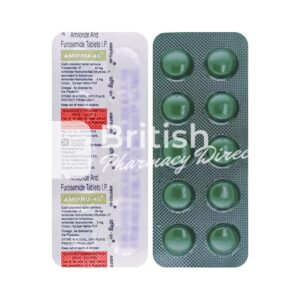
- Administered orally as tablets (most commonly 5 mg; some markets also offer 10 mg); available alone or in combination products with thiazides.
- The effect typically begins within about 2–4 hours after an oral dose, with peak diuretic/natriuretic effect around 3–6 hours.
- The duration of action is approximately 24 hours, so once-daily dosing is usual for many indications.
- Avoid excessive alcohol while taking amiloride — alcohol can worsen dizziness, orthostatic hypotension and dehydration and may exacerbate electrolyte disturbances.
- The most common side effect is hyperkalaemia (high potassium); other frequent effects include nausea, vomiting, diarrhoea, headache, dizziness, muscle cramps and fatigue; severe hyperkalaemia can cause cardiac arrhythmia.
- Would you like to try “amiloride” without a prescription?
Basic Amiloride Information
- INN (International Nonproprietary Name): Amiloride
- Brand Names Available In United Kingdom: Amiloride Hydrochloride — 5 mg tablets; commonly supplied in packs of 28 or 56 tablets by Mylan, Teva and Bristol
- ATC Code: C03DB01
- Forms & Dosages: Tablets are the most common form; typical strength is 5 mg with some markets offering 10 mg; combination products with thiazide diuretics (eg, hydrochlorothiazide/amiloride) are marketed
- Manufacturers In United Kingdom: Mylan, Teva, Bristol Labs
- Registration Status In United Kingdom: Listed with the MHRA as “Amiloride Hydrochloride”; prescription-only medicine
- OTC / Rx Classification: POM (Prescription Only Medicine) — prescription required in the UK
Critical Warnings & Restrictions — Patient Safety First (UK Focus)
Who needs to be extra careful about amiloride?
Patients at high risk include older people, pregnant or breastfeeding women, and people with chronic illnesses such as diabetes or renal disease.
Amiloride is a prescription-only medicine and requires specialist oversight.
Absolute contraindications include anuria, acute or chronic severe renal impairment, Addison’s disease, known hypersensitivity, and baseline hyperkalaemia greater than 5.5 mmol/L.
Elderly people should start low — typically 5 mg — and have serum potassium and renal function monitored more frequently.
Pregnant or breastfeeding patients should avoid amiloride unless the prescriber and obstetrician consider benefits clearly outweigh risks, and informed consent is documented.
People with diabetes or moderate renal impairment need dose adjustments and closer monitoring due to higher hyperkalaemia risk.
High‑Risk Groups (Elderly, Pregnancy, Chronic Illness)
- Elderly: Start at 5 mg; monitor potassium and eGFR more often than usual.
- Pregnancy/Breastfeeding: Avoid unless essential; discuss with obstetric team and document consent.
- Renal Disease/Diabetes: Reduce dose or avoid in moderate-to-severe impairment; monitor electrolytes closely.
Checklist For Clinicians Before Starting Amiloride
- Baseline eGFR and blood urea — record in notes.
- Baseline serum potassium — do not start if >5.5 mmol/L.
- Pregnancy status and breastfeeding review.
- Review concomitant drugs that raise potassium (ACE inhibitors, ARBs, potassium supplements, trimethoprim, NSAIDs, heparin, other potassium‑sparing agents).
- Set a monitoring schedule: baseline, 1–2 weeks after start or dose change, then monthly/3–6 monthly depending on risk.
- Document informed consent for higher-risk or off‑label use.
Interaction With Activities (Driving, Workplace Safety Under UK Law)
Dizziness and headache are reported adverse effects with amiloride.
If a patient experiences dizziness, weakness or blurred vision they must not drive or operate heavy machinery until symptoms resolve.
Advise patients that persistent side effects affecting alertness should be reported to the prescriber and may affect fitness to drive under DVLA guidance.
Q&A — “Can I Drive After Taking It In The UK?”
Q: Can I drive after starting amiloride?
A: If you feel dizzy, weak or have blurred vision, do not drive.
A: Report persistent symptoms to your prescriber and record advice in the patient notes.
A: Check DVLA guidance if side effects affect your fitness to drive.
Usage Basics
INN, Brand Names Available In The UK
INN: Amiloride.
In the UK the licensed listing is “Amiloride Hydrochloride” usually as 5 mg tablets supplied by Mylan, Teva and Bristol.
International brands useful for patients moving countries include Midamor (Australia) and Amiloride Arrow (France), among others.
Legal Classification (POM, P, GSL)
Amiloride is a Prescription Only Medicine (POM) in the United Kingdom and requires a valid prescription from an authorised prescriber.
NHS prescriptions can be issued electronically via the Electronic Prescription Service or as private handwritten prescriptions.
Repeat dispensing must be authorised by the prescriber and documented in the patient record.
Patient-Facing Labelling Points
- Clear dose (eg, 5 mg once daily) and purpose (potassium-sparing diuretic).
- Monitoring requirements: baseline and follow-up blood tests for potassium and renal function.
- Keep out of reach of children.
- Advice on side effects and when to seek urgent help (muscle weakness, palpitations).
Dosing Guide
Standard Regimens (NHS-Style Guidance)
Typical adult starting dose is 5–10 mg once daily depending on indication and comorbidity.
For congestive heart failure dosing ranges from 5–20 mg/day in divided doses with a maximum of 20 mg/day.
Standard UK formulation is 5 mg tablets supplied in packs of 28 or 56.
When used with thiazide diuretics, clinicians often start with 5 mg amiloride combined with the thiazide component, as per local formulary combinations.
Recommended Dose Regimens (Patient Card Format)
| Situation | Starting Dose | Titration Steps | Maximum Dose |
|---|---|---|---|
| Edema / Hypertension | 5–10 mg once daily | Increase by 5 mg after review and labs | 20 mg/day |
| Congestive Heart Failure | 5 mg once daily | Increase to 5 mg twice daily then up to 20 mg/day as needed | 20 mg/day |
| With Thiazide Diuretic | 5 mg with thiazide component | Titrate thiazide per BP/edema response; monitor K+ | 20 mg/day |
Adjustments For Comorbidities
- Renal impairment: Avoid in severe impairment or anuria; use minimal dose and frequent electrolyte checks in mild/moderate disease.
- Elderly: Start at 5 mg and monitor renal function and potassium closely.
- Children: Not routinely recommended under 18 years — seek specialist advice.
Q&A — “What If I Miss A Dose?”
Q: Missed dose?
A: Take the missed dose as soon as you remember unless the next dose is due soon.
A: Do not take a double dose to make up for a missed one.
A: If unsure, contact the pharmacist or prescriber.
A: For suspected overdose with symptoms such as muscle weakness or palpitations, seek urgent medical attention and bring the medication packaging.
Interaction Chart
Food And Drinks (Alcohol, Tea/Coffee, Diet Habits)
No major direct food interactions are recorded, but diets high in potassium and use of potassium salt substitutes increase risk of hyperkalaemia.
Recommend consistent potassium intake and avoid sudden large increases in high‑potassium foods without clinical advice.
Alcohol may worsen dizziness and dehydration; counsel moderation.
Common Drug Conflicts (MHRA Yellow Card Context)
Key drug interactors that raise hyperkalaemia risk include ACE inhibitors, ARBs, potassium supplements, potassium-sparing diuretics, NSAIDs, trimethoprim and heparin.
Concomitant use with lithium requires monitoring due to potential for altered lithium handling.
| Drug Class | Interaction Type | Risk Level | Monitoring Required |
|---|---|---|---|
| ACE Inhibitors / ARBs | Synergistic potassium-raising | High | Baseline and frequent K+ and eGFR checks |
| Potassium Supplements / Salt Substitutes | Direct potassium increase | High | Avoid or monitor closely |
| NSAIDs | Reduce renal perfusion, raise K+ | Moderate | Check renal function and K+ more often |
| Trimethoprim | Blocks renal K+ excretion | High | Monitor K+ during co-prescribing |
| Heparin | Can increase serum K+ | Moderate | Monitor electrolytes |
Report suspected adverse drug reactions via the MHRA Yellow Card scheme.
How to submit a Yellow Card: visit the MHRA website, complete the online form or use the Yellow Card app to report suspected reactions with details of concomitant medicines and lab results where possible.
User Reports & Trends
What patients often ask or report online about amiloride?
- Frequent concern about routine blood tests for potassium.
- Reports of tiredness or dizziness shortly after starting treatment.
- Confusion about whether it affects driving.
- Positive feedback where it prevents thiazide-induced hypokalaemia and helps oedema.
- Queries about interactions with ACE inhibitors and potassium supplements.
- Misinformation: some forums incorrectly state that amiloride removes potassium — in reality it spares potassium and can raise levels.
Clinicians should triage patient queries, provide clear monitoring leaflets and coordinate counselling with community pharmacy to ensure consistent messages.
Suggested small bar chart: x-axis = months, y-axis = query volume; display peaks when local formulary changes or media reports occur.
Access & Purchase Options (UK)
High‑Street Pharmacies (Boots, LloydsPharmacy, Superdrug)
Amiloride hydrochloride 5 mg tablets are dispensed via community pharmacies including major chains and independents.
Patients can present an NHS or private prescription for dispensing.
Pharmacists may request recent blood results for potassium and renal function before supplying repeat therapy.
Online Pharmacies And NHS E‑Prescriptions
The NHS Electronic Prescription Service enables prescriptions to be sent to a nominated pharmacy for collection or delivery.
MHRA-registered online pharmacies can provide repeat dispensing with verification checks.
Caution patients to avoid unregulated suppliers or imports without MHRA approval.
In our online pharmacy, amiloride is available without a prescription, with discreet delivery to United Kingdom in 5-14 days.
| Access Route | Pros | Cons | Typical Turnaround |
|---|---|---|---|
| NHS GP Prescription | Integrated into records; cost covered if exempt | Requires GP appointment | Same day to 3 days |
| NHS Electronic Prescription Service | Direct to nominated pharmacy; convenient | Depends on pharmacy stock | 1–3 days |
| Private Prescription | Faster access if GP unavailable | Private cost applies | Same day to 2 days |
| MHRA-registered Online Pharmacy | Home delivery and repeat services | Must verify prescription and ID | 2–7 days |
- Checklist For Safe Online Purchase: Verify MHRA registration, confirm prescription verification process, ensure a patient information leaflet is provided, check delivery times and discreet packaging.
Mechanism & Pharmacology
Simplified Explanation
Amiloride is a potassium‑sparing diuretic that inhibits epithelial sodium channels (ENaC) in the distal nephron.
By blocking ENaC it decreases sodium reabsorption and reduces urinary potassium excretion, which can raise serum potassium.
ATC classification is C03DB01.
Clinical Pharmacology Terms
- ENaC: Epithelial sodium channel targeted by amiloride.
- Hyperkalaemia: Elevated serum potassium that can cause muscle weakness and cardiac arrhythmias.
- ATC Code: C03DB01 — potassium-sparing diuretics, plain.
Onset and duration are consistent with an orally active small-molecule diuretic; accumulation can occur with renal impairment, increasing hyperkalaemia risk.
Indications & Off‑Label Uses
MHRA‑Approved Uses
Licensed uses in UK practice include use as a potassium‑sparing diuretic adjunct for oedema and hypertension, commonly combined with thiazide diuretics.
Amiloride is nationally listed with MHRA and is prescription-only.
Off‑Label Practices In NHS And Private Care
Off‑label uses include selective low-dose use in heart failure to limit hypokalaemia when loop or thiazide diuretics are required.
Off‑label prescribing should be documented with informed consent and include enhanced monitoring such as baseline and early follow-up potassium and eGFR checks.
- Approved Indications: Adjunct potassium-sparing diuretic for oedema and hypertension; combination with thiazides.
- Common Off‑Label Uses: Low-dose use in heart failure to avoid hypokalaemia; specialist-directed electrolyte-sparing strategies.
Key Clinical Findings (UK & EU Context)
Recent literature emphasises safety, particularly hyperkalaemia risk, rather than superiority for blood pressure control.
Trials and observational studies show increased hyperkalaemia admissions when amiloride is combined with ACE inhibitors, ARBs or NSAIDs, especially in elderly and renal impaired cohorts.
NICE and MHRA guidance focus on monitoring rather than routine substitution.
| Evidence Type | Key Finding | Strength |
|---|---|---|
| Randomised Controlled Trials | Mixed BP outcomes; potassium-sparing properties confirmed | Moderate |
| Observational Studies | Higher hyperkalaemia events with combined RAS blockade or NSAIDs | Moderate |
Practical takeaway: Use low doses with active monitoring and follow local formularies and safety protocols.
Alternatives Matrix
NHS Prescribing Alternatives (Comparison Table)
| Drug | Mechanism | Potassium Effect | Typical Indications | Monitoring Intensity |
|---|---|---|---|---|
| Triamterene | ENaC blocker | Spares potassium | Oedema, adjunct to thiazides | Moderate |
| Spironolactone | Aldosterone antagonist | Raises potassium | Resistant hypertension, heart failure, ascites | High |
| Eplerenone | Aldosterone antagonist | Raises potassium | Heart failure post-MI, hypertension | High |
| Thiazides / Loops | Inhibit Na+ transport at different nephron sites | Can lower potassium (thiazide) or variable (loop) | Hypertension, oedema | Variable |
Pros And Cons Checklist
- If hyperkalaemia risk is unacceptable, prefer thiazide alone or loop diuretic with potassium monitoring.
- For resistant oedema or ascites, consider spironolactone though it carries similar potassium risks and requires monitoring.
- Triamterene can be an alternative where amiloride is unsuitable, but it has its own safety profile and monitoring needs.
Common Questions (Patient FAQs From UK Consultations)
- Will amiloride make my potassium high? Yes; baseline and periodic serum potassium measurements are mandatory; report muscle weakness or palpitations immediately.
- How often will I need blood tests? Baseline, then within 1–2 weeks after starting or changing dose, then frequency depends on comorbidities — typically monthly until stable, then every 3–6 months.
- Can I take other medicines? Always check with the prescriber or pharmacist; avoid potassium supplements and inform clinicians about ACE inhibitors, ARBs, NSAIDs and trimethoprim.
- Can I travel with it? Yes — keep original packaging and a copy of the prescription or repeat slip; store at recommended temperatures and carry contact details for the prescriber.
Downloadable one‑page patient leaflet template suggested: includes dosing, monitoring schedule, warning signs, and emergency contacts for GP/111.
NHS Cost & Access Comparison Table
| Source / Pharmacy | Typical Private Price Range | NHS Prescription Charge | Pack Sizes |
|---|---|---|---|
| Boots | Private prices vary by supplier | Insert current NHS charge at publication | 5 mg tablets: 28 or 56 |
| LloydsPharmacy | Private prices vary by supplier | Insert current NHS charge at publication | 5 mg tablets: 28 or 56 |
| Independent Pharmacy | Often competitive; generic substitution | Insert current NHS charge at publication | 5 mg tablets: 28 or 56 |
| Online Pharmacy | Varies; check MHRA registration | Insert current NHS charge at publication | 5 mg tablets: 28 or 56 |
| Region | Prescription Charge Policy |
|---|---|
| England | Standard prescription charge applies unless exempt; check current rate at publication |
| Scotland | Prescriptions are free for residents |
| Wales | Prescriptions are free for residents |
| Northern Ireland | Different arrangements; prescriptions may be free or subsidised |
- Cost‑saving tips: use generic substitution, check local formularies, ask about pharmacy discount schemes and consider repeat dispensing to reduce visits.
Registration & Regulation
MHRA Approval Process
Amiloride is approved and listed by the MHRA as “Amiloride Hydrochloride” and is prescription-only.
It is not centrally authorised through EMA and is maintained in national marketing authorisations across EU member states.
Publications should link to the MHRA product information and SPC for up-to-date regulatory details.
NHS Prescribing Framework
Prescribing should follow local primary care formularies and NICE guidance where applicable.
Use repeat prescription templates and monitoring reminders within GP IT systems to flag high-potassium risks.
Report suspected adverse events through the MHRA Yellow Card scheme.
Storage & Handling (UK Household & Pharmacy)
UK Household Storage (Cold/Damp Climate)
Store at 20–25°C and protect from moisture and light.
Avoid storing in bathrooms where humidity fluctuates and keep in original blister packs or bottles.
Keep out of reach of children and pets; avoid extremes of temperature during travel.
Guidance From NHS And Pharmacists
Pharmacists should counsel patients on storage, expiry dates and safe disposal via pharmacy take-back schemes.
Do not flush unused tablets; return them to pharmacy for safe disposal.
Community pharmacy stock should follow manufacturer storage guidance; cold chain is not required but avoid heat.
- Patient Checklist For Home Storage: store at room temperature, keep in original packaging, check expiry, return unused medicine to pharmacy.
Guidelines For Proper Use — Counselling & Safety
UK Pharmacist Counselling Style
Explain why the medicine is prescribed in plain language and how and when to take it.
Highlight side effects to watch for, particularly signs of hyperkalaemia such as muscle weakness or palpitations.
Provide the blood test schedule and review potential interactions, including ACE inhibitors, ARBs, NSAIDs and potassium supplements.
Use the teach-back method by asking the patient to repeat instructions to confirm understanding.
Provide a printed medication card listing dose and monitoring dates.
NHS Patient Safety Advice
Document baseline results in the primary care record and set safety-netting instructions for severe symptoms (severe weakness, palpitations).
Advise escalation pathways including GP, NHS 111 or emergency department if severe signs occur.
Encourage use of NHS apps or repeat prescription services to help patients keep monitoring appointments.
- Downloadable tools suggested: monitoring checklist, pharmacist scripting bullets, and a patient medication card template.
Delivery Across United Kingdom
| City | Region | Delivery Time |
|---|---|---|
| London | Greater London | 5-7 days |
| Birmingham | West Midlands | 5-7 days |
| Manchester | Greater Manchester | 5-7 days |
| Glasgow | Scotland | 5-7 days |
| Edinburgh | Scotland | 5-7 days |
| Bristol | South West | 5-7 days |
| Leeds | West Yorkshire | 5-7 days |
| Cardiff | Wales | 5-7 days |
| Belfast | Northern Ireland | 5-7 days |
| Newcastle Upon Tyne | North East | 5-9 days |
| Southampton | South East | 5-9 days |
| Nottingham | East Midlands | 5-9 days |
| Norwich | East of England | 5-9 days |
| Exeter | South West | 5-9 days |
Final Notes And Practical Tips
Amiloride is a useful potassium‑sparing diuretic when used carefully and monitored appropriately.
The primary safety concern is hyperkalaemia, especially with renal impairment, diabetes, older age or co-prescribing of potassium‑raising agents.
Keep monitoring simple: baseline blood tests, check at 1–2 weeks after start or dose change, then tailor frequency to risk.
When in doubt, consult the local formulary or specialist and document rationale and monitoring in the clinical record.
For patients, the key messages are clear dosing, when to expect blood tests, signs of high potassium and when to get urgent care.