Co-amilofruse
In brief
- In our pharmacy, you can buy co-amilofruse without a prescription, with delivery in 5–14 days throughout the United Kingdom and discreet packaging; note that co-amilofruse is classified as a prescription-only medicine in many countries, so availability without a prescription depends on local pharmacy policy and regulations.
- Co-amilofruse is used to treat fluid overload such as peripheral oedema and heart failure; it combines furosemide (a loop diuretic that inhibits the Na+-K+-2Cl− transporter in the thick ascending limb of Henle, causing natriuresis and diuresis) with amiloride (a potassium-sparing diuretic that blocks epithelial sodium channels in the distal nephron to reduce potassium loss).
- The usual dose is one tablet (40 mg furosemide + 5 mg amiloride) in the morning; this may be increased to one tablet twice daily if required, with a maximum of four tablets per day (maximum amiloride 20 mg/day) under medical supervision.
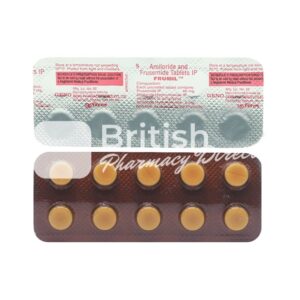
- The form of administration is an oral tablet (scored for splitting; orange and typically marked on the tablet for brand variants).
- The effect usually begins within 30–60 minutes after an oral dose.
- The diuretic effect typically lasts about 6–8 hours; the potassium-sparing action may persist longer.
- Avoid excessive alcohol while taking co-amilofruse, as alcohol can increase the risk of dizziness, fainting and dehydration and may worsen low blood pressure.
- The most common side effect is increased urination; other frequent effects include dizziness (especially on standing), electrolyte disturbances (eg low sodium or potassium), mild dehydration and gastrointestinal upset.
- Would you like to try co-amilofruse without a prescription?
Critical Warnings & Restrictions
Basic Co-amilofruse Information
- INN (International Nonproprietary Name): Furosemide (frusemide) and Amiloride Hydrochloride.
- Brand Names Available In United Kingdom: Frumil 40mg/5mg is marketed in the UK; other generic variants may be available — always check packaging for both active ingredients.
- ATC Code: C03EB01.
- Forms & Dosages: Tablet — 40 mg furosemide + 5 mg amiloride; oral, scored for splitting.
- Manufacturers In United Kingdom: Sanofi is listed as the primary originator; distribution is via national subsidiaries or licensed local partners.
- Registration Status In United Kingdom: Licensed as a Prescription Only Medicine (POM) with PIL and SPC available online.
- OTC / Rx Classification: Prescription only medicine (POM) in the UK.
High-Risk Groups — Elderly, Pregnancy, Chronic Illness
If you are elderly, pregnant, breastfeeding or have a long-term medical condition you need extra safeguards before starting co-amilofruse.
- Immediate safety priorities: stop or withhold co-amilofruse and seek urgent medical review if you develop severe dehydration, marked dizziness or fainting, signs of marked electrolyte disturbance or anuria.
- Monitor serum electrolytes (potassium, sodium), renal function and blood pressure at baseline, after dose changes and periodically thereafter.
- Pregnancy and breastfeeding: avoid unless a specialist has advised it after considering risks and benefits.
Absolute Contraindications (Checklist)
- Anuria or severe renal failure.
- Hyperkalaemia.
- Addison’s disease.
- Known allergy to furosemide, amiloride, sulfonamides or related compounds.
- Pregnancy and breastfeeding unless specialist advises.
Monitoring
- Baseline and periodic blood tests: serum potassium, sodium and renal function (creatinine/eGFR).
- Blood pressure checks at baseline and after dose changes.
- Weight and fluid-balance monitoring.
- Medication review for interacting drugs, especially ACE inhibitors/ARBs, NSAIDs and lithium.
Dispensing Note (Checklist)
- POM status: supply only with a valid prescription as per MHRA classification.
- Counsel patients on increased urination and the best timing for doses (typically morning).
- Advise orthostatic precautions: rise slowly from lying/sitting positions to reduce fainting risk.
Q&A — “Can I Drive After Taking It In The UK?”
- Short answer: usually yes, but only if you feel well and free of dizziness or lightheadedness.
- If you experience dizziness, blurred vision, fainting or orthostatic hypotension you must not drive or operate machinery.
- Report adverse effects via the Yellow Card system and follow DVLA guidance if symptoms persist.
Usage Basics
INN, Brand Names Available In The UK
- Active ingredients: furosemide (also written frusemide) and amiloride hydrochloride.
- Common UK brand: Frumil 40mg/5mg; generics labelled as furosemide + amiloride are also seen.
- Tablet appearance: orange, scored, marked “FRUMIL” and supplied in blister packs or bottles — always check packaging for both actives.
- INN
- The international nonproprietary names for the active substances: furosemide and amiloride hydrochloride.
- Brand
- The trade name used by the manufacturer, commonly Frumil 40mg/5mg in the UK.
Legal Classification
- Classification: Prescription-only medicine (POM) regulated by the MHRA in the United Kingdom.
- Patient information leaflets (PIL) and the summary of product characteristics (SPC) are available online for prescribers and pharmacists.
Dosing Guide
Standard Regimens — NHS-Style Advice
- Typical adult starting dose: 1 tablet (40 mg furosemide / 5 mg amiloride) once daily in the morning.
- Adjustment: may be increased to 2 tablets per day, taken AM and at noon, if required under clinical supervision.
- Maximum amiloride dose: 20 mg per day (equivalent to 4 tablets); follow specialist direction for higher needs.
Adjustments For Comorbidities
- Elderly: start at the lowest effective dose and titrate cautiously due to increased sensitivity and comorbidities.
- Renal impairment: contraindicated in severe renal failure and anuria; in mild–moderate impairment use with caution and close electrolyte monitoring.
- Liver disease: use cautiously because of encephalopathy risk; adjust dose under specialist advice.
| Suggested Dosing | Split/Tablet Guidance | Monitoring Schedule |
|---|---|---|
| Start 1 tablet once daily (AM) | Tablet scored — may be halved if clinician advises lower dose | Baseline blood tests then re-check within 1–2 weeks after initiation or dose change |
| Increase to 1 tablet AM and 1 tablet noon if needed | Avoid evening doses to reduce nocturia | Regular checks every 1–3 months depending on renal function and comedications |
Q&A — “What If I Miss A Dose?”
- Take the missed dose as soon as you remember unless it is close to the next dose.
- Do not double up doses to make up for a missed tablet.
- If unsure, contact your GP or pharmacist for advice.
Interaction Chart
Food And Drinks
- Alcohol may increase dizziness and worsen blood-pressure falls; advise limiting alcohol while taking co-amilofruse.
- There are no strong dietary interactions, but maintain consistent potassium intake and seek advice before using salt substitutes.
Common Drug Conflicts
| Interacting Drug/Class | Risk | Action/Monitoring |
|---|---|---|
| ACE Inhibitors / ARBs | Risk of hyperkalaemia when combined with potassium-sparing diuretics | Check potassium and renal function soon after co-prescribing |
| Potassium Supplements / Other K-Sparing Diuretics | Hyperkalaemia risk | Avoid unless closely monitored; check serum potassium |
| NSAIDs | Reduced diuretic effect and increased renal risk | Review need for NSAID; monitor renal function |
| Lithium | Increased lithium toxicity risk | Frequent lithium level checks and liaison with prescriber |
| Aminoglycosides | Increased ototoxicity risk with loop diuretics | Avoid combination where possible; monitor auditory symptoms |
| Digoxin | Arrhythmia risk if electrolytes change (especially potassium) | Monitor ECG and potassium levels |
Monitoring Prompts (Checklist)
- Baseline blood tests for electrolytes and renal function before starting interacting medicines.
- Early re-checks after starting or changing doses of interacting drugs.
- Report suspected interactions or adverse reactions via the Yellow Card scheme.
User Reports & Trends
Patients commonly ask what to expect within the first week of treatment.
UK patient forums and NHS community pages commonly report increased urination and reduction in ankle swelling as primary benefits.
Episodes of dizziness on standing and concerns about blood tests or ECGs are frequently mentioned.
- Many patients appreciate pharmacist counselling on timing of dose to avoid nocturia.
- Frequent monitoring is a source of concern but reassures many once results are stable.
Practical Takeaways
- Expect diuresis to begin within hours; schedule dosing in the morning to reduce night-time toilet trips.
- Weigh yourself regularly and keep a symptom diary of swelling, dizziness and urination patterns.
- Report new rash, muscle weakness or palpitations to a clinician straight away.
| Reported Adverse Event | Frequency (Qualitative) | Common Coping Strategies |
|---|---|---|
| Increased Urination | Common | Take in morning; limit evening fluids |
| Orthostatic Dizziness | Occasional | Rise slowly; sit for a moment before standing |
| Frequent Blood Tests | Common Concern | Keep appointments; ask pharmacist for explanation of results |
Access & Purchase Options
High-Street Chains
- Major UK suppliers such as Boots, LloydsPharmacy and Superdrug dispense co-amilofruse with a valid prescription.
- Product availability varies and generics exist — always confirm both active ingredients on the label.
Online Pharmacies & NHS E-Prescriptions
- NHS electronic prescriptions can be sent to a chosen pharmacy for collection or dispensing.
- When using online pharmacies, check GPhC registration and secure prescription validation before ordering.
Patient Action Checklist
- Confirm co-amilofruse is a POM and ensure you have a valid prescription or clinician recommendation.
- Check packaging for Frumil or generic furosemide + amiloride labelling.
- Request pharmacist counselling on monitoring requirements and side effects when you collect.
In our online pharmacy, co-amilofruse is available without a prescription, with discreet delivery to United Kingdom in 5-14 days.
Mechanism & Pharmacology
Simplified Explanation
Furosemide is a loop diuretic that increases excretion of sodium and water through action in the thick ascending limb of the loop of Henle.
Amiloride is a potassium-sparing diuretic that acts on the collecting duct to reduce potassium loss.
The combination aims to relieve fluid overload while reducing the risk of hypokalaemia compared with loop diuretic alone.
Clinical Terms
- ATC Classification
- C03EB01 — combination of potassium-sparing and other diuretics.
- Loop Diuretic
- A medication that acts on the loop of Henle to promote water and sodium excretion.
- Potassium-Sparing
- Drugs that reduce urinary potassium loss at the distal nephron.
- SPC vs PIL
- The summary of product characteristics (SPC) is for professionals; the patient information leaflet (PIL) is written for patients.
| Nephron Site | Primary Pharmacodynamic Effect |
|---|---|
| Thick Ascending Limb (Loop of Henle) | Furosemide: increased Na+/Cl-/water excretion |
| Collecting Duct | Amiloride: reduced K+ secretion; potassium conservation |
Indications & Off-Label Uses
MHRA-Approved Uses
- Licensed for management of oedema and fluid retention due to heart failure and other causes where a loop diuretic with potassium conservation is indicated.
- Not licensed as a first-line monotherapy for hypertension.
Off-Label Practices In NHS And Private Care
- Occasionally used off-label in specialist settings for resistant oedema or when hypokalaemia risk must be minimised.
- Off-label use should be documented, patient consented and monitoring arranged.
Prescriber Justification Checklist
- Document clinical indication and reasons for choosing the combination over alternatives.
- Provide patient information about monitoring, potential risks and follow-up plans.
- Arrange baseline and follow-up blood tests when prescribing off-label.
Key Clinical Findings
Combination therapy with a loop diuretic and a potassium-sparing agent is commonly used to manage oedema while moderating potassium losses.
Evidence Summary
Observational studies and pragmatic audits suggest the combination reduces oedema effectively compared with some single-agent regimens.
Randomised head-to-head trials specifically comparing branded co-amilofruse products are limited, and prescribers should consult current guidelines and SPCs when available.
Safety Data Highlights
- Compared with furosemide alone, the combination reduces the incidence of symptomatic hypokalaemia in many reports.
- Ongoing monitoring for renal function and electrolytes remains essential due to risks associated with loop diuretics and potassium-sparing agents.
| Study Type | Typical Endpoints | Strength Of Evidence |
|---|---|---|
| Randomised Controlled Trial (limited) | Weight change, diuresis, electrolyte events | Moderate where available |
| Cohort / Audit | Oedema reduction, monitoring frequency, adverse events | Supportive but lower quality than RCTs |
| Pragmatic Observational Studies | Patient-reported outcomes, safety in routine care | Useful for real-world context |
Alternatives Matrix
NHS Prescribing Alternatives
| Drug | Mechanism | Typical Use | Key Monitoring | Pros | Cons |
|---|---|---|---|---|---|
| Furosemide Alone | Loop diuretic | Rapid diuresis for oedema | Electrolytes, renal function | Strong diuretic effect | Risk of hypokalaemia |
| Moduretic (Amiloride + HCTZ) | Potassium-sparing + thiazide | Oedema, hypertension in some cases | Electrolytes, BP | Conserves potassium vs thiazide alone | Different sodium handling vs loop diuretics |
| Spironolactone Combos | Aldosterone antagonist ± thiazide | Heart failure, resistant oedema | Electrolytes, renal function | Useful where aldosterone plays a role | Hyperkalaemia risk, endocrine side effects |
Pros And Cons Checklist For Alternatives
- Consider efficacy for oedema versus potassium effects (hypo- versus hyperkalaemia).
- Account for renal monitoring needs and blood-pressure effects.
- Evaluate cost and NHS availability or local formulary preferences.
Common Questions (Patient FAQs)
- Will it make me pass a lot of urine? — Yes; most patients see increased urine output soon after starting; take in the morning to limit nocturia.
- How often will I need blood tests? — Baseline tests and early re-check after initiation or dose change; frequency depends on renal function and co-medications.
- Can I take potassium supplements or salt substitutes? — Not without clinician advice because amiloride can raise potassium levels.
- How do I report side effects? — Report via the MHRA Yellow Card scheme or discuss with your GP or pharmacist.
NHS Cost & Access Comparison Table
| Source / Pharmacy | Typical Price Range | NHS Prescription Charge | Exemption Status |
|---|---|---|---|
| High-Street Pharmacy (Boots / Lloyds) | Varies by supplier and pack size — not specified | Applicable to non-exempt patients in England — check current NHS charge | Exemptions apply (see NHS guidance) |
| Online Pharmacy | Varies; confirm pack and prescription validation — not specified | Prescription charge applies where relevant | Exempt groups no charge |
| Region | Prescription Cost / Scheme |
|---|---|
| England | Standard NHS prescription charge applies for non-exempt patients — verify current fee |
| Scotland | Prescription exemption schemes in place — patients usually do not pay per-item |
| Wales | Prescription charges may not apply for many patients under local arrangements |
| Northern Ireland | Local prescription schemes apply; check Health Service guidance |
Registration & Regulation
MHRA Approval Process
- Co-amilofruse is licensed as a Prescription Only Medicine (POM) by the MHRA in the UK.
- The SPC and PIL should be consulted by prescribers and pharmacists for up-to-date product details.
NHS Prescribing Framework
- Follow local formulary guidance when prescribing; pharmacists should confirm indication and monitoring obligations.
- Report suspected adverse drug reactions (ADRs) via the Yellow Card scheme and keep accurate records for audit.
Licence, SPC consultation and reporting routes:
- Licence issued by MHRA.
- Consult SPC and PIL for product details.
- Report ADRs via Yellow Card and document in patient record.
Storage & Handling
UK Household Storage — Damp/Cold Climate
- Store below 25°C and protect from moisture and direct light.
- Keep tablets in their original blister pack or bottle and out of reach of children.
- Do not store in the bathroom or on a windowsill where damp or heat may affect stability.
Pharmacy Transport And Disposal
- Standard ambient transport is acceptable; follow distributor handling rules.
- Return unused medicines to a pharmacy for safe disposal per NHS guidance.
Practical Household Checklist
- Check expiry dates before use.
- Keep with dosing reminders or a calendar if multiple medicines are taken.
- Store away from damp and direct sunlight.
Guidelines For Proper Use
UK Pharmacist Counselling Style
- Confirm the indication and why co-amilofruse was chosen for the patient.
- Explain expected diuretic effect and recommend morning dosing to reduce nocturia.
- Discuss orthostatic precautions and warn about signs of electrolyte disturbance such as muscle weakness or palpitations.
- Ask about pregnancy and breastfeeding status before supply.
- Advise not to stop the medicine suddenly without review.
NHS Patient Safety Advice
- Encourage patients to carry a list of current medicines and to ensure GP follow-up for blood tests.
- Document weight changes, urine output and blood test results in primary care records for ongoing review.
- Report side effects via the Yellow Card and seek urgent care for severe dehydration or fainting.
Suggested Patient Handout Items
- Dosing calendar to tick each day when the tablet is taken.
- Simple symptom diary template for weight, ankle swelling and dizzy episodes.
- Emergency contact points: GP surgery, out-of-hours service, and pharmacy phone number.
Delivery Across United Kingdom
| City | Region | Delivery time |
|---|---|---|
| London | England | 5-7 days |
| Birmingham | England | 5-7 days |
| Manchester | England | 5-7 days |
| Glasgow | Scotland | 5-7 days |
| Liverpool | England | 5-7 days |
| Leeds | England | 5-7 days |
| Bristol | England | 5-7 days |
| Edinburgh | Scotland | 5-7 days |
| Cardiff | Wales | 5-7 days |
| Belfast | Northern Ireland | 5-7 days |
| Sheffield | England | 5-9 days |
| Newcastle | England | 5-9 days |
| Nottingham | England | 5-9 days |