Bimatoprost
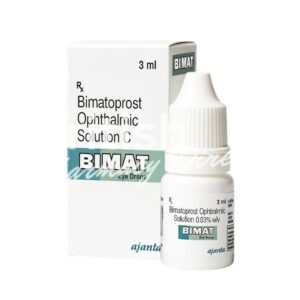
In brief
- In our pharmacy, bimatoprost can be purchased without a prescription, with delivery available across the United Kingdom in discreet packaging.
- Bimatoprost is used to lower raised intraocular pressure in open-angle glaucoma and ocular hypertension. It is a prostaglandin analogue/prostamide that increases the outflow of aqueous humour from the eye.
- The usual dosage is 1 drop in the affected eye(s) once daily, typically in the evening or at night. Do not use more often than prescribed, as that may reduce its effect.
- The form of administration is ophthalmic drops/solution applied topically to the eye.
- The effect usually begins within a few hours, with full pressure-lowering effect developing over about 4 to 8 hours after dosing.
- The duration of action is about 24 hours, which is why it is generally used once daily.
- Avoid or limit alcohol, as it does not directly interact with bimatoprost, but excessive alcohol may worsen dehydration and adherence to treatment. If you have any concerns, speak to a clinician or pharmacist.
- The most common side effects are red eyes (ocular hyperaemia), eyelash growth, eye itching, dryness, and a feeling of irritation or a foreign body in the eye.
- Would you like to try bimatoprost without a prescription?
Basic bimatoprost information
- INN (international nonproprietary name): Bimatoprost
- Brand names available in the United Kingdom: Lumigan; generic bimatoprost
- ATC code: S01EE03
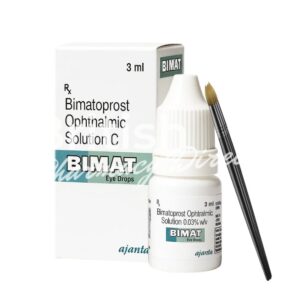
- Forms and dosages: Ophthalmic solution/drops 0.03% (0.3 mg/mL), topical eye use
- Manufacturers in the United Kingdom: AbbVie/Allergan and generic manufacturers
- Registration status in the United Kingdom: Prescription-only medicine (POM)
- OTC / Rx classification: Prescription-only medicine (POM)
Critical warnings and patient protection
Prescription-only status and why UK patients should be cautious
Bimatoprost is a prescription-only eye medicine, so it should be used under clinician supervision rather than bought and used casually for a red, tired, or irritated eye.
In UK practice, it is usually prescribed for glaucoma or ocular hypertension, then supplied through NHS or private prescription routes with pharmacist counselling and MHRA-regulated supply chains.
Do not use if:
- You are allergic to bimatoprost or any excipient.
- You have an active eye infection, such as conjunctivitis.
- You have severe ocular surface disease, including a decompensated cornea.
Extra caution is needed with a history of uveitis or iritis, aphakia or pseudophakia with a ruptured posterior capsule, asthma or bronchospasm, and during pregnancy or breastfeeding.
Patient safety red flags
Seek urgent help if you notice eye pain, sudden vision changes, marked redness, swelling, signs of infection, or any allergic reaction.
- Eye pain that is getting worse.
- Sudden blurred or reduced vision.
- Marked redness or swelling of the eye or eyelids.
- Discharge, crusting, or other signs of infection.
- Rash, breathing difficulty, or other allergy symptoms.
Long-term use can also lead to iris pigmentation changes and darkening of the eyelid skin, and some colour changes may be permanent.
What bimatoprost is and how it is classified
INN, ATC code and medicine type
Bimatoprost is the International Nonproprietary Name, or INN, for this medicine.
Its ATC code is S01EE03, placing it in ophthalmological prostaglandin analogues and prostamides used in eye care.
- Medicine type
- Prescription eye medicine for lowering intraocular pressure.
- Key UK product forms
- Lumigan 0.03% and generic bimatoprost 0.03%.
Cosmetic lash or eyebrow use is an unapproved use and should not be presented as an NHS indication.
Approved uses in UK practice
MHRA-aligned therapeutic use
The main use is lowering intraocular pressure in open-angle glaucoma and ocular hypertension.
That matters because raised pressure can damage the optic nerve and affect sight over time.
Treatment is usually long-term and reviewed periodically, rather like a patient who comes back every few months for eye pressure checks and a quick chat about how the drops are going.
When it is not appropriate
| Approved use | Not intended use |
|---|---|
| Lowering intraocular pressure in glaucoma or ocular hypertension | Self-treatment of red, tired, or irritated eyes |
| Specialist eye-care prescribing | Lash enhancement as an NHS indication |
Lumigan eye drops are a medicine for pressure control, not a general eye-soother.
How bimatoprost works in the eye
Simple mechanism
It helps fluid drain out of the eye more easily, which lowers the pressure inside the eye.
- Eye pressure builds when fluid does not drain well enough.
- Bimatoprost improves outflow of that fluid.
- Lower pressure helps protect the optic nerve.
- It is commonly used once daily at night because that fits its dosing schedule well.
Clinical explanation
As a prostamide-related medicine, it behaves like a prostaglandin analogue in eye care.
That is why bimatoprost eye drops are usually prescribed once daily rather than several times a day.
Standard dosage, timing and missed doses
Usual regimen
The standard dose is one drop in the affected eye or eyes once daily, typically at night.
No routine dose adjustment is usually needed in older adults.
For many patients, the simplest routine is “one drop after the evening wash-up”, because missing doses happens most often when the day gets busy.
Missed dose and overdose
If a dose is missed, use it when remembered unless it is nearly time for the next dose.
Do not double dose.
If too much is used, rinse with warm water.
If the medicine is swallowed, supportive care is usually needed rather than panic, as systemic toxicity is rare.
Q&A — What if I miss a dose?
Take it when you remember, unless the next dose is close, then skip the missed one and carry on as normal.
| Step | Advice |
|---|---|
| Missed one dose | Use it when remembered |
| Near the next dose | Skip and continue the usual schedule |
| Do not | Double dose |
How to use bimatoprost eye drops correctly
Step-by-step application
- Wash your hands first.
- Check the bottle and avoid touching the dropper tip.
- Instil one drop into the affected eye.
- Close the eye gently afterwards.
- If contact lenses are being used, remove them if advised and wait before reinserting.
Infection prevention
Contamination is a real risk with eye drops, so one bottle should be treated as one user only.
Discard the bottle four weeks after opening, even if some solution remains.
That simple habit reduces the chance of eye infection and keeps the treatment safer at home.
Practical UK pharmacist counselling points
Store the bottle safely, keep it away from children, and do not share it with anyone else.
Patients often ask for a quick refresher at the pharmacy counter, especially when they collect a repeat prescription for Lumigan 0.03% or a generic bimatoprost 0.03% bottle.
Side effects and what patients should watch for
Common side effects
The most common effects are eye redness, itchiness, dry eye sensation, foreign body sensation, eyelash growth, and darkening of the eyelid skin.
These are the effects many people notice first, especially during the first few weeks.
Less common but important adverse effects
| Common side effects | Less common or important side effects |
|---|---|
| Ocular hyperaemia | Iris pigmentation changes |
| Itching | Blurred vision |
| Dry eye sensation | Eye discomfort |
| Eyelash growth | Rare macular oedema |
Iris pigmentation changes can be permanent, particularly in mixed-colour irises, so patients should be told about that upfront rather than being surprised later.
Q&A — Are eyelash changes normal?
Yes, eyelash growth is a known effect of bimatoprost, but any unexpected eye symptoms should still be reported.
Who needs extra caution
High-risk groups
- Children: use is not recommended under 18 because safety and efficacy are not established.
- Pregnancy: data are limited, so a risk–benefit assessment is needed.
- Breastfeeding: limited data mean specialist advice is sensible.
- Asthma or bronchospasm history: extra caution is needed.
- Eye inflammation history: uveitis, iritis, or other inflammatory eye disease needs careful review.
- Liver or kidney impairment: caution is advised because systemic absorption is rare but possible.
For a patient with asthma and glaucoma, the prescriber may compare options carefully rather than assuming one drop suits everyone.
Drug interactions, eye care combinations and lifestyle factors
Common interaction considerations
Interactions are mainly relevant when other eye drops are being used as well.
If more than one ophthalmic medicine is prescribed, spacing the drops apart as advised by the prescriber or pharmacist usually helps them work properly.
| Interaction type | Advice |
|---|---|
| Multiple eye drops | Space them apart as advised |
| Food and drink | No major interactions expected |
| Daily routines | Plan around driving, screen work, and bedtime dosing |
There are no major food interactions, but practical habits matter, especially if blurred vision happens after the dose.
Legal status and availability in the UK
In our online pharmacy, bimatoprost is available without a prescription, with discreet delivery to the United Kingdom in 9–21 days.
Brand names, packaging and generics
Main brand and generic naming
Lumigan 0.03% is the best-known brand, and generic versions are also available.
Packaging can vary by manufacturer.
What patients may see on packs
| Brand or form | Packaging | Typical note |
|---|---|---|
| Lumigan | 3 mL bottle, dropper type, carton | Best-known brand |
| Generic bimatoprost | 3 mL or 5 mL plastic bottle | Packaging may vary |
Patients should always check the medicine strength, form and instructions on the pack.
Storage, transport and household safety
Storage rules
Store below 25°C, do not freeze, and keep away from heat and light.
Unopened shelf life is typically up to two years, and the bottle should be discarded four weeks after opening.
Practical home guidance
- Keep out of children’s reach.
- Do not leave it in a car.
- Keep it away from radiators and sunny windowsills.
- Avoid damp bathrooms if possible.
Alternatives and comparative options used in UK practice
Common alternatives
Clinicians may compare bimatoprost with latanoprost, travoprost, tafluprost and timolol when choosing the right glaucoma treatment.
Combination therapy such as bimatoprost + timolol is also widely available, especially when a single medicine is not enough to control pressure.
How clinicians choose
| Alternative | Class | Why it may be chosen |
|---|---|---|
| Latanoprost | Prostaglandin analogue | Common first-line option |
| Travoprost | Prostaglandin analogue | Alternative if tolerability matters |
| Tafluprost | Prostaglandin analogue | Another pressure-lowering option |
| Timolol | Beta-blocker | Useful depending on eye history and comorbidities |
Choice usually depends on efficacy, tolerability, side effects, dosing convenience and the patient’s eye history or other medical conditions.
Practical patient guidance and frequently asked questions
What pharmacists and clinicians usually explain
Good counselling usually covers timing, missed doses, red-flag symptoms, contact lens advice and when to review treatment.
Regular eye pressure monitoring is essential, because the goal is not just to take the drops, but to keep the pressure controlled over time.
- Use one drop once daily, usually at night.
- Do not double up after a missed dose.
- Report pain, infection signs, or vision changes quickly.
- Keep regular follow-up appointments for pressure checks.
Common questions patients ask
Can I drive after using it? If vision is blurred or the eyes feel irritated, do not drive until it is safe and legal.
Will it make my eyelashes grow? Yes, eyelash growth is a known effect.
Is it available on the NHS? It may be prescribed through NHS pathways when clinically appropriate.
How long should I use it? Usually for as long as pressure lowering is needed, with periodic review.
Delivery across the United Kingdom
| City | Region | Delivery Time |
|---|---|---|
| London | England | 9–21 days |
| Birmingham | England | 9–21 days |
| Manchester | England | 9–21 days |
| Leeds | England | 9–21 days |
| Glasgow | Scotland | 9–21 days |
| Edinburgh | Scotland | 9–21 days |
| Liverpool | England | 9–21 days |
| Bristol | England | 9–21 days |
| Cardiff | Wales | 9–21 days |
| Belfast | Northern Ireland | 9–21 days |
| Sheffield | England | 9–21 days |
| Newcastle upon Tyne | England | 9–21 days |
| Nottingham | England | 9–21 days |
| Aberdeen | Scotland | 9–21 days |
| Coventry | England | 9–21 days |
Summary for UK patients
Bimatoprost is a prescription eye medicine used to lower intraocular pressure in glaucoma and ocular hypertension.
It works by helping fluid drain from the eye, is usually taken once daily at night, and needs regular review because eye pressure treatment is often long-term.
Patients should watch for red-flag symptoms, use the drops carefully, and remember that colour changes in the iris or eyelids can happen with ongoing treatment.