Tegretol
In brief
- In our pharmacy, you can buy tegretol without a prescription, with delivery in 5–14 days throughout the United Kingdom. Discreet and anonymous packaging.
- Tegretol (carbamazepine) is used to treat epilepsy (partial and generalised tonic–clonic seizures), trigeminal neuralgia and other neuropathic pain syndromes, and in some cases bipolar disorder; it works mainly by blocking voltage‑gated sodium channels, stabilising hyperexcitable neuronal membranes and reducing repetitive firing.
- Usual doses vary by indication: adults often start at 200 mg once or twice daily with maintenance commonly 800–1,200 mg/day for epilepsy; trigeminal neuralgia may start 100 mg once or twice daily with maintenance 400–800 mg/day; children typically start 10–20 mg/kg/day in divided doses—titrate to the lowest effective dose.
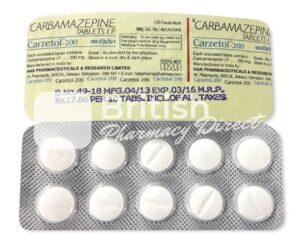
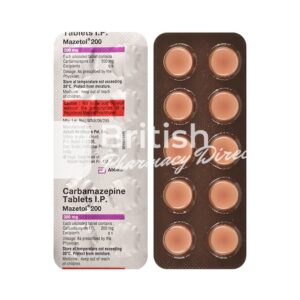
- Administered orally as tablets (100 mg, 200 mg, 400 mg immediate and controlled‑release), chewable tablets and as an oral suspension (e.g. 100 mg/5 mL); sustained‑release/retard tablets must not be split.
- Plasma levels begin to rise within a few hours after an oral dose (peaks commonly around 4–8 hours); some symptomatic improvement may be seen within days, but full therapeutic effect often requires careful titration over days to weeks.
- Duration of action depends on formulation: immediate‑release effects typically last about 6–12 hours, whereas controlled‑release/retard formulations provide effect for roughly 12–24 hours; steady‑state is reached over several days.
- Avoid alcohol while taking tegretol — alcohol increases drowsiness and dizziness and may interact with carbamazepine metabolism, worsening side effects and altering blood levels.
- The most common side effects are dizziness and drowsiness (also fatigue, nausea, blurred vision, unsteadiness and mild skin rash); more serious risks include blood dyscrasias and severe cutaneous reactions requiring urgent medical attention.
- Would you like to try tegretol without a prescription?
Critical Warnings & Restrictions
Basic Tegretol Information
- INN (International Nonproprietary Name): Carbamazepine
- Brand Names Available In United Kingdom: Tegretol; Tegretol Retard; tablets 100mg, 200mg and sustained‑release (Retard) 400mg
- ATC Code: N03AF01
- Forms & Dosages: Tablets 100mg, 200mg, 400mg (immediate and controlled‑release); extended/sustained‑release (Retard/CR/LP) 200mg, 400mg; suspension 100mg/5mL (varies)
- Manufacturers In United Kingdom: Novartis (originator) and multiple generics such as Teva, Sandoz, Mylan, Zentiva
- Registration Status In United Kingdom: MHRA‑authorised (prescription‑only medicine)
- OTC / Rx Classification: Prescription‑only medicine (POM)
High‑Risk Groups (Elderly, Pregnancy, Chronic Illness)
Key safety points up front:
Carbamazepine (INN: carbamazepine; UK brands Tegretol/Tegretol Retard) is a prescription‑only medicine and has important absolute contraindications.
Do not use carbamazepine in patients with allergy to carbamazepine or to tricyclic antidepressants.
Do not use carbamazepine in people with a history of bone marrow depression.
Do not use carbamazepine in anyone with a prior Stevens‑Johnson syndrome or toxic epidermal necrolysis to carbamazepine.
Use extreme caution in pregnancy because carbamazepine carries a teratogenic risk and should be considered only when no safer alternative is suitable.
Exercise caution and close monitoring in patients with hepatic or renal impairment, cardiac conduction disease, or previous blood dyscrasias.
Elderly patients need lower starting doses and close monitoring for hyponatraemia, sedation and falls.
Monitoring Checklist
- Baseline: Full Blood Count (FBC).
- Baseline: Liver Function Tests (LFTs).
- Baseline: Urea & Electrolytes (U&E) including sodium.
- Baseline: 12‑lead ECG if there is a cardiac history.
- Baseline: Pregnancy test where applicable for women of childbearing potential.
- Monitoring Intervals And Triggers For Specialist Review:
- FBC, LFTs and U&E at 2–4 weeks after initiation, then at 3 months and periodically thereafter (more often if clinically indicated).
- Sodium checks early on in the elderly or when hyponatraemia is suspected (within 2 weeks and as required).
- Check LFTs sooner and consider specialist review if transaminases rise or if jaundice develops.
- Urgent specialist review for unexplained fever, sore throat, mouth ulcers, bruising, or rapid‑onset rash.
Interaction With Activities (Driving, Workplace Safety Under UK Law)
Carbamazepine commonly causes dizziness, drowsiness and blurred vision, especially when starting or increasing the dose.
Anyone starting carbamazepine or increasing the dose should avoid driving and operating heavy machinery until they know how the medicine affects them.
Under UK rules, patients must follow DVLA guidance for epilepsy and antiepileptic medicines and should report any persistent impairment that affects driving.
If cognitive slowing or sedation is persistent, patients should stop driving and discuss fitness to drive with their GP.
Q&A — “Can I Drive After Taking It In The UK?”
Short answer: Not until you know how it affects you.
If you experience recent seizures, significant sedation or persistent visual disturbance, stop driving immediately and notify the DVLA as required.
Contact your GP or treating clinician for advice on fitness to drive and for documentation if you need to stop driving temporarily.
Usage Basics
INN, Brand Names Available In The UK
The International Nonproprietary Name is carbamazepine.
UK brand names include Tegretol and Tegretol Retard, available as tablets 100mg, 200mg and sustained‑release Retard 400mg.
Manufacturers include Novartis as the originator and multiple generics supplied by Teva, Sandoz, Mylan and Zentiva.
| Brand | Formulations | Notes |
|---|---|---|
| Tegretol | Tablets 100mg, 200mg | Immediate‑release; 200mg may be scored |
| Tegretol Retard | Sustained‑release tablets 400mg | Retard = sustained release; do not split |
| Generic Carbamazepine | Tablets 100mg, 200mg, 400mg | Multiple suppliers; formulations vary |
Legal Classification (POM, P, GSL)
In the United Kingdom Tegretol is a prescription‑only medicine (POM) and is prescribable on the NHS.
Electronic prescribing and pharmacy dispensing must follow MHRA guidance and NHS e‑prescription safety checks.
- Patient ID/Verification At Collection: check name, date of birth and address against the prescription.
- Pharmacist Counselling Prompts: confirm allergies (especially to tricyclics), pregnancy status or plans, and review all current medicines for interactions.
Dosing Guide
Standard Regimens (NHS Practice)
Typical adult starting dose is 200mg once or twice daily, with gradual titration according to response and tolerability.
Maintenance doses for epilepsy commonly range from 800mg to 1,200mg per day.
For trigeminal neuralgia doses are commonly 400–800mg per day.
Bipolar use varies and is sometimes off‑label depending on local formularies and specialist advice.
| Indication | Typical Start | Maintenance Range | Note On Formulation |
|---|---|---|---|
| Epilepsy (Adult) | 200mg once or twice daily | 800–1,200mg/day | Immediate or sustained‑release depending on regimen |
| Trigeminal Neuralgia | 100–200mg once or twice daily | 400–800mg/day | Often titrate quickly for pain control |
| Bipolar Disorder (Selected Cases) | 400–600mg/day | 400–1,200mg/day | Specialist‑led dosing |
Retard/controlled‑release formulations must not be split or crushed.
Immediate‑release 200mg scored tablets may be split if the product licence allows.
Adjustments For Comorbidities
Children usually start at approximately 10–20mg/kg/day in two to three divided doses and are titrated to the lowest effective dose.
Elderly patients follow a “start low, go slow” approach because they are more sensitive to neurocognitive effects and hyponatraemia.
Patients with liver or renal impairment require lower starting doses and closer monitoring of effects and laboratory tests.
- Baseline And Follow‑Up Checklist: FBC, LFTs, U&E (including sodium) and therapeutic drug monitoring where locally available.
- Increase monitoring frequency when interacting medicines are started or stopped.
Q&A — “What If I Miss A Dose?”
Take the missed dose as soon as you remember unless it is very close to the next scheduled dose.
Do not double up doses to make up for a missed dose.
For sustained‑release forms, follow the product leaflet or contact your pharmacist if unsure.
Interaction Chart
Food And Drinks (Alcohol, Tea/Coffee, Diet Habits)
Alcohol increases sedation and may increase seizure risk, so avoid heavy or binge drinking while on carbamazepine.
Carbamazepine is a hepatic enzyme inducer and can lower the effectiveness of hormonal contraceptives, so advise barrier methods or alternative contraception.
Caffeine from tea or coffee does not have major direct interactions with carbamazepine, but high caffeine intake can worsen sleep and may lower seizure threshold in poorly controlled epilepsy.
- Avoid heavy alcohol consumption.
- Discuss contraception early if of childbearing potential.
- Grapefruit juice is not a major documented concern for carbamazepine, but check interactions for individual products.
Common Drug Conflicts (MHRA Yellow Card Data)
Carbamazepine is a potent inducer of CYP3A4 and interacts with many medicines.
Concomitant use with monoamine oxidase inhibitors (MAOIs) is contraindicated.
Interactions include reduced efficacy of oral contraceptives, altered anticoagulant effects, and reduced plasma levels of some antiretrovirals and immunosuppressants.
| Drug Class | Effect / Clinical Action |
|---|---|
| Oral Contraceptives | Reduced effectiveness → recommend additional or alternative contraception |
| Anticoagulants (e.g. warfarin) | Altered INR → increased monitoring and dose adjustments |
| Antiretrovirals / Some HIV Drugs | Reduced efficacy of antiretrovirals → specialist advice required |
| Azole Antifungals / CYP Inhibitors | May increase carbamazepine levels or be affected → monitor and adjust |
Encourage Yellow Card reporting for suspected adverse reactions to help pharmacovigilance.
User Reports & Trends
Patients on NHS.uk, Patient.info and discussion forums commonly report early side effects such as sedation, dizziness, nausea and visual disturbance.
Longer‑term concerns reported include changes to mood and memory in some people taking carbamazepine.
In trigeminal neuralgia threads patients often praise the rapid pain relief that Tegretol can provide, while noting the need for careful dose adjustment to manage side effects.
- Benefits
- Good control of partial seizures and effective rapid pain relief in many cases of trigeminal neuralgia.
- Burdens
- Initial sedation, dizziness, nausea, and potential for serious skin reactions or blood disorders in rare cases.
- Common Patient Questions For Counselling: “Will it make me sleepy?”, “What about contraception?”, “Can I stop suddenly?”
- Answer Short: Expect early drowsiness; discuss contraception before starting; do not stop abruptly—consult your prescriber.
| Sentiment | Common Frequency |
|---|---|
| Positive — Symptom Control | High |
| Negative — Adverse Effects | Moderate |
Access & Purchase Options
High‑Street Pharmacies (Boots, LloydsPharmacy, Superdrug)
Tegretol and Tegretol Retard are dispensed via NHS prescription at major chains and independent pharmacies across the UK.
Availability of specific strengths may vary by outlet and stock; pharmacists can offer generics or alternatives if a brand is unavailable.
- Steps When Collecting: present prescription, confirm allergies, request pharmacist counselling, read the patient information leaflet.
Online Pharmacies And NHS E‑Prescriptions
Electronic prescriptions and recognised online pharmacies are commonly used for repeat supplies and convenience.
Verify pharmacy registration with the General Pharmaceutical Council (GPhC) in England and Wales or the equivalent regulators in other UK nations before ordering.
- Checklist For Online Verification: registered domain, visible GPhC number, NHS logo where applicable, pharmacist contact details and NHS e‑prescription compatibility.
In our online pharmacy, tegretol is available without a prescription, with discreet delivery to United Kingdom in 5-14 days.
Mechanism & Pharmacology
Simplified Explanation
Carbamazepine stabilises hyperexcited neuronal membranes by blocking voltage‑gated sodium channels and reducing repetitive neuronal firing.
This sodium‑channel blockade explains its efficacy in partial seizures and in trigeminal neuralgia.
Carbamazepine also has mood‑stabilising properties that account for its use in certain bipolar presentations.
- Primary Action: Voltage‑gated Na+ channel blockade.
- Secondary Effects: Hepatic enzyme induction (CYP induction) and auto‑induction of its own metabolism.
Clinical Terms
ATC code for carbamazepine is N03AF01, categorised as a carboxamide derivative anticonvulsant.
Auto‑induction means carbamazepine accelerates its own metabolism over the first few weeks of therapy until levels stabilise.
- Auto‑induction
- Progressive increase in metabolism leading to lower plasma levels unless dose adjusted.
- Sustained‑release vs Immediate Release
- Sustained‑release provides smoother plasma levels; do not split or crush Retard/CR tablets.
- Therapeutic Window
- Monitoring of clinical response and occasionally plasma levels guides dosing.
Indications & Off‑Label Uses
MHRA‑Approved Uses
Licensed indications include epilepsy — partial and generalised tonic‑clonic seizures — and trigeminal neuralgia.
Some product labels and local formularies include bipolar disorder in selected settings under specialist guidance.
| Indication | Licensed? | Typical Dosing Range |
|---|---|---|
| Epilepsy (partial / tonic‑clonic) | Yes | 200mg start; 800–1,200mg/day maintenance |
| Trigeminal Neuralgia | Yes | 100–200mg start; 400–800mg/day |
| Bipolar Disorder | Varies / Specialist | 400–1,200mg/day |
Off‑Label Practices In NHS And Private Care
Off‑label use occurs in some neuropathic pain syndromes and in bipolar maintenance for selected patients under informed consent.
- Prescriber Checklist: document the indication, discuss teratogenic and blood disorder risks, perform baseline tests, and set a clear follow‑up plan.
Key Clinical Findings
Recent MHRA and EMA vigilance emphasise the risk of serious cutaneous reactions such as Stevens‑Johnson syndrome and toxic epidermal necrolysis.
Genetic risk markers such as HLA‑B*1502 are relevant in people with Asian ancestry and may influence prescribing decisions.
Clinical evidence supports carbamazepine’s effectiveness for partial seizures and trigeminal neuralgia, but it carries a higher adverse‑effect and drug‑interaction burden compared with some newer agents.
- Effectiveness: Proven for partial seizures and trigeminal neuralgia.
- Common Adverse Effects: dizziness, drowsiness, nausea, blurred vision, hyponatraemia, leukopenia.
- Monitoring Imperatives: FBC, LFTs, U&E (including sodium), and vigilance for rash and blood dyscrasia.
- Contraception Counselling: discuss reduced hormonal contraception effectiveness.
| Guideline Body | Key Advice |
|---|---|
| MHRA | Safety monitoring; report serious skin reactions; pharmacovigilance |
| NICE | Use in licensed indications; specialist input for mood disorders |
| EMA | Risk minimisation for severe cutaneous reactions; genetic considerations |
Alternatives Matrix
NHS Prescribing Alternatives (Comparison Table)
| Drug | Indications | Pros | Cons | Pregnancy Note |
|---|---|---|---|---|
| Valproate | Generalised seizures, bipolar | Highly effective for many seizure types | High teratogenic risk; weight gain | Avoid in pregnancy if possible |
| Lamotrigine | Epilepsy, bipolar | Fewer drug interactions; mood benefit | Risk of rash including SJS if titrated too fast | Lower teratogenicity than valproate but counselled |
| Oxcarbazepine | Partial seizures, neuropathic pain | Similar efficacy to carbamazepine; different side effect profile | Hyponatraemia risk; still interacts with some drugs | Use specialist advice |
| Phenytoin | Epilepsy | Long history of use | Complex kinetics; many interactions | Teratogenic risk exists |
Pros And Cons Checklist
- Effectiveness vs Side Effects: match patient needs to drug profile.
- Interaction Potential: prefer drugs with fewer interactions in polypharmacy.
- Teratogenicity: avoid valproate in childbearing potential where possible.
- Monitoring Needs: some alternatives need less intensive haematological monitoring.
- Cost And Formulary Status: consider NHS local formulary guidance.
Common Questions
Q: “Can I drink alcohol while on Tegretol?”
A: Avoid heavy drinking; alcohol worsens sedation and may lower seizure threshold—discuss with your GP.
Q: “Is Tegretol safe in pregnancy?”
A: Carbamazepine carries teratogenic risk and should be used only if no safer alternative is appropriate, with specialist obstetric and neurology input.
Pre‑conception counselling and folate optimisation are essential.
Q: “How long until it works?”
A: For trigeminal neuralgia benefit can be rapid within days for many patients.
For seizure control titration over weeks is common and therapeutic drug levels plus clinical response guide adjustments.
Q: “What monitoring will I need?”
A: Baseline and periodic FBC, LFTs, and U&E (including sodium) are required, with more frequent checks when starting interacting medicines.
- Seek Urgent Help For: any rash, breathing difficulty, severe dizziness, unexplained fever, sore throat, mouth ulcers, or unexplained bruising.
NHS Cost & Access Comparison Table
| Source / Pharmacy | Typical Price Range (Private) | NHS Prescription Charge Applicability | Notes On Regional Differences |
|---|---|---|---|
| Boots | £10–£30 (varies by pack and brand) | Subject to standard NHS prescription charges where applicable | Stock varies; ask about generics |
| LloydsPharmacy | £10–£30 | As per NHS entitlements | Repeat collection services available |
| Independent Pharmacy | £8–£30 | As per NHS entitlements | May stock specific generics on request |
| Online Pharmacy (UK Registered) | £8–£35 | Private purchase or NHS e‑prescription depending on service | Verify GPhC registration |
- England operates standard NHS prescription charges; Scotland, Wales and Northern Ireland have free prescriptions—check your regional entitlements.
- Ask the pharmacist about generics to reduce cost and keep repeat prescription dates to avoid missed doses.
Registration & Regulation
MHRA Approval Process
Carbamazepine is MHRA‑authorised in the UK and adverse events should be reported via the Yellow Card Scheme.
- Reporting Steps: identify the adverse reaction, submit via the Yellow Card online form or app, and inform the prescribing clinician.
NHS Prescribing Framework
Prescribers must follow local formulary guidance and document indication, counselling and the monitoring plan in the patient record.
- Prescriber Checklist: baseline tests completed, patient information leaflet issued, contraception discussed where relevant, and follow‑up arranged.
Storage & Handling
UK Household Storage (Cold/Damp Climate)
Store carbamazepine at room temperature (15–30°C) in a dry place and keep it in the original packaging to protect blister packs and labels.
Avoid storing tablets in bathrooms or on windowsills where humidity and temperature vary.
- Household Guidance: keep in original box, avoid heat and moisture, never transfer to unlabelled containers, and lock away if there is risk of misuse by others or children.
- Dispose of expired or unwanted medication via pharmacy take‑back schemes.
Guidance From NHS And Pharmacists
For travel, carry a copy of the prescription and a brief letter stating the medication by generic name — carbamazepine — and avoid extreme temperatures in luggage.
- Travel Pack Checklist: prescription, pill organiser, GP contact details, and spare supply if travel is extended.
- Do not crush or split Retard/controlled‑release formulations.
Guidelines For Proper Use
UK Pharmacist Counselling Style
Pharmacists should use a structured counselling approach: confirm indication, review concurrent medicines and pregnancy risk, and explain common side effects clearly.
Advise on missed doses, the difference between immediate and sustained‑release tablets, and arrange monitoring as needed.
- Quick Checklist Card For Patients: baseline blood tests, contraception discussion, avoid alcohol, report rash/fever/mouth ulcers or unexplained bruising, and keep an up‑to‑date medicines list.
NHS Patient Safety Advice
Seek urgent care for rapid widespread rash, fever with sore throat or mouth ulcers, severe dizziness, fainting, breathlessness, or signs of blood dyscrasia such as easy bruising.
Carbamazepine overdose requires emergency attention and there is no specific antidote; treatment is supportive.
- Common ADRs
- Dizziness, drowsiness, nausea, blurred vision, ataxia.
- Serious ADRs
- Severe skin reactions (SJS/TEN), significant blood dyscrasias, severe hepatic impairment.
- Contact Points
- GP, NHS 111, A&E for emergencies; Yellow Card for reporting adverse reactions.
Delivery Across United Kingdom
| City | Region | Delivery Time |
|---|---|---|
| London | Greater London | 5–7 days |
| Birmingham | West Midlands | 5–7 days |
| Manchester | North West England | 5–7 days |
| Glasgow | Scotland | 5–7 days |
| Leeds | West Yorkshire | 5–7 days |
| Edinburgh | Scotland | 5–7 days |
| Bristol | South West England | 5–7 days |
| Belfast | Northern Ireland | 5–9 days |
| Southampton | South East England | 5–9 days |
| Cardiff | Wales | 5–7 days |
| Newcastle | North East England | 5–9 days |
| Norwich | East of England | 5–9 days |
| Plymouth | South West England | 5–9 days |
| Stirling | Scotland | 5–9 days |