Eszopiclone
In stock
3mg · 2mg · 1mg
from 25,22 £
In brief
- Eszopiclone is a hypnotic for adults whose insomnia is severe enough to disrupt daily life, intended for short courses only.
- Three strengths of this imported generic (1, 2 and 3 mg), with 50, 100 or 150 tablets per order.
- In Britain a prescription is required; Lunivia is the UK-licensed brand.
Eszopiclone for nights that will not settle
Eszopiclone is a sleeping medicine from the cyclopyrrolone family, chemically close to zopiclone. It is thought to act on GABA-A receptors in the brain, strengthening the natural calming signal that allows sleep to begin and continue. Its UK licence covers adults whose sleeplessness is severe, disabling or deeply distressing, and treatment is meant to be brief. Any underlying cause, such as pain, low mood, alcohol, caffeine or poor sleep habits, should be addressed first, and the need for treatment is looked at again after seven to fourteen days.
Strengths and quantities available
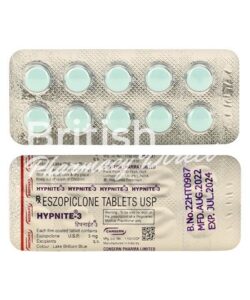
You can choose between 1 mg, 2 mg and 3 mg tablets, each offered as 50, 100 or 150 tablets. As an imported generic, it arrives in its own packaging with a leaflet unlike the British one.
Taking it at bedtime
One tablet is swallowed on getting into bed; never repeat it during the same night. The usual starting dose is 1 mg; if this is not enough, it can be raised, but adults should never go above 3 mg. Older people begin on 1 mg and should not exceed 2 mg, and the same 2 mg ceiling applies to anyone with severe kidney impairment or taking a strong CYP3A4 inhibitor. In patients over 65, combining it with a strong CYP3A4 inhibitor is contraindicated altogether. Swallow the tablet whole without crushing or splitting it. An exit plan, covering how and when to stop, is agreed with the prescriber before treatment begins. In general the course, including the time spent tapering down, lasts no longer than four weeks, though for chronic insomnia the SmPC allows up to six months with regular reassessment. Only take it when a whole night of eight hours’ sleep lies ahead. Driving, operating machinery and similar tasks should wait until twelve hours have passed.
Lunivia and the position in Britain
In the UK eszopiclone is marketed as Lunivia, film-coated tablets of 1, 2 and 3 mg whose marketing authorisation dates from June 2023. Supply is on prescription only (POM). The emc carries a separate SmPC and leaflet for each Lunivia strength. That authorisation does not extend to imported tablets such as these.
Who should not use it, and medicines that interfere
Eszopiclone is ruled out below the age of 18 and in anyone allergic to it or to zopiclone. Myasthenia gravis, serious respiratory insufficiency, severe sleep apnoea and severe liver failure are further barriers, as is any earlier episode of sleepwalking, sleep-driving or similar activity after a hypnotic. Combined with opioid painkillers it can slow breathing dangerously and cause deep sedation, so the two are used together only when nothing else will do. Alcohol, sedating antihistamines, other sleeping tablets and medicines for anxiety or psychosis all deepen its effect. Ketoconazole and other azole antifungals, macrolide antibiotics such as clarithromycin, and grapefruit juice raise blood levels; rifampicin, carbamazepine, phenytoin and St John’s Wort lower them. Use during pregnancy is not advised, and mothers who breastfeed should not take it.
Taste changes, morning drowsiness and reliance
A bitter or metallic taste is the side effect people mention most, followed by headache, sleepiness the next day, dry mouth, dizziness and nausea. Sleepwalking, driving or making food without remembering it afterwards are reasons to stop the medicine immediately. Dependence can develop, especially with higher doses or longer use, and stopping abruptly may bring withdrawal symptoms or a few nights of worse sleep than before, which is why the dose is reduced step by step. How long eszopiclone is used, and at which strength, is decided by your prescriber.