Tadalafil
In stock
10mg · 20mg · 40mg · 60mg · 80mg
from 25,22 £
In brief
- Tadalafil is a treatment for erectile dysfunction whose effect, per the UK SmPC, can last as long as 36 hours after one tablet.
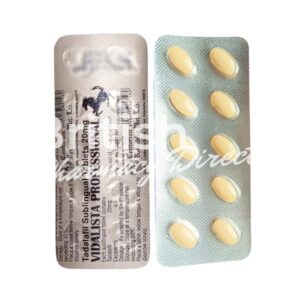
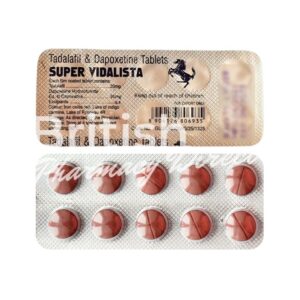
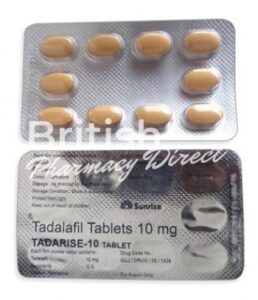
- Imported generic tablets of 10, 20, 40, 60 and 80 mg in a range of box sizes.
- The UK SmPC sets 20 mg as the highest single daily dose for use before sex.
What Tadalafil does for erections
Tadalafil treats erectile dysfunction in adult men, meaning a repeated difficulty in achieving or keeping an erection good enough for sex. It belongs to the PDE5 inhibitors. During arousal, nitric oxide raises levels of a messenger called cGMP in the penis, which relaxes the blood vessels and lets blood flow in; PDE5 normally breaks cGMP down again, and blocking it supports a firmer, longer-lasting erection. Without sexual stimulation it has no effect, and it does not boost libido. What sets this medicine apart is its duration: according to the UK SmPC, it can improve erectile function for up to 36 hours after a dose. Women should not use it. Erectile problems can be an early sign of heart disease or diabetes, so a medical check is sensible before treatment.
Strengths in the range
These are imported generic tablets in five strengths. For 10, 20, 40 and 60 mg the box sizes run 10, 20, 30, 60, 90, 120, 180, 270 and 360, while the 80 mg strength is limited to boxes of 10 to 120. Only 10 mg and 20 mg correspond to strengths licensed in the UK for on-demand use; 40, 60 and 80 mg exceed the dose described in the SmPC.
Dose, timing and the 20 mg limit
Under the SmPC, most men begin with 10 mg, swallowed at least half an hour ahead of intercourse; it can be taken with or without food. If the effect is not enough it can be raised to 20 mg, which is the maximum, and the tablets should be taken no more than once a day. On-demand dosing is not meant for continuous daily use; for men who expect to be sexually active often, a separate low-dose regimen of 5 mg once a day (sometimes 2.5 mg) exists. In severe kidney impairment the dose should not go above 10 mg and the daily regimen is not recommended. Older men and men with diabetes do not need a different dose.
UK licensing in brief
In the UK, tadalafil is licensed as 2.5, 5, 10 and 20 mg film-coated tablets, sold both as the originator brand and as generics, and these are prescription-only medicines (POM). Two further uses exist: benign prostatic enlargement (5 mg once daily) and, under a different product licence, pulmonary arterial hypertension at 20 mg. One 10 mg product was reclassified by the MHRA in March 2023 and can now be supplied by a pharmacist as a P medicine. The imported tablets listed here are not covered by any UK licence.
Who must not take it, and interactions
Tadalafil must never be combined with nitrates, such as GTN or isosorbide, or with riociguat, because blood pressure can drop dangerously; if a nitrate is needed in an emergency, at least 48 hours should pass after the last dose. The SmPC also excludes men who have had a heart attack in the past 90 days, a stroke in the past six months or heart failure of NYHA class 2 or above within six months, as well as those with unstable angina, angina during sex, uncontrolled arrhythmia, blood pressure below 90/50 mmHg or uncontrolled high blood pressure. Men who have lost vision in one eye through NAION, a type of optic nerve damage, should not take it either. Strong CYP3A4 inhibitors such as ketoconazole or ritonavir increase exposure, rifampicin reduces it, and alpha-blockers like doxazosin can add to its blood pressure-lowering effect.
Side effects and warning signs
Headache, indigestion, back pain and muscle aches are the most frequent effects, and they become more likely as the dose rises. A flushed face and nasal stuffiness are common too. Dizziness, blurred vision, palpitations, a fast heartbeat and rash are uncommon. Get medical help straight away if an erection lasts longer than four hours, and stop Tadalafil and seek urgent advice if you suddenly lose sight or hearing. Whether Tadalafil is suitable, and at what dose, is for the doctor or prescriber to decide.