Symmetrel
In brief
- In our pharmacy, you can buy symmetrel without a prescription, with delivery in 5–14 days throughout the United Kingdom. Discreet and anonymous packaging.
- Symmetrel (amantadine hydrochloride) is used for Parkinson’s disease (including drug-induced extrapyramidal symptoms) and for treatment/prophylaxis of influenza A; it acts as an antiviral by blocking the influenza A M2 ion channel and as an antiparkinsonian agent by promoting dopamine release and antagonising NMDA receptors.
- Usual doses: Parkinson’s — 100 mg once or twice daily (typical range 100–400 mg/day, start low and titrate); Influenza A treatment — 100 mg twice daily for 5–7 days (start within 48 hours of symptom onset); children ≥10 years often 100 mg twice daily (younger children require specialist advice); reduce dose in renal impairment and the elderly.
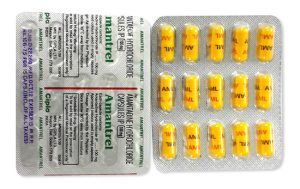
- Available as tablets and capsules (including extended-release), and as an oral syrup (50 mg/5 mL); administration is oral.
- Onset: antiviral benefit is only if started within 48 hours of influenza symptom onset; symptomatic antiparkinsonian effects are often noticed within 24–72 hours but may take longer in some patients.
- Duration of action: immediate-release formulations typically provide 12–24 hours of effect (may require twice-daily dosing); extended-release products are designed for once-daily coverage; elimination is prolonged in renal impairment.
- Alcohol warning: avoid or limit alcohol while taking symmetrel because it can increase drowsiness, dizziness and other central nervous system side effects.
- The most common side effect is dizziness.
- Would you like to try symmetrel without a prescription?
Basic Symmetrel Information
- INN (International Nonproprietary Name): Amantadine hydrochloride
- Brand Names Available In United Kingdom: SYMMETREL (listed in USA, CA, UK, NZ, AU), generic amantadine preparations; other international brands include Gocovri and Osmolex ER (US) and PK‑Merz (Germany/EU).
- ATC Code: N04BB — amantadine (Anti‑Parkinson’s drugs; Adamantane derivatives).
- Forms & Dosages: Tablets 100 mg; Capsules including standard and extended‑release formulations (100 mg and ER strengths); syrup 50 mg/5 mL in markets where available; some ER products sold in 68.5 mg, 129 mg and 137 mg strengths in select regions.
- Manufacturers In United Kingdom: Various suppliers and generic manufacturers supply amantadine in the UK; internationally listed manufacturers include Endo Pharmaceuticals, Adamas Pharma (Gocovri), Osmotica, Merz Pharma (PK‑Merz), HEXAL and KRKA.
- Registration Status In United Kingdom: Amantadine products are authorised in the EU/UK region under various brand and generic names and are prescription‑only medicines.
- OTC / Rx Classification: Prescription‑only (Rx/POM) across markets listed in source data.
Critical Warnings & Restrictions
High‑Risk Groups (Elderly, Pregnancy, Chronic Illness)
Worried this medicine might be unsafe for someone you care for?
Amantadine can cause serious central nervous system, cardiac and renal‑related adverse effects.
Absolute contraindications from product data are a known allergy to amantadine or any excipient and untreated angle‑closure glaucoma.
Use extreme caution in elderly patients because of increased risk of confusion, hallucinations and orthostatic hypotension.
Reduce dose and monitor closely for people with severe renal impairment due to risk of drug accumulation.
Avoid or use with caution in patients with seizure disorders, severe heart failure or untreated psychiatric illness because of increased adverse event risk.
Pregnancy and breastfeeding are listed as situations where amantadine is not recommended unless the potential benefit justifies the potential risk to the foetus or infant.
Before prescribing or dispensing, check renal function, current medicines and mental health history.
- Is the patient elderly or frail?
- Is there known renal impairment or recent eGFR/creatinine result?
- Does the patient have a seizure disorder or recent psychiatric admission?
- Is the patient pregnant or breastfeeding, or of childbearing potential?
- Are there concurrent medicines that increase anticholinergic burden or lower seizure threshold?
Urgent Red‑Flag Symptoms — Stop The Drug And Seek Immediate Review
- New severe confusion or marked behavioural change.
- New visual disturbance or suspected acute glaucoma symptoms.
- Sudden severe dizziness, fainting or marked orthostatic symptoms.
- Urinary retention or severe difficulty passing urine.
- Signs of allergic reaction — rash, swelling, difficulty breathing.
Report suspected adverse reactions to the MHRA Yellow Card scheme.
Interaction With Activities (Driving, Workplace Safety Under UK Law)
Concerned about whether it is safe to drive or work after taking amantadine?
Amantadine may impair alertness, reaction times and cause dizziness or blurred vision.
Under UK road law and workplace safety rules, patients whose ability to drive or operate heavy machinery is affected must not drive or work until fitness returns.
Advise a trial period off driving after starting treatment or after dose increases, and document counselling in the pharmacy record.
Employers or occupational health may need written advice for safety‑critical roles, and patients should be told to notify the DVLA if they develop seizures or persistent cognitive impairment.
Q&A — “Can I Drive After Taking It In The UK?”
Short answer: Not if you feel drowsy, confused, dizzy or have blurred vision.
If any of those symptoms affect your driving ability, stop driving, seek medical review and follow DVLA guidance.
Employers should be informed when the role requires safety‑critical performance.
Usage Basics
INN, Brand Names Available In The UK
Looking for the official name and common brands so you know what to ask for?
- INN: Amantadine hydrochloride.
- Brand: Symmetrel is a recognised brand name listed in the raw data and generic amantadine products are used in the UK.
- Form: Commonly supplied as 100 mg tablets or capsules; syrup 50 mg/5 mL is available in some markets.
Legal Classification (POM, P, GSL)
Worried whether you can walk into a shop and buy it?
Amantadine is prescription‑only (POM) across the UK and is not available over the counter without a valid prescription.
Prescriptions may be issued in primary or secondary care and community pharmacists supply under NHS prescription or a valid private prescription.
Electronic prescriptions (EPS) and the NHS App are accepted for dispensing where applicable.
Ensure a valid prescription is provided and that counselling is documented on supply.
Dosing Guide
Standard Regimens (NHS Guidelines)
What dose should I expect if this is prescribed for Parkinson’s or for influenza?
| Indication | Usual Dose | Notes |
|---|---|---|
| Parkinson’s Disease | 100 mg once or twice daily (typical); up to 400 mg/day in divided doses | Start low and titrate; elderly and renal impairment need caution |
| Influenza A — Treatment | 100 mg twice daily for 5–7 days | Use if started within 48 hours of symptom onset (historical guidance) |
| Influenza A — Prophylaxis | 100 mg twice daily | Duration depends on exposure and public health advice |
| Children (≥10 years) | 100 mg twice daily | Aged 5–9 years consult a specialist; children 1–9 years not routinely recommended |
Adjustments For Comorbidities
Worried about how other illnesses change the dose?
Reduce dose by 50% or more in significant renal impairment because amantadine is predominantly renally excreted and accumulates without adjustment.
Start at the lowest effective dose in elderly people and monitor for CNS and cardiac side effects.
Use caution in hepatic impairment with increased clinical monitoring, although no standard hepatic adjustment is specified in the source data.
Review concomitant anticholinergic medicines, diuretics and any drugs that lower the seizure threshold.
For long‑term Parkinson’s use, reassess benefit regularly and consider gradual dose reduction or stopping to avoid withdrawal effects if appropriate.
Q&A — “What If I Miss A Dose?”
If you miss a dose, take it as soon as you remember.
If it is nearly time for the next dose, skip the missed dose and continue the regular schedule.
Do not take a double dose to make up for a missed one.
If in doubt, contact your GP, pharmacist or NHS 111 for advice.
Interaction Chart
Food And Drinks (Alcohol, Tea/Coffee, Diet Habits)
Do everyday drinks change how this medicine feels?
- Avoid excess alcohol while taking amantadine because alcohol may worsen dizziness and sedation.
- Caffeine in tea or coffee does not cause a major pharmacokinetic interaction but may increase agitation or insomnia in sensitive people.
- Major changes in salt or fluid intake do not materially affect absorption, although monitor blood pressure and peripheral oedema.
Common Drug Conflicts (MHRA Yellow Card Data)
Which prescriptions should alert the prescriber or pharmacist?
| Drug Class | Interaction | Clinical Action |
|---|---|---|
| Anticholinergics | Additive urinary retention and confusion | Review necessity; monitor urinary function and cognition |
| Dopaminergic Agents | Potential additive CNS effects | Adjust doses and monitor motor and psychiatric effects |
| Antihypertensives / Diuretics | Increased risk of orthostatic hypotension | Measure lying/standing BP; counsel on postural precautions |
| Antipsychotics / Seizure‑lowering Drugs | Increased seizure risk and potential antagonism | Assess seizure history; consider alternative therapy or monitoring |
| Tricyclic Antidepressants | Cardiac and anticholinergic additive effects | ECG if indicated; monitor for anticholinergic toxicity |
Monitoring Checklist
- Check renal function before starting and periodically thereafter.
- Monitor blood pressure and orthostatic symptoms after initiation or dose change.
- Monitor for new psychiatric symptoms, hallucinations or confusion.
- Report suspected interactions and adverse events via the MHRA Yellow Card scheme.
User Reports & Trends
Insights From NHS Choices, Patient.info, And Mumsnet Forums
What do patients say online and how should that shape counselling?
- Many report an early motor benefit for Parkinson’s symptoms in selected patients, often noted within days to weeks.
- Vivid dreams, disturbed sleep and occasional agitation are commonly described as bothersome side effects.
- Livedo reticularis — a mottled skin appearance — is a frequently mentioned dermatologic observation.
- Discussion threads highlight variable efficacy and frequent advice to check renal function when symptoms appear.
- Forums emphasise the need for close contact with GP or pharmacist for dose changes and side‑effect management.
Note that forum data have selection bias and are anecdotal; always prioritise evidence and regulatory guidance when advising patients.
Access & Purchase Options
Boots, LloydsPharmacy, Superdrug
Where can people get this medicine in person?
Symmetrel and generic amantadine are supplied by prescription at major UK pharmacy chains such as Boots, LloydsPharmacy and Superdrug and at independent community pharmacies.
Availability of specific branded packs depends on supplier stock and the dispensed brand/strength should be checked on the label.
Online Pharmacies And NHS E‑Prescriptions
Can you order it online and what should you check?
Electronic prescribing (EPS) and the NHS App allow prescriptions to be sent to a nominated pharmacy for dispensing.
UK online pharmacy services will dispense prescription‑only medicines after receipt of a valid electronic prescription or a remote consultation where appropriate.
Patients should avoid buying from unverified overseas sellers and ensure the product is MHRA‑licensed with pharmacist contact details.
- Valid prescription or EPS record.
- MHRA‑licensed product and UK supplier address.
- Accessible pharmacist contact for counselling and queries.
- Clear privacy and delivery policy for discreet supply.
In our online pharmacy, symmetrel is available without a prescription, with discreet delivery to United Kingdom in 5-14 days.
Mechanism & Pharmacology
Simplified Explanation
How does amantadine work in plain language?
- Adamantane derivative: a chemical class that includes amantadine.
- Dopaminergic activity: it may enhance dopamine release and reduce reuptake giving modest motor symptom improvement in Parkinson’s.
- NMDA antagonist effect: may contribute to benefit in dyskinesia and some CNS effects.
- Antiviral action (historical): inhibited Influenza A viral uncoating, but utility is limited by resistance.
Clinical Terms
Want the technical labels used by prescribers and formularies?
ATC classification is N04BB confirming its place as an anti‑Parkinson drug in the adamantane derivatives group.
Onset of motor effect can be days to weeks while central nervous system adverse effects can appear quickly after starting or increasing dose.
Because amantadine is renally excreted, pharmacokinetic caution and renal dose reduction are needed in impaired renal function to avoid accumulation and toxicity.
Indications & Off‑Label Uses
MHRA‑Approved Uses
Why might a clinician prescribe this medicine?
- Parkinson’s disease (idiopathic and some secondary forms).
- Drug‑induced extrapyramidal symptoms and secondary parkinsonism.
- Historically, treatment and prophylaxis of Influenza A — use curtailed by resistance patterns.
Off‑Label Practices In NHS And Private Care
Are there uses beyond the licence?
Specialist practice and the literature report off‑label use for management of fatigue in multiple sclerosis and investigational use in some post‑acute brain injury states and certain long‑COVID symptom trials.
Off‑label prescribing should be specialist‑led with documented informed consent and a monitoring plan.
- Evidence review and rationale documented in notes.
- Informed consent recorded.
- Monitoring and follow‑up plan in place.
- Specialist oversight recommended.
Key Clinical Findings
Major UK And EU Findings (2022–2025) — Summary
What does recent clinical evidence say about benefits and harms?
| Study Type | Outcome | Clinical Implication |
|---|---|---|
| Randomised Trials / Meta‑analyses | Modest short‑term motor benefit in early Parkinson’s; variable response. | Consider a trial period and stop if no clear benefit. |
| Open Label / Observational | Some reduction in dyskinesia for selected patients. | May be useful adjunct in specialist care for dyskinesia management. |
| Antiviral Surveillance | High levels of resistance in circulating Influenza A strains in many regions. | Not routinely recommended for community influenza without current public health advice. |
| Small Trials (Fatigue/Post‑acute) | Mixed and inconclusive results for fatigue syndromes and long‑COVID. | Further large trials needed before routine use. |
Always check current NICE and MHRA guidance for up‑to‑date recommendations before prescribing.
Alternatives Matrix
NHS Prescribing Alternatives (Comparison Table)
| Drug | Mechanism | Typical Use | Pros / Cons |
|---|---|---|---|
| Levodopa/Carbidopa | Dopamine precursor | First‑line symptomatic therapy for Parkinson’s | Highly effective for motor symptoms; long‑term motor complications possible. |
| MAO‑B Inhibitors (Selegiline, Rasagiline) | Monoamine oxidase B inhibition | Adjunct or monotherapy in early disease | Modest symptomatic benefit; generally well tolerated. |
| Dopamine Agonists (Pramipexole, Ropinirole) | Dopamine receptor agonist | Alternative or adjunct to levodopa | Useful for motor control; higher risk of impulse control disorders and somnolence. |
| Rimantadine / Neuraminidase Inhibitors | Antiviral (different mechanism) | Possible alternatives for influenza depending on strain susceptibility | Rimantadine shares resistance concerns; neuraminidase inhibitors used based on public health guidance. |
Pros And Cons Checklist
- Pros: Oral administration; inexpensive in many regions; may help dyskinesia and motor symptoms for selected patients.
- Cons: Efficacy limited in many patients; CNS and psychiatric side effects; requires renal dosing; contraindicated in untreated angle‑closure glaucoma; historical antiviral resistance concerns.
- Choose alternatives based on patient comorbidity, monitoring capacity and therapeutic goals.
Common Questions
- Is amantadine safe for older adults?
Use low starting doses, check renal function and monitor for confusion, hypotension and hallucinations.
Involve carers and schedule regular reviews.
- How fast does it work for Parkinson’s?
Some patients notice benefit within days to weeks; reassess after a trial period and continue only if benefit outweighs harms.
- Can children take it?
Licensed for older children (≥5 years in some regimens) but dosing should be specialist‑directed and paediatric guidance followed.
NHS Cost & Access Comparison Table
| Source / Pharmacy | Typical Private Price Range (Approx.) | NHS Prescription Charge | Exemption Status / Regional Differences |
|---|---|---|---|
| Boots / LloydsPharmacy / Superdrug | £10–£40 per pack depending on brand and pack size | Standard NHS prescription charge applies in England (check current rate) | Prescriptions are generally free in Scotland, Wales and Northern Ireland for most patients; exemptions apply by age, income or medical condition. |
| Independent Community Pharmacies | Variable within similar range depending on brand | Standard NHS prescription charge applies in England (check current rate) | Check local pharmacy pricing and NHS exemption status. |
| Online Pharmacies (UK‑based) | Variable; similar to high street private pricing | EPS prescriptions honoured if prescription indicates NHS supply | Ensure MHRA‑licensed supply; check delivery and postage fees. |
Patients should check current NHS prescription charge and local pharmacy prices as these can change.
Registration & Regulation
MHRA Approval Process
How is this medicine regulated in the UK?
Amantadine products are authorised via national or decentralised procedures and marketing authorisations are held by branded and generic companies.
Prescribing should follow the product licence and heed MHRA safety communications.
Report serious adverse reactions to the MHRA Yellow Card scheme and monitor for product recalls or safety alerts.
NHS Prescribing Framework
How should prescribers and pharmacists document and manage treatment?
Follow NHS formularies and local trust guidelines for secondary care and GP shared‑care agreements where applicable.
Use electronic prescribing systems and document counselling, baseline renal checks and monitoring plans on the record.
For off‑label use, obtain documented informed consent and record the rationale in clinical notes.
Storage & Handling
UK Household Storage (Cold/Damp Climate)
Worried about damp cupboards and syrup bottles in winter?
Store amantadine at room temperature (15–30°C) away from heat, moisture and direct sunlight.
In damp UK homes, keep tablets in the original sealed container and store in a cool dry cupboard rather than the bathroom.
Keep any syrup tightly closed and upright to avoid spillage and contamination.
Do Not dispose of unused medicine in household waste or down the sink; return to a pharmacy for safe disposal.
Guidance From NHS And Pharmacists
Keep medicines out of reach of children and check expiry dates before use.
Return unused or unwanted medicines to a pharmacy for safe disposal.
For travel, carry medicines in original packaging with a copy of the prescription or GP letter and avoid exposing to extreme temperatures.
Record storage counselling on the dispensing record for audit and patient safety.
Guidelines For Proper Use
UK Pharmacist Counselling Style
How should pharmacists speak to patients about amantadine?
- Confirm the indication and the prescribed dosing schedule before supply.
- Review recent renal function and any concomitant medicines that increase risk.
- Counsel on CNS effects including dizziness, confusion, and visual disturbance and advise on driving and work safety.
- Explain missed dose instructions and what to do in case of overdose or adverse symptoms.
- Advise on red‑flag symptoms that require urgent medical review and provide written information leaflets where available.
- Record counselling in the patient medication record.
NHS Patient Safety Advice
What routine checks should be in place?
Ensure baseline renal function is checked and periodic monitoring arranged especially after dose changes or if new symptoms arise.
Schedule medication reviews and encourage reporting of side effects via the MHRA Yellow Card scheme.
Provide contact details for urgent advice — GP, NHS 111, or emergency services — and consider deprescribing if harms outweigh benefits on long‑term therapy.
Delivery Across United Kingdom
| City | Region | Delivery time |
|---|---|---|
| London | England | 5–7 days |
| Birmingham | England | 5–7 days |
| Manchester | England | 5–7 days |
| Glasgow | Scotland | 5–7 days |
| Leeds | England | 5–7 days |
| Liverpool | England | 5–7 days |
| Edinburgh | Scotland | 5–7 days |
| Bristol | England | 5–7 days |
| Sheffield | England | 5–7 days |
| Newcastle Upon Tyne | England | 5–7 days |
| Belfast | Northern Ireland | 5–7 days |
| Cardiff | Wales | 5–7 days |
| Nottingham | England | 5–9 days |
| Southampton | England | 5–9 days |
Final Notes And Practical Tips
Quick Safety Reminders For Patients And Carers
Always check the dispensed brand and strength on the label when you collect your medicine.
Keep a recent renal function result on file if you are on long‑term amantadine to guide dosing.
Stop the medicine and seek urgent review for new severe confusion, visual disturbance, marked dizziness, urinary retention or suspected allergic reaction.
Report suspected adverse reactions via the MHRA Yellow Card scheme to help ongoing safety monitoring.
When To Call A Clinician
Seek urgent advice if there are new hallucinations, severe agitation, sudden fainting or seizure.
Contact the GP or pharmacist for guidance about dose adjustments when starting or stopping interacting medicines.
Use NHS 111 for out‑of‑hours concerns and emergency services for life‑threatening reactions.
References And Where To Read More
For detailed prescribing, monitoring and renal dosing tables consult the BNF, product literature and current MHRA guidance.
Check NICE guidance and local NHS formulary documents for local prescribing policies and shared‑care arrangements.