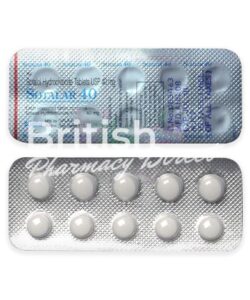
Sotalol
In stock
40mg
from 20,63 £
In brief
- Sotalol is an anti-arrhythmic medicine combining beta-blockade with a class III effect that lengthens the heart’s recovery phase.
- The tablets are imported and contain 40 mg each; packs range from 20 to 360.
- A POM in the UK; treatment starts under ECG monitoring, and doses are reduced when kidney function is impaired.
Sotalol and heart rhythm disorders
Sotalol hydrochloride acts on the heart in two ways. As a non-selective beta-blocker it slows the heart rate and dampens the response to adrenaline, and through its class III action it prolongs repolarisation, the recovery phase after each beat, making it harder for abnormal electrical circuits to sustain themselves. The UK SmPC for the 40 mg tablet covers life-threatening ventricular tachyarrhythmias and symptomatic non-sustained ventricular tachycardia. It also covers the prevention of paroxysmal atrial tachycardia and paroxysmal atrial fibrillation, AV nodal re-entrant tachycardia, AV re-entrant tachycardia using an accessory pathway and supraventricular tachycardia after heart surgery, as well as keeping a normal rhythm once atrial fibrillation or flutter has been converted.
Strength, pack sizes and UK status
Packs contain 20, 30, 60, 90, 120, 180 or 360 tablets, all of the 40 mg strength. Usual maintenance doses are several times this strength, so more than one tablet a day is often needed; the prescription label always takes precedence. British patients receive sotalol on prescription only (POM), as generic tablets licensed to a number of companies. The tablets on this page are an imported product, not a UK-registered pack.
Why the first doses are ECG-monitored
Before the first dose, the SmPC asks for a baseline ECG including the corrected QT interval, blood tests for kidney function, potassium and magnesium, and a check of everything else the patient takes. Treatment should be started, and each dose increase made, where the heart rhythm can be monitored. The usual initial dose is 80 mg a day, as one dose or two divided doses. Each increase comes after an interval of two to three days, giving levels time to steady and allowing a repeat QT measurement. Maintenance usually settles between 160 and 320 mg daily, split into two doses spaced roughly half a day apart. In resistant, life-threatening ventricular arrhythmias, doses of 480 to 640 mg daily are reserved for patients under close hospital supervision. Food reduces absorption by around 20%, so taking the tablets the same way each day in relation to meals is sensible.
Renal function decides the dose
Because elimination is almost wholly renal, creatinine clearance determines how much sotalol is given. With clearance above 60 ml/min, no reduction is needed; from 30 to 60 ml/min half the usual dose is given, and from 10 to 30 ml/min a quarter. A clearance under 10 ml/min rules it out completely. Since renal function usually falls with advancing age, elderly patients need their dose set accordingly. No change is needed for liver impairment.
Contraindications, interactions and precautions
According to the SmPC, sotalol must not be used in sick sinus syndrome, second- or third-degree AV block without a functioning pacemaker, congenital or acquired long QT syndrome, a history of torsade de pointes, symptomatic sinus bradycardia, uncontrolled heart failure, cardiogenic shock, untreated phaeochromocytoma, hypotension other than that caused by an arrhythmia, Raynaud’s phenomenon or severe peripheral circulatory disturbance, asthma or chronic obstructive airways disease, metabolic acidosis or severe renal failure. Diarrhoea or any other cause of low potassium or magnesium makes dangerous rhythms more likely. Other medicines that prolong the QT interval, including class IA and other class III anti-arrhythmics, phenothiazines, tricyclic antidepressants, intravenous erythromycin and some quinolone antibiotics, need great care, as do verapamil, diltiazem, digoxin and clonidine. During pregnancy sotalol is given only after weighing benefit against risk, because it passes across the placenta, and it is not advised for breastfeeding mothers. Treatment should be withdrawn gradually over one to two weeks.
Side effects and warning signs
Common side effects include fatigue, breathlessness, dizziness, headache, a slow heartbeat, low blood pressure, chest pain, palpitations, oedema, nausea and other digestive upsets, rash, muscle cramps, sleep disturbance, depression, sexual dysfunction and visual or hearing disturbances. The most serious risk is that the medicine can provoke new arrhythmias or make existing ones worse, torsade de pointes in particular. Call 999 or go to A&E straight away in the event of fainting, a sudden fast or irregular heartbeat, or severe dizziness while on this medicine. Decisions about prescribing rest with the cardiologist, doctor or prescriber.