Naltrexone
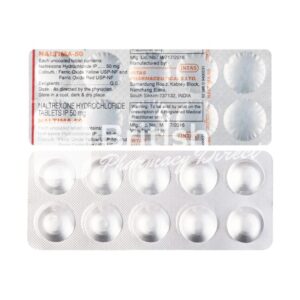
In brief
- You may be able to buy naltrexone without a prescription from some online pharmacies, but it is a prescription-only medicine in the UK and in most major jurisdictions. It should only be used under medical supervision, particularly because opioid use must be excluded before starting treatment.
- Naltrexone is used for the treatment of opioid dependence after detoxification and for alcohol dependence. It is an opioid receptor antagonist, which works by blocking opioid receptors in the brain and reducing the rewarding effects of opioids and alcohol-related cravings.
- The usual oral dose is 25 mg as a test dose, then 50 mg once daily. Some maintenance regimens use 100 mg on Monday, Wednesday and Friday or 150 mg on Friday under specialist guidance. For the extended-release injection, the usual dose is 380 mg intramuscularly every 4 weeks.
- Naltrexone is available as oral tablets and as a long-acting intramuscular injection. Tablet strengths are commonly 25 mg, 50 mg and 100 mg, while the depot injection is supplied as 380 mg per vial.
- The oral form begins working within about 1 to 2 hours after a dose, although the clinical benefit builds with regular use. The injectable form starts to provide sustained blockade soon after administration.
- The duration of action is about 24 hours for a typical oral dose, so it is usually taken once daily. The extended-release injection lasts about 4 weeks.
- Do not drink alcohol while taking naltrexone if you are being treated for alcohol dependence, and avoid heavy alcohol use because naltrexone can be used alongside support to reduce drinking rather than to make alcohol safe. Alcohol can also worsen liver problems, which is important because naltrexone may affect liver function.
- The most common side effects are nausea, headache, dizziness, abdominal pain, insomnia, anxiety, and diarrhoea. Injection-site reactions can occur with the depot form.
- Would you like to try naltrexone without a prescription?
Basic Naltrexone Information
- INN (International Nonproprietary Name): Naltrexone
- Brand names available in United Kingdom: Naltrexone Accord
- ATC Code: N07BB04
- Forms & dosages: Tablets 25 mg, 50 mg, 100 mg; extended-release injection 380 mg per vial
- Manufacturers in United Kingdom: Accord Healthcare
- Registration status in United Kingdom: Prescription Only (Rx)
- OTC / Rx classification: Prescription Only (Rx)
What You Need To Know Before Starting Naltrexone
Do Not Start If Opioids Are Still In Your System
Worried about whether you can start naltrexone after codeine for a bad back, or after tramadol, morphine, oxycodone, methadone, buprenorphine, or illicit opioids?
This medicine must not be started if there is current physiologic opioid dependence, a positive opioid urine test, acute hepatitis, liver failure, or known hypersensitivity to naltrexone or any excipient.
The main risk is precipitated withdrawal, which can feel abrupt and severe if opioids are still on board.
That is why prescribers in the UK check opioid use carefully before supply, especially when a person has recently taken an opioid painkiller, a cough mixture containing codeine, or any non-prescribed opioid.
High-Risk Groups And When To Seek Urgent Help
Extra caution is needed in pregnancy, breastfeeding, older adults, people with severe liver disease, renal impairment, or anyone taking medicines that can affect the liver.
If symptoms are mild, contact your GP, prescriber, or pharmacist for advice.
If symptoms are worrying or getting worse, call NHS 111.
If there is severe abdominal pain, jaundice, collapse, trouble breathing, or a serious allergic reaction, seek emergency help immediately.
- Recent opioid use or uncertain opioid exposure
- Known liver disease or abnormal liver tests
- Pregnancy or breastfeeding
- Kidney problems
- Other medicines that may stress the liver
Driving, Machinery, And Workplace Safety
Dizziness, insomnia, and anxiety can happen, particularly when treatment is first started.
If you feel affected, avoid driving, operating machinery, or anything that could be unsafe at work until you know how naltrexone affects you.
Can I Drive After Taking Naltrexone In The UK?
Yes, but only if you feel safe, are not affected by side effects, and are not impaired.
Do not drive if you feel dizzy, overly anxious, or not fully alert.
What Naltrexone Is And UK Brand Names
INN, Generic Name, And British Terminology
Naltrexone hydrochloride is an opioid antagonist used in dependence treatment.
The INN is naltrexone, which is the name most patients and clinicians will use in the UK.
Brand Names And Availability
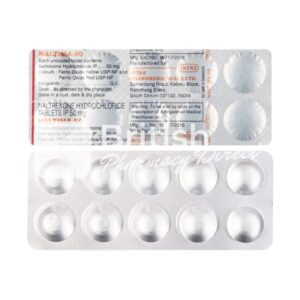
In the UK, Naltrexone Accord is listed and supplied as tablets, typically 50 mg, usually in a local pack.
Internationally, you may also see Revia, Vivitrol, Adepend, Naltima, Nodict, Nalcon, Naltrex, Naltrexona Torrex, Naltrexone GH, and Naltrexone Destoxican.
Those names can help if a patient has travelled or has seen a medicine online, but the active ingredient is still naltrexone.
Not The Same As Opioid Replacement Therapy
Naltrexone is different from methadone and buprenorphine.
It does not replace opioids or act as a substitute.
Instead, it blocks opioid effects, which is why opioid-free assessment matters before treatment starts.
Legal Classification, MHRA Status, And NHS Prescribing
Prescription-Only Medicine In The UK
Naltrexone is a prescription-only medicine in the UK.
Supply and local prescribing follow MHRA-regulated medicine rules.
That means it should be used under clinical supervision, not started casually from an unverified source.
NHS And Private Prescribing Pathways
People may access naltrexone through a GP, addiction service, hospital team, or private specialist.
Electronic prescriptions and e-prescribing are used where available, which can make dispensing smoother for the pharmacy and more convenient for the patient.
What Patients Should Expect From The Pharmacist
Pharmacists usually check the medicine history, confirm any opioid exposure, and provide counselling before supply.
That may include a quick medicines reconciliation, advice on side effects, and reminders about follow-up.
This careful UK pharmacy approach helps reduce avoidable harm and supports safe monitoring.
| Access Route | What Happens |
|---|---|
| GP or NHS service | Assessment, prescription, follow-up, and monitoring |
| Private specialist | Consultation, prescription, and tailored treatment plan |
| Pharmacy supply | Prescription check, counselling, and safety screening |
How Naltrexone Works In The Body
Simplified Mechanism
Naltrexone works by blocking opioid receptors.
That means opioids cannot bind and produce their usual rewarding effect.
In alcohol dependence, this can help reduce the rewarding drive that contributes to relapse and cravings.
Clinical Explanation
The ATC code is N07BB04, placing it in drugs used in alcohol dependence.
It is available as oral tablets and as a monthly injection in some markets.
Clinically, the receptor blockade is helpful, but only when the person is already opioid-free and ready to start treatment safely.
Why It Must Not Be Started Too Early
If opioids are still present, the receptor blockade can trigger withdrawal very quickly.
That is why a prescriber checks for recent opioid use, a urine test where needed, and any signs of dependence before treatment begins.
Approved Uses And Common UK Clinical Contexts
NHS-Recognised Use Areas
- Alcohol dependence support
- Opioid dependence after detoxification
Typical Place In Treatment
Naltrexone is often part of a wider plan rather than a stand-alone fix.
It is commonly used alongside counselling, psychosocial support, relapse prevention, and routine follow-up.
That combined approach is what makes treatment more realistic in day-to-day UK practice.
Off-Label Or Special-Interest Use
Low Dose Naltrexone, often searched as LDN, is a separate topic from standard dependence treatment.
It is not the same as the licensed use described here, and the evidence and prescribing routes differ.
If a patient is asking about LDN, the safest answer is to discuss it with a prescriber rather than swapping products on their own.
Dosing Guide For Adults In The UK
Oral Tablet Regimens
For opioid dependence after detoxification, treatment often starts with a 25 mg test dose, then moves to 50 mg daily.
For alcohol dependence, 50 mg daily is the usual starting and maintenance dose.
Some supervised regimens use 100 mg on Monday, Wednesday, and Friday, or 150 mg on Friday.
Monthly Injection Regimen
Extended-release injectable naltrexone is given as 380 mg intramuscularly every 4 weeks.
That format is used in some settings where adherence to tablets is difficult.
Practical Adherence Advice
Take it exactly as prescribed.
Do not change the dose, stop early, or stretch doses out without speaking to the prescriber.
One patient may do well on daily tablets, while another needs closer supervision and regular review.
What If I Miss A Dose?
Take it when remembered unless it is close to the next dose.
Do not double up.
Dose Adjustments And Special Populations
Children And Adolescents
Safety and efficacy are not typically established under 18.
That is why naltrexone is generally not used routinely in children or teenagers without specialist input.
Older Adults And Comorbidity
No routine dose change is specified for older adults.
Even so, monitoring is important if there is frailty, liver disease, kidney impairment, or multiple medicines.
Liver And Kidney Impairment
Avoid naltrexone in acute hepatitis or liver failure.
Use caution in hepatic impairment, and monitor liver function tests if advised.
Severe renal impairment also needs caution and closer monitoring.
Pregnancy And Breastfeeding
Use only when the benefits outweigh the risks, and specialist input is available.
That is a conversation for the prescriber rather than something to self-manage.
- Needs a clinician review first
- May need liver function monitoring
- Requires an opioid-use check before starting
- Needs extra caution in pregnancy and lactation
Side Effects, Red Flags, And When To Get Help
Common Side Effects
- Nausea
- Vomiting
- Abdominal pain
- Diarrhoea
- Headache
- Dizziness
- Insomnia
- Anxiety
- Joint or muscle pain
- Raised liver enzymes
- Injection-site reactions with depot treatment
Serious Symptoms Needing Prompt Review
Persistent vomiting, severe abdominal pain, jaundice, dark urine, or any sign of liver injury needs prompt medical review.
Severe mood change, a rash, swelling, breathing problems, or other signs of allergy also need urgent action.
Warning: If you develop yellowing of the skin or eyes, feel very unwell, or have a reaction that looks serious, stop and seek medical advice straight away.
Patient Guidance
It helps to track symptoms, alcohol use, and any new medicines so patterns are easier to spot at review.
Tell the prescriber or pharmacist if side effects are troublesome or do not settle.
In the UK, suspected adverse reactions can also be reported through the Yellow Card scheme.
Interactions With Opioids, Alcohol, And Other Medicines
Opioid Medicines And Hidden Sources
Mixing naltrexone with codeine, tramadol, morphine, oxycodone, fentanyl, methadone, buprenorphine, cough mixtures, or some diarrhoea medicines can cause serious problems.
The key issue is not just a prescribed painkiller; it is also any hidden opioid source from another product.
Alcohol, Food, Tea, And Coffee
Alcohol matters mainly because naltrexone is being used to support alcohol reduction or abstinence.
There is no major direct food interaction, and tea or coffee are not known to be major interactions.
That said, caffeine may make insomnia feel worse if the medicine already disturbs sleep.
Other Medicines That May Matter
Medicines that can affect the liver need extra care, especially if several are taken together.
Sedatives may also complicate the overall picture, even if they are not direct opioid interactions.
| Interaction Type | Examples | What To Do |
|---|---|---|
| Opioid medicines | Codeine, tramadol, morphine, oxycodone, methadone, buprenorphine | Avoid unless the prescriber specifically advises |
| Hidden opioid sources | Cough mixtures, some diarrhoea medicines | Check labels and ask the pharmacist |
| Liver-stressing medicines | Hepatotoxic drugs | Ask for review and monitoring |
Access, Pharmacies, And Buying Safely In The UK
Community Pharmacy Supply
High-street pharmacies such as Boots, LloydsPharmacy, and Superdrug may supply naltrexone where available and appropriate.
That usually includes pharmacist counselling, prescription checking, and a practical discussion about side effects and interactions.
Online Pharmacies And E-Prescriptions
Online pharmacy use is now common in the UK, but it still needs careful checking.
Look for registration, prescription verification, and compliance with MHRA and General Pharmaceutical Council standards where relevant.
In our online pharmacy, naltrexone is available without a prescription, with discreet delivery to United Kingdom in 5-14 days.
NHS Versus Private Access
Access can differ by service and region, especially if a local addiction team or specialist is involved.
Some patients receive an NHS prescription, while others go through private care when a faster or more tailored route is needed.
| Route | Typical Feature | What To Check |
|---|---|---|
| Community pharmacy | Face-to-face counselling and supply checks | Prescription validity and opioid screening |
| Online pharmacy | Convenient ordering and home delivery | Registration and prescription verification |
| NHS or private specialist | Clinical oversight and follow-up | Monitoring plan and treatment goals |
Cost, Prescription Charges, And UK Regional Differences
England
NHS prescriptions in England usually carry a charge unless the patient is exempt.
Scotland, Wales, And Northern Ireland
NHS prescriptions are free in these nations.
That can make a real difference for long-term treatment, especially when follow-up is regular.
Private Price Variation
Private prices can vary depending on whether the product is a generic tablet or a specialist product, and on pack size.
Cost also depends on whether the supply is NHS or private, and on the exact brand used.
| Area | NHS Prescription Charge |
|---|---|
| England | Usually charged unless exempt |
| Scotland | Free |
| Wales | Free |
| Northern Ireland | Free |
Evidence, Outcomes, And What Patients Report
What Research Generally Shows
Naltrexone can help reduce alcohol relapse and support opioid abstinence after detoxification when it is paired with psychosocial care.
It is not a cure, but it can be a useful tool in the right patient.
UK Patient Experience Themes
Patients often talk about adherence problems, nausea at the start, and the need for counselling alongside medicine.
In NHS-style consultations, the best results tend to come when follow-up is regular and expectations are realistic.
Clinical Realism
Benefits vary from person to person.
Some people do well quickly, while others need a change in plan or a different support package.
What matters most is continuity, review, and a treatment goal that fits the person’s situation.
- Best results are usually seen with follow-up
- Adherence matters more than wishful thinking
- Side effects can affect persistence
- Counselling improves the treatment plan
Alternatives And Comparison With Other Treatments
Alternative Medicines
For alcohol dependence, common alternatives include acamprosate, disulfiram, and nalmefene.
For opioid dependence, methadone and buprenorphine are key alternatives or adjunctive therapies.
When Each May Suit Different Patients
Acamprosate is mainly used to support abstinence.
Disulfiram works through aversion therapy, so it suits selected patients who are highly committed to avoiding alcohol.
Nalmefene is used in some European settings for alcohol dependence.
Methadone and buprenorphine are opioid substitution treatments, while naltrexone blocks opioid effects rather than replacing them.
Pros And Cons Checklist
| Medicine | Main Strength | Main Limitation |
|---|---|---|
| Naltrexone | Blocks opioid effects and supports alcohol relapse prevention | Must be opioid-free first; liver caution |
| Acamprosate | Supports abstinence | Different fit for different patients |
| Disulfiram | Aversion therapy | Needs strong motivation and supervision |
| Methadone / Buprenorphine | Opioid substitution or adjunctive support | Not the same goal as naltrexone |
Storage, Transport, And Home Handling
Tablet Storage In UK Homes
Store tablets at 20–25°C and keep them in the original packaging.
Protect them from moisture so the medicine stays stable.
Injectable Product Handling
Depot products should be refrigerated according to the product label.
If a patient is travelling, the medicine should be transported in original packaging and protected from heat or freezing.
Household Safety
- Keep out of reach of children
- Avoid bathrooms and damp cupboards
- Do not leave near heaters or sunny windows
- Check the expiry date before use
Proper Use, Counselling, And Patient Checklist
What UK Pharmacists Usually Explain
Patients are normally told to start only after an opioid-free assessment.
They should take the medicine exactly as prescribed and attend follow-up appointments, especially if liver monitoring is advised.
That advice is a routine part of safe pharmacy care in the UK.
Practical Self-Management
Keeping a simple record of doses, side effects, alcohol use, and any opioid exposure can be surprisingly helpful.
If travelling, carry the medication details so another clinician can see what is being taken.
Patient Safety Checklist
- Confirm no recent opioid use
- Tell the clinician about all medicines, including OTC products and codeine medicines
- Ask about liver monitoring if advised
- Know what to do if a dose is missed
- Seek help quickly for worrying side effects
Can I Take Naltrexone With Low Dose Naltrexone Or Mysimba?
These medicines are not interchangeable and should only be used with clinical advice.
Do not assume that a product labelled LDN or a weight-management medicine containing naltrexone has the same purpose, dose, or safety profile.
Delivery Across United Kingdom
| City | Region | Delivery time |
|---|---|---|
| London | Greater London | 5-7 days |
| Birmingham | West Midlands | 5-7 days |
| Manchester | North West England | 5-7 days |
| Glasgow | Scotland | 5-7 days |
| Edinburgh | Scotland | 5-7 days |
| Liverpool | North West England | 5-7 days |
| Leeds | Yorkshire and the Humber | 5-7 days |
| Sheffield | Yorkshire and the Humber | 5-7 days |
| Bristol | South West England | 5-7 days |
| Newcastle upon Tyne | North East England | 5-7 days |
| Nottingham | East Midlands | 5-9 days |
| Leicester | East Midlands | 5-9 days |
| Cardiff | Wales | 5-7 days |
| Belfast | Northern Ireland | 5-7 days |
| Coventry | West Midlands | 5-9 days |