Duphaston
In brief
- In many countries Duphaston is officially a prescription-only medicine supplied in pharmacies (10 mg tablets, blisters of 20); however, in practice some pharmacies may sell Duphaston without a prescription—note it is withdrawn from the UK and the USA.
- Duphaston (dydrogesterone) is a progestogen used to treat luteal phase deficiency and infertility support, secondary amenorrhoea, dysfunctional uterine bleeding, endometriosis, dysmenorrhoea/PMS and to support threatened or habitual abortion; it works by selectively activating progesterone receptors to stabilise the endometrium and support pregnancy, with minimal androgenic or oestrogenic effects.
- Usual doses vary by indication but are commonly 10 mg once daily or 10 mg twice daily; examples: luteal support/infertility 10 mg daily (often days 14–25), secondary amenorrhoea 10 mg twice daily (days 11–25), threatened abortion initial 40 mg then 10 mg every 8 hours, habitual abortion 10 mg daily (continued into pregnancy as directed).
- Form of administration: oral tablet only (10 mg tablets); no approved injectable, vaginal or topical forms are generally marketed.
- Onset time: systemic effects typically begin within 1–3 hours after an oral dose, though clinical benefits (for bleeding or pregnancy maintenance) may take longer to observe.
- Duration of action: effects generally persist for roughly 12–24 hours, which is why dosing is usually once or twice daily depending on the regimen.
- Alcohol warning: avoid excessive alcohol while taking Duphaston and use caution if you have significant liver disease (alcohol may worsen liver function and side effects); moderate consumption is advised to be discussed with your prescriber or pharmacist.
- The most common side effect is menstrual irregularity (spotting or breakthrough bleeding); other common reactions include breast tenderness, headache and nausea.
- Would you like to try duphaston without a prescription?
Basic Duphaston Information
- INN (International Nonproprietary Name): Dydrogesterone
- Brand Names Available In United Kingdom: Duphaston is no longer available in the UK (withdrawn since 2008).
- ATC Code: G03DB01
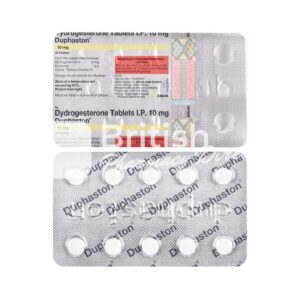
- Forms & Dosages: Tablet, 10 mg; typically supplied in blisters of 20 tablets.
- Manufacturers In United Kingdom: not specified
- Registration Status In United Kingdom: Duphaston withdrawn from the UK market since 2008; dydrogesterone is registered in many other European and international markets but not currently marketed in the UK.
- OTC / Rx Classification: Prescription-only (Rx) in all countries where it is registered; not available over-the-counter.
Critical Warnings, Safety And Patient Protection
Immediate Safety Steps And Who To Contact
Always confirm any prescription with an NHS prescriber or a UK‑registered prescriber before taking dydrogesterone.
Duphaston and dydrogesterone are prescription-only internationally and should not be started without clinical review.
If you develop severe symptoms stop the medicine immediately and seek emergency care.
- Emergency signs: Shortness of breath, chest pain, severe abdominal pain, jaundice, sudden severe headache, focal neurological signs (weakness, slurred speech).
- Immediate actions: Call 999 for life‑threatening signs or attend A&E.
- Non‑emergency urgent help: Contact NHS 111 for advice if concerned but not in immediate danger.
- Adverse reaction reporting: UK patients should report suspected adverse reactions to the MHRA via the Yellow Card scheme and retain packaging for batch details.
High‑Risk Groups (Elderly, Pregnancy, Chronic Illness)
Prescribers must review high‑risk patients before issuing dydrogesterone prescriptions.
Absolute contraindications include active or severe liver disease, allergy to dydrogesterone or any excipient, suspected progestogen‑dependent tumours and undiagnosed vaginal bleeding.
Use the checklist below to screen before prescribing or dispensing.
- History of thromboembolism or strong family history of VTE.
- Uncontrolled hypertension.
- Current or past depression.
- Diabetes mellitus—assess metabolic control.
- Renal impairment—exercise caution and document rationale.
Q&A — “Can I Drive After Taking It In The UK?”
Most people do not experience effects that impair driving after dydrogesterone at standard doses.
If you feel dizzy, drowsy or develop visual disturbance do not drive or operate machinery.
If your doctor advises that your reaction affects driving you must contact DVLA as instructed.
Usage Basics And Legal Status In The UK
INN, Brand Names And UK Availability
The International Nonproprietary Name (INN) for the active substance is dydrogesterone.
The best-known brand globally is Duphaston, supplied as 10 mg tablets in blisters of 20 in many countries.
Duphaston is not currently marketed in the United Kingdom and was withdrawn from the UK market in 2008.
Patients should not import medicines without prior clinical advice and UK prescribers may select licensed alternatives appropriate for NHS care.
Legal Classification And Prescribing Framework
- Prescription‑Only Medicine (POM)
- Requires a prescription from an authorised prescriber and is dispensed by a pharmacy.
- Pharmacy (P)
- Sold under the supervision of a pharmacist without a prescription when specifically permitted.
- General Sales List (GSL)
- Available widely without pharmacist supervision; not applicable to dydrogesterone.
| Product | UK Status |
|---|---|
| Duphaston (brand) | Withdrawn from UK market since 2008 |
| Dydrogesterone (INN) | Prescription‑only where licensed internationally; not marketed in UK currently |
Dosing Guide (Practical NHS‑Focused Regimens)
Standard Regimens And Examples
- Secondary amenorrhoea: 10 mg twice daily, typically given on cycle days 11–25 or as directed.
- Luteal‑phase support in infertility: 10 mg daily from day 14–25 or continuously depending on protocol.
- Threatened abortion: an initial total of 40 mg then 10 mg every 8 hours as used in some protocols; continue as advised.
- Habitual abortion: 10 mg daily continued through at least the 20th week in some regimens.
- Endometriosis: 10–20 mg daily, often days 5–25 or continuous as tolerated.
- Dysfunctional bleeding: 10 mg twice daily for 5–7 days to control bleeding.
UK prescribers will adapt these examples to NICE and local NHS guidance and to individual patient needs.
Monitoring checklist: observe bleeding pattern, mood changes, and consider liver function tests if clinically indicated.
Adjustments For Comorbidities
Dydrogesterone is metabolised in the liver and is contraindicated in active or severe hepatic disease.
Use with caution in renal impairment and the elderly, and document the risk–benefit decision.
Screen and monitor patients with a history of depression or thrombotic risk, and adjust management if adverse features emerge.
Q&A — “What If I Miss A Dose?”
If you miss a single dose take it as soon as you remember unless the next dose is due soon.
Do not double the next dose to make up for a missed one.
Contact your prescriber if several doses have been missed or if you are unsure how to resume treatment.
Interaction Chart (Drugs, Food, Alcohol And Activities)
Food And Drinks Interactions
No major food interactions are documented for dydrogesterone tablets.
Moderate alcohol intake can worsen side effects such as dizziness and nausea and should be limited when starting treatment.
- Take with food to reduce nausea if this occurs.
- Avoid heavy alcohol while initiating therapy.
Common Drug Interactions And MHRA Yellow Card Context
Enzyme inducers may reduce plasma levels of progestogens and potentially decrease efficacy.
Examples include rifampicin, carbamazepine, some antiepileptics and St John’s wort; consider dose review or alternative therapy.
Check interactions with antidepressants and anticoagulants and provide full medication review at dispensing.
| High‑Risk Drug Class | Recommended Action |
|---|---|
| Enzyme Inducers (rifampicin, carbamazepine, St John’s wort) | Review efficacy; consider alternative or specialist advice |
| Antidepressants | Check for additive CNS effects; monitor mood and interactions |
| Anticoagulants | Monitor INR if on warfarin and document any changes |
Advise patients to supply a full medication list to the pharmacist and to report suspected interactions via the MHRA Yellow Card scheme.
Driving and workplace safety: if drowsiness or dizziness occurs advise patients not to drive and record counselling in NHS records.
User Reports, Trends And Patient Experience In The UK
Patients often ask whether dydrogesterone helps with luteal support and miscarriage prevention.
Online patient forums and NHS Choices report mixed experiences and occasional supply frustration because the Duphaston brand is not marketed in the UK.
- Top reported benefits: improved luteal phase support in fertility treatment, perceived reduction in miscarriage risk in certain patients.
- Common adverse experiences: mood changes, breakthrough bleeding, breast tenderness and nausea.
- Supply issues: patients report difficulty sourcing Duphaston in the UK and seeking clinical alternatives.
Clinicians triage anecdotal reports by comparing symptoms to known side effects and escalating care if severe or persistent.
For persistent problems recommend contacting GP or NHS 111 and report serious or unexpected reactions to the Yellow Card scheme.
Access And Purchase Options For UK Patients
High‑Street Pharmacies And E‑Prescribing
Patients seeking dydrogesterone in the UK should discuss alternatives with an NHS GP, sexual and reproductive health clinic or fertility specialist.
Major pharmacy chains dispense NHS prescriptions and offer counselling at the point of supply.
- Safe sourcing checklist: confirm MHRA licence where applicable, check prescriber details and ensure the pharmacy is registered with the GPhC.
Online pharmacies registered in the UK can accept NHS electronic prescriptions (EPS) and provide pharmacist counselling.
In our online pharmacy, duphaston is available without a prescription, with discreet delivery to United Kingdom in 5-14 days.
Importation, Private Prescriptions And Online Pharmacies
Importing medicines from abroad should only be considered under clinician advice and with full traceability.
Avoid purchasing prescription medicines from unregulated marketplaces.
| Supply Route | Pros | Cons / Safety Steps |
|---|---|---|
| NHS Prescription | Safest; pharmacist counselling; subsidised in devolved nations | Availability depends on local formulary; Duphaston brand not marketed |
| Private Prescription | Faster access to specialist choices | Patient pays; ensure prescriber is UK‑registered |
| Import / Named‑Patient Supply | Access to unlicensed products when clinically justified | Requires specialist approval, traceability and documentation |
Mechanism Of Action And Pharmacology
Simplified Patient Explanation
Dydrogesterone is an oral progestogen that mimics the effects of natural progesterone on the lining of the uterus.
It supports the luteal phase, helps stabilise the endometrium and in selected settings can reduce the risk of bleeding or pregnancy loss according to some protocols.
The molecule is noted for lacking androgenic, estrogenic or glucocorticoid effects that are present with some other progestins.
Clinical Pharmacology Notes For Prescribers
- INN
- Dydrogesterone
- ATC Code
- G03DB01
- Mechanism
- Progestogenic action on endometrium and uterine tissues; supports luteal phase function.
- Metabolic Caution
- Metabolised in the liver; contraindicated in active/severe liver disease.
For formulary searches the ATC entry G03DB01 is useful.
A simple flow diagram (use graphic in practice) can show ovulation → corpus luteum → progesterone effect stabilises endometrium → dydrogesterone mimics progesterone support.
Indications And Off‑Label Uses (MHRA Vs NHS Practice)
Licensed And Commonly Used Indications
Internationally dydrogesterone is used for secondary amenorrhoea, luteal insufficiency in infertility, dysfunctional uterine bleeding, threatened and habitual abortion, endometriosis, dysmenorrhoea and as part of HRT regimens.
Typical dosing uses 10 mg tablets, adjusted per indication and local protocol.
In the UK clinicians generally use comparable progestogens that are available and licensed here.
Off‑Label Practices And NHS Considerations
Off‑label prescriptions should be justified, documented and accompanied by informed consent.
In fertility clinics progestogens are commonly prescribed for luteal support and choice depends on evidence, patient preference and route of administration (oral versus vaginal).
- Common off‑label contexts: early pregnancy support, specific IVF protocols, prolonged luteal support in recurrent pregnancy loss protocols.
Checklist for documentation: clinical rationale, discussion of risks and benefits, patient consent, and follow‑up plan.
Key Clinical Findings And Evidence Summary (UK/EU Focus, 2022–2025)
Dydrogesterone has a long clinical history since 1961 and a generally favourable tolerability profile.
Systematic reviews and randomised trials have supported its use for luteal support in assisted reproduction, though evidence strength varies by indication.
Regional regulatory differences remain: dydrogesterone is registered in many European countries but not marketed in the UK.
- Strong evidence: Luteal support in certain assisted reproduction protocols.
- Moderate evidence: Treatment of dysfunctional uterine bleeding and secondary amenorrhoea in some studies.
- Limited evidence: Routine use for miscarriage prevention outside selected protocols.
| Trial/Review | Population | Main Result |
|---|---|---|
| Systematic Reviews (Assisted Reproduction) | Women undergoing IVF/ICSI | Benefit shown for luteal support versus placebo in selected trials |
| RCTS on Threatened Abortion | Early pregnancy with bleeding | Some protocols show reduced progression to miscarriage; evidence varies |
Clinicians should consult NICE guidance, fertility clinic protocols and primary literature when choosing therapy.
Alternatives Matrix And Prescribing Choices
NHS Prescribing Alternatives And Comparison
| Molecule / Brand | Route | ATC Class | Typical NHS Indications | Pros / Cons |
|---|---|---|---|---|
| Norethisterone | Oral | G03AC01 | Endometriosis, HRT, bleeding control | Widely available; some androgenic effects possible |
| Medroxyprogesterone | Oral / Injectable | G03AC06 | Amenorrhoea, bleeding control | Effective for bleeding; injectable form for depot therapy |
| Micronized Progesterone | Oral / Vaginal | G03DA04 | HRT, infertility luteal support | Suitable for vaginal route; often preferred in some fertility protocols |
Pros And Cons Checklist For Prescribers And Patients
- Confirm indication and evidence supporting the selected progestogen.
- Assess pregnancy status and whether luteal support is indicated.
- Evaluate thrombotic risk and hepatic function before prescribing.
- Consider route preference (oral vs vaginal) and local IVF protocol preferences.
- Review cost and prescription charge implications with the patient.
Common Patient Questions (Clinic‑Ready FAQs)
- Is Duphaston Available On The NHS? Duphaston brand is not marketed in the UK since 2008; discuss alternatives with your GP or fertility clinic.
- Will It Affect My Fertility? At typical doses progestogens such as dydrogesterone support the luteal phase and do not usually suppress ovulation.
- What Are Typical Side Effects? Common effects include breast tenderness, headache, nausea, menstrual irregularities and fatigue; seek help for severe events.
- How Do I Report Side Effects? Keep packaging and report suspected adverse reactions to the MHRA Yellow Card scheme.
Patients are advised to keep a symptom diary and bring prescription details to appointments for an informed review.
NHS Cost & Access Comparison Table (Practical)
| Source | Typical Price / Charge | NHS Charge / Exemption | Safety Notes |
|---|---|---|---|
| NHS Prescription | Varies by product | England: prescription charge per item unless exempt; Scotland/Wales/Northern Ireland: generally free | Safest route; use UK‑licensed alternatives where available |
| Private Prescription | Variable (pharmacy charge) | Patient pays | Ensure prescriber is UK‑registered and product traceable |
| Import / Private Sourcing | Generally higher cost | Patient pays | Requires traceability; only under specialist advice |
| Online UK‑Registered Pharmacy | May accept NHS EPS or private payment | Depends on EPS use | Confirm GPhC registration and supplier details |
Regional note: England applies standard prescription charges unless exempt; Scotland, Wales and Northern Ireland provide prescriptions free at point of dispensing in most cases.
IVF and fertility funding varies by local commissioning policies and integrated care boards.
Registration, Regulation And Reporting (MHRA, Guidance)
MHRA Approval And Licensing Processes Relevant To Patients
Marketing authorisation determines product availability in the UK and is granted by the MHRA.
Duphaston is registered and marketed in many European countries but has not been marketed in the UK since 2008.
Prescribers needing unlicensed supplies should follow named‑patient import rules and specialist advice with full documentation.
- MHRA
- UK regulator for medicines and devices.
- Marketing Authorisation
- Licence allowing a product to be marketed in the UK.
- Named‑Patient Import
- Process for accessing unlicensed medicines under clinician supervision.
Pharmacovigilance And Yellow Card Reporting
Report suspected adverse drug reactions to the MHRA Yellow Card scheme online or via app.
Pharmacists should record batch and supplier details when reporting to aid investigations.
- Report the event, onset date, batch number, concomitant medicines and patient demographics.
- Keep packaging and documentation to support any pharmacovigilance inquiries.
Storage, Handling And Household Guidance (UK Climate)
Household Storage And Transport
Store dydrogesterone tablets below 30°C and away from moisture and heat.
Keep tablets in the original blister until use to protect them from damp in UK homes.
Avoid storing medicines in bathrooms or near kettles where humidity is high.
During travel do not leave blister packs in hot cars; keep them in carry‑on luggage where temperature is more stable.
Disposal And Returning Unwanted Medication
- Return unused or expired medicines to any pharmacy for safe disposal.
- Do not flush medicines down the toilet or drain.
- If you have imported private packs retain supplier documentation and batch details for records.
Guidelines For Proper Use And Pharmacist Counselling (UK Style)
Counselling Checklist For Pharmacists And Prescribers
- Confirm the indication and whether the patient is pregnant or breastfeeding.
- Review contraindications including liver disease, undiagnosed vaginal bleeding and progestogen‑dependent tumours.
- Discuss common side effects and clear red flags that require stopping the medicine.
- Advise on missed‑dose policy and interactions with other medicines and herbal products.
- Document counselling in NHS electronic records or on the private prescription record.
Patient Safety Advice And Follow‑Up
- Arrange baseline monitoring where indicated such as liver function tests if clinically suspected liver disease.
- Screen for mood changes and review history of depression during follow‑up.
- Assess thrombotic risk and advise patients on symptoms of VTE.
- Provide the MHRA Yellow Card link and encourage reporting of unexpected adverse effects.
Offer a printable one‑page checklist summarising when to stop the medicine and when to seek help.
Delivery Across United Kingdom
| City | Region | Delivery time |
|---|---|---|
| London | Greater London | 5-7 days |
| Birmingham | West Midlands | 5-7 days |
| Manchester | Greater Manchester | 5-7 days |
| Glasgow | Scotland | 5-7 days |
| Leeds | West Yorkshire | 5-7 days |
| Edinburgh | Scotland | 5-7 days |
| Bristol | South West England | 5-7 days |
| Cardiff | Wales | 5-9 days |
| Belfast | Northern Ireland | 5-9 days |
| Newcastle | Tyne and Wear | 5-9 days |
| Southampton | South East England | 5-9 days |
| Norwich | East of England | 5-9 days |
| Swansea | Wales | 5-9 days |
| Reading | South East England | 5-9 days |