Atenolol
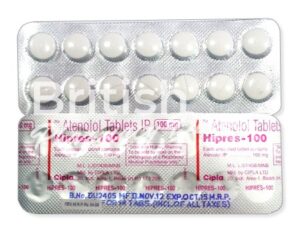
In stock
25mg · 50mg · 100mg
from 18,34 £
In brief
- Atenolol is a cardioselective beta-blocker that slows the heart and lowers blood pressure, used for hypertension, angina and some heart rhythm problems.
- Choose 25mg, 50mg or 100mg tablets in packs from 14 to 350; a 98-tablet pack is listed for the 50mg strength only.
- An imported generic of a prescription-only medicine; in the UK it is also sold as Tenormin and combined with chlortalidone as co-tenidone.
Atenolol in high blood pressure and angina
Atenolol acts selectively on beta-1 receptors, which are concentrated in the heart. By damping down the effect of adrenaline, it slows the heart rate and reduces the force of each beat, lowering blood pressure and cutting the heart’s demand for oxygen. Four licensed indications appear in the SmPC: high blood pressure, angina, certain disturbances of heart rhythm, and treatment both early after a heart attack and over the longer term to protect the heart. As it is cleared mainly through the kidneys, kidney function has a bearing on the dose.
Tablet strengths and the full range of packs
Three tablet strengths of this imported generic are listed: 25mg, 50mg and 100mg. Whichever strength you need, packs of 14, 28, 56, 84, 140 and 350 tablets are available, with an extra 98-tablet option for 50mg. The 25mg tablet suits people who need a lower daily amount, such as some older adults or those with reduced kidney function.
Where Atenolol stands in UK prescribing
UK pharmacies supply atenolol only against a prescription, as it is classed as POM. It is widely prescribed as a generic in 25mg, 50mg and 100mg tablets, and is also sold under the brand name Tenormin. Co-tenidone combines it with the diuretic chlortalidone for blood pressure that needs two medicines to bring it under control.
Daily doses for each condition
For high blood pressure most adults take 100mg once a day, although some respond well to 50mg; the full effect builds up over one to two weeks. Angina is usually treated with 100mg a day, taken either in one go or as 50mg in the morning and 50mg in the evening. For heart rhythm disorders, the maintenance dose is 50mg to 100mg once daily. People with kidney problems need less: 50mg a day when creatinine clearance is 15–35ml/min, and 25mg a day or 50mg every other day below 15ml/min. Older patients often start lower, and the medicine is not recommended for children. Do not stop suddenly – the dose should be tapered over 7 to 14 days, as abrupt withdrawal can make angina worse.
Heart, lung and circulation problems to declare
The tablets must not be used with cardiogenic shock, uncontrolled heart failure, second- or third-degree heart block, sick sinus syndrome, a very slow pulse, low blood pressure, severe problems with circulation in the arms or legs, metabolic acidosis or an untreated phaeochromocytoma. Although it acts mainly on the heart, it can still narrow the airways, so anyone with asthma or a history of wheezing must tell their doctor. In diabetes it may hide warning signs of low blood sugar, such as a racing heart, and it can also mask the signs of an overactive thyroid. Before surgery, make sure the anaesthetist is aware that you are on a beta-blocker.
Medicines that interact with Atenolol
Taking it with verapamil or diltiazem can slow the heart too much or bring on heart failure. If clonidine is to be stopped, the beta-blocker should be withdrawn several days beforehand to avoid a sharp rise in blood pressure. Care is also needed with antiarrhythmic medicines such as disopyramide and amiodarone, with digoxin, and with NSAIDs such as ibuprofen, which can weaken the blood-pressure-lowering effect.
Common and less common side effects
The effects people report most are a slow pulse, cold fingers and toes, an upset stomach and fatigue. Disturbed sleep is less common. Rarely, people notice dizziness, headache, mood changes, dry eyes or worsening heart failure. Seek prompt medical advice for wheezing or breathlessness, fainting, or a very slow heartbeat. Whether atenolol is right for you, and at which dose, is for your doctor or prescriber to decide.