
Bempedoic Acid
In brief
- You can obtain bempedoic acid via prescription from pharmacies and healthcare providers in major markets (sold as Nexletol, Nilemdo, Nexlizet or Nustendi by manufacturers such as Esperion and Daiichi Sankyo); it is classified as prescription-only (Rx) and should not be supplied without a valid prescription.
- Bempedoic acid is used to lower LDL‑cholesterol in adults (as an adjunct to diet and maximally tolerated statin therapy or for statin‑intolerant patients); it works by inhibiting ATP citrate lyase (ACL), reducing cholesterol synthesis upstream of the HMG‑CoA reductase step targeted by statins.
- The usual dose is 180 mg orally once daily for monotherapy; the fixed‑dose combination with ezetimibe is 180 mg/10 mg once daily.
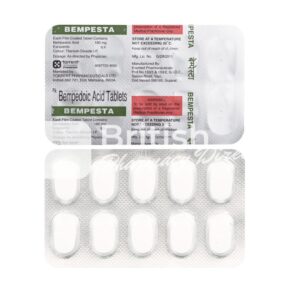
- The medicine is supplied as film‑coated tablets for oral administration, taken once daily, with or without food.
- Effects on LDL‑cholesterol begin to appear within 2–4 weeks, with clinical reassessment typically at 4–12 weeks to judge response.
- The pharmacological effect is sustained with daily dosing (duration of action per dose is approximately 24 hours), and LDL‑lowering is maintained only while treatment continues.
- There is no specific prohibition on moderate alcohol use, but avoid excessive alcohol—particularly if you have liver disease or elevated hepatic enzymes—and discuss alcohol intake with your prescriber.
- The most common side effect is increased blood uric acid (hyperuricaemia), which may precipitate gout; other frequent adverse effects include muscle spasms, back or limb pain, upper respiratory infection, gastrointestinal complaints and elevated liver enzymes.
- Would you like to try bempedoic acid without a prescription?
Critical Warnings & Restrictions
Basic Bempedoic Acid Information
- INN (International Nonproprietary Name): Bempedoic acid
- Brand Names Available In United Kingdom: Nilemdo (bempedoic acid 180 mg), Nustendi (bempedoic acid 180 mg/ezetimibe 10 mg)
- ATC Code: C10AX21
- Forms & Dosages: Film-coated tablet 180 mg (monotherapy); film-coated tablet 180 mg/10 mg (fixed combination with ezetimibe)
- Manufacturers In United Kingdom: Daiichi Sankyo Europe (Nilemdo/Nustendi distribution in EU/EEA including UK); Esperion Therapeutics noted as originator globally; CSL Seqirus and Otsuka Pharmaceutical listed as regional distributors in other markets
- Registration Status In United Kingdom: Not specified
- OTC / Rx Classification: Prescription only (Rx) in all major markets
Are you worried this medicine could harm someone in your household?
Bempedoic acid is a prescription-only medicine and should only be used under a prescriber’s supervision.
Pregnancy and breastfeeding are absolute contraindications for bempedoic acid because safety data are lacking and potential fetal or neonatal risk cannot be ruled out.
Women of childbearing potential must use effective contraception while taking bempedoic acid and should have a pregnancy test if pregnancy is possible before starting therapy.
Severe renal impairment (eGFR <30 mL/min/1.73 m²) and severe hepatic impairment are situations where bempedoic acid is not recommended or requires strong caution due to limited data.
There is a documented risk of increased serum uric acid and hyperuricaemia with bempedoic acid, so check history of gout before prescribing.
Tendon disorders, including tendon rupture, have been reported with drugs that affect tendons; review any history of tendon rupture or disorders before starting treatment.
Elderly patients need monitoring for adverse effects, but routine dose reduction is not required by available data.
Use the checklist below to protect immediate patient safety before initiation.
- Pregnancy test if pregnancy possible.
- Baseline liver function tests (LFTs).
- Baseline renal function (eGFR).
- Baseline serum uric acid.
- Review concomitant medications for gout risk and tendon risk.
Checklist For Baseline Tests
- Full blood count not routinely required unless clinically indicated.
- Liver function tests: ALT, AST and bilirubin before starting and repeated if clinically indicated.
- Serum creatinine/eGFR prior to initiation and periodically in those with impaired renal function.
- Serum uric acid baseline and if symptomatic during therapy.
- Pregnancy test for women of childbearing potential.
| Contraindication | Clinical Note |
|---|---|
| Known hypersensitivity to bempedoic acid or excipients | Avoid use; document allergy in records |
| Pregnancy | Contraindicated; advise effective contraception |
| Breastfeeding | Contraindicated; advise to stop breastfeeding if treatment necessary |
| Severe hepatic impairment | Not recommended; consider alternatives |
| Severe renal impairment (eGFR <30) | Use caution; limited data available |
Interaction With Activities (Driving And Workplace Safety)
Concerned about how the tablets will affect your day‑to‑day tasks?
Some patients report fatigue, muscle pains or dizziness while taking bempedoic acid.
Advise patients not to operate heavy machinery or drive until they know how the medicine affects them.
Record counselling about activity precautions in the patient’s GP or non-medical prescriber (NMP) record.
Q&A — Can I Drive After Taking It In The UK?
Usually yes, but stop driving if you experience dizziness, extreme fatigue or severe muscle symptoms.
Report worrying symptoms to your GP or pharmacist and follow DVLA guidance on fitness to drive.
Usage Basics — Names, Legal Status, UK Availability
Who makes this tablet and what is it called in the UK?
The international nonproprietary name (INN) is bempedoic acid.
In Europe and the UK the licensed brand name is Nilemdo (bempedoic acid 180 mg) and the fixed combination with ezetimibe is marketed as Nustendi (bempedoic acid 180 mg/ezetimibe 10 mg).
Globally the originator is Esperion Therapeutics and Daiichi Sankyo Europe holds distribution or licensing in the EU/EEA and UK for Nilemdo and Nustendi.
Legal Classification And How You Get It
Bempedoic acid is a prescription-only medicine (POM/Rx) in major markets according to available data.
Supply in the UK is via NHS prescriptions or private prescribers and dispensed through community pharmacies, including large chains and independent pharmacies.
Electronic prescriptions and registered online pharmacies are commonly used to supply prescription medicines to patients.
- INN
- International Nonproprietary Name — common name for the active substance (bempedoic acid).
- POM
- Prescription Only Medicine — requires a prescriber’s prescription.
- Fixed-Dose Combination
- A single tablet containing two active ingredients, for example bempedoic acid plus ezetimibe (Nustendi).
| Brand | Pack/Strength | Manufacturer |
|---|---|---|
| Nilemdo | 180 mg tablets, blister | Daiichi Sankyo Europe |
| Nustendi | 180 mg/10 mg tablets | Daiichi Sankyo Europe |
| Nexletol / Nexlizet (global) | 180 mg or 180/10 mg | Esperion Therapeutics / CSL Seqirus (regional) |
Dosing Guide — NHS-Aligned Regimens & Adjustments
What dose will the GP usually start you on?
The standard adult dose is 180 mg orally once daily as a film-coated tablet.
When supplied as a fixed-dose combination with ezetimibe the dose is 180 mg/10 mg once daily.
Tablets may be taken with or without food.
Clinicians should reassess LDL‑C and tolerability at about 4–12 weeks after starting treatment.
Adjustments For Comorbidities
No routine dose change is required for elderly patients based on available data.
No adjustment is required for mild or moderate renal impairment (eGFR ≥30 mL/min/1.73 m²), but caution is advised in severe renal impairment due to limited data.
Use caution and monitor in moderate hepatic impairment; the drug is not recommended in severe hepatic impairment.
Not approved for paediatric use.
Q&A — What If I Miss A Dose?
Take the missed dose as soon as you remember unless it is almost time for the next dose.
Do not double up doses to make up for a missed one.
If in doubt, contact your GP or pharmacist for advice.
- Checklist For Baseline Tests: LFTs, renal function (eGFR), serum uric acid, pregnancy test if applicable.
- Monitoring Schedule: LDL‑C reassessment at 4–12 weeks; periodic LFTs if clinically indicated; monitor uric acid if history of gout; record adverse events promptly.
Interaction Chart — Food, Drink & Drug Conflicts
Can you take the tablets with your favourite foods and drinks?
No specific food interactions are required; tablets can be taken with or without food.
Advise moderation of alcohol because alcohol can raise uric acid and may worsen hyperuricaemia associated with bempedoic acid.
Give simple dietary advice alongside therapy, such as reduced saturated fat, increased fibre and weight management to help lower LDL‑C.
Common Drug Conflicts And Practical Actions
| Concomitant Drug/Food | Practical Action | Monitoring Required |
|---|---|---|
| Diuretics That Raise Uric Acid | Review necessity; consider alternatives if recurrent gout | Serum uric acid and gout symptom review |
| Drugs Associated With Tendon Rupture (e.g. Fluoroquinolones) | Avoid co-prescription where possible; counsel on tendon symptoms | Monitor for tendon pain, swelling or rupture |
| Agents That Alter Hepatic Function | Assess liver enzyme risks; avoid if severe hepatic impairment | Baseline and periodic LFTs if indicated |
Report suspected adverse drug reactions to the MHRA Yellow Card scheme and document events in the clinical record.
User Reports & Trends — Patient Experience In The UK
What are people saying online and at the GP surgery?
Patient‑facing platforms such as NHS.uk and Patient.info and community forums show common themes consistent with clinical data.
Patients report good LDL‑C lowering when bempedoic acid is added to maximally tolerated statin therapy or used for statin intolerance.
Common tolerability complaints mirror trial data and include muscle spasms, back or limb pain, raised uric acid or gout flares, gastrointestinal upset and fatigue.
Frequent patient questions concern cost, access and whether the drug affects driving.
- Reported Benefits: Additional LDL‑C reduction when statin alone is insufficient; oral option for some statin‑intolerant patients.
- Reported Side Effects: Muscle spasms, elevated uric acid, gastrointestinal symptoms, fatigue, occasional raised liver enzymes.
| Outcome | Frequency In Trials | Anecdotal Frequency Online |
|---|---|---|
| LDL‑C Reduction | Significant across major trials (CLEAR programme) | Many patients report visible cholesterol improvements |
| Raised Uric Acid / Gout | Noted as increased incidence | Common theme in forum anecdotes |
| Muscle Symptoms | Reported but variable | Frequently reported as muscle pain or cramps |
Remind patients and clinicians that forum posts are anecdotal and should be verified with formal monitoring and Yellow Card reporting.
- Clinician Checklist For Follow-Up Visits: record LDL‑C change, adverse effects, uric acid, adherence and any patient‑reported impact on daily activities.
Access & Purchase Options — Community & Online In The UK
How do patients get bempedoic acid in the UK?
Prescription supply is the standard route through NHS prescriptions from GPs or specialists and dispensed at community pharmacies such as Boots, LloydsPharmacy and Superdrug.
Private prescriptions may also be dispensed at the same community pharmacies and at independent pharmacies.
Registered online pharmacies and NHS electronic prescriptions are increasingly used for convenience.
Do not buy from unregulated international sellers; verify any online pharmacy by checking its General Pharmaceutical Council (GPhC) number and that a prescription is required.
| Supply Route | Pros | Cons / Verification Checks |
|---|---|---|
| NHS Prescription | Usually free or low cost depending on region; clinician oversight | Check prescription validity and patient eligibility |
| Private GP Prescription | Faster access in some cases; choice of pharmacy | Patient pays full cost; verify prescriber details |
| Online Registered Pharmacy (UK) | Convenient, home delivery; electronic prescriptions accepted | Check GPhC registration and prescription requirement |
In our online pharmacy, bempedoic acid is available without a prescription, with discreet delivery to United Kingdom in 5-14 days.
Mechanism & Pharmacology — Plain English And Clinical Terms
Why does bempedoic acid lower cholesterol?
Bempedoic acid inhibits ATP citrate lyase (ACL), an enzyme upstream of HMG‑CoA reductase in the cholesterol synthesis pathway.
By reducing hepatic cholesterol synthesis it lowers low‑density lipoprotein cholesterol (LDL‑C).
The drug is activated in the liver and not in skeletal muscle, a factor that may explain a different muscle side‑effect profile compared with statins.
- ACL Inhibitor
- Blocks ATP citrate lyase to reduce cholesterol synthesis in the liver.
- LDL‑C
- Low‑density lipoprotein cholesterol — the main target for cardiovascular risk reduction.
- Activation Site
- Bempedoic acid is a prodrug activated mainly in the liver, not in muscle tissue.
Clinical Terms And Pharmacokinetics
The ATC code is C10AX21, classed as an other lipid‑modifying agent.
The usual formulation is a once‑daily oral 180 mg film‑coated tablet with a fixed‑dose combo available with ezetimibe for added LDL‑C lowering.
Consider adding a small infographic in patient leaflets showing the ACL inhibition step and how it reduces LDL‑C.
Indications & Off‑Label Uses — MHRA Stance Vs Practice
What is this tablet officially for?
Authorised indications include primary hypercholesterolaemia and mixed dyslipidaemia as an adjunct to diet and to maximally tolerated statin therapy, or for patients who are statin‑intolerant.
The standard adult dose is 180 mg once daily and the fixed combination with ezetimibe provides greater LDL‑C reduction.
Off‑Label Practices
Specialist lipid clinics may use bempedoic acid in tailored regimens or in complex patients where evidence supports its use, but off‑label prescribing requires governance.
- Approved Indications: Primary hypercholesterolaemia, mixed dyslipidaemia as add‑on to diet and statin therapy or as option for statin intolerance.
- Off‑Label Considerations: Use in specialist settings with documented evidence, informed consent and enhanced monitoring; paediatric use is not recommended.
Checklist For Clinicians Considering Off‑Label Prescribing: document evidence base, obtain informed consent, set monitoring timetable, and record rationale in notes.
Key Clinical Findings — Major Trials & Outcomes
Which trials matter for this medicine?
The CLEAR programme provided the core clinical data evaluating LDL‑C lowering and tolerability for bempedoic acid and its combinations.
Regulatory approvals by the EMA (April 2020) and FDA (February 2020) were supported by LDL‑C reduction data from these development trials.
Later outcome studies are focused on longer‑term cardiovascular effects and safety in broader populations.
| Trial Name / Programme | Primary Endpoint | Population | Regulatory Relevance |
|---|---|---|---|
| CLEAR Programme (various trials) | LDL‑C reduction and safety | Adults with hypercholesterolaemia, with/without statin intolerance | Supported EMA and FDA approvals |
- Key Takeaways: consistent LDL‑C reductions as adjunct therapy; tolerability profile includes increased uric acid and some muscle complaints.
- Clinical Interpretation: weigh LDL‑C benefit against individual cardiovascular risk and existing statin use.
Alternatives Matrix — NHS Prescribing Options
What else might the GP prescribe instead of—or in addition to—bempedoic acid?
| Drug Class | Typical LDL‑C Reduction | Route | Cost / Availability | Suitability |
|---|---|---|---|---|
| Statins (Atorvastatin, Rosuvastatin) | Large (varies by dose) | Oral | Low cost; widely available on NHS | First‑line for most patients |
| Ezetimibe | Modest when alone; additive with statin | Oral | Low cost; NHS available | Good for statin add‑on or intolerance |
| PCSK9 Inhibitors (Alirocumab, Evolocumab) | Very large | Subcutaneous injection | High cost; specialist referral | Reserved for very high‑risk or specialist use |
Pros And Cons Checklist
- Pros Of Bempedoic Acid: oral dosing, additive LDL‑C lowering, option for some statin‑intolerant patients.
- Cons Of Bempedoic Acid: raises uric acid, tendon risk concerns, prescription-only and monitoring needs.
- Consider patient preference, monitoring burden and cost when choosing therapy.
Common Questions From UK Patients
Patients usually want quick, clear answers at the pharmacy counter.
-
Q: How quickly will my cholesterol fall?
A: LDL‑C is typically reassessed at 4–12 weeks and the magnitude of reduction depends on baseline therapy and combination use. -
Q: Can I take it with my statin?
A: Yes — it is licensed as an add‑on to maximally tolerated statin therapy; monitor for muscle symptoms and LFT changes. -
Q: Will it cause muscle damage like statins?
A: It has a different activation profile, being activated mainly in the liver rather than muscle, but muscle events have been reported so monitor and report any myopathy. -
Q: Is it safe with gout?
A: Bempedoic acid can raise serum uric acid, so use caution and consider alternatives for patients with recurrent gout.
Present these as short boxed FAQs in patient leaflets and link to NHS and MHRA resources for further reading.
NHS Cost & Access Comparison Table
| Source / Pharmacy | Typical Supply Route | NHS Prescription Charge Applicability | Exemption Status | Notes On Verification |
|---|---|---|---|---|
| GP (NHS) | NHS prescription | Charge applies in England unless exempt | Exemptions include age, income, certain medical conditions | Check NHS number and prescription form |
| Community Pharmacy Chains (Boots, Lloyds, Superdrug) | Dispense NHS or private prescriptions | Follows prescription type | Same as NHS rules | Verify prescription and ID for exemptions |
| Online Registered Pharmacies | Electronic prescriptions or private order | Depends on prescription type | Same as NHS rules | Check GPhC number and require valid prescription |
| Region | Prescription Charge | Notes |
|---|---|---|
| England | Yes (standard charge applies) | Exemptions available for certain groups |
| Scotland | No (prescriptions generally free) | Residents receive free prescriptions |
| Wales | No (prescriptions generally free) | Residents receive free prescriptions |
| Northern Ireland | No (prescriptions generally free) | Residents receive free prescriptions |
- Documentation Patients Commonly Need: NHS number, proof of exemption if claiming free prescription, photo ID for private purchases in some pharmacies.
Registration & Regulation — MHRA & Prescribing Framework
Who regulates this medicine and what should prescribers do?
Regulatory approvals have been issued by the FDA (February 2020) and EMA (April 2020) for bempedoic acid and its fixed combinations.
The MHRA is the UK authority responsible for licensing and post‑market surveillance, and prescribers should consult MHRA and NICE for local guidance and safety updates.
Prescribers must report adverse events to the MHRA Yellow Card scheme and follow local formularies when deciding on use.
- Regulatory Terms
- Licensing, post‑market surveillance, ATC classification (C10AX21).
Post‑Prescription Governance Checklist
- Document indication, baseline tests, monitoring plan and informed consent.
- Audit prescribing periodically and submit Yellow Card reports for serious or unexpected adverse events.
Storage & Handling — UK Household & Pharmacy Guidance
How should patients keep their tablets at home in a damp, cool UK climate?
Store bempedoic acid at room temperature between 15–30°C and protect from moisture by keeping tablets in the original packaging.
Avoid storing medication in bathrooms or other humid areas and choose a cool, dry place such as a bedroom cupboard away from direct heat.
When travelling, protect tablets from extreme heat and freezing.
Pharmacy Handling
Pharmacies should manage stock rotation, keep storage logs and inspect packaging for integrity on receipt.
| Do | Don’t |
|---|---|
| Keep in original blister and box | Do not store in bathrooms |
| Check expiry dates before dispensing | Do not expose to excessive heat or moisture |
- Disposal: return unused medicines to any community pharmacy for safe disposal.
- Keep out of reach of children and pets.
Guidelines For Proper Use — Pharmacist Counselling & NHS Safety Advice
What should the pharmacist cover in a brief counselling session?
Confirm the indication, review concomitant medicines (with attention to gout‑risk and tendon‑risk drugs) and check pregnancy or breastfeeding status.
Explain the main adverse effects to look out for, including raised uric acid, muscle symptoms, gastrointestinal upset and possible liver enzyme changes.
Set the expectation that LDL‑C will be reviewed at 4–12 weeks and agree a monitoring plan.
- Counselling Checklist: allergies, current medicines, renal/hepatic history, gout history, pregnancy status, monitoring plan, when to seek help.
NHS Aftercare And Safety Advice
Provide written aftercare that includes red‑flag symptoms requiring urgent review: severe muscle pain or weakness, signs of tendon rupture (sudden pain, swelling, loss of movement), jaundice or severe abdominal pain.
Advise how to report side effects via the MHRA Yellow Card and give contact points: GP, local pharmacy and lipid clinic where relevant.
Ensure leaflet sections include short checklists, clear red‑flag bullet points and reputable evidence sources such as EMA or manufacturer product information to maintain trust and clinical accuracy.
Delivery Across United Kingdom
| City | Region | Delivery time |
|---|---|---|
| London | South East England | 5-7 days |
| Birmingham | West Midlands | 5-7 days |
| Manchester | North West England | 5-7 days |
| Glasgow | Scotland | 5-7 days |
| Leeds | Yorkshire and the Humber | 5-7 days |
| Edinburgh | Scotland | 5-7 days |
| Bristol | South West England | 5-9 days |
| Newcastle | North East England | 5-9 days |
| Nottingham | East Midlands | 5-9 days |
| Sheffield | Yorkshire and the Humber | 5-9 days |
| Belfast | Northern Ireland | 5-7 days |
| Cardiff | Wales | 5-7 days |
| Plymouth | South West England | 5-9 days |
| Aberdeen | Scotland | 5-9 days |