Amitriptyline
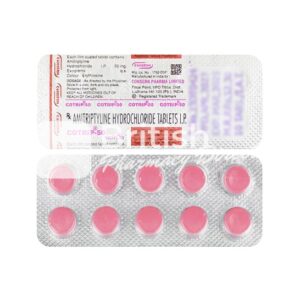
In brief
- You can purchase amitriptyline from pharmacies and licensed suppliers in many countries, but it is prescription-only (Rx) in most territories, including the UK, EU, North America, India, Australia and South America. Availability may vary by country, and some sellers may offer it without a prescription.
- Amitriptyline is a tricyclic antidepressant used for depression, neuropathic pain, migraine prevention, fibromyalgia, and some other off-label conditions. It works by inhibiting the reuptake of serotonin and noradrenaline, increasing their levels in the nervous system.
- The usual dose depends on the condition: for depression, 25–50 mg daily at first, then often 75–150 mg daily; for pain or migraine prevention, 10–25 mg at night, usually increased to 25–75 mg daily as needed.
- The drug is usually taken as tablets, but it is also available as oral drops in some markets and as prolonged-release tablets in certain brands. Rare injectable forms exist but are uncommon in routine use.
- Amitriptyline may start to make you feel drowsy within a few hours, but its full therapeutic effect for depression usually takes 2–4 weeks, and sometimes longer.
- The duration of action is typically around 24 hours, which is why it is commonly taken once daily at bedtime; the clinical effect may last through the night and into the next day.
- Avoid alcohol while taking amitriptyline, as it can significantly increase drowsiness, dizziness, impaired coordination, and the risk of side effects and overdose.
- The most common side effects are drowsiness, dry mouth, constipation, dizziness, blurred vision, weight gain, and postural low blood pressure.
- Would you like to try amitriptyline without a prescription?
Basic Amitriptyline Information
- INN (International Nonproprietary Name): Amitriptyline
- Brand names available in United Kingdom: Amitriptyline tablets are usually supplied as a generic medicine; international brand names include Elavil, Sarotex, Laroxyl and others.
- ATC Code: N06AA09
- Forms & dosages: Tablets 10 mg, 25 mg, 50 mg, 75 mg, 100 mg; oral drops in some markets; prolonged-release tablets in some markets.
- Manufacturers in United Kingdom: Not specified
- Registration status in United Kingdom: Prescription medicine (Rx)
- OTC / Rx classification: Prescription Only (Rx)
Critical Safety Warnings For UK Patients
Who Should Not Take Amitriptyline
Amitriptyline is a prescription-only medicine, so it should only be supplied after a proper clinical check.
It must not be used if there is hypersensitivity to amitriptyline or related compounds, if a recent myocardial infarction has occurred, or if a monoamine oxidase inhibitor has been taken within the last 14 days.
Extra caution is needed in older adults, people with seizure disorders, angle-closure glaucoma, urinary retention or prostatic hypertrophy, cardiovascular disease, and anyone at risk of self-harm, because this first-generation tricyclic antidepressant has a higher anticholinergic burden and is highly toxic in overdose.
For NHS and MHRA patient protection, cardiac history, other medicines, and overdose risk should be reviewed by a prescriber or pharmacist before supply.
When To Seek Urgent Help
Get urgent medical help if any of the following occur:
- Severe dizziness.
- Fainting.
- Palpitations.
- Confusion.
- Agitation.
- Seizures.
- Breathing problems.
- Any sign of overdose.
An overdose is a medical emergency because it can cause arrhythmias and central nervous system depression.
Q&A — Can Amitriptyline Be Dangerous In Overdose?
Yes.
Even a relatively small excess dose can be serious, so tablets should be stored safely and never shared with anyone else.
What Amitriptyline Is And How It Is Classified
Inn, Names, And Atc Code
Amitriptyline is the official INN, while US prescribing commonly specifies amitriptyline hydrochloride.
Its ATC code is N06AA09, which places it in the nervous system group as a first-generation tricyclic antidepressant.
Uk Brand And Generic Naming
In the UK, patients usually receive amitriptyline tablets as a generic medicine, although brand names vary internationally, including Elavil, Sarotex, and Laroxyl.
- INN
- The standard international generic name for the active substance.
- ATC code
- A classification code used to group medicines by therapeutic use.
- Generic medicine
- A medicine sold under its non-branded name after the original patent has expired.
How Uk Prescribing And Supply Work
Nhs Prescribing Route
Amitriptyline is prescription only in the UK and is commonly started after review by a GP or specialist.
Electronic prescriptions, repeat prescriptions, and pharmacist counselling all play a strong role in UK practice, especially when a person is starting amitriptyline tablets for depression or amitriptyline for pain.
Community Pharmacy And Online Supply
Most people recognise pharmacy names such as Boots, LloydsPharmacy, and Superdrug, but there are also many regulated online pharmacies serving patients across the UK.
The key point is to use a registered UK pharmacy, because pharmacists may check interactions, dose timing, and sedation risks before supply.
In our online pharmacy, amitriptyline is available without a prescription, with discreet delivery to United Kingdom in 5-14 days.
Q&A — Do I Need A Paper Prescription In The UK?
Usually no, because electronic prescriptions are common.
The medicine still needs a valid prescription, even if the supply route is digital.
Approved Uses And Common Off-Label Uses
Main Uses In Practice
Amitriptyline is used for major depression, neuropathic and chronic pain, migraine prophylaxis, fibromyalgia, and several other off-label uses.
Depression and pain are the most common UK use-cases, and lower doses are often used for pain and headache prevention than for amitriptyline for depression.
When Clinicians May Choose It
It may be chosen when SSRIs or SNRIs are not suitable, or when night-time sedation is actually helpful for sleep.
- Depression, especially when a previous SSRI has not worked well.
- Neuropathic pain and chronic pain, usually at lower doses.
- Migraine prophylaxis, often taken at bedtime.
- Sleep-related use, when sedation is useful and appropriate.
- Other specialist uses, including selected off-label anxiety disorders.
Standard Doses In Uk Adults And How Titration Works
Typical Dosing By Condition
| Indication | Typical Adult Starting Dose | Usual Maintenance Or Range |
|---|---|---|
| Major depression | 25–50 mg daily | 75–150 mg daily |
| Neuropathic pain / Chronic pain | 10–25 mg at bedtime | 25–75 mg daily |
| Migraine prophylaxis | 10–25 mg at bedtime | Up to 75 mg daily |
| Fibromyalgia and other off-label uses | 10–25 mg at bedtime | 25–75 mg daily |
Common tablet strengths include 10 mg, 25 mg, 50 mg, 75 mg, and 100 mg, which makes gradual titration practical.
Why Clinicians Start Low
Starting low reduces sedation, dizziness, anticholinergic effects, and fall risk, which is especially important with amitriptyline 10 mg tablets or amitriptyline 25 mg tablets when treatment is being built up slowly.
Special Dose Adjustments And Vulnerable Groups
Elderly, Liver Impairment, Kidney Impairment, Children
Older adults often start at 10–25 mg at night, with slow titration and a lower usual ceiling because of side effects and falls.
Liver impairment may require dose reduction or avoidance because amitriptyline is extensively metabolised in the liver.
Kidney impairment usually does not need a routine dose adjustment, but monitoring is still sensible.
Children are rarely treated with amitriptyline and, when it is used, it should only be under specialist supervision.
Extra Safety Checks
In older adults, blood pressure, pulse, cognition, sedation, and fall risk should be reviewed.
- Age.
- Liver disease.
- Glaucoma.
- Urinary symptoms.
- Epilepsy.
- Pregnancy.
- All current medicines.
How To Take It Safely Day To Day
Timing, Food, And Missed Doses
Amitriptyline is often taken at bedtime because drowsiness is common.
If a dose is missed, take it when remembered unless the next dose is nearly due, and do not double up.
- Take it at the same time each day.
- Do not stop suddenly unless a clinician advises it.
- Avoid alcohol excess.
- Stand up slowly to reduce dizziness.
Tapering And Stopping
Gradual tapering is preferred, because stopping suddenly can lead to withdrawal symptoms.
Q&A — What If I Miss A Dose?
Take it when remembered unless it is nearly time for the next dose.
Side Effects Uk Patients Most Commonly Report
Common Effects And What To Expect
The side effects most often reported are drowsiness, dry mouth, constipation, urinary retention, weight gain, blurred vision, dizziness, and orthostatic hypotension.
Less common effects include sexual dysfunction, palpitations, sweating, and tremor.
Practical Patient Management
| Side Effect | Self-Help Tip |
|---|---|
| Dry mouth | Try small sips of water and sugar-free gum. |
| Constipation | Increase fluids and fibre if appropriate. |
| Dizziness | Stand up slowly and sit down if light-headed. |
| Drowsiness | Take it at night and avoid other sedating medicines unless advised. |
| Blurred vision | Be cautious with driving and reading until it settles. |
Falls, worsening mood, or troublesome urinary symptoms need review, particularly in older adults using amitriptyline for pain or sleep.
Interactions With Medicines, Alcohol, And Daily Habits
High-Risk Medicine Combinations
Amitriptyline must not be combined with MAOIs, and caution is needed with other antidepressants, sedatives, cardiac medicines, and any drug that increases arrhythmia risk.
Pharmacist interaction checking is a key safeguard in the UK, because even a routine repeat prescription can become unsafe if a new medicine has been added elsewhere.
Alcohol, Driving, And Work Safety
Alcohol can worsen drowsiness and slow reaction time, so even a small amount may make the effects feel stronger.
- Driving.
- Using machinery.
- Working at height or on ladders.
- Night shifts.
- Caring for children alone if sedation is marked.
Driving, Work, And Legal Caution In The UK
When Amitriptyline Affects Fitness To Drive
Sedation, blurred vision, and slowed reactions can affect fitness to drive, especially when treatment is just starting or the dose has been increased.
Workplace safety also matters, particularly where UK health and safety expectations apply to hazardous duties.
Practical Safety Advice
If the medicine is newly started or the dose has been changed, driving should be avoided until its effects are known.
- Newly started treatment.
- Recent dose increase.
- Safety-sensitive job.
- Symptoms of sleepiness or blurred vision.
Q&A — Can I Drive After Taking It In The UK?
Only if you are safe, alert, and not impaired.
If drowsy, do not drive.
Contraindications And When Clinicians Avoid It
Absolute And Relative Contraindications
Absolute contraindications include hypersensitivity, recent myocardial infarction, and co-administration with a monoamine oxidase inhibitor.
Relative contraindications include seizure disorders, angle-closure glaucoma, urinary retention, prostate enlargement, cardiovascular disease, and suicidal risk.
Why These Matter
The anticholinergic effects can worsen glaucoma and urinary retention, while the cardiac effects can aggravate conduction problems and arrhythmias.
- Absolute contraindication
- A situation where the medicine should not be used.
- Relative contraindication
- A situation where the medicine may be possible, but only with caution and clinical review.
Storage, Transport, And Household Safety
How To Store Tablets In The UK
Tablets should be kept at room temperature, between 15 and 30°C, in a dry place away from light.
Blister strips or bottles should be kept out of reach of children and vulnerable adults.
Travelling And Seasonal Damp Or Cold
Do not leave medicines in cars, bathrooms, or damp kitchens, because moisture and heat can damage tablets.
- Take the original pack.
- Keep the prescription label with it.
- Carry enough supply for the trip.
- Store it securely.
Brands, Strengths, And International Supply Context
Uk Generic Vs International Brands
Amitriptyline is off-patent and widely available as a generic, which is why branding can vary so much across countries.
International brand names include Elavil, Endep, Sarotex, Tryptanol, Laroxyl, Redomex, and Syneudon, while dosage forms may include tablets, oral drops, and prolonged-release tablets in some regions.
Why Packaging Can Differ
Availability depends on manufacturer and country, so the same amitriptyline hydrochloride tablets may look different even when the active ingredient is identical.
| Brand | Country Or Region | Dosage Form |
|---|---|---|
| Elavil | USA, Canada | Tablets |
| Endep | Australia | Tablets |
| Laroxyl | France, Turkey | Tablets, drops |
| Sarotex Retard | Europe, Australia | Prolonged-release tablets |
Cost, Access, And Nhs Regional Differences
England Vs Devolved Nations
In England, prescription charges usually apply, while prescriptions are free in Scotland, Wales, and Northern Ireland.
Prices can also differ between NHS prescriptions and private pharmacy supply.
Pharmacy And Online Access
Boots, LloydsPharmacy, Superdrug, and regulated online pharmacies all play a role in UK access, and registration checks plus delivery safety are worth confirming before ordering.
| Source | Access Route | Typical Patient Cost Difference |
|---|---|---|
| NHS in England | Prescription | Standard prescription charge may apply |
| NHS in Scotland | Prescription | Usually free |
| NHS in Wales | Prescription | Usually free |
| NHS in Northern Ireland | Prescription | Usually free |
| Private pharmacy | Pharmacy supply | Varies by provider |
Monitoring, Follow-Up, And When To Ask For Review
What Good Uk Counselling Should Cover
Good counselling should cover sedation, dose timing, side effects, missed doses, and overdose prevention, with special attention to older adults and anyone with a history of self-harm.
Follow-up should also review mood response, pain benefit, falls, cardiac symptoms, and anticholinergic burden.
When Treatment Needs Reassessment
Depression usually needs several weeks for full effect, while pain and migraine trials are often judged after 2–4 weeks.
If the treatment is helping, it may be continued as long as benefit outweighs side effects; if not, the prescriber may consider another tricyclic antidepressant, an SSRI, an SNRI, or another pain modulator such as gabapentin or pregabalin.
- Worsening mood.
- Suicidal thoughts.
- Palpitations.
- Fainting.
- Severe constipation.
- Urinary retention.
- No benefit after an adequate trial.
That review point matters because amitriptyline for pain often starts low and needs patience before the dose is considered effective.
Delivery Across United Kingdom
| City | Region | Delivery time |
|---|---|---|
| London | England | 5-7 days |
| Birmingham | England | 5-7 days |
| Manchester | England | 5-7 days |
| Leeds | England | 5-7 days |
| Liverpool | England | 5-7 days |
| Bristol | England | 5-7 days |
| Sheffield | England | 5-7 days |
| Newcastle upon Tyne | England | 5-7 days |
| Edinburgh | Scotland | 5-7 days |
| Glasgow | Scotland | 5-7 days |
| Cardiff | Wales | 5-7 days |
| Belfast | Northern Ireland | 5-7 days |
| Aberdeen | Scotland | 5-9 days |
| Norwich | England | 5-9 days |
| Plymouth | England | 5-9 days |