Ursodeoxycholic acid
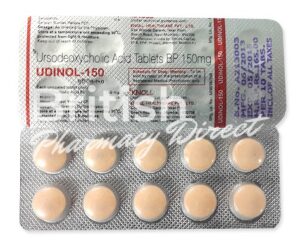
In stock
300mg
from 97,09 £
In brief
- Ursodeoxycholic acid (UDCA) is a naturally occurring bile acid; UK licences cover primary biliary cholangitis and the dissolution of small cholesterol gallstones.
- Offered as imported tablets of 300 mg; choose 30, 60, 90, 120 or 180 per pack.
- UK legal category: POM; the daily amount depends on the patient’s weight.
How ursodeoxycholic acid changes bile
Ursodeoxycholic acid, often shortened to UDCA, is a bile acid that the body produces naturally in small quantities. Taken as a medicine, it changes the make-up of bile so that it holds less cholesterol. As a result, cholesterol is less likely to form stones, and small cholesterol gallstones that are already there can slowly dissolve. In certain liver conditions it also supports the flow of bile out of the liver. This page offers imported 300 mg tablets.
Licensed indications in Britain
Top of the UK SmPC list is primary biliary cholangitis (PBC), where the fine bile ducts within the liver are slowly destroyed over many years. It is also licensed for dissolving cholesterol gallstones that are radiolucent, meaning they do not show on a plain X-ray, as long as the gallbladder still functions. Stones that are calcified or made of pigment do not respond. Children and teenagers with cystic fibrosis, aged 6 to under 18, may also receive it for associated liver and bile duct disorders.
One strength, five quantities
Ursodeoxycholic acid is listed in a single 300 mg strength, in quantities of 30, 60, 90, 120 or 180 tablets. The tablets are swallowed whole with some liquid, and the number needed each day follows from the weight-based calculation below.
Calculating a weight-based dose
In PBC, ursodeoxycholic acid is given at 10 to 15 mg/kg a day, as two, three or four separate doses. For a person of 60 kg, that works out at roughly 600 to 900 mg a day, or two to three 300 mg tablets. Gallstone dissolution uses a lower range, 6 to 12 mg/kg daily, given once at bedtime or spread through the day; in obesity the dose can reach 15 mg/kg. Gallstone treatment can continue for up to two years and goes on for three months after the stones have disappeared on imaging. Liver function blood tests are carried out often in the first months and less frequently afterwards, and the gallbladder is scanned after six to ten months to check progress. Working out the exact regimen is for the prescriber.
UK legal status and brands
In the UK this is a prescription-only medicine. Ursofalk is a well-known brand, alongside licensed generic tablets, capsules and oral suspensions. The doctor or prescriber decides whether it is suitable for an individual patient.
Situations that rule it out
The SmPC contraindicates its use if the gallbladder or bile ducts are acutely inflamed, if the common bile duct or cystic duct is blocked, if biliary colic keeps recurring, if the stones are calcified, or if the gallbladder cannot contract properly. It should also be avoided by anyone who is hypersensitive to bile acids or to any of the tablet’s ingredients.
Other medicines and unwanted effects
Because colestyramine, colestipol, medicinal charcoal and aluminium-containing antacids can bind ursodeoxycholic acid in the gut, a gap of at least two hours should separate them from each dose. Ursodeoxycholic acid can alter blood levels of ciclosporin, which may need to be checked. Oestrogens, including combined oral contraceptives, and clofibrate raise the cholesterol content of bile and work against gallstone dissolution. The side effect seen most often is soft, pasty stools or diarrhoea. In PBC, severe pain under the right ribs has been reported very rarely, and in advanced PBC with cirrhosis liver function can worsen, partly improving once treatment is stopped. Diarrhoea that persists should be reported to the prescriber.