Amantadine
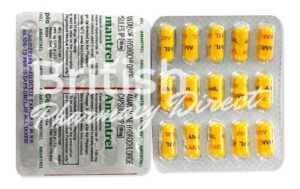
In stock
100mg
from 34,40 £
In brief
- Amantadine is a long-established medicine used to ease stiffness, tremor and slowness of movement in Parkinson’s disease.
- A single 100 mg strength, with six quantities ranging from 30 to 360.
- Supplied in Britain on prescription only, with the dose increased in stages and lowered if the kidneys work less well.
Where amantadine fits in Parkinson’s care
Amantadine started life as an antiviral and was later found to help the movement symptoms of Parkinson’s disease. It is thought to increase the release of dopamine in the brain and to block glutamate activity at NMDA receptors. In the UK it is licensed for Parkinson’s disease. It can be given on its own when symptoms are mild, or alongside levodopa and other Parkinson’s medicines when extra control is wanted.
The 100 mg strength and quantities
Amantadine is listed here at 100 mg per dose, with quantities of 30, 60, 90, 120, 180 and 360 available. It is an imported product, so the dose form and leaflet language may differ from the UK versions; confirm that the pack states 100 mg before use. Larger quantities should only be kept where the prescriber agrees, because the SmPC advises supplying the smallest practical amount to anyone at risk of self-harm.
Licence and forms available in Britain
Amantadine is licensed in the UK as a prescription-only medicine (POM). UK products include 100 mg capsules and a 50 mg in 5 ml oral solution, each with its own SmPC and patient leaflet. Those documents are the reference for the doses and warnings summarised below.
Dose steps, the kidneys and stopping
Treatment usually begins at 100 mg once a day for the first week and then rises to 100 mg twice daily, with any further increases made at intervals of at least a week. The daily total must never exceed 400 mg, and doses above 200 mg carry a greater risk of toxicity. Older people are kept on the lowest dose that works. Because the drug leaves the body through the kidneys, the dose is reduced when creatinine clearance falls: the SmPC gives 100 mg once every two or three days for a clearance between 15 and 35 ml/min and rules the medicine out altogether below 15 ml/min. Treatment should be withdrawn gradually, typically by halving the dose each week, since stopping suddenly can worsen Parkinson’s symptoms or trigger a reaction resembling neuroleptic malignant syndrome.
Exclusions and combinations to avoid
Amantadine is contraindicated in epilepsy or any seizure history, a past or present stomach ulcer, severe kidney disease, pregnancy and hypersensitivity to the ingredients, and it is not given with untreated angle-closure glaucoma. Women who are breastfeeding should not take it. Extra caution is needed with confusion, hallucinations or other psychiatric illness and with heart, liver or kidney disease. Anticholinergic drugs and levodopa can add to confusion, neuroleptics may raise the risk of a serious reaction, and alcohol or other sedating medicines increase central nervous system effects. A diuretic combining a thiazide with a potassium-sparing drug can push blood levels up.
Skin changes, swelling and other effects
A blotchy, net-like discolouration of the legs (livedo reticularis) is typical, as is ankle swelling, which tends to appear after about four weeks and may point to heart failure. The leaflet also mentions a dry mouth, nausea with little appetite, constipation, feeling faint when getting up, a pounding heartbeat, headache, poor sleep, anxiety, low mood and sweating. Blurred vision or eye pain can reflect corneal oedema and should be checked. Some people develop impulse control problems such as gambling or binge eating. Driving and machinery are best avoided while drowsiness or visual blurring persists. Whether amantadine is worth trying, and at which dose, is for your prescriber to judge.