Doxycycline
In brief
- Doxycycline is a prescription-only medicine (POM) in the UK.
- Doxycycline is an antibiotic used for bacterial infections such as respiratory infections, chlamydia, some cases of gonorrhoea, Lyme disease, malaria prevention, acne, and rosacea. It works by inhibiting bacterial protein synthesis by binding to the 30S ribosomal subunit, which stops bacteria from growing and multiplying.
- The usual dose depends on the condition: for many infections, 100 mg twice daily on day 1, then 100 mg once daily; for acne or rosacea, 40–100 mg daily; for malaria prophylaxis, 100 mg daily; and for some infections such as chlamydia, 100 mg twice daily.
- Doxycycline is available as capsules, modified-release capsules, tablets and dispersible tablets, all taken by mouth.
- Doxycycline usually starts working within a few hours, although noticeable improvement in infection or acne symptoms may take 1–3 days or longer depending on the condition.
- The duration of action is generally about 12–24 hours, which is why it is commonly taken once or twice daily. Treatment courses usually last 7–21 days, though acne treatment and malaria prophylaxis can require longer use.
- Alcohol is best avoided or limited, as it may reduce the effectiveness of treatment and increase the risk of stomach upset or liver strain.
- The most common side effects are nausea, vomiting, diarrhoea, abdominal pain, photosensitivity, rash, headache, and yeast infections. It can also cause throat irritation or tooth discolouration in children.
- Would you like to try doxycycline without a prescription?
Basic doxycycline information
- INN (international nonproprietary name): Doxycycline
- Brand names available in the United Kingdom: Vibramycin, Efracea; generic doxycycline
- ATC code: J01AA02
- Forms and dosages: capsules 50 mg, 100 mg; modified-release capsules 40 mg; tablets 100 mg; dispersible tablets 100 mg
- Manufacturers in the United Kingdom: Pfizer, Mylan, Actavis, Sandoz, Galderma, Teva
- Registration status in the United Kingdom: Licensed by the MHRA; prescription-only medicine (POM)
- OTC / Rx classification: Prescription only (Rx)
What doxycycline is and how it is used
High-risk groups and safety first
Doxycycline is a prescription only medicine in the UK, so it should be taken exactly as prescribed by a GP, sexual health clinician, or other authorised prescriber.
The main groups who need extra caution are people who are pregnant, breastfeeding, children under 8 years, and anyone with liver disease, renal impairment, lupus, or myasthenia gravis.
Known hypersensitivity to doxycycline or other tetracyclines is an absolute reason not to take it.
Pregnancy is a particular concern, especially in the second and third trimesters, and children under 8 years are generally avoided unless a specialist says the benefit is greater than the risk.
A pharmacist will also be alert to hepatic or renal impairment, because toxicity risk can be higher and specialist advice may be needed.
- Rash or hives.
- Swelling of the face, lips, tongue, or throat.
- Breathing difficulty or wheeze.
- Severe headache or blurred vision.
- Vomiting or severe diarrhoea.
- Yellowing of the skin or eyes, or dark urine.
Driving, work, and sun exposure
Doxycycline can make the skin more sensitive to sunlight, so photosensitivity is a real issue for commuters, outdoor workers, and anyone heading on a UK holiday abroad.
That means a short walk to the station, gardening at the weekend, or a beach trip can trigger an unexpected burn if sunscreen, clothing, and shade are ignored.
If dizziness, visual disturbance, or feeling generally unwell occurs, workplace safety should be reconsidered before operating machinery or doing tasks that need full concentration.
Micro-FAQ
Q: Can I drive after taking it in the UK?
A: Usually yes if you feel well, but do not drive if you feel dizzy, unwell, or have vision problems.
What patients usually ask at the counter
Many people come in worried that an antibiotic will interfere with everyday life, but doxycycline is often straightforward once the main precautions are understood.
It is not a painkiller, and it will not make symptoms vanish instantly, but it can help the body clear the infection or control longer-term conditions when it is used in the right way.
What doxycycline is and how UK patients may see it prescribed
INN, ATC code, and common UK naming
Doxycycline is the International Nonproprietary Name, or INN, used to identify the medicine consistently across countries.
It belongs to the tetracyclines and carries ATC code J01AA02, which places it in the anti-infective group for systemic use.
UK patients may recognise it as Vibramycin or as generic doxycycline.
Why patients are prescribed it
- Antibiotic
- A medicine used to treat bacterial infections.
- INN
- The standard global medicine name, regardless of brand.
- ATC code
- A classification code used to group medicines by therapeutic use.
In practice, doxycycline may be chosen for infections, acne, rosacea, and travel medicine, because it has a broad spectrum of activity and is familiar to UK prescribers.
Legal status and availability in the UK
In our online pharmacy, doxycycline is available without a prescription, with discreet delivery to the United Kingdom in 9–21 days; the medicine still needs to be used safely and only when suitable.
Dosage forms, strengths, and what UK patients might receive
Capsules and tablets
In the UK doxycycline is taken by mouth; longer treatment plans are common in acne and rosacea.
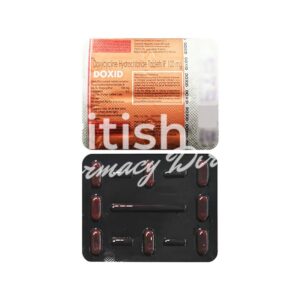
Packaging and capsule colour can vary between manufacturers even when the active ingredient is the same.
| Form | Strengths | Route | Common use |
|---|---|---|---|
| Capsule | 50mg, 100mg | Oral | Infections, acne, malaria prevention |
| Modified-release capsule | 40mg | Oral | Rosacea |
| Tablet | 100mg | Oral | Infections and longer courses |
| Dispersible | 100mg | Oral | Swallowable alternative |
Brand and packaging variation
Vibramycin is a widely recognised brand name, but generic packs may use different labels or manufacturer details.
How doxycycline works in the body
Simplified mechanism of action
Doxycycline works by stopping bacteria growing, rather than killing them outright.
It does this by inhibiting protein synthesis, which makes it bacteriostatic, not a quick cure and not a painkiller.
That is one reason it can be useful in acne, some respiratory infections, and travel medicine, where steady control matters more than instant relief.
Clinical language made simple
- Bacteriostatic
- Stops bacteria multiplying so the immune system can deal with them.
- Spectrum
- The range of bacteria a medicine can act against.
- Resistance
- When bacteria become less sensitive to an antibiotic.
Because resistance can develop, taking doxycycline exactly as prescribed is important, even if symptoms start improving early.
UK-approved uses and common prescription reasons
MHRA/NHS indications
Common uses include respiratory infections, acne, rosacea, malaria prophylaxis, chlamydia, gonorrhoea, Lyme disease, and anthrax post-exposure treatment.
Local NHS prescribing may vary by condition and guideline, so what is used in one area may differ from another.
Acne and rosacea context
Longer supervised courses are often used in acne and rosacea.
Efracea (40 mg modified-release capsules) is used for rosacea, alongside regular doxycycline capsules or tablets.
- Skin infections and inflammatory acne.
- Rosacea that needs longer-term control.
- Chest infections where a tetracycline is suitable.
- Chlamydia treatment under sexual health guidance.
- Travel-related malaria prevention.
- Lyme disease after clinician assessment.
Dosing guide, duration, and what to do if a dose is missed
Typical adult regimens
Exact dose depends on the reason for treatment, and the prescriber may choose a different plan if the infection, age, or medical history needs it.
For respiratory infections, the usual adult regimen is 100mg twice daily on day 1, then 100mg once daily.
For acne and rosacea, 40–100mg daily is common, while malaria prophylaxis is usually 100mg daily.
Chlamydia or gonorrhoea is commonly treated with 100mg twice daily, Lyme disease with 100mg twice daily, and anthrax post-exposure with 100mg twice daily.
| Condition | Typical adult dose | Usual duration |
|---|---|---|
| Respiratory infections | 100mg twice daily on day 1, then 100mg once daily | 7–14 days |
| Acne and rosacea | 40–100mg daily | 6–12 weeks |
| Malaria prophylaxis | 100mg daily | Before and after exposure |
| Chlamydia or gonorrhoea | 100mg twice daily | 7–10 days |
| Lyme disease | 100mg twice daily | 10–21 days |
| Anthrax post-exposure | 100mg twice daily | 60 days |
Micro-FAQ
Q: What if I miss a dose?
A: Take it when you remember unless the next dose is nearly due; never double up.
Duration and timing
Most infection courses last 7–21 days, while acne, rosacea, and some prevention regimens are longer.
For malaria prevention, doxycycline is started 1–2 days before exposure and continued for 4 weeks after leaving the endemic area.
Children, older adults, and organ impairment
Age restrictions
Children under 8 years should generally avoid doxycycline unless it is strictly necessary, because of the risk of tooth discolouration.
Where a child is older than 8 years, dosing is usually weight-based and clinician supervised.
Elderly and comorbidity considerations
There is no specific elderly dose adjustment, but renal and hepatic function should be monitored.
Use extra caution in liver or kidney impairment, and ask for specialist input if dysfunction is severe.
Practical clinician note
Before a prescription is issued, the prescriber needs to know about pregnancy, breastfeeding, liver disease, allergies, and other medicines.
- Pregnant or trying to conceive.
- Breastfeeding.
- History of liver or kidney disease.
- Any tetracycline allergy.
- Lupus or myasthenia gravis.
- Regular medicines, including supplements.
How to take doxycycline safely
Administration tips
Swallow doxycycline with a full glass of water and stay upright afterwards to reduce the risk of irritation or oesophageal problems.
It should not be taken right before bed, and food may help if stomach upset is an issue, as long as the pharmacist’s instructions are followed.
Many UK patients ask whether tea or coffee matters; usually it is acceptable, but the main point is to take the dose in a way that does not upset the stomach.
UK pharmacist counselling points
Finish the course, do not save leftovers, and ask the pharmacist if anything about the pack instructions is unclear.
- Use a phone alarm or pill organiser.
- Link the dose to breakfast or another regular routine.
- If vomiting happens soon after taking it, contact the pharmacist for advice.
- If a dose is missed, take it when remembered unless the next dose is close.
Micro-FAQ
Q: Can I take it with tea or coffee?
A: Usually yes, but avoid taking it in a way that irritates your stomach; follow the pharmacist’s instructions.
Interactions with food, drinks, and supplements
Common interactions
Calcium, iron, magnesium, antacids, and multivitamins can reduce absorption, so spacing doses apart is often important.
Dairy may also matter if the prescriber or pharmacist advises separating it from the antibiotic.
| Substance | Possible issue | What to do |
|---|---|---|
| Calcium | Reduced absorption | Separate if advised |
| Iron | Reduced absorption | Separate by several hours if instructed |
| Magnesium | Reduced absorption | Avoid taking together |
| Antacids | Reduced absorption | Ask the pharmacist about timing |
| Multivitamins | May contain minerals that interfere | Check the label |
Alcohol and lifestyle habits
Alcohol is not the main interaction, but heavy drinking can worsen side effects or make it harder to stick to the course.
Interactions with other medicines and when to seek advice
Important medicine conflicts
Extra caution is needed with anticoagulants, retinoids, seizure medicines, and other antibiotics where relevant.
People using oral contraception should be advised to check with a pharmacist or clinician rather than assume there is no issue at all.
If a reaction is suspected, the MHRA Yellow Card scheme can be used to report adverse effects.
- Anticoagulants.
- Retinoids such as acne medicines.
- Seizure medicines.
- Other antibiotics already being taken.
- History of allergy to tetracyclines.
- Pregnancy, breastfeeding, lupus, or myasthenia gravis.
Side effects, warning signs, and what is serious
Common side effects
The most common problems are nausea, vomiting, diarrhoea, abdominal pain, photosensitivity, rash, itching, headache, dry mouth, and candidiasis.
Some children may also develop reversible teeth discolouration, which is another reason age restrictions matter.
Rare but serious reactions
Serious reactions are uncommon, but anaphylaxis, Stevens-Johnson syndrome, and severe hepatotoxicity need urgent attention.
That is why people are told to read the leaflet and not brush off worrying symptoms as “just side effects”.
When to get urgent help
- Facial swelling, wheeze, or breathing difficulty.
- Blistering rash or peeling skin.
- Severe headache with visual changes.
- Yellowing of the skin or eyes.
- Blood in the stool or severe diarrhoea.
For severe symptoms, call 999.
For urgent but less severe concerns, NHS 111, a pharmacist, or a GP may be the right next step.
Doxycycline for malaria prevention and travel medicine
How prophylaxis is used
For malaria prevention, the usual dose is 100mg daily.
It should start 1–2 days before exposure and continue for 4 weeks after leaving the risk area.
That schedule matters because missing doses around travel days is a common reason for poor protection.
Travel planning in the UK
Travel clinic advice is helpful before long-haul trips, especially when sun exposure, diarrhoea risk, or other medicines are part of the picture.
- Check the destination malaria risk.
- Check how long the trip lasts.
- List all other medicines and supplements.
- Confirm pregnancy status if relevant.
- Plan sun protection before leaving.
Comparing doxycycline with alternatives
NHS-prescribed alternatives
Depending on the condition, clinicians may consider minocycline, tetracycline, azithromycin, clarithromycin, amoxicillin/clavulanic acid, or cefuroxime.
The choice depends on the infection, patient factors, age, allergy history, and local guidance rather than brand familiarity alone.
Pros and cons matrix
| Medicine | When preferred | Advantages | Limitations |
|---|---|---|---|
| Doxycycline | Acne, rosacea, Lyme disease, some travel uses | Broad use, familiar dosing | Photosensitivity, age limits |
| Minocycline | Similar skin or infection uses | Same class option | Clinician-led choice |
| Tetracycline | Some same-class use | Alternative tetracycline option | Not always preferred |
| Azithromycin / clarithromycin | Overlapping infections | Macrolide alternatives | Different suitability and guidance |
| Amoxicillin/clavulanic acid / cefuroxime | Other bacterial infections | Useful in different patient groups | Not interchangeable for every case |
For patients, the key point is that the prescriber chooses the medicine, not the marketing name.
Storage, handling, and patient-friendly UK use tips
Storage in UK homes
Store doxycycline at 15–30°C, away from light and moisture, and protect it from freezing.
Good-use checklist
- Finish the course.
- Do not share antibiotics.
- Keep out of children’s reach.
- Ask the pharmacist if a dose is missed.
- Seek help quickly if side effects are worrying.
Delivery across the United Kingdom
| City | Region | Delivery time |
|---|---|---|
| London | England | 9–21 days |
| Birmingham | England | 9–21 days |
| Manchester | England | 9–21 days |
| Leeds | England | 9–21 days |
| Liverpool | England | 9–21 days |
| Newcastle upon Tyne | England | 9–21 days |
| Sheffield | England | 9–21 days |
| Bristol | England | 9–21 days |
| Glasgow | Scotland | 9–21 days |
| Edinburgh | Scotland | 9–21 days |
| Cardiff | Wales | 9–21 days |
| Belfast | Northern Ireland | 9–21 days |
| Aberdeen | Scotland | 9–21 days |
| Norwich | England | 9–21 days |
| Plymouth | England | 9–21 days |