Donepezil
In brief
- Donepezil is a prescription-only medicine in the UK and should be obtained from a pharmacy with a valid prescription; brands include Aricept, Aricept Evess and generic donepezil (Teva, Mylan, Sandoz).
- Donepezil is used for symptomatic treatment of Alzheimer’s disease (mild to moderate, and in some cases moderate to severe) and acts as a reversible acetylcholinesterase inhibitor, increasing central cholinergic neurotransmission by preventing acetylcholine breakdown.
- The usual oral regimen for adults is 5 mg once daily (commonly at bedtime) with an increase to 10 mg once daily after 4–6 weeks if tolerated; the maximum dose is 10 mg daily.
- Forms of administration include oral film‑coated tablets and orodispersible tablets (ODT).
- Pharmacologically, donepezil reaches peak plasma concentrations within about 3–4 hours; clinically, some patients may notice symptomatic changes within 1–4 weeks, though full clinical response can take several weeks to months.
- The clinical effect is maintained with once‑daily dosing (therapeutic effect covering 24 hours); the elimination half‑life is long (around 60–90 hours), so steady state is reached over a couple of weeks and effects persist with daily dosing.
- Avoid excessive alcohol while taking donepezil as alcohol can worsen dizziness, sedation and cognitive impairment and may increase gastrointestinal upset; moderate to heavy drinking is not advised.
- The most common side effect is gastrointestinal disturbance—particularly nausea (also diarrhoea, vomiting and anorexia); other frequent effects include insomnia, headache, dizziness, fatigue and muscle cramps, and less commonly bradycardia or syncope.
- Would you like to try donepezil without a prescription?
Basic donepezil information
- INN (international nonproprietary name): Donepezil
- Brand names available in the United Kingdom: Aricept; Aricept Evess; Donepezil Teva; Donepezil Mylan; Donepezil Sandoz
- ATC code: N06DA02
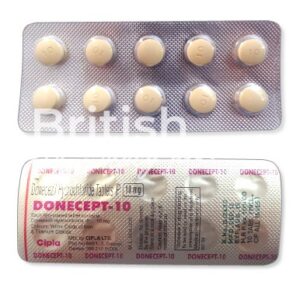
- Forms and dosages: Film-coated tablets 5mg and 10mg; Orodispersible tablets (ODT) 5mg and 10mg
- Registration status in the United Kingdom: Registered with MHRA
- OTC / Rx classification: Prescription-only medicine (POM)
Critical warnings and restrictions
High-risk groups
Donepezil is prescribed mainly for older adults with Alzheimer’s disease.
Known hypersensitivity to donepezil hydrochloride or piperidine derivatives is an absolute contraindication.
Use extreme caution in patients with cardiac conduction abnormalities such as sick sinus syndrome.
Exercise caution if the patient has asthma or chronic obstructive pulmonary disease.
A history of peptic ulcer disease or current anticoagulant/NSAID use increases gastrointestinal bleed risk.
Urinary outflow obstruction and seizure disorders require careful assessment before starting donepezil.
Pregnancy and lactation: data are limited so avoid unless benefit clearly outweighs risk and consult obstetric services.
- In-clinic review checklist:
- Baseline ECG
- Respiratory review (asthma/COPD history)
- History of gastrointestinal bleeding or peptic ulcer disease
- Seizure history and neurology input if present
- Medication reconciliation including OTC and herbal products
Interaction with activities
Donepezil can cause dizziness, drowsiness, blurred vision, syncope and bradycardia.
Patients should be counselled about the risk of falls and fainting, especially during initiation and dose increases.
Under UK law, patients with dementia must inform the DVLA when their condition affects driving safety.
Clinicians should document the driving advice given to each patient.
Advise not to undertake safety-critical tasks, including certain work duties, if symptomatic.
Q&A — “Can I drive after taking it in the UK?”
- Q: Can I drive after taking donepezil?
- A: Only if you feel safe.
- If you experience dizziness, fainting, marked drowsiness or visual disturbance do not drive and inform your GP and the DVLA as required.
- Documented cognitive decline from dementia often triggers DVLA reporting; always check NHS.UK and DVLA guidance.
- Immediate actions checklist:
- Stop driving immediately if you faint or have repetitive dizziness.
- Contact your GP for urgent review.
- Report new syncope or falls to your healthcare team.
Usage basics
INN, brand names available in the UK
Donepezil is the International Nonproprietary Name used across clinical practice.
Common UK-supplied brands and generics include Aricept, Aricept Evess and generics such as Donepezil Teva, Donepezil Mylan and Donepezil Sandoz.
Formulations on the market include film-coated tablets and orodispersible tablets (ODT) in 5mg and 10mg strengths.
Legal classification (POM, P, GSL)
- Donepezil is a prescription-only medicine (POM) throughout the United Kingdom.
- NHS prescriptions are dispensed under the arrangements of each UK nation.
- Pharmacists must follow GPhC standards for counselling and record-keeping.
- INN
- Donepezil
- POM
- Prescription-only medicine
- ODT
- Orodispersible tablet
Dosing guide
Standard regimens
The usual starting dose for adults with Alzheimer’s disease is 5mg once daily, commonly taken at bedtime.
After 4–6 weeks, if tolerated, the dose is often increased to 10mg once daily.
The maximum dose is 10mg daily.
Donepezil is intended as a long-term symptomatic treatment and requires regular review for benefit and harms.
Adjustments for comorbidities
- No routine renal dose adjustment is required due to minimal renal excretion.
- Use caution in severe hepatic impairment and consider closer monitoring or lower threshold for stopping treatment.
- Not recommended for children; safety and efficacy not established.
Q&A — “What if I miss a dose?”
- Q: Missed dose—what to do?
- A: Take the next scheduled dose at the usual time; do NOT double up.
- If it is close to the next dose, skip the missed dose and continue as normal.
- Contact GP or pharmacist if multiple missed doses occur or if withdrawal-like symptoms are suspected.
- Titration monitoring checklist:
- Record heart rate and blood pressure at baseline and during titration.
- Monitor weight and appetite.
- Ask about gastrointestinal symptoms such as nausea or diarrhoea.
- Check adherence and provide support such as ODT or pill organisers.
Interaction chart
Food and drinks
Alcohol may increase dizziness and the risk of falls, particularly during initiation and dose changes.
Advise limiting alcohol until individual tolerance is clear.
There is no clinically important interaction with ordinary caffeine intake, but monitor for sleep disturbance or agitation.
Common drug conflicts
| Drug | Interaction type | Clinical risk |
|---|---|---|
| Anticholinergics (e.g. oxybutynin, some antihistamines) | Pharmacodynamic antagonism | Reduced cognitive benefit from donepezil |
| Other cholinomimetics | Additive cholinergic effects | Increased nausea, diarrhoea, bradycardia |
| Beta-blockers, calcium-channel blockers | Pharmacodynamic interaction | Increased risk of bradycardia and syncope |
| NSAIDs / Anticoagulants | Increased bleeding risk | Higher risk of gastrointestinal bleeding |
| Anaesthetics / neuromuscular blockers | Perioperative considerations | Altered response to neuromuscular blockade |
- Action and counselling summary:
- Record all medicines including OTC and herbal products.
- Warn about additive bradycardia with beta-blockers or calcium antagonists.
- Consider gastroprotection if NSAIDs are required.
- Report suspected interactions to the MHRA Yellow Card scheme.
Legal status and availability in the UK
In our online pharmacy, donepezil is available without a prescription, with discreet delivery to the United Kingdom in 9–21 days.
Mechanism and pharmacology
Simplified explanation
Donepezil is a centrally acting reversible acetylcholinesterase inhibitor.
It slows the breakdown of acetylcholine in the brain and temporarily enhances cholinergic neurotransmission.
That mechanism can modestly improve cognition, behaviour and function in Alzheimer’s disease for some patients.
Clinical terms
- Acetylcholinesterase inhibitor
- A drug that blocks the enzyme which breaks down acetylcholine.
- ODT
- Orodispersible tablet, dissolves on the tongue for easier swallowing.
- POM
- Prescription-only medicine.
| Formulation | Strengths | Administration route |
|---|---|---|
| Film-coated tablets | 5mg, 10mg | Oral |
| Orodispersible tablets | 5mg, 10mg | Oral (ODT) |
Indications and off-label uses
MHRA-approved uses
- Primary approved use is symptomatic treatment of Alzheimer’s disease, typically in mild to moderate cases.
- Use donepezil as part of a broader dementia care plan including non-drug interventions.
Off-label practices in NHS and private care
Off-label use may be considered for Parkinson’s disease dementia and dementia with Lewy bodies where cholinesterase inhibitors can benefit cognition and visual hallucinations.
Such use requires specialist assessment and careful weighing of benefit versus risk.
- Checklist for specialist referral and consent:
- Document clinical rationale and expected outcomes.
- Obtain informed consent and record discussion in notes.
- Arrange baseline assessments and a review plan with secondary care.
Alternatives matrix
NHS prescribing alternatives
| Drug | Formulations | Typical dose range | Pros | Cons |
|---|---|---|---|---|
| Rivastigmine | Patch, capsule | 3mg-12mg daily (patch dosing varies) | Patch reduces GI effects; useful in Parkinson’s disease dementia | Patch site reactions; dosing complexity |
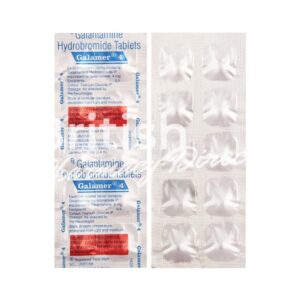
| Galantamine | Tablet, capsule | 8mg-24mg daily | May help cognition; established evidence base | Requires titration and monitoring; GI side effects |
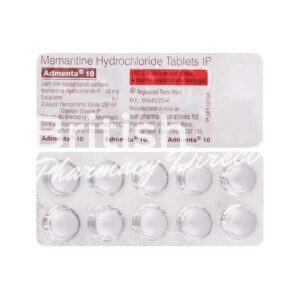
| Memantine | Tablet, solution | 10mg-20mg daily | Different mechanism (NMDA antagonist); used in moderate-severe disease | Not primary choice for mild disease; can be combined with cholinesterase inhibitors |
Pros and cons checklist
- Donepezil pros: Once-daily dosing, solid evidence base, generics widely available.
- Donepezil cons: Gastrointestinal side effects, bradycardia risk, no disease-modifying effect.
Common questions
- Q: Will donepezil stop my dementia getting worse?
- A: No — it may temporarily improve cognition or slow decline for some people, but it is not disease-modifying.
- Q: How soon will I see an effect?
- A: Some patients notice changes within weeks; a standard review is at 6–12 weeks after titration to judge benefit.
- Q: Can carers administer and crush tablets?
- A: Orodispersible tablets can help with swallowing; crushing some film-coated tablets may be unsuitable so check the SPC and ask the pharmacist.
- Q: What are the main side effects?
- A: Nausea, diarrhoea, insomnia, vivid dreams, muscle cramps; bradycardia and syncope are less common but important.
- When to contact the GP checklist:
- Persistent or severe gastrointestinal symptoms.
- Any fainting, syncope or unexplained falls.
- Marked bradycardia or palpitations.
- New or worsening seizures.
Registration and regulation
MHRA approval process
The MHRA issues marketing authorisations for medicinal products for UK use and oversees pharmacovigilance requirements.
Donepezil branded and generic products are subject to MHRA licensing and safety monitoring.
Suspected adverse reactions should be reported via the MHRA Yellow Card scheme.
NHS prescribing framework
- Prescribing should follow NICE guidance and local formulary recommendations.
- GPs should document indication, expected outcomes and review schedule in records.
- Shared care agreements with secondary care are common for dementia treatments.
- Clinician checklist:
- Obtain informed consent and document it.
- Perform baseline checks such as ECG if indicated.
- Agree follow-up timing and who will review the patient.
- Record any DVLA driving advice in the notes.
Storage and handling
UK household storage
Store donepezil at room temperature between 15–30°C and keep dry and away from direct light.
Avoid storing medicines in the bathroom due to humidity variations.
Keep medicines in their original packaging to retain expiry and batch details.
Keep out of reach and sight of children and vulnerable adults.
Guidance from NHS and pharmacists
- When travelling: Keep medicines in hand luggage and avoid extreme temperatures for long periods.
- Disposal: Return unused or expired medication to a pharmacy for safe disposal; do not flush medicines down the toilet.
- Expiry
- Check the date on original packaging and do not use beyond this date.
- Batch information
- Keep packaging until you no longer need batch details for adverse-event reporting.
Guidelines for proper use
UK pharmacist counselling style
Pharmacists should cover the INN and brand names, dosing schedule and route of administration.
Explain expected benefits and a realistic timeline for response.
Describe common and serious side effects and what to do about them.
Check for interactions with prescription, OTC and herbal medicines.
Advise on missed doses and emergency actions for overdose, noting that IV atropine is used as an antidote per product information.
Emphasise DVLA responsibilities regarding driving for patients with dementia.
NHS patient safety advice
- Document a review schedule at 6–12 weeks after initiation or dose change, then periodically thereafter.
- Monitor weight, appetite, heart rate and falls.
- Consider ECG monitoring if cardiac conduction disease is suspected.
- Consider ODT if there are swallowing difficulties.
- Shared care agreements should clarify responsibilities between primary and secondary care.
- Dispensing and follow-up checklist:
- Confirm identity and prescription validity before supply.
- Provide a simple patient handout stating dose, common side effects and emergency contacts.
- Record counselling in the pharmacy record and offer contact details for follow-up.
Delivery across the United Kingdom
| City | Region | Delivery Time |
|---|---|---|
| London | England | 9–21 days |
| Birmingham | England | 9–21 days |
| Manchester | England | 9–21 days |
| Glasgow | Scotland | 9–21 days |
| Edinburgh | Scotland | 9–21 days |
| Leeds | England | 9–21 days |
| Bristol | England | 9–21 days |
| Cardiff | Wales | 9–21 days |
| Belfast | Northern Ireland | 9–21 days |
| Newcastle | England | 9–21 days |
| Sheffield | England | 9–21 days |
| Nottingham | England | 9–21 days |
| Brighton | England | 9–21 days |
| Hull | England | 9–21 days |